Rokarolla targets 217 banking and crypto apps with 137 commands, enabling PIN, SMS code, and crypto payment theft.


A new Android banking trojan named Rokarolla is targeting 217 banking and cryptocurrency applications using an extensive set of 137 commands.
The malware is distributed via malicious websites purporting to provide the Google Chrome or TikTok app, and can take complete administrative control of a compromised device.
Its capabilities include stealing lock screen credentials, contact lists, and SMS data, as well as using keyloggers to continuously record user input.

Quantum computing has long been viewed as one of the most promising technologies of the future, and 2026 is bringing new signs of progress. Major technology companies and research institutions continue to invest billions into developing more stable and scalable quantum systems capable of solving problems beyond the reach of traditional computers. Recent advances have focused on improving error correction, increasing qubit reliability, and developing practical applications in fields such as drug discovery, materials science, logistics, and financial modelling. While widespread commercial adoption remains years away, experts believe the pace of innovation is accelerating as competition intensifies across the industry.

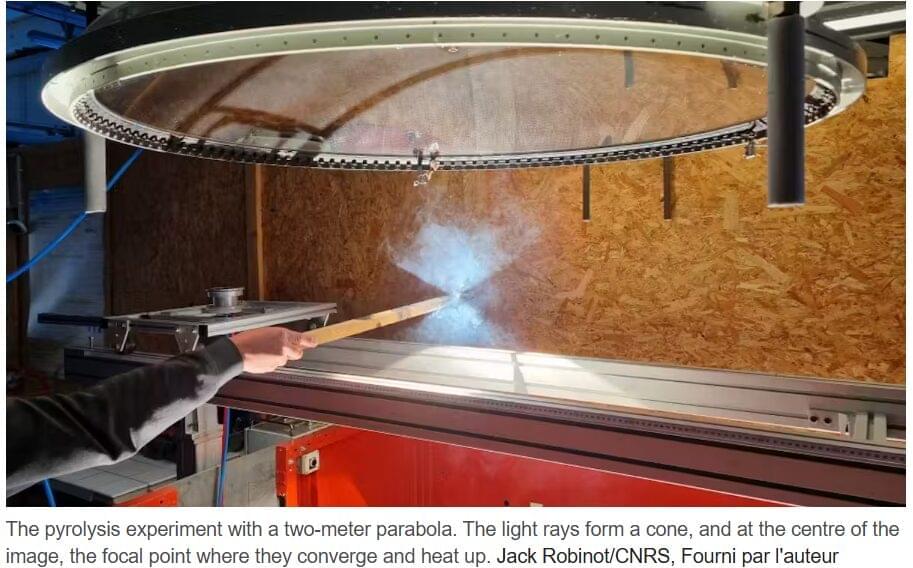
A new race to the moon is emerging between the United States and China. Unlike fifty years ago, the goal is no longer just about landing and leaving, but establishing a base that allows for a sustainable presence and extended stays on the surface of our natural satellite. The objective is now to use the moon as a testing ground for technologies that will enable us to travel further, particularly to Mars.
One of these key technologies is in-situ resource utilization (ISRU), which involves using available resources on-site to produce the consumables necessary for human activities: oxygen, water, rocket fuels, or construction materials. By producing these essentials directly on the moon, it will be possible to significantly reduce the mass of cargo sent from Earth, thereby reducing the logistical and financial costs of space exploration. Instead of importing these resources from Earth, the goal is to learn how to live on the moon.
Breaking down lunar dust to extract oxygen At the dawn of humanity’s sustainable return to the moon, ISRU is emerging as a strategic pivot. One of the major challenges is producing oxygen from regolith, the layer of soil covering the moon, primarily composed of small rock fragments and dust. The composition of regolith is complex, mainly consisting of several minerals (plagioclase, pyroxene, olivine) themselves made up of a mixture of metal oxides—chemical compounds that combine oxygen with another element such as silicon, iron, or calcium.

A drop of dye added to a glass of water undergoes ordinary diffusion. However, when placed on the surface of a foam, the dye spreads differently—diffusion becomes anomalous. An example of this is the pattern on the froth of a cup of cappuccino. Interestingly, recent research suggests that diffusion equations in a heterogeneous environment can also describe social phenomena, such as election results or the behavior of stock market traders. The study is published in the Chaos: An Interdisciplinary Journal of Nonlinear Science.
The movement of particles in complex media—such as porous materials, gels or foams—bears more resemblance to a random journey through an irregular maze than to a leisurely stroll through a homogeneous space. The presence of local “traps” alongside narrow passages or branches causes the transport of matter or energy to be significantly slowed down or accelerated. Such deviations from classical diffusion are referred to as anomalous diffusion. It is also observed in media with a nonuniform structure.
An international team of physicists from Poland, Croatia, Macedonia and Hungary has undertaken a mathematical description of diffusion in such systems; the Polish side was represented by scientists from the Institute of Nuclear Physics of the Polish Academy of Sciences (IFJ PAN) in Cracow.

Oracle PeopleSoft servers are being targeted in ongoing data theft attacks by the ShinyHunters extortion gang, which claims to have stolen data from over 100 organizations.
PeopleSoft is an enterprise business software suite used by large organizations to manage business operations such as human resources, payroll, finance, supply chain management, procurement, and student administration.
Yesterday, BleepingComputer learned of widespread data theft attacks targeting both cloud and on-premises Oracle PeopleSoft customer instances. These customers were receiving extortion demands that were signed by the ShinyHunters extortion gang.
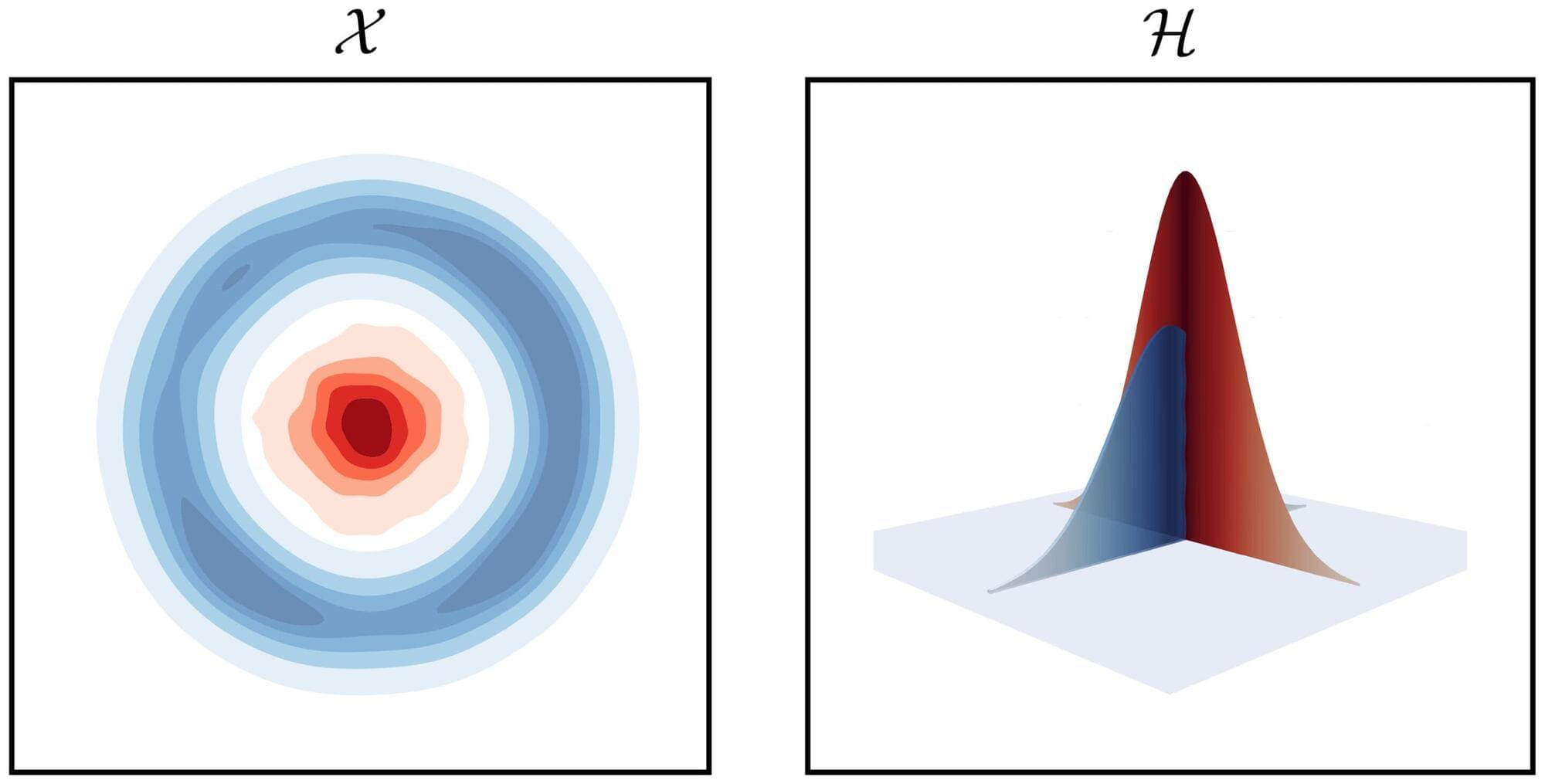
Are two sets of data genuinely different, or is it because of randomness? This question, known as the two-sample testing problem, becomes notoriously difficult in modern datasets, because they are often high-dimensional, complex, and differences between them can take countless subtle forms.
“Simply put, we don’t know what differences to look for, the possibilities are bewildering,” says Professor Victor Panaretos at EPFL’s Institute of Mathematics.
To solve the problem, mathematicians have developed the so-called “kernel methods,” which have emerged as powerful solutions, widely used in fields such as genomics, finance, and artificial intelligence.

New variants of the NFCShare Android malware are being distributed as fake updates for legitimate banking apps hosted on GitHub.
The malware has evolved and is now targeting customers of multiple banks and financial institutions across Europe in a phishing campaign aimed at stealing payment card data.
After tricking victims with a fake verification screen to place the cards near the mobile device’s near-field communication (NFC) chip, NFCShare reads the information using Android’s IsoDep interface and EMV commands.
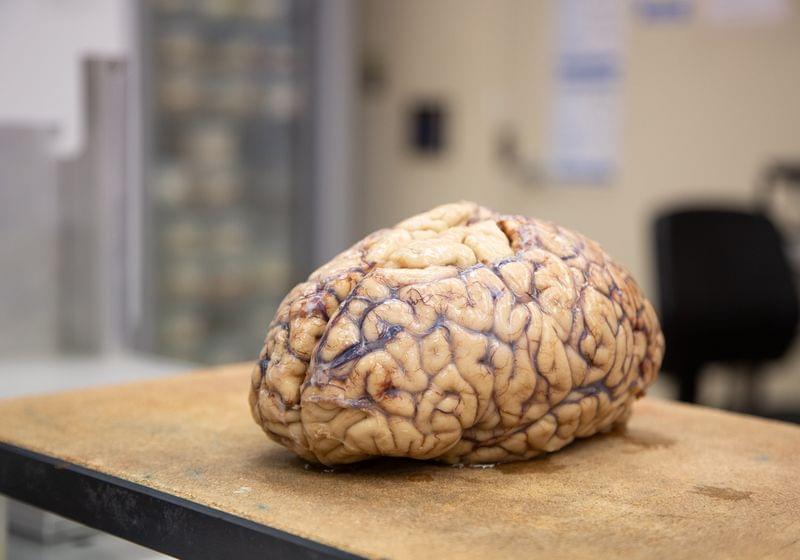
For decades, researchers across institutions have peered into microscopes and dived into data to try to understand how diseases like Alzheimer’s disease, Parkinson’s disease, and amyotrophic lateral sclerosis (ALS) affect the brain. While scientists have made many important insights into these conditions, breakthrough therapies to cure or even treat them remain out of reach.
To expedite understanding of and treatments for neurodegenerative diseases, the Allen Institute launched the Brain Health accelerator. The project, announced today, is a global initiative that will leverage cutting-edge technology with the goal of improving modeling, therapeutic development, and the understanding of disease mechanisms. With funding support from the Allen Institute, the Bezos family, Amazon Web Services, the National Institutes of Health, EverythingALS, and other partners, the project financial contribution is $400 million.
One of the challenges in studying diseases in the human brain and identifying treatment strategies has been the scale and complexity of the organ. The brain consists of many distinct parts, and studying disease mechanisms requires samples from large numbers of individuals. Additionally, while technological advancements in transcriptomics, proteomics, neuroimaging, and AI have helped researchers study the brain in finer detail, researchers have not always integrated many of these approaches into the same project.