Multicoin, Alameda and the Solana Foundation are backing Render Network’s vision for a decentralized alternative to Pixar’s massive rendering farms.
The chile peppers thrived in a controlled microgravity environment. But to develop agriculture away from Earth, NASA will have to think outside the box.
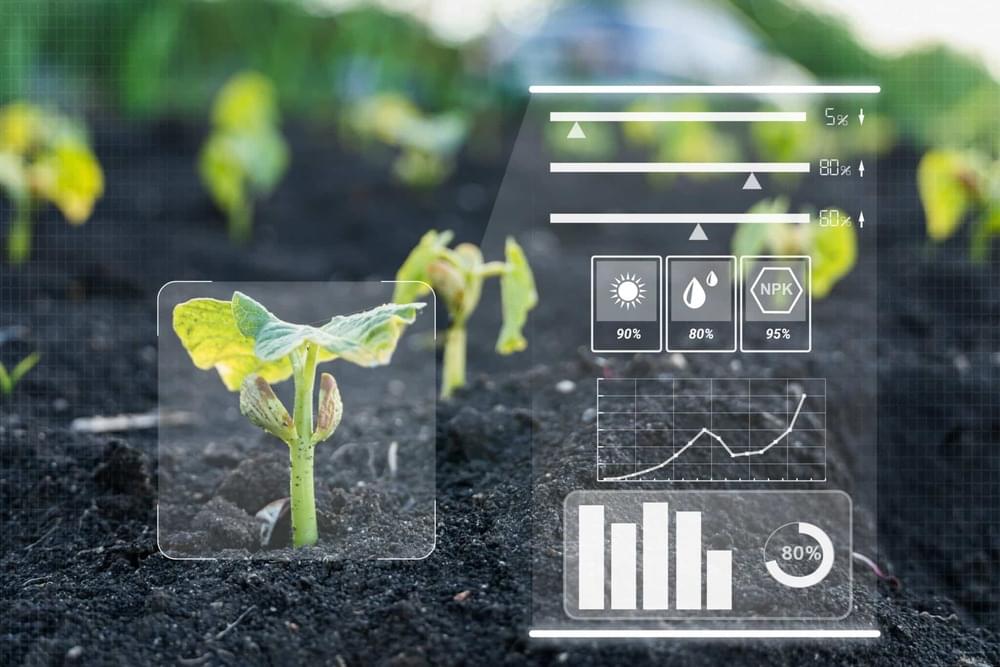
Biotechnology is a curious marriage of two seemingly disparate worlds. On one end, we have living organisms—wild, unpredictable celestial creations that can probably never be understood or appreciated enough, while on the other is technology—a cold, artificial entity that exists to bring convenience, structure and mathematical certainty in human lives. The contrast works well in combination, though, with biotechnology being an indispensable part of both healthcare and medicine. In addition to those two, there are several other applications in which biotechnology plays a central role—deep-sea exploration, protein synthesis, food quality regulation and preventing environmental degradation. The increasing involvement of AI in biotechnology is one of the main reasons for its growing scope of applications.
So, how exactly does AI impact biotechnology? For starters, AI fits in neatly with the dichotomous nature of biotechnology. After all, the technology contains a duality of its own—machine-like efficiency combined with the quaintly animalistic unpredictability in the way it works. In general terms, businesses and experts involved in biotechnology use AI to improve the quality of research and for improving compliance with regulatory standards.
More specifically, AI improves data capturing, analysis and pattern recognition in the following biotechnology-based applications:
Part 2
In this video Dr. Lustgarten goes into more detail on what he tracks and how he does the analysis of the results. He emphasizes the importance of running your own tests, to not only look at one biomarker but to then combine that marker with other biomarkers, looking for what is optimal for you.
Dr. Michael Lustgarten is a scientist at the Tufts University Human Nutrition Research Center on Aging in Boston, Massachusetts. His research currently focuses on the role of the gut microbiome and serum metabolome on muscle mass and function in older adults.
In this series of interviews Dr Lustgarten shares his experience with his rigorous n of 1 experiment over the last 7 years and shows how we or anyone can conduct a similar trial by tracking food, exercise and sleep, measure results and derive relationships between them, with a goal of extending our healthspan.
Dr Lustgarten’s channel on YouTube: https://www.youtube.com/channel/UCT1UMLpZ_CrQ_8I431K0b-g.
***************************************************************
Infarm, an Amsterdam-headquartered start-up that grows food indoors in racks, has been valued at over $1 billion in a new $200 million funding round.
It is the first vertical farming start-up in Europe to pass the $1 billion “unicorn” milestone.
Erez Galonska, co-founder and CEO of Infarm, said in a statement that the current food system is broken.
A new fabrication technique produces low-voltage, power-dense artificial muscles that improve the performance of flying microrobots.
When it comes to robots, bigger isn’t always better. Someday, a swarm of insect-sized robots might pollinate a field of crops or search for survivors amid the rubble of a collapsed building.
MIT.
AI doesn’t just want to eat your lunch — sometimes it wants to deliver it, too.
Driverless tech provider Motional and Uber Eats plan to add a dash of autonomy to food delivery next year in Santa Monica, serving up meal kits from select restaurants. The news was first reported by AiThority.
The plan is for food deliveries to come via Motional’s all-electric Hyundai IONIQ 5-based robotaxis. Motional said this will be the first time its vehicles are used to deliver food. It’s not clear whether humans or robots will bring the meal kits to customers’ doorsteps.
In this video Dr. Lustgarten introduces his N of 1 experiment and gives an overview of the processes that he follows. He also discusses why he thinks it is important to track your own markers and not just rely on published trials.
Dr. Michael Lustgarten is a scientist at the Tufts University Human Nutrition Research Center on Aging in Boston, Massachusetts. His research currently focuses on the role of the gut microbiome and serum metabolome on muscle mass and function in older adults.
In this series of interviews Dr Lustgarten shares his experience with his rigorous n of 1 experiment over the last 7 years and shows how we or anyone can conduct a similar trial by tracking food, exercise and sleep, measure results and derive relationships between them, with a goal of extending our healthspan.
Dr Lustgarten’s channel on YouTube: https://www.youtube.com/channel/UCT1UMLpZ_CrQ_8I431K0b-g.
***************************************************************
Health claims Disclosure: Information provided on this video is not a substitute for direct, individual medical treatment or advice. Please consult with your doctor first. Products or services mentioned in this video are not a recommendation.
Audio Copyright Disclaimer.
Please note that we have full authorization to the music that we used in our videos as they were created using the service WeVideo which provides the rights to the music. The rights are detailed in the terms of use that can be reviewed here https://www.wevideo.com/terms-of-use and any following inquiries should be addressed to [email protected].
*****************************************************************
Many intractable diseases are the result of a genetic mutation. Genome editing technology promises to correct the mutation and thus new treatments for patients. However, getting the technology to the cells that need the correction remains a major challenge. A new study led by CiRA Junior Associate Professor Akitsu Hotta and in collaboration with Takeda Pharmaceutical Company Limited as part of the T-CiRA Joint Research Program reports how lipid nanoparticles provide an effective means for the delivery to treat Duchenne muscular dystrophy (DMD) in mice.
Last year’s Nobel Prize for Chemistry to the discoverers of CRISPR-Cas9 cemented the impact of genome editing technology. While CRISPR-Cas9 can be applied to agriculture and livestock for more nutritious food and robust crops, most media attention is on its medical potential. DMD is just one of the many diseases that researchers foresee a treatment using CRISPR-Cas9.
“Oligonucleotide drugs are now available for DMD, but their effects are transient, so the patient has to undergo weekly treatments. On the other hand, CRISPR-Cas9 effects are long lasting,” said Hotta.