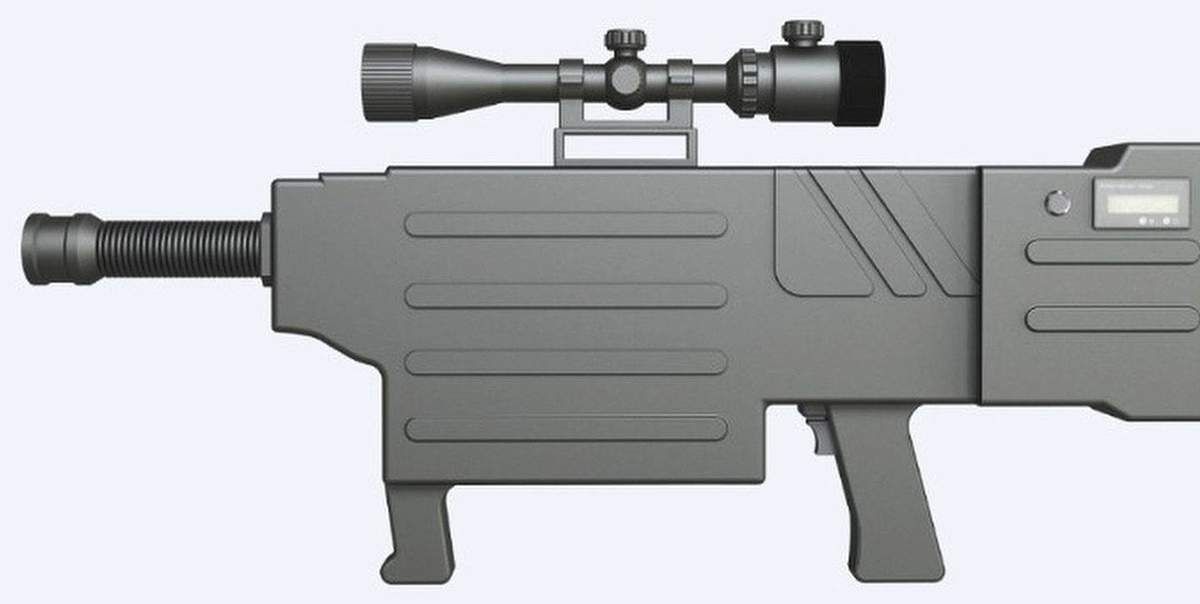
The ‘Miss R’ could outperform the Tesla Roadster.
Category: futurism – Page 1,162
Why Children of Men has never been as shocking as it is now
Nothing goes out of date more quickly than films set in the future. Big-screen visions of tomorrow always reflect the era in which they were made – hence the disco outfits in Flash Gordon. Most soon become quaint relics rather than uncanny prophecies of the shape of things to come. But then, on the other hand, there is Children of Men. Alfonso Cuarón’s feverish dystopian chase thriller is set in a decade’s time, in 2027, but it also came out a decade ago. By now, we should be chuckling at how far off-target its predictions were, both in their overall picture and their background minutiae. Instead, it’s tempting to ask whether Cuarón had access to a crystal ball.
Alfonso Cuarón’s dystopian thriller is one of the 21st Century’s most acclaimed films – and its version of the future is now disturbingly familiar. Nicholas Barber looks back.
How Buildings of the Future Will Conserve Water
Commercial, residential, and industrial buildings use a lot of water. It’s hard for them to conserve water when there are so many people and processes relying on the liquid. It’s even worse for industrial organizations where water use is constant.
According to the U.S. Department of Energy (DOE), commercial buildings use about 88 percent of all drinkable water in the U.S. Facility managers who understand the need to conserve this water and use their resources to do so could significantly decrease water use throughout the world.
As things evolve, so will the future of water conservation. It will be about using technology, science, and more in the name of water-saving features. It will also save companies time and money.
Be My Eyes
This program lets you be a blind person’s eyes anytime from anywhere in the world.
Study finds the limits of putting oneself in another’s shoes (instead, ask and listen)
Important — “Understanding the mind of another person is therefore enabled by getting perspective, not simply taking perspective.”
I still remember the time I tried to comfort one of my best friends when her father died. Because I’d lost my own parents years before, I thought I understood her pain. But, when I offered sympathy, she balked. Her father’s death had been transcendent, filled with love and family connection. She didn’t feel pain; she felt at peace.
Trying to see where another person is coming from is often touted as a key to empathy. If we imagine ourselves in their shoes, the thinking goes, we’ll be able to predict their feelings and their behavior, bridging the gap between self and other. This is considered a skill—sometimes called “theory of mind”—that begins in childhood and develops throughout our lives, helping us to navigate social situations gracefully.
But a newly published study (see below) suggests that trying to take another perspective may be less beneficial than we think—at least when it comes to truly understanding another person. The alternative? Direct questions and answers. If people can’t read each other’s minds, then we need to use our words.
In the Age of AI, Children Should Befriend Their Supertoys
There is no doubt that artificial general intelligence (AGI) — an AI that is capable of generating human-level intelligence — is on its way. It’s only a matter a when, not if. According to some researchers, the quest to developing AGI may take longer than expected. But even then, the quest continues on.
How we treat robots in the future may significantly rely on how we expose children to artificially intelligent supertoys today.