Indian users face a cyber espionage campaign using tax phishing, Blackmoon malware, and abused SyncFuture TSM tools for persistence and data theft.



Internal carotid artery (ICA) bifurcation (ICAB) aneurysms carry high rupture risk, treatment challenges, and recurrence due to complex morphology and origination patterns. Given their relatively low incidence, research on ICAB morphology is limited. This study analyzed ICAB morphology in aneurysmal, contralateral, and healthy bifurcations, highlighting bilateral differences, anterior cerebral artery (ACA) dominance, and deviations from the vascular optimality principle (VOP).
A total of 194 angiographic volumes (40 aneurysmal, 28 contralateral, 126 healthy) were evaluated. ICAB morphology included parent/daughter vessel diameters and angle between the ICA and middle cerebral artery (MCA; ФMCA), angle between the ICA and ACA (ФACA), total ICAB angle (ФICAB; ФMCA + ФACA). Aneurysm characteristics (size, neck, origination) and VOP parameters (radius ratio [RR] and junction exponent [n]) were evaluated. Bilateral analysis accounted for ACA dominance.
Compared with controls, aneurysmal ICABs exhibited wider ΦMCA (57.22° ± 12.22° vs 43.74° ± 9.41°, p < 0.001; area under the curve [AUC] = 0.83) and ΦICAB (160.27° ± 16.16° vs 143.66° ± 10.74°, p < 0.001; AUC = 0.79), but not ΦACA, in univariate, multivariate (AUC = 0.85), and bilateral analyses. Angle thresholds of 51.7° for ΦMCA and 152.4° for ΦICAB were identified. Aneurysms originated predominantly off the apex (65%) and ACA (30%). Most occurred on ICABs with dominant (31%) and codominant (58%) A1 segments. Aneurysm neck, but not size, correlated with ΦMCA and ΦICAB, but not ΦACA. In controls, ΦMCA was larger and ΦACA smaller on the dominant A1 side, with no ΦICAB difference. There was no statistically significant difference in RR and n values regardless of aneurysm presence and dominance status.

Consciousness, like intelligence, is multi-faceted. This makes the future of AI more unpredictable and potentially even more hazardous.
Well, no. Of course not. There’s no fundamental necessity for these two characteristics to be tightly bound together. A chatbot can provide a human companion with sparkling conversation without having its own inner sparkle of feeling. Like an actor, it can mimic expressions of emotional highs and lows whilst lacking any interior passion. It can talk persuasively about having an inner life without there being any inside inside.



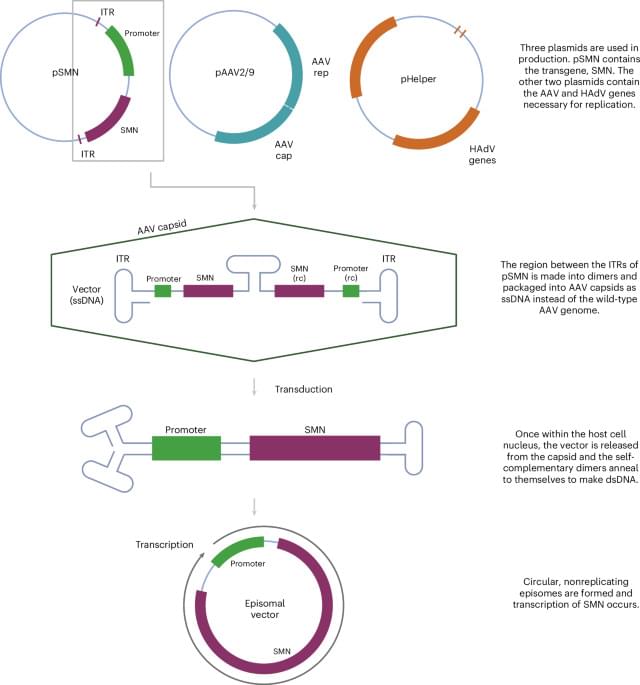
A valuable paper examining the presence of AAV manufacturing contaminants in a human patient’s liver. These results will hopefully be leveraged for improving the safety of gene therapies in the future.
Analyses of liver biopsies from a child with spinal muscular atrophy treated with adeno-associated virus gene therapy who developed hepatitis reveal contaminating manufacturing plasmids and disrupted vector genomes, possibly resulting from recombination events.