Toggle light / dark theme

Amazon Cloud CEO Predicts a Future Where Most Software Engineers Don’t Code — and AI Does It Instead

AI is shaking up industries — and software engineering is no exception.

In a leaked recording of a June fireside chat obtained by Business Insider, Amazon Web Services CEO Matt Garman reportedly told employees that AI is changing what being a software engineer means —and essentially changes the job description.

“If you go forward 24 months from now, or some amount of time — I can’t exactly predict where it is — it’s possible that most developers are not coding,” Garman said, adding later that the developer role would look different next year compared to 2020.

Research Reveals Potential Target for Immune Diseases

Research that began with a patient-driven discovery in the lab of YSM’s Carrie Lucas, PhD, could help in fighting autoimmune diseases.

Writing in Nature Immunology, Lucas and colleagues identify a signaling molecule found in immune cells that could be a target for future treatments.


A medical mystery served as the genesis for a Yale-led study that has promising implications for treating a range of autoimmune diseases.

A young girl entered the clinic suffering from blood cell abnormalities, difficulty breathing, and later, diarrhea. She also had been diagnosed with recurrent infections due to low levels of antibody production. Her doctors treated her with corticosteroids to reduce her lung and gut inflammation and immunoglobulin replacement therapy to restore her antibody levels.

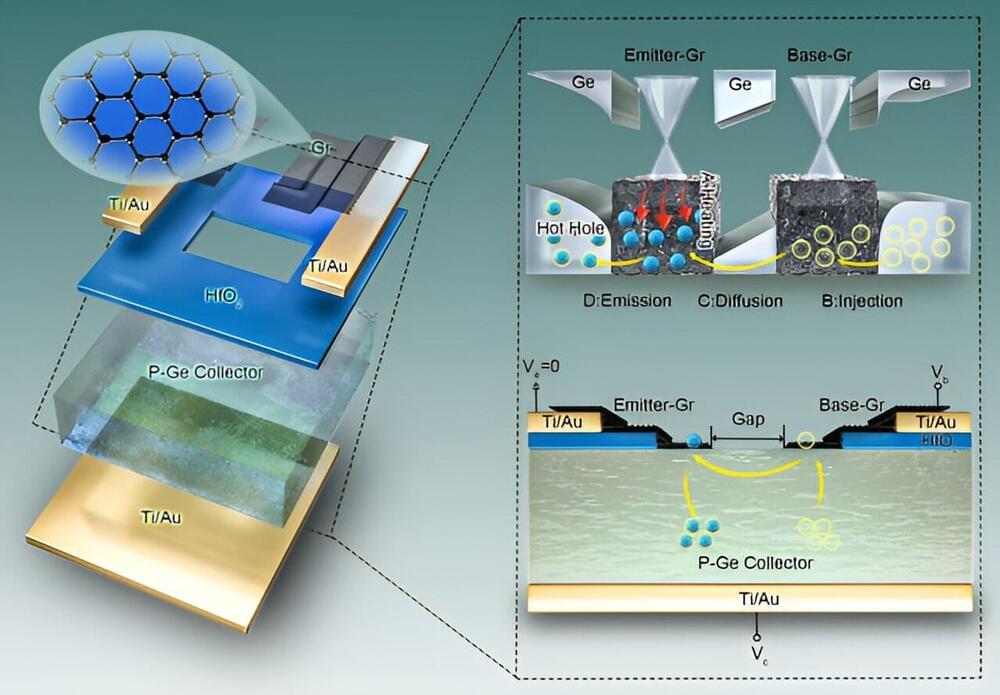
Scientists invent a hot-emitter transistor for future high-performance, low-power, multifunctional devices

Transistors, the building blocks of integrated circuits, face growing challenges as their size decreases. Developing transistors that use novel operating principles has become crucial to enhancing circuit performance.

Hot , which utilize the excess kinetic energy of carriers, have the potential to improve the speed and functionality of transistors. However, their performance has been limited by how hot carriers have traditionally been generated.

A team of researchers led by Prof. Liu Chi, Prof. Sun Dongming, and Prof. CHeng Huiming from the Institute of Metal Research (IMR) of the Chinese Academy of Sciences has proposed a novel hot carrier generation mechanism called stimulated emission of heated carriers (SEHC).

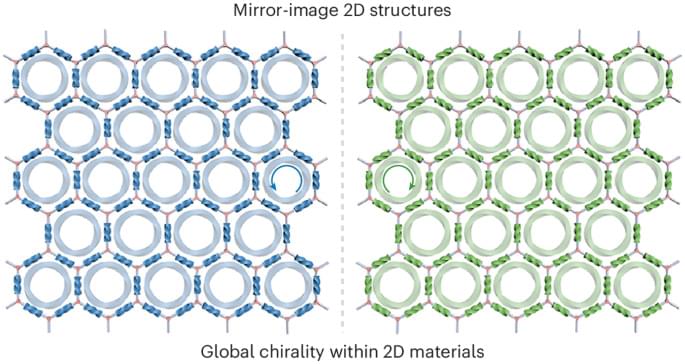
Emerging chiral two-dimensional materials

Chirality in extended 2D structures exhibits fundamental differences from molecular-level chirality. This Perspective discusses how local molecular chirality is transmitted and amplified to form distinctive global chirality within ultrathin, single-crystalline 2D materials; it also explores the future challenges and potential of this field.

Quenching the intense heat of a fusion plasma may require a well-placed liquid metal evaporator

The researchers originally thought the lithium would be best housed in a “metal box” with an opening at the top. The plasma would flow into the gap so the lithium could dissipate the heat of the plasma before reaching the metal walls. Now, the researchers say a cave—geometrically just the inner half of a box—full of lithium vapor would be simpler than a box. The difference is more than just semantics: It impacts where the lithium travels and how effectively it dissipates heat.

“For years, we thought we needed a full, four-sided box, but now we know we can make something much simpler,” said Emdee. Data from new simulations pointed them in a different direction when the research team realized they could contain the lithium just as well if they cut their box in half. “Now we call it the cave,” Emdee said.

In the cave configuration, the device would have walls on the top, bottom and side closest to the center of the tokamak. This optimizes the path for the evaporating lithium, setting it on a better course for capturing the most heat from the private flux region while minimizing the complexity of the device.

/* */