17K likes, — eco.medy on April 11, 2024: “Meet @fionn.ferreira, the young innovator tackling microplastic pollution head-on with his groundbreaking magnetic solution! 💡… #…”

17K likes, — eco.medy on April 11, 2024: “Meet @fionn.ferreira, the young innovator tackling microplastic pollution head-on with his groundbreaking magnetic solution! 💡… #…”

Here’s something a little different.
The Buccino Leadership Institute presents Ideas & Trends (2024) Nanotechnology: The Three Lenses — Past, Present and Future.
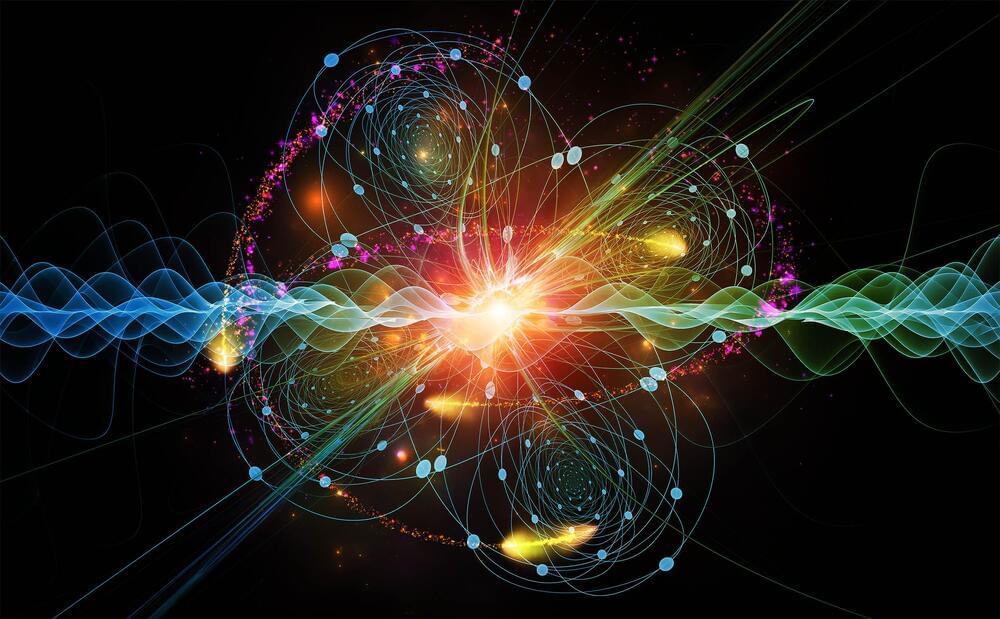
Photon-number distributions of various light sources have been studied extensively, but little is known about the statistical distribution of electrons emitted under the effect of intense quantum light.
However, researchers at the Max Planck Institute for the Science of Light (MPL) and Friedrich-Alexander-Universität Erlangen-Nürnberg (FAU) have made a discovery that highlights this phenomenon.
Published in the journal Nature Physics, the study led by Prof. Maria Chekhova at MPL and Prof. Peter Hommelhoff at FAU reveals extreme and highly unusual statistical events in electron-number distributions obtained when nanometer-sized metal needle tips are illuminated with ultrashort pulses of bright quantum light.


A from-scratch implementation of Kolmogorov-Arnold Networks (KAN)…and MLP
By: Lorenzo Maggi https://mlwithouttears.com/2024/05/15/a-from-scratch-impleme…works-kan/
With KAN DYI implementation.
Code repository of ml-without-tears blog: https://mlwithouttears.com/ — lollodealma/ml_without_tears.
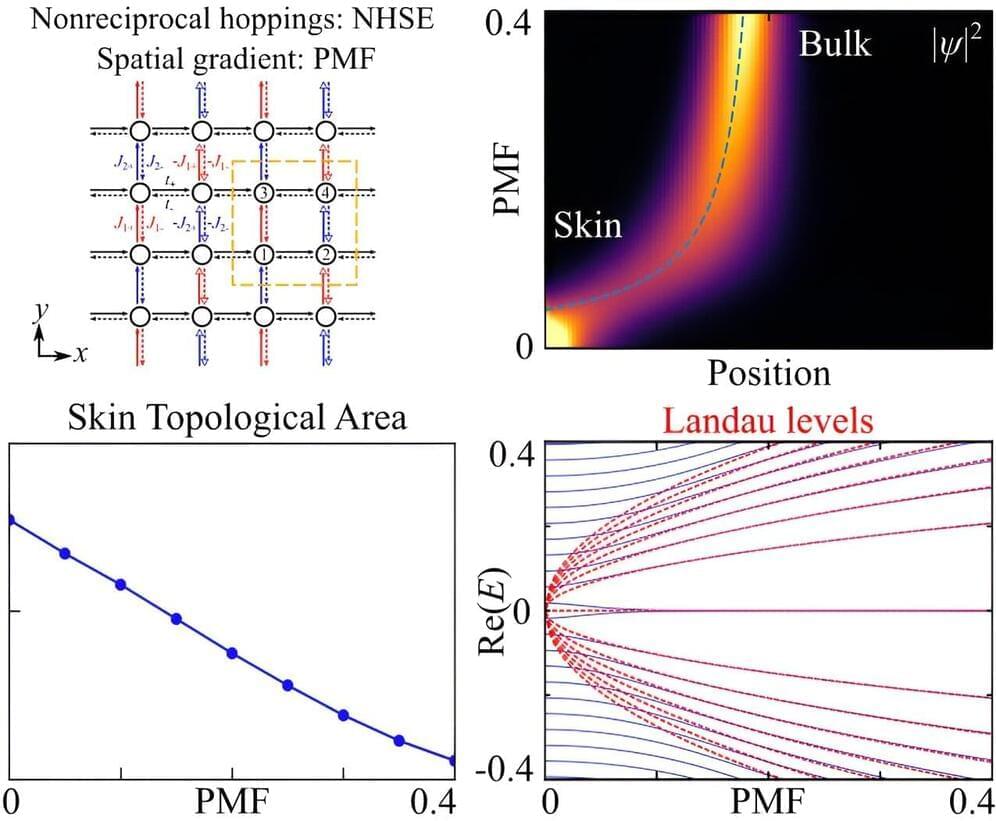
Due to the presence of non-Hermitian components, wave intensities tend to localize at the system boundary, namely the non-Hermitian skin effect. The skin behavior is protected by topology, making it insensitive to minor changes. Nevertheless, it has recently been shown that the non-Hermitian skin effect can be suppressed by real magnetic fields.
Zhang, Xue, and Zhang’s graduate student Hau Tian Teo wondered, “Can a ‘fake’ magnetic field —pseudomagnetic field—also suppress the non-Hermitian skin effect?” The team then performed theoretical calculations on a two-dimensional lattice array to study the topology and movement of the skin behavior.
By switching on the pseudomagnetic field, the team discovered that the skin states can be pushed into the bulk. “This movement from skin to bulk can be precisely traced by a theoretically predicted trajectory,” Teo suggests. In addition to the movement, the suppression is reflected in the reduction of topological number.
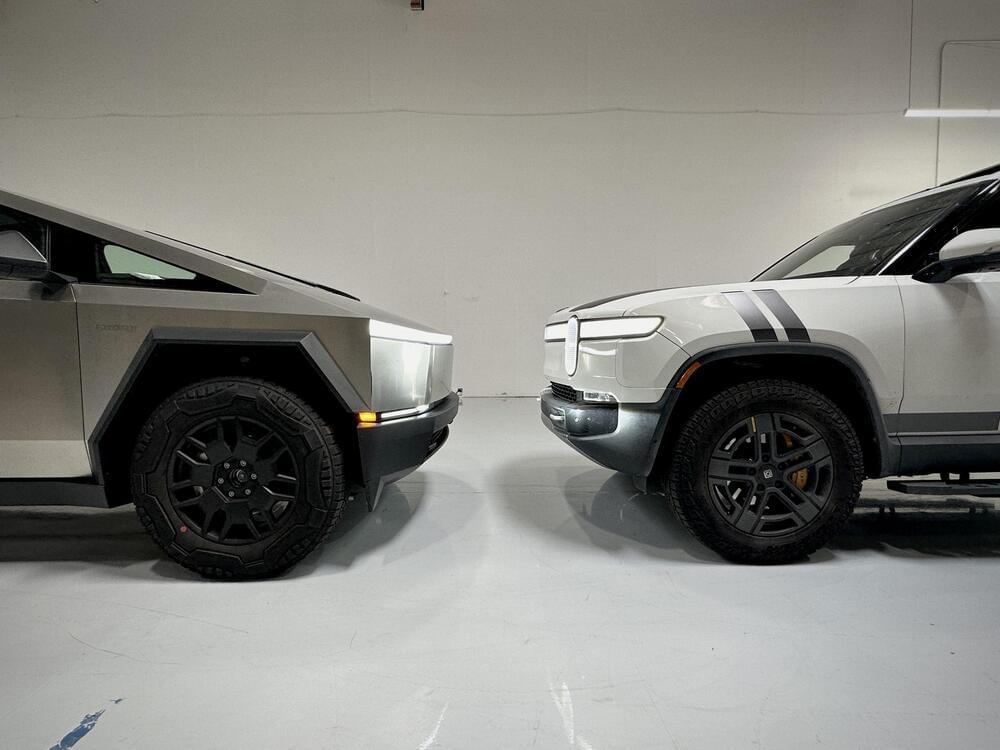
Although the Tesla Cybertruck has only been available for about six months, it is already making a major splash in the electric pickup scene.
According to data from S&P Global Mobility, Tesla’s first all-electric pickup had more registrations in March than one of its most notable foes, the Rivian R1T.
March was the fourth month the Tesla Cybertruck was available for purchase. Production is still ramping, and after Tesla built 1,000 units in a single week during Q1, it is evident the company is starting to get the hang of things.