Toggle light / dark theme

Scientists Map the Invisible Fault That Could Trigger the Next Major Earthquake

A new 3D subsurface model shows how variations in rock strength beneath the Marmara Sea could trigger future large earthquakes along the North Anatolian Fault. The findings improve understanding of fault mechanics and support better earthquake forecasting for the Istanbul region. Türkiye lies in

Spotlight on Optics

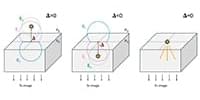
The University of Texas at Arlington researchers resolved a largely unnoticed modeling gap in how researchers interpret the behavior of single molecules at interfaces:

By treating emitters as finite-sized surface currents in contact with both media within finite-element simulations, this study provides the first physically self‑consistent framework for describing dipoles at arbitrary dielectric interfaces.

Spotlight by Matthew D. Lew.


A longstanding but largely unnoticed modeling gap has been skewing how researchers interpret the behavior of single molecules at interfaces—this work finally resolves it. Defocused fluorescence microscopy is widely used to infer molecular orientation, yet conventional models of dipole emission near refractive‑index boundaries diverge from one another depending on which side of the interface the molecule approaches. The result has been hidden, systematic biases in measured orientations. By treating emitters as finite-sized surface currents in contact with both media within finite-element simulations, this study provides the first physically self‑consistent framework for describing dipoles at arbitrary dielectric interfaces.

A legendary golden fabric lost for 2,000 years has been brought back

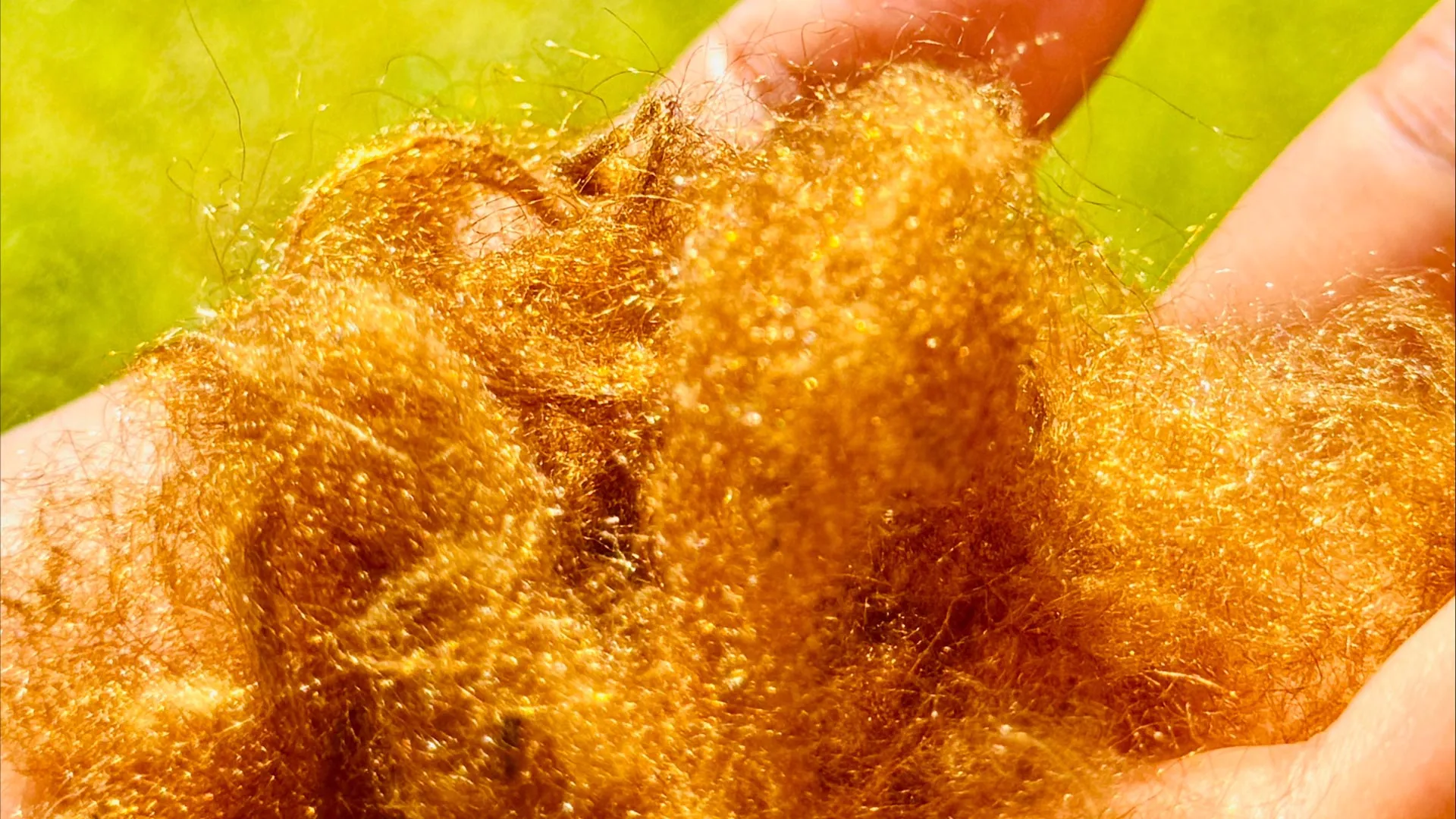
A legendary golden fabric once worn only by emperors has made an astonishing comeback. Korean scientists have successfully recreated ancient sea silk—a rare, shimmering fiber prized since Roman times—using a humble clam farmed in modern coastal waters. Beyond reviving its luxurious look, the team uncovered why this fiber never fades: its glow comes not from dyes, but from microscopic structures that bend light itself.

You can turn off yourself #shorts @lexfridman

“Joscha Bach Bits” features short videos of Joscha Bach’s ideas, opinions, and perspectives on various topics, edited from interviews.

#JoschaBachBits #Philosophy #CognitiveScience #ComputerScience #ArtificialIntelligence #shorts.

This video is edited from the “Lex Fridman” channel:
https://www.youtube.com/c/lexfridman.

Watch the full interview here:
https://www.youtube.com/watch?v=P-2P3MSZrBM

“Joscha Bach Bits” is not an official channel.
One time donations: https://ko-fi.com/joschabachbits.
Monthly Patreon: https://www.patreon.com/JoschaBachBits

The role of the immune tumor microenvironment in shaping metastatic dissemination, dormancy, and outgrowth

Immune and stromal orchestration of the pre-metastatic niche👇

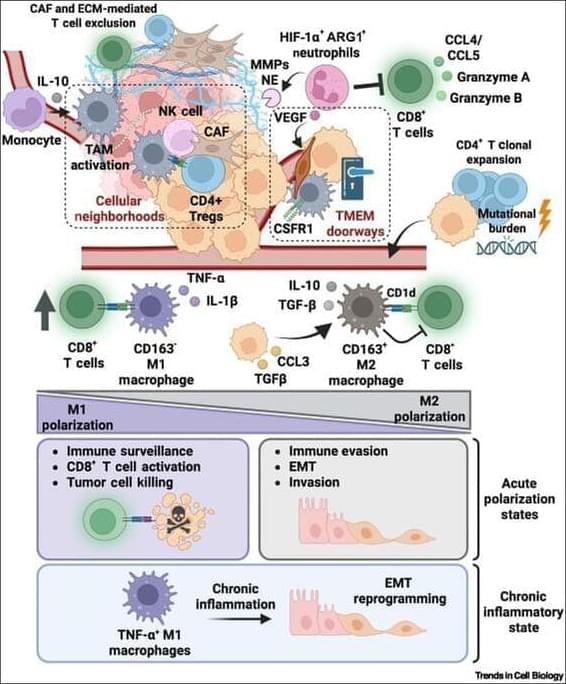
✅Priming distant organs before tumor cell arrival Primary tumors actively condition distant organs by releasing soluble factors, cytokines, and tumor-derived exosomes. These signals recruit monocytes and neutrophils and reprogram resident immune and stromal cells, initiating the formation of a pre-metastatic niche (PMN) that becomes permissive to future metastatic seeding.

✅Role of monocytes and macrophages Recruited monocytes differentiate into inflammatory or immunosuppressive macrophages depending on the local context. In organs such as the lung and liver, these cells promote extracellular matrix (ECM) remodeling, fibrotic deposition, and secretion of growth factors, creating a supportive scaffold for disseminated tumor cells (DTCs).

✅Neutrophils as niche architects Neutrophils contribute to PMN formation through the release of matrix metalloproteinases (MMPs), inflammatory cytokines, and neutrophil extracellular traps (NETs). These processes alter tissue architecture, enhance inflammation, and support tumor cell survival and reactivation.

✅Organ-specific niche specialization Different organs develop distinct PMNs. In the lung, inflammatory macrophages and neutrophils drive ECM remodeling and leukotriene signaling. In the liver, fibrosis, granulins, and chemokine-driven immune cell recruitment promote an immunosuppressive environment favorable for metastatic colonization.

✅Fate of disseminated tumor cells Once DTCs arrive, they face multiple outcomes. Some are eliminated by immune surveillance, others enter long-term dormancy, and a subset evades immunity to initiate metastatic outgrowth. ECM composition, immune pressure, and stromal signaling critically determine these divergent fates.

✅Dormancy and reawakening Dormant DTCs can persist in a latent state for prolonged periods. Changes in ECM remodeling, inflammatory signaling, or immune suppression can trigger their reawakening, leading to renewed proliferation and metastatic progression.


Aerobic respiration began hundreds of millions of years earlier than previously thought, study suggests

Oxygen is a vital and constant presence on Earth today. But that hasn’t always been the case. It wasn’t until around 2.3 billion years ago that oxygen became a permanent fixture in the atmosphere, during a pivotal period known as the Great Oxidation Event (GOE), which set the evolutionary course for oxygen-breathing life as we know it today. A new study by MIT researchers suggests some early forms of life may have evolved the ability to use oxygen hundreds of millions of years before the GOE. The findings may represent some of the earliest evidence of aerobic respiration on Earth.

In their study published in the journal Palaeogeography, Palaeoclimatology, Palaeoecology, MIT geobiologists traced the evolutionary origins of a key enzyme that enables organisms to use oxygen. The enzyme is found in the vast majority of aerobic, oxygen-breathing lifeforms today. The team discovered that this enzyme evolved during the Mesoarchean —a geological period that predates the Great Oxidation Event by hundreds of millions of years.

The team’s results may help to explain a longstanding puzzle in Earth’s history: Why did it take so long for oxygen to build up in the atmosphere?

/* */