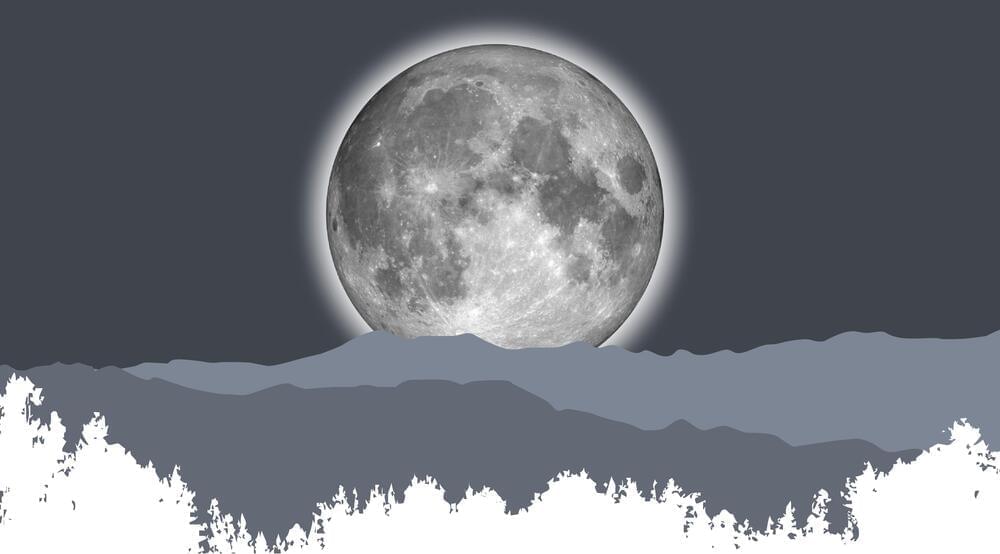
Set your calendar: August will bring us two supermoons, including a rare blue moon. Here’s a visual explainer.

We should not be surprised if such changes occur. Summer was not always about the seaside and sunbathing. True, there is a long tradition, dating back at least to the Romans, of leaving the city for the seashore in the summer months. Baiae, on the northern tip of the Gulf of Naples, was a favorite haunt of the emperors Augustus, Nero and Caligula. (According to Seneca the Younger, it was a “harbor of vice.”) But activities such as swimming in the sea and stripping semi-naked to lie on the beach are of quite recent provenance.
Moreover, the seaside is not an appealing summer location in much of the world. No sweat-soaked imperial civil servant in British-ruled India would have chosen the Bay of Bengal as his preferred holiday destination. The only way to escape the heat of the summer was — as Rudyard Kipling described — to flee the plains and head northwards to Himalayan “hill stations” such as Simla.
Now that summer in more and more of the world is as searingly hot as India in Kipling’s time, we are all going to have to take a leaf out of his book. The hill station is coming back, and this time it’s global.
Emotional wording, persuasive animations, and roadblocks to completing purchases are all used to drive people into a Prime membership.

Our memories may not be as reliable as we think. Once we experience an event, most of us likely assume that those memories stays intact forever. But there is the potential for memories to be altered or for completely false memories to be planted, according to Elizabeth Loftus, PhD. Loftus, a distinguished professor at the University of California, Irvine, is an expert on human memory and she discusses how our recollections of events and experiences may be subject to manipulation.
The American Psychological Association is the leading scientific and professional organization representing psychology in the United States, with more than 118,000 researchers, educators, clinicians, consultants and students as its members.
To learn more about APA visit http://www.apa.org.
Follow APA on social media:


A Hegemonizing Swarm is a hypothetical living weapon, or self-replicating machine, which seeks to turn every last available bit of matter into more of itself…
Davis (2014) called for “extreme caution” in the use of non-invasive brain stimulation (NIBS) to treat neurological disorders in children, due to gaps in scientific knowledge. We are sympathetic to his position. However, we must also address the ethical implications of applying this technology to minors. Compensatory trade-offs associated with NIBS present a challenge to its use in children, insofar as these trade-offs have the effect of limiting the child’s future options. The distinction between treatment and enhancement has some normative force here. As the intervention moves away from being a treatment toward being an enhancement—and thus toward a more uncertain weighing of the benefits, risks, and costs—considerations of the child’s best interests (as judged by the parents) diminish, and the need to protect the child’s (future) autonomy looms larger. NIBS for enhancement involving trade-offs should therefore be delayed, if possible, until the child reaches a state of maturity and can make an informed, personal decision. NIBS for treatment, by contrast, is permissible insofar as it can be shown to be at least as safe and effective as currently approved treatments, which are (themselves) justified on a best interests standard.
See Full PDF
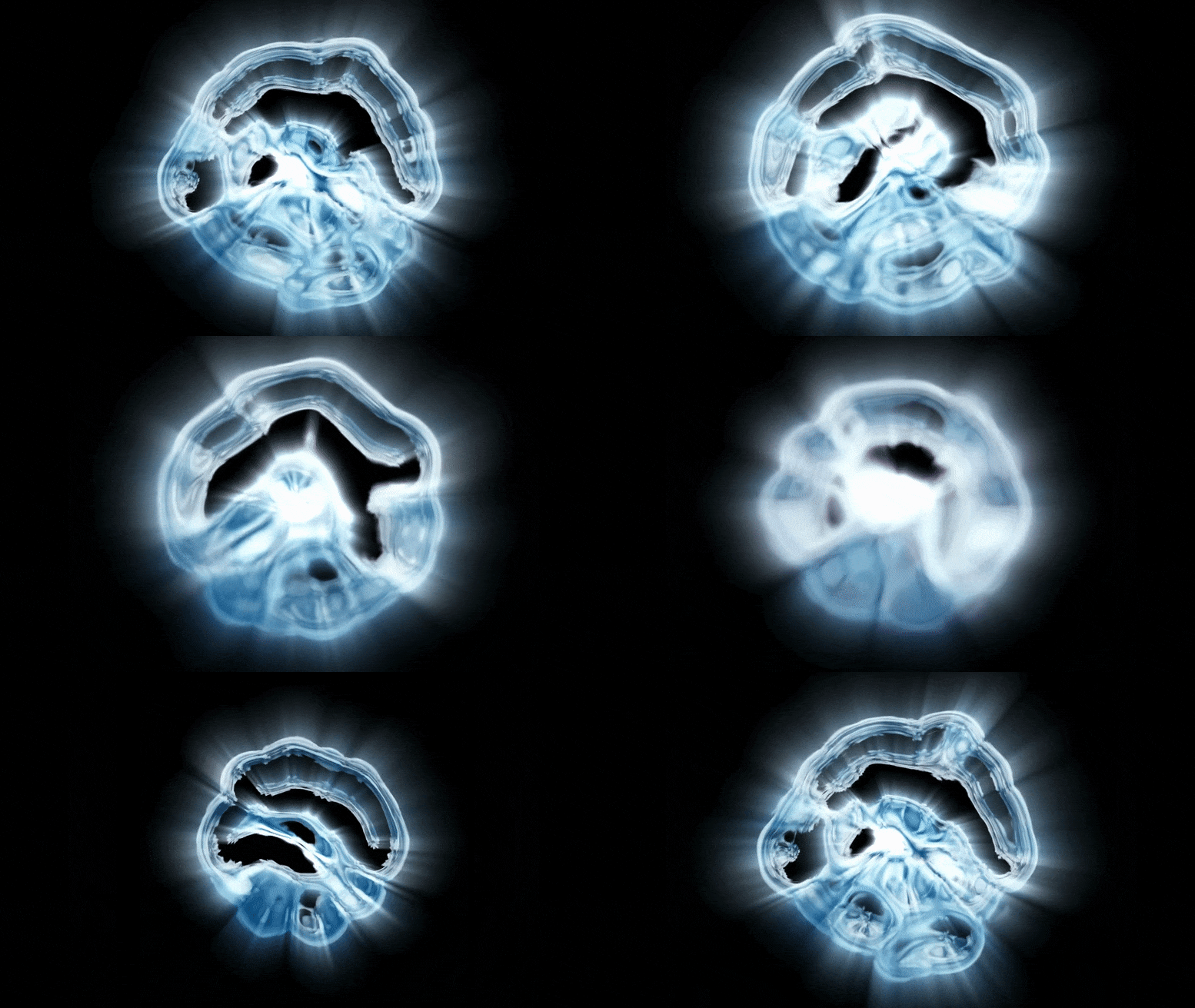
The mythological Norse god Thor hails from the celestial city of Asgard, and according to revolutionary research published in the scientific journal, Nature, he’s not the only Asgardian. This new research suggests that we humans — along with eagles, starfish, daisies, and every complex organism on Earth — are, in a sense, Asgardians.
The research team at The University of Texas at Austin, along with collaborators from different institutions, conducted a genomic analysis of several hundreds of microorganisms known as archaea. Their findings revealed that eukaryotes – complex life forms with nuclei in their cells, including all flora, fauna, insects, and fungi across the globe – can trace their origins back to a common Asgard archaean ancestor.
That means eukaryotes are, in the parlance of evolutionary biologists, a “well-nested clade” within Asgard archaea, similar to how birds are one of several groups within a larger group called dinosaurs, sharing a common ancestor. The team has found that all eukaryotes share a common ancestor among the Asgards.