Toggle light / dark theme

2,600-year-old stone busts of ‘lost’ ancient Tartessos people discovered in sealed pit in Spain

Archaeologists in Spain have unearthed five life-size busts of human figures that could be the first-known human depictions of the Tartessos, a people who formed an ancient civilization that disappeared more than 2,500 years ago.

The carved stone faces, which archaeologists date to the fifth century B.C., were found hidden inside a sealed pit in an adobe temple at Casas del Turuñuelo, an ancient Tartessian site in southern Spain. The pieces were scattered amongst animal bones, mostly from horses, that likely came from a mass sacrifice, according to a translated statement (opens in new tab) published April 18.

Is our Universe standing still? Examining Einstein’s key theory through the cosmic “yin-yang”

Is there such a thing as absolute motion? Modern science, as represented by Einstein’s theory of relativity, says no. After all, absolute motion would require that there exists a single coordinate system — or common reference point — that all observers could agree is stationary. Such a coordinate system doesn’t exist.

But modern science has also found a way to observe the coordinate system of the entire visible Universe. If one can find a coordinate system in which the visible Universe is stationary, isn’t that the “right” one? What’s the truth behind this, and does it invalidate Einstein’s theory? And how does the yin-yang symbol come into play?

Einstein’s theory of relativity makes many counterintuitive claims, but those claims are consequences of one fundamental assumption: that any individual is perfectly justified in assuming that they are the one, unmoving, thing in the entire Universe. This assertion could be called the “cosmic egotist principle.” Essentially, you are the one thing around which the entire Universe revolves.

The HUGE Problem with ChatGPT

Very interesting piece.


Get Surfshark VPN at https://surfshark.deals/kyle — Enter promo code KYLE for 83% off and 3 extra months for FREE!

Free-to-use, exceptionally powerful artificial intelligences are available to more people than ever, seemingly making some kind of news every day. The problem is, the public doesn’t realize the problem in ascribing so much power to systems we don’t actually understand.

💪 JOIN [THE FACILITY] for members-only live streams, behind-the-scenes posts, and the official Discord: https://www.patreon.com/kylehill.

👕 NEW MERCH DROP OUT NOW! https://shop.kylehill.net.

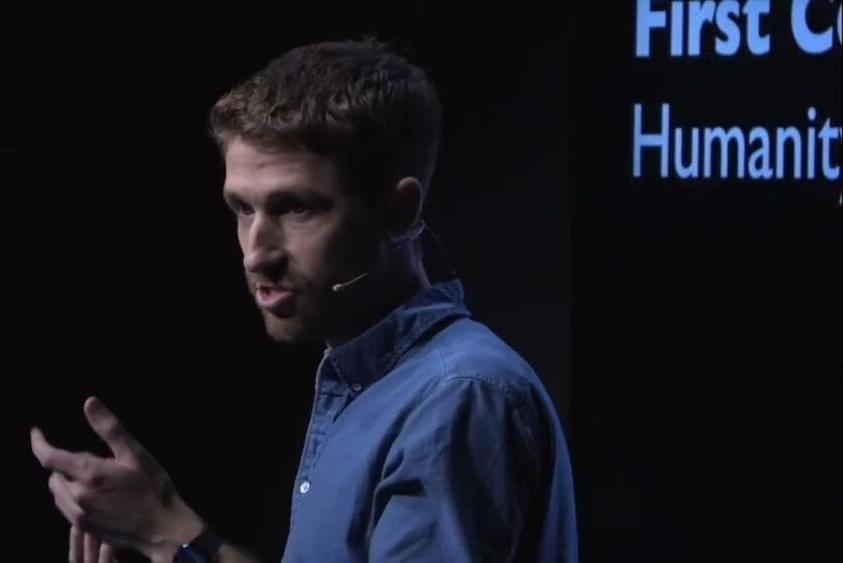
The A.I. Dilemma — Tristan Harris & Aza Raskin — Center for Humane Technology — March 9, 2023

Click on photo to start video.

This video is from a presentation at a private gathering in San Francisco on March 9th with leading technologists and decision-makers with the ability to influence the future of large-language model AIs. This presentation was given before the launch of GPT-4.

Center for Humane Technology.

Original video : https://vimeo.com/809258916/92b420d98a

Read more

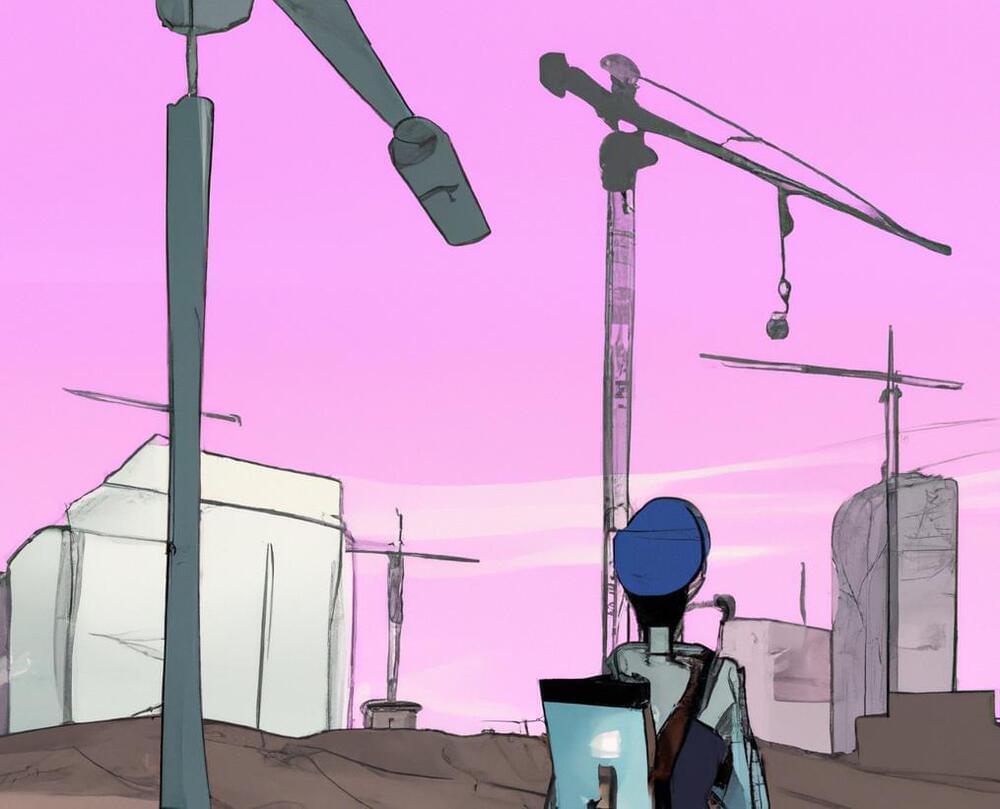
Information Mastery Scale

The possible levels of information mastery in the future of technology.


This series focus will be on the Information Mastery version of the Kardashev scale. In his book, The Cosmic Connection, Carl Segan proposed an alternative approach to the Kardashev Scale. He added another dimension to the original scale in addition to the pure energy usage that was first used to characterize different civilizations. Sagan believed that the amount of information available to a civilization should be an important criterion when trying to come up with a useful metric to measure different types of civilizations. So he assigned a lettered scale from A-Z where each letter meant an order of magnitude increase in the volume of information a civilization can hold. This information, he proposed, could be described in terms of bits, the number of yes or no statements concerning different civilizations, and the universe that such civilizations occupy.

/* */