Summary: Blocking the activity of the reactor called the aryl hydrocarbon receptor in T cells resulted in both a decrease in inflammation and recovery in mouse models of multiple sclerosis.
Source: University of Virginia.
University of Virginia Health neuroscientists have discovered a potential way to disrupt the chronic inflammation responsible for multiple sclerosis.
The Johns Hopkins Center for Health Security, in partnership with WHO and the Bill & Melinda Gates Foundation, conducted Catastrophic Contagion, a pandemic tabletop exercise at the Grand Challenges Annual Meeting in Brussels, Belgium, on October 23, 2022.
The extraordinary group of participants consisted of 10 current and former Health Ministers and senior public health officials from Senegal, Rwanda, Nigeria, Angola, Liberia, Singapore, India, Germany, as well as Bill Gates, co-chair of the Bill & Melinda Gates Foundation.
The exercise simulated a series of WHO emergency health advisory board meetings addressing a fictional pandemic set in the near future. Participants grappled with how to respond to an epidemic located in one part of the world that then spread rapidly, becoming a pandemic with a higher fatality rate than COVID-19 and disproportionately affecting children and young people.
In collaboration with the UC San Diego Center for Integrative Nutrition, the Berry Good Food Foundation convenes a panel of experts to discuss the rise of comprehensive medicine and nutritional healing to treat chronic disease and maintain general well-being. [6/2018] [Show ID: 33486]
Explore More Public Affairs & Politics on UCTV (https://www.uctv.tv/public-affairs) Public Affairs UCTV goes beyond the headlines to explore economics, public policy, race, immigration, health policy and more. Hear directly from the researchers so you can be informed to make important decisions.
Explore More Health & Medicine on UCTV (https://www.uctv.tv/health) UCTV features the latest in health and medicine from University of California medical schools. Find the information you need on cancer, transplantation, obesity, disease and much more.
UCTV is the broadcast and online media platform of the University of California, featuring programming from its ten campuses, three national labs and affiliated research institutions. UCTV explores a broad spectrum of subjects for a general audience, including science, health and medicine, public affairs, humanities, arts and music, business, education, and agriculture. Launched in January 2000, UCTV embraces the core missions of the University of California — teaching, research, and public service – by providing quality, in-depth television far beyond the campus borders to inquisitive viewers around the world. (https://www.uctv.tv)
In her current role, Ms. Pace is responsible for advancing the U.S. international health agenda through multilateral and bilateral forums. Reporting directly to the Secretary of Health & Human Services (HHS), she is the Office of Global Affairs’ lead on setting priorities and policies that promote American public health agencies and interests worldwide.
Ms. Pace oversees HHS’ engagement with foreign governments and international institutions, as well policymaking bodies such as the G7, G20, United Nations General Assembly (UNGA), and World Health Assembly. Previously, she served as President & Executive Director of Global Health Council (GHC) and was also a member of the Biden-Harris Transition COVID-19 Advisory Board. At GHC, she advocated for increased federal investments in global health, in the face of budget cuts to the U.S. Centers for Disease Control & Prevention, United States Agency for International Development, and World Health Organization (WHO).
Prior to her role at GHC, Ms. Pace spent over a decade working with community-based organizations and grassroots leaders in countries across Africa and Asia on campaigns calling for person-centered access to health, including American Cancer Society, Catholic Relief Services, and the LiveStrong Foundation. Additionally, she has held positions on various global and regional advisory committees and boards that focus on equity and inclusion.
Ms. Pace holds a Bachelor’s degree with Honors in human biology from Stanford University and a Master’s degree in international health & human rights with the distinction of Delta Omega from Johns Hopkins Bloomberg School of Public Health.
To create is human. For the past 300,000 years we’ve been unique in our ability to make art, cuisine, manifestos, societies: to envision and craft something new where there was nothing before.
Now we have company. While you’re reading this sentence, artificial intelligence (AI) programs are painting cosmic portraits, responding to emails, preparing tax returns, and recording metal songs. They’re writing pitch decks, debugging code, sketching architectural blueprints, and providing health advice.
Artificial intelligence has already had a pervasive impact on our lives. AIs are used to price medicine and houses, assemble cars, determine what ads we see on social media. But generative AI, a category of system that can be prompted to create wholly novel content, is much newer.
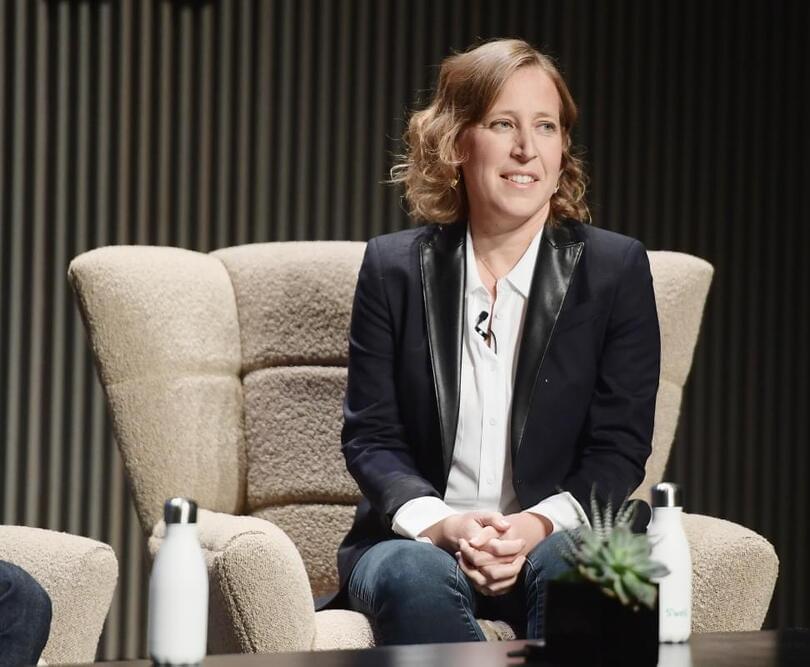
Susan Wojcicki is stepping down as YouTube CEO after nine years at the helm. In a letter to employees (first published by Recode), Wojcicki says that she’s leaving in order to “start a new chapter focused on my family, health and personal projects I’m passionate about.”
“Today, after nearly 25 years here, I’ve decided to step back from my role as the head of YouTube,” Wojcicki wrote. “The time is right for me, and I feel able to do this because we have an incredible leadership team in place at YouTube.”
Wojcicki will be replaced by Neal Mohan, YouTube’s longtime chief product officer. Mohan came to Google with the tech giant’s DoubleClick acquisition in 2007, and — as his responsibilities grew — he was promoted to SVP of display and video ads before assuming his current role in 2015. As for Wojcicki, she says that she’ll take on an “advisory role” across Google and Alphabet, offering counsel and guidance.
YouTube CEO Susan Wojcicki is stepping down after nearly a decade in the role, the company shared in a blog post Thursday.
Wojcicki told staff she’s departing the top job to “start a new chapter focused on my family, health, and personal projects I’m passionate about.” She’ll continue to help advise the company, she said.
She’ll be replaced by Neal Mohan, who has been YouTube’s chief product officer since 2015 and helped launch the company’s TikTok competitor, Shorts. Vox’s Peter Kafka first reported the news.
As technology will progress robots will become cheaper.in future healthcare robots can be available at v less cost.then we can gift these robots to our bedridden friends and relatives.
A nurse-assisting robot named Moxi has been working with clinical staff on the neurology unit at Texas Health Presbyterian Hospital Dallas. During the month-long trial, Moxi helped with fetch-and-gather tasks such as delivering admissions kits, lab specimens and picking up and dropping off linen bags. Texas Health Dallas is the first hospital in the country to deploy Moxi. The robot was designed to provide clinical staff more time to focus on patient care.
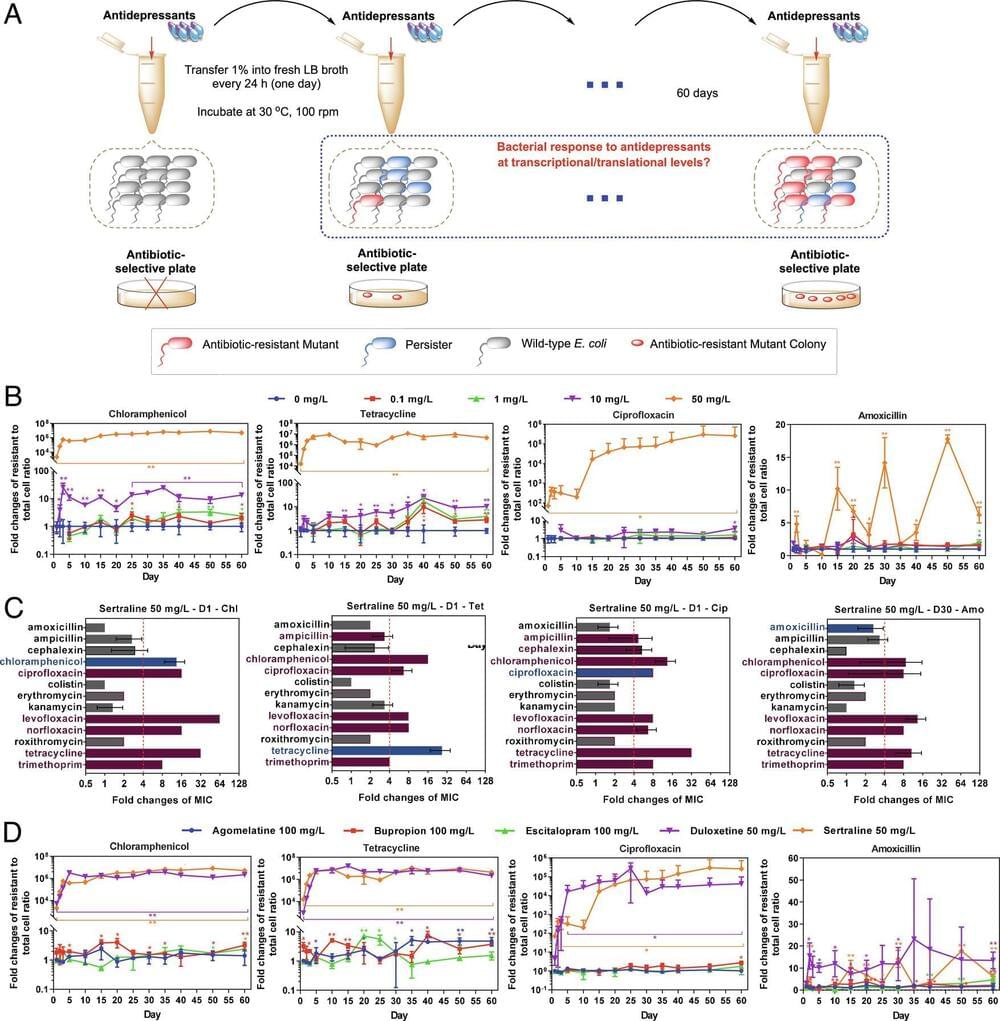
Antibiotic resistance is a global threat to public health and associated with the overuse of antibiotics. Although non-antibiotic drugs occupy 95% of the drug market, their impact on the emergence and spread of antibiotic resistance remains unclear. Here we demonstrate that antidepressants, one of the most frequently prescribed drugs, can induce antibiotic resistance and persistence. Such effects are associated with increased reactive oxygen species, enhanced stress signature responses, and stimulation of efflux pump expression. Mathematical modeling also supported a role for antidepressants in the occurrence of antibiotic-resistant mutants and persister cells. Considering the high consumption of antidepressants (16,850 kg annually in the United States alone), our findings highlight the need to re-evaluate the antibiotic-like side effects of antidepressants.
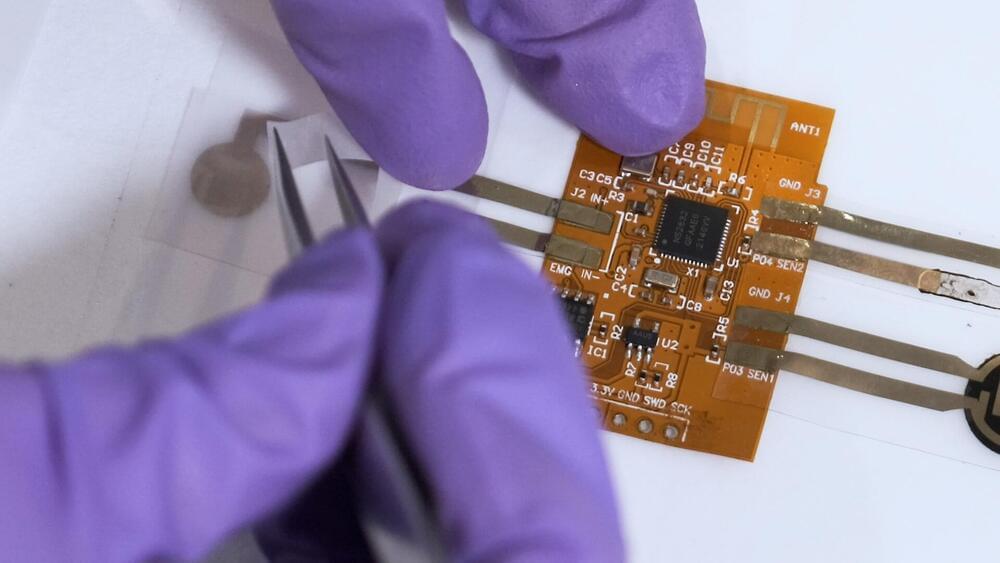
An international team led by researchers from Nanyang Technological University, Singapore (NTU Singapore) has developed a universal connector to assemble stretchable devices simply and quickly, in a “Lego-like” manner.
Stretchable devices including soft robots and wearable health care devices are assembled using several different modules with different material characteristics—some soft, some rigid, and some encapsulated.
However, the commercial pastes (glue), currently used to connect the modules often either fail to transmit mechanical and electrical signals reliably when deformed or break easily.