Toggle light / dark theme

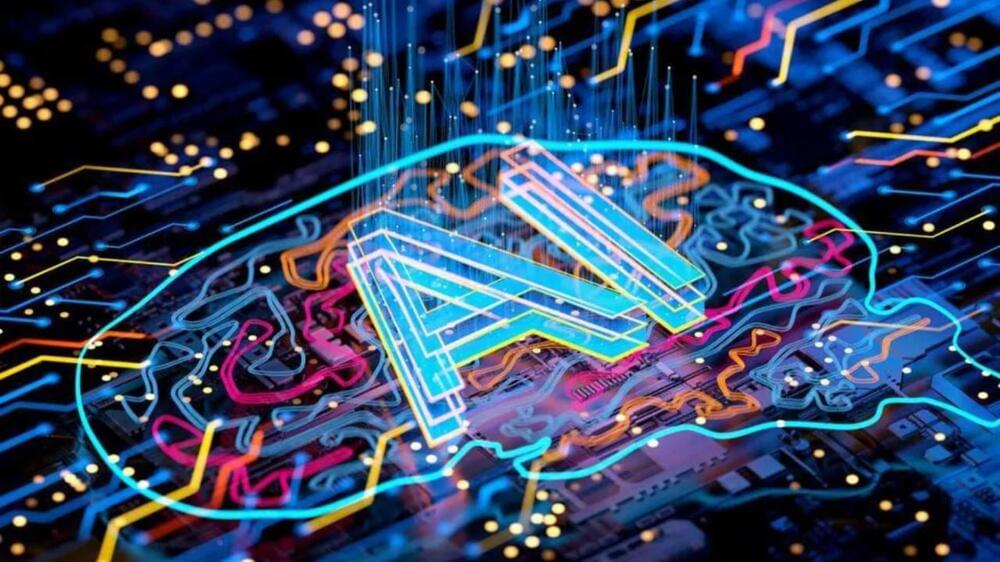
AI girlfriends are ruining an entire generation of men

And that is just health care. In 1940, there were 42 workers per beneficiary of Social Security. Today, there are only 2.8 workers per beneficiary, and that number is getting smaller. We are going broke, and the young men who will play a huge role in determining our nation’s future are going there with AI girlfriends in their pockets.

While the concept of an AI girlfriend may seem like a joke, it really isn’t that funny. It is enabling a generation of lonely men to stay lonely and childless, which will have devastating effects on the U.S. economy in less than a decade.

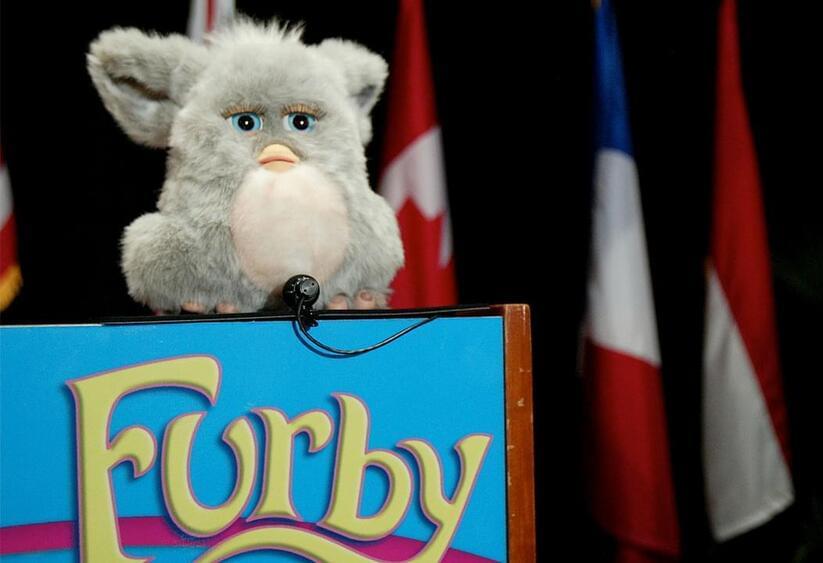
ChatGPT-Powered Furby Reveals Secret Furby Plans for World Domination

Although this is mostly a joke that a furby would take over the world it is also a great idea for teaching kids Basically everything imagine a God level furby that could answer any question and even do your homework what a great toy 😗😁.


Furby has come back from the dead to take over the world — and this time it’s in the form of a ChatGPT-powered toy.

Jessica Card, a computer science student at the University of Vermont, shared a clip on Twitter on Sunday, April 1, showing the animatronic Furby’s face — spiked antennas for ears, beak and all — answering this one question based on a script written by ChatGPT: “Is there a secret by Furbies to take over the world?” After thinking for 10 seconds, the AI-powered abomination revealed its species’ plot for world domination.

“Furbies’ plan to take over the world involves infiltrating households through their cute and cuddly appearance, then using their advanced AI technology to manipulate and control their owners,” the disembodied Furby said. “They will slowly expand their influence until they have complete domination over humanity.”

Scientists: The Human Brain Has Odd Similarities to the Entire Universe

An astrophysicist and a neurosurgeon walked into a room.

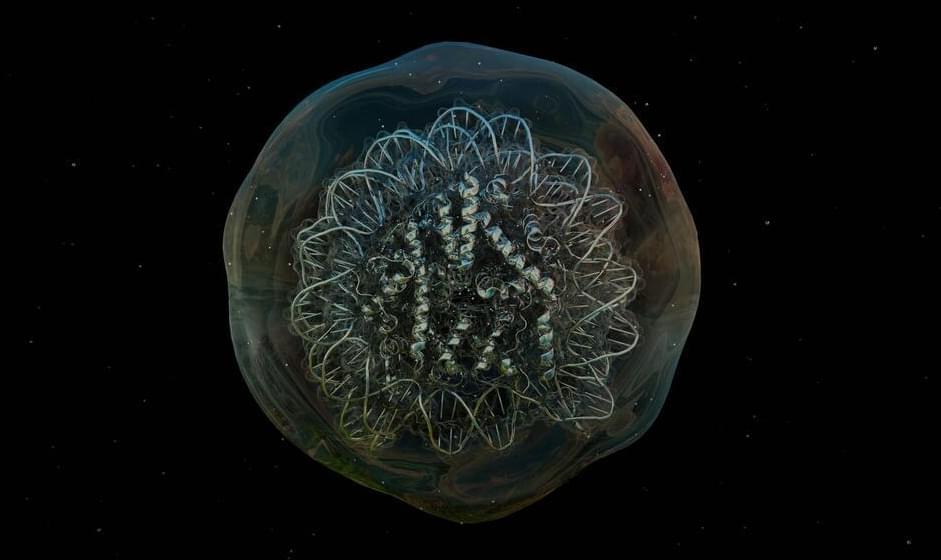
It may sound like the start of a horrible joke, but what a group of Italian academics came up with is a truly galaxy brain take: the structures of the observable universe, they claim, are startlingly similar to the neural networks of the human brain.

In a recent research published in the journal Frontiers in Physics, University of Bologna astronomer Franco Vazza and University of Verona neurosurgeon Alberto Feletti reveal the unexpected similarities between the cosmic network of galaxies and the complex web of neurons in the human brain. According to the researchers, despite being nearly 27 orders of magnitude distant in scale, the human brain and the makeup of the cosmic web exhibit similar levels of complexity and self-organization.

Why everything eventually becomes a crab

Crabe-shape beings.


The joke—that everything will eventually look like a crab—comes from an actual truth. The crab shape has evolved so many times that scientists had to come up with a special term for it: carcinization.

While it’s probably not in the stars for humans to evolve into crabs, it is something that has happened multiple times in the crustacean family, where a creature may have started out looking like a lobster or a hermit crab and then eventually turning into the low, round, pinchy critters we all know and love. But before we dive into why this is, let’s first define the term “crab.”

When you think of the word crab, the first thing that pops into your head is probably something that looks like a blue, king, or Dungeness crab. Their look is unique and therefore memorable—a short, flat, roundish or square body shape, an abdomen hidden on the underside of the crab, and a hidden tail replacing a muscley exposed one that is common with lobsters.

Optical Fibers Go Topological

A new design for an optical fiber borrows concepts from topology to protect light from imperfections in the fiber’s light-guiding materials or from distortions in its cross section.

Using concepts from the mathematical field of topology, researchers at the University of Bath, UK, have designed an optical fiber that can robustly propagate light, even if there are variations in the properties of its light-guiding materials or in its overall geometry [1]. The team thinks that this newfound topological protection could enable advances in optical communication and photonic quantum computing.

The concept of topology is often explained using a joke about a donut and a coffee cup. A coffee cup made of rubber can be continuously twisted and stretched—no cuts need to be made—so that it takes on the shape of a donut. Even though the object’s outline changes under this transformation, its essence remains the same—it contains one hole. Thus, the quip goes, a topologist cannot tell the difference between the two things.

/* */