You can watch a livestream of the launch at SpaceX’s YouTube channel using the link at the top of this page. Livestreams typically begin about five minutes before liftoff.
Category: internet – Page 125

Holding Information in Mind May Mean Storing It Among Synapses
Summary: Findings support modern thought that neural networks store information by making short-term alterations to the synapses. The study sheds new light on short-term synaptic plasticity in recent memory storage.
Source: picower institute for learning and memory.
Between the time you read the Wi-Fi password off the café’s menu board and the time you can get back to your laptop to enter it, you have to hold it in mind. If you’ve ever wondered how your brain does that, you are asking a question about working memory that has researchers have strived for decades to explain. Now MIT neuroscientists have published a key new insight to explain how it works.

Researcher Uncovers Potential Wiretapping Bugs in Google Home Smart Speakers
A security researcher was awarded a bug bounty of $107,500 for identifying security issues in Google Home smart speakers that could be exploited to install backdoors and turn them into wiretapping devices.
The flaws “allowed an attacker within wireless proximity to install a ‘backdoor’ account on the device, enabling them to send commands to it remotely over the internet, access its microphone feed, and make arbitrary HTTP requests within the victim’s LAN,” the researcher, who goes by the name Matt, disclosed in a technical write-up published this week.
In making such malicious requests, not only could the Wi-Fi password get exposed, but also provide the adversary direct access to other devices connected to the same network. Following responsible disclosure on January 8, 2021, the issues were remediated by Google in April 2021.

There Are Spying Eyes Everywhere—and Now They Share a Brain
One afternoon in the fall of 2019, in a grand old office building near the Arc de Triomphe, I was buzzed through an unmarked door into a showroom for the future of surveillance. The space on the other side was dark and sleek, with a look somewhere between an Apple Store and a doomsday bunker. Along one wall, a grid of electronic devices glinted in the moody downlighting—automated license plate readers, Wi-Fi-enabled locks, boxy data processing units. I was here to meet Giovanni Gaccione, who runs the public safety division of a security technology company called Genetec. Headquartered in Montreal, the firm operates four of these “Experience Centers” around the world, where it peddles intelligence products to government officials. Genetec’s main sell here was software, and Gaccione had agreed to show me how it worked.
He led me first to a large monitor running a demo version of Citigraf, his division’s flagship product. The screen displayed a map of the East Side of Chicago. Around the edges were thumbnail-size video streams from neighborhood CCTV cameras. In one feed, a woman appeared to be unloading luggage from a car to the sidewalk. An alert popped up above her head: “ILLEGAL PARKING.” The map itself was scattered with color-coded icons—a house on fire, a gun, a pair of wrestling stick figures—each of which, Gaccione explained, corresponded to an unfolding emergency. He selected the stick figures, which denoted an assault, and a readout appeared onscreen with a few scant details drawn from the 911 dispatch center. At the bottom was a button marked “INVESTIGATE,” just begging to be clicked.

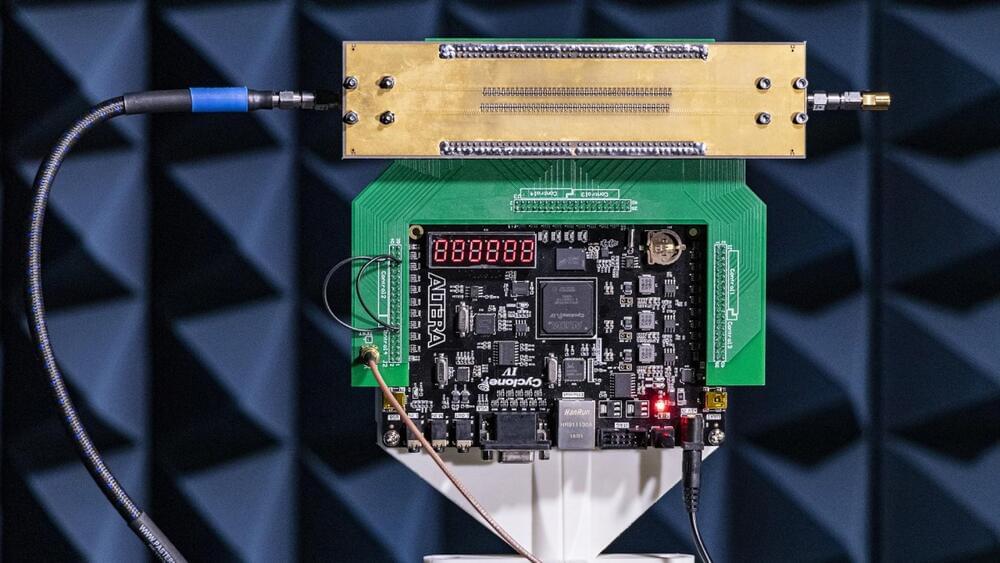
A novel antenna bringing us closer to 6G wireless communications
I think communication with AI and each other will also be wireless so discoveries like this are important.
CityU
A research team led by a scientist at CityU has resulted in an innovative, game-changing antenna. This revolutionary invention allows unprecedented control of the direction, frequency, and intensity of its signal beam emission. On top of that, this antenna is invaluable for 6G wireless communications applications such as ISAC sensing and communication integration.
1st batch of SpaceX’s Gen2 Starlink satellites has just been delivered to LEO
SpaceX/YouTube.
“This launch marks the first of Starlink’s upgraded network. Under our new license, we [can now] deploy satellites to new orbits that will add even more capacity to the network,” SpaceX explained in its mission description.
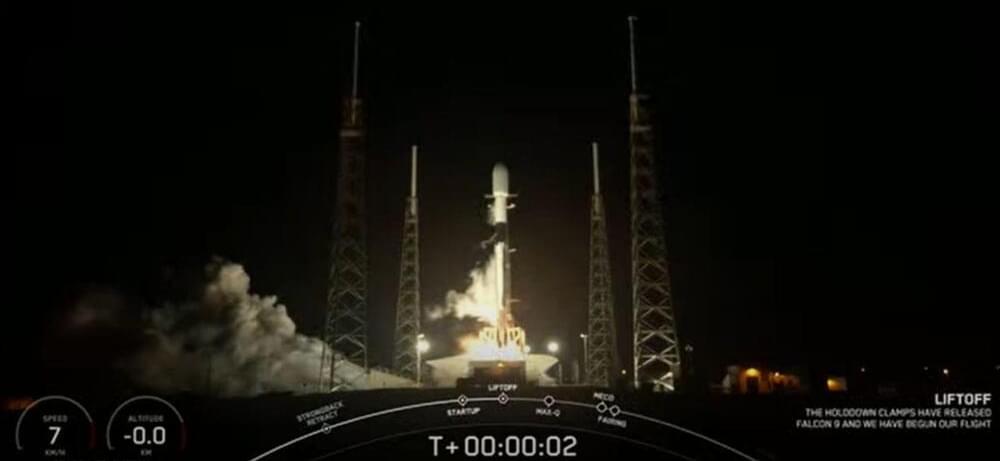
SpaceX launches 54 upgraded Starlink internet satellites and nails rocket landing at sea in 60th flight of the year
SpaceX launched the first batch of a new generation of Starlink satellites into orbit early Wednesday (Dec. 28) and nailed a rocket landing at sea to mark a record 60th flight of the year.
A Falcon 9 rocket topped with 54 upgraded Starlink internet satellites — the first generation 2 (Gen2) versions of the SpaceX fleet — lit up the predawn sky with a smooth launch at 4:34 a.m. EST (0934 GMT) from the Cape Canaveral Space Force Station in Florida.

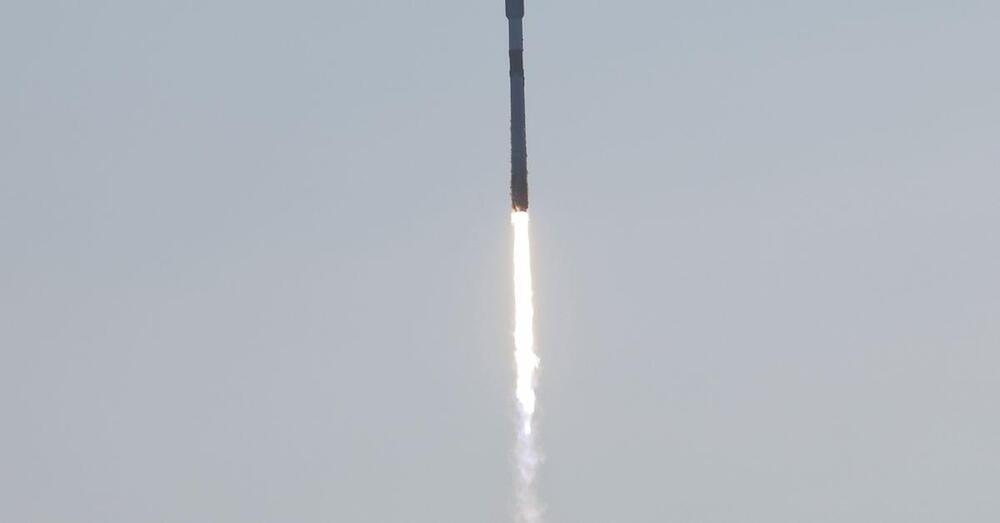
Elon Musk says around 100 Starlinks now active in Iran
Dec 26 (Reuters) — SpaceX Chief Executive Elon Musk said on Monday that the company is now close to having 100 active Starlinks, the firm’s satellite internet service, in Iran, three months after he tweeted he would activate the service there amid protests around the Islamic country.
Musk said, “approaching 100 starlinks active in Iran”, in a tweet on Monday.
The billionaire had said in September that he would activate Starlink in Iran as part of a U.S.-backed effort “to advance internet freedom and the free flow of information” to Iranians.