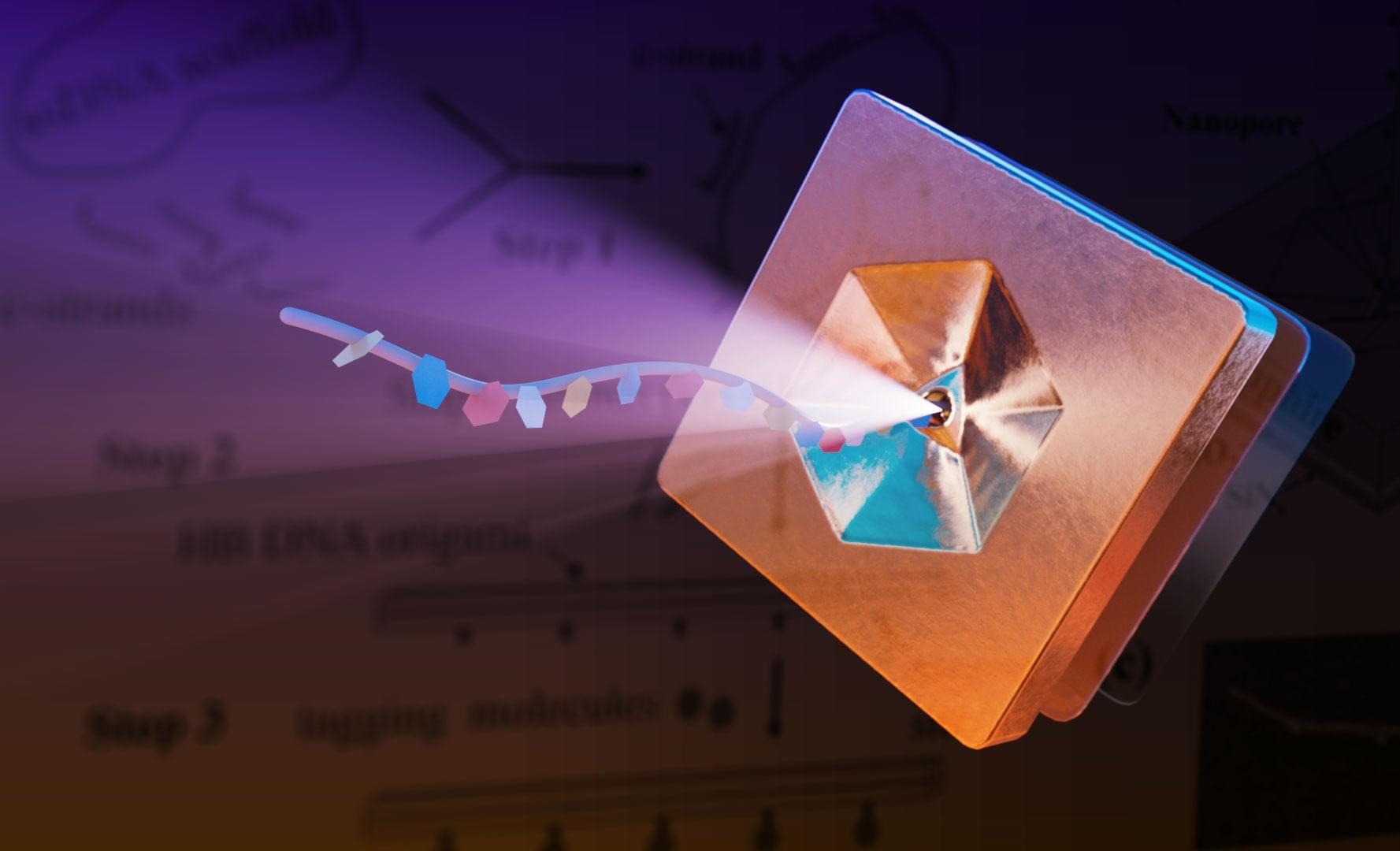
Scientists are exploring how DNA’s physical structure can store vast amounts of data and encode secure information.

A newly documented Linux botnet named SSHStalker is using the IRC (Internet Relay Chat) communication protocol for command-and-control (C2) operations.
The protocol was invented in 1988, and its adoption peaked during the 1990s, becoming the main text-based instant messaging solution for group and private communication.
Technical communities still appreciate it for its implementation simplicity, interoperability, low bandwidth requirements, and no need for a GUI.
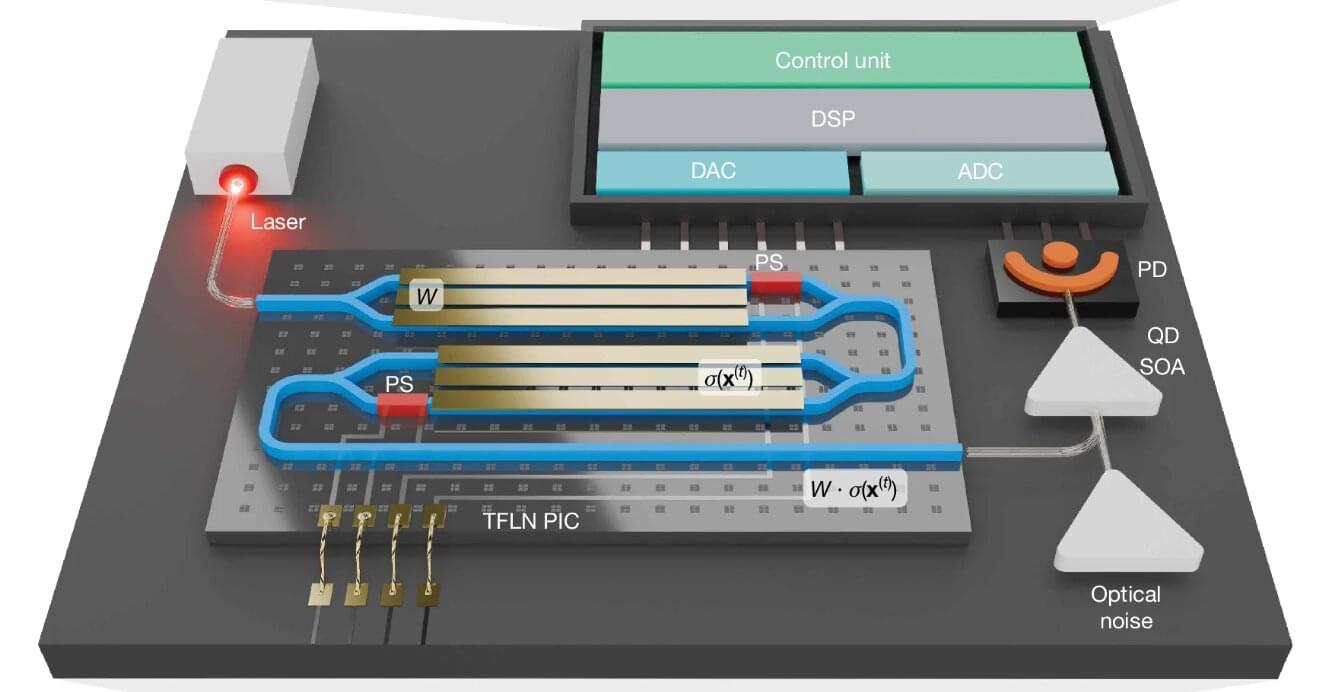
A team of researchers at Queen’s University has developed a powerful new kind of computing machine that uses light to take on complex problems such as protein folding (for drug discovery) and number partitioning (for cryptography). Built from off-the-shelf components, it also operates at room temperature and remains remarkably stable while performing billions of operations per second. The research was published in Nature.
The breakthrough shows that it is possible to build a practical and scalable machine that can tackle extremely difficult problems.
The project, led by Bhavin Shastri, Canada Research Chair in Neuromorphic Photonic Computing and professor in the Department of Physics, Engineering Physics, and Astronomy, with a team of his graduate students including Nayem Al Kayed and Hugh Morison, uses commercially available lasers, fiber optics, and modulators—the same technology that powers today’s internet infrastructure. The team partnered with McGill University researcher David Plant and his graduate student Charles St-Arnault.

Scientists achieved the ‘impossible’ in 2024, teleporting a quantum state through more than 30 kilometers amid a torrent of internet traffic.
In 2024, a quantum state of light was successfully teleported through more than 30 kilometers (around 18 miles) of fiber optic cable amid a torrent of internet traffic – a feat of engineering once considered impossible.
The impressive demonstration by researchers in the US may not help you beam to work to beat the morning traffic, or download your favorite cat videos faster.
However, the ability to teleport quantum states through existing infrastructure represents a monumental step towards achieving a quantum-connected computing network, enhanced encryption, or powerful new methods of sensing.

A cross-sectional study of Chinese college students found ADHD symptoms were associated with internet addiction, with insomnia and executive dysfunction acting as mediating factors. Moderate and high physical activity levels were also linked with lower internet addiction symptoms, although causality cannot be inferred.
A CIMC salon at the internet archive in san francisco.


Quantum technologies, devices and systems that process, store, detect, or transfer information leveraging quantum mechanical effects, have the potential to outperform classical technologies in a variety of tasks. An ongoing quest within quantum engineering is the realization of a so-called quantum internet: a network conceptually analogous to today’s internet, in which distant nodes are linked through shared quantum resources, most notably quantum entanglement.
Researchers at Nanjing University and University of Science and Technology of China have developed a new ultra-thin metasurface that could contribute to this goal, as it can control the behavior of light, while also generating and directing entanglement across many channels.
This metasurface, presented in a paper published in Physical Review Letters, has so far proved to be promising for the development of scalable and integrated quantum technologies.

Cloud outages expose identity systems as critical failure points, turning infrastructure disruptions into major business continuity risks.