Toggle light / dark theme

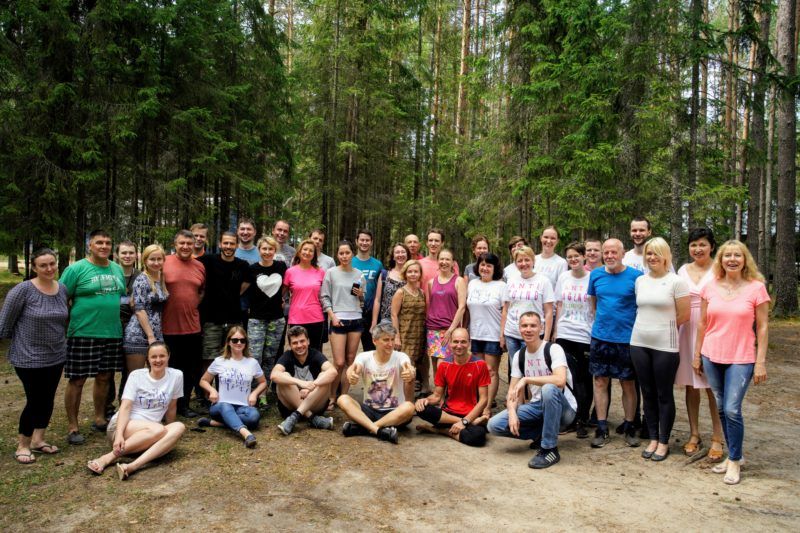
Open Longevity School: Summer Camp 2018

Today we have a report from Open Longevity School: Summer Camp 2018, an initiative in Russia focused on developing a personal health and longevity strategy, Elena Milova went to investigate.


When we ask researchers when, in their opinion, the cures for aging will be ready, we often hear an optimistic answer: 20–25 years. As a well-informed optimist, I add another 10 years to this number, because wherever the therapies appear, it will take time for them to be distributed to other countries and become affordable. I will be happy if it takes less time, but what if it doesn’t? I am nearly 40, and when I add 35 years to my current age, I vividly imagine how my reflection in the mirror will show a 75-year-old lady. Honestly, I don’t want to see my body change, and it can explain why I aspire to get first-hand information about any means to slow down aging as soon as possible. Evidence-based information, of course.

Before I tell you my story of discovering how to control my aging, I must provide a disclaimer. This article does not contain any medical recommendations. The websites of the projects I will tell you about, once again, do not contain medical recommendations and cannot be independently used to make health decisions. The experience I will share, and the activities of the projects I will tell you about, are aimed at teaching you about the existing scientific knowledge about aging and interventions that have the potential to change the way we age. Whatever you decide to implement in your everyday life, please talk to your medical advisor first.

I am always looking for the means to keep myself as young as possible. Luckily for me, in Russia, there is a project focused on collecting this kind of information and making it publicly available. It is Nestarenie.ru (translation: “not aging”), an online encyclopedia created by professional sports trainer, valeologist and citizen scientist Dmitry Veremeenko. The amount of information that Dmitry has managed to process is hard to imagine; it consists of more than 70,000 scientific papers. The development of this database took him several years of work. Each article of his encyclopedia summarizes a specific drug, food or lifestyle element that can slow down or even reverse age-related changes, with a deep explanation of the underlying mechanisms. Each of his information-dense articles has lots of internal links to actual scientific papers (including the freshest meta-analyses) and finishes with a list of additional references.

Surviving the odds

Is life extension at… odds with probability?


Does probability ensure that you will die, no matter what, once you are old enough? Does it throw the ultimate spanner in the works of life extension? The answer is not as clear-cut as you might think.

Recently, a study from Sapienza University in Italy has revived the idea of the so-called “mortality plateaus”—the apparent flattening of mortality rates in people aged above 100, suggesting that the maximum mortality rate of such people is 50% at age 105 [1]. However, even if this mortality rate remained constant for as long as you lived, you’d still be overwhelmingly likely to die relatively soon.

What may be even more disheartening is that, if you had a constant, larger-than-zero probability of dying, then no matter how small it was, you’d be overwhelmingly likely to die past a certain point in time, be it even billions of years into the future. As a matter of fact, over an infinite time, that probability would be exactly 100%. However, the situation is not as dire as it seems.

Researchers confine mature cells to turn them into stem cells

Recent research led by Professor G.V. Shivashankar of the Mechanobiology Institute (MBI) at the National University of Singapore (NUS) and the FIRC Institute of Molecular Oncology (IFOM) in Italy, has revealed that mature cells can be reprogrammed into re-deployable stem cells without direct genetic modification — by confining them to a defined geometric space for an extended period of time.

“Our breakthrough findings will usher in a new generation of stem cell technologies for tissue engineering and regenerative medicine that may overcome the negative effects of geonomic manipulation,” said Prof Shivashankar.

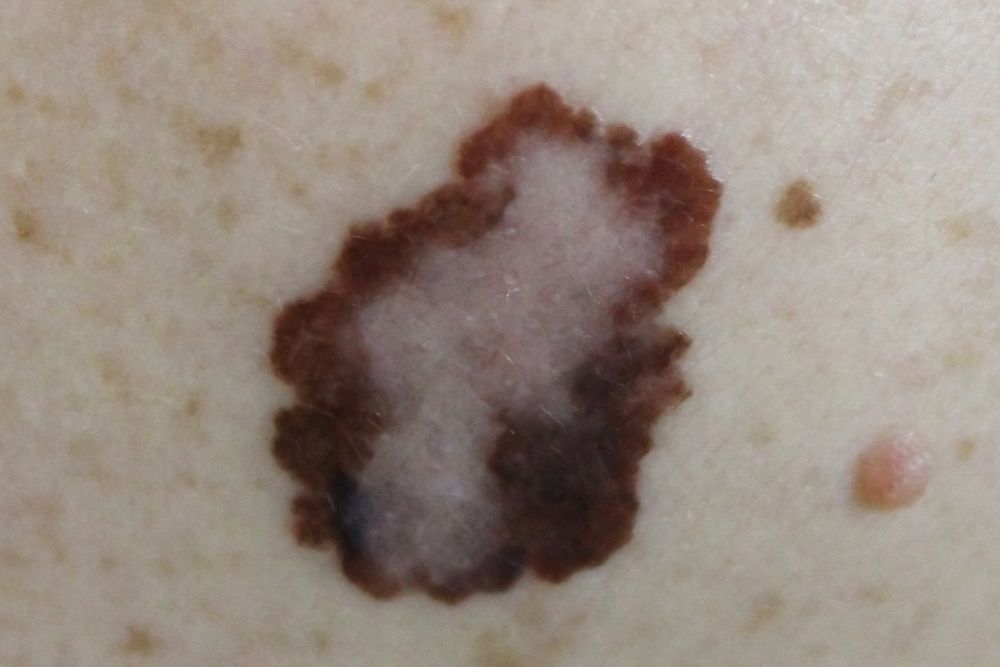
Two Papers Trace The Steps Leading From Moles to Melanomas

Researchers isolated several mutations leading to melanoma and reproduced them in the lab using CRISPR.


Two papers authored by researchers at the University of California, San Francisco described the genetic changes that turn harmless moles into malignant melanomas and the experiment they devised to recreate the step-by-step evolution of normal skin cells into cancer cells [1], [2].

Summary ([1])

We elucidated genomic and transcriptomic changes that accompany the evolution of melanoma from pre-malignant lesions by sequencing DNA and RNA from primary melanomas and their adjacent precursors, as well as matched primary tumors and regional metastases. In total, we analyzed 230 histopathologically distinct areas of melanocytic neoplasia from 82 patients. Somatic alterations sequentially induced mitogen-activated protein kinase (MAPK) pathway activation, upregulation of telomerase, modulation of the chromatin landscape, G1/S checkpoint override, ramp-up of MAPK signaling, disruption of the p53 pathway, and activation of the PI3K pathway; no mutations were specifically associated with metastatic progression, as these pathways were perturbed during the evolution of primary melanomas. UV radiation-induced point mutations steadily increased until melanoma invasion, at which point copy-number alterations also became prevalent.

Senolytics Improve Physical Function and Lifespan

We wanted to draw your attention to a new publication by James Kirkland and his team. Kirkland is one of the pioneers of senolytics, as he demonstrated that a combination of compounds could remove senescent cells and improve healthspan in mice back in 2015 [1].

The contribution of senescent cells to aging has been the subject of intense research in the last year or two, as researchers have focused on ways to remove these problem cells using therapies known as senolytics.

The Forever Healthy Foundation Fellowship in Rejuvenation Biotechnology

Do you want to join in the fight to end age-related disease?


Request for Proposals (RFP)

In cooperation with the Forever Healthy Foundation, SENS Research Foundation (SRF) is inviting candidates to submit research proposals for a Fellowship in Rejuvenation Biotechnology that would be undertaken at our Research Center (RC) in Mountain View, California.

SRF pursues the development of therapies to prevent and reverse age-related disease and disability through a “damage-repair” paradigm: developing interventions that maintain and restore the structural and functional integrity of tissues by directly removing, repairing, replacing, or rendering harmless the cellular and molecular damage of aging. Applications are requested that promise progress in regenerative medicine for the prevention and reversal of age-related disease.

Magnetic Microrobots Deliver Cells Into Living Animals

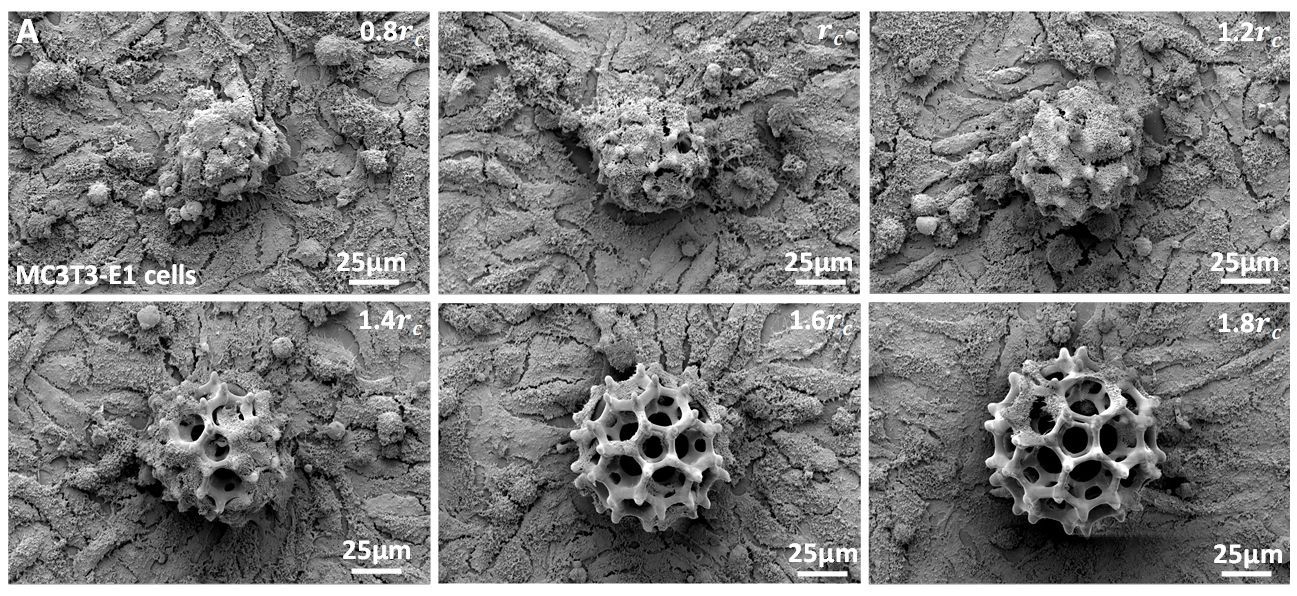
Researchers used magnetically driven microrobots to carry cells to predetermined spots within living zebrafish and mice, they report in Science Robotics today (June 27). The authors propose using these hair-width gadgets as delivery vehicles in regenerative medicine and cell therapy.

The scientists used a computer model to work out the ideal dimensions for a microrobot; spiky, porous, spherical ones were deemed best for transporting living cells. They printed the devices using a 3D laser printer and coated the bots with nickel and titanium to make them magnetic and biocompatible, respectively. An external magnetic field applied to the animal then leads the microrobots.

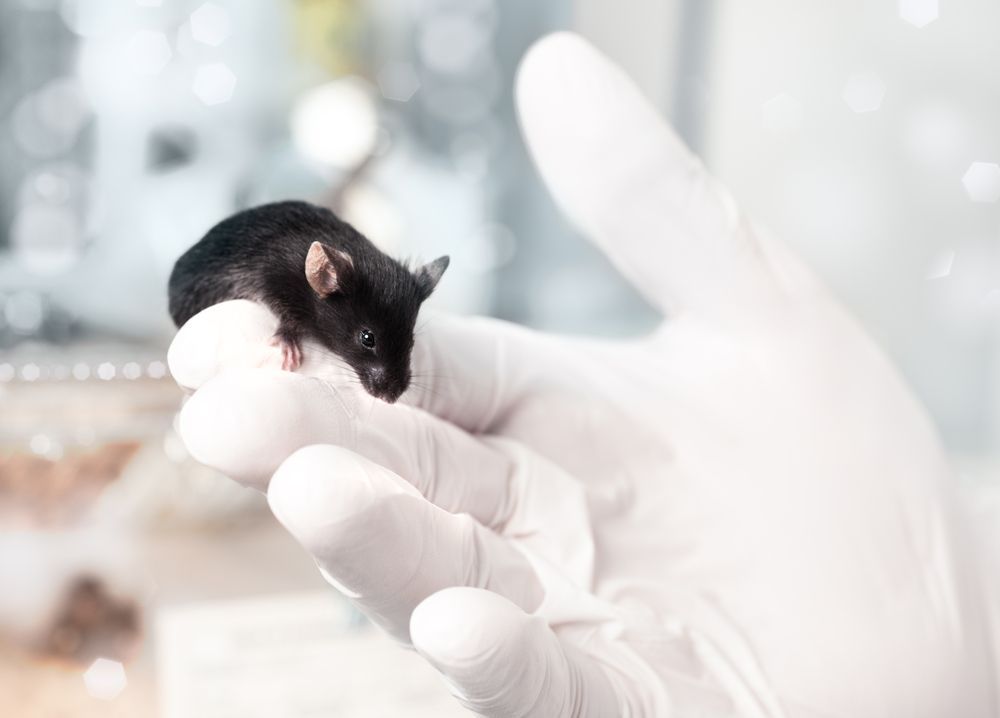
To begin with, the research team tested the ability for the robots to transport cells through cell cultures, blood vessel–like microfluidic chips, and in vivo in zebrafish. Further, they used these microrobots to induce cancer at a specific location within mice by ferrying tumor cells to the spot. The team observed fluorescence at the target site as the labeled cancer cells proliferated.

Memo to those seeking to live for ever: eternal life would be deathly dull

Take this seriously and you can see how the idea of living for ever is incoherent. If your body could be kept going for a thousand years, in what sense would the you that exists now still be around then? It would be more like a descendant than it would a continuation of you. I sometimes find it hard to identify with my teenage self, and that was less than 40 years ago. If I change, I eventually become someone else. If I don’t, life becomes stagnant and loses its direction.


It’s great that more of us are living to 100, but the transhumanist dream of immortality would betray what it means to be human says philosopher Julian Baggini.

New drug shows promise for preventing and even reversing damage from age-related dementia and stroke

Cerebral small vessel disease (SVD) is one of the most commonly associated causes of age-related dementia and stroke. New research, led by the University of Edinburgh, may have finally uncovered the mechanism by which SVD causes brain cell damage, as well as a potential treatment to prevent the damage, and possibly even reverse it.

SVD is thought to be responsible for up to 45 percent of dementia cases, and the vast majority of senior citizens are suspected of displaying some sign of the condition. One study strikingly found up to 95 percent of subjects between the ages of 60 and 90 displayed some sign of SVD when examined through MRI scans.

The new research set out to examine early pathological features of SVD and found that dysfunction in endothelial cells are some of the first signs of the disease’s degenerative progression. These are cells that line small blood vessels in the brain and, in early stages of SVD, they secrete a protein that impairs production of myelin, a compound essential for the protection of brain cells.

/* */