Process is cheap and more environmentally friendly, say researchers.
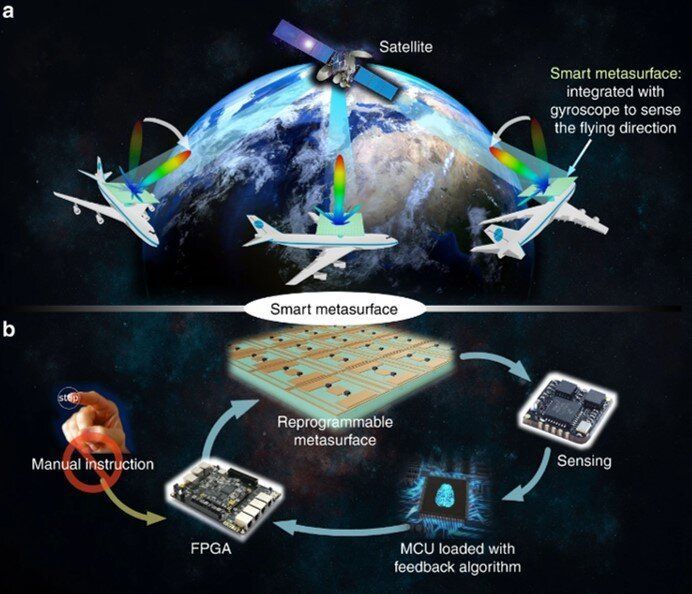
Materials scientists aim to engineer intelligence into the fabric of materials or metamaterials for programmable functions. Engineering efforts can vary from passive to active forms to develop programmable metasurfaces using dynamic and arbitrary electromagnetic (EM) wavefields. Such metasurfaces, however, require manual control to switch between functions. In a new study now published on Light: Science & Applications, Qian Ma and an interdisciplinary research team in the State Key Laboratory, Cyberspace Science and Technology, and the Department of Electronics in China engineered a smart metasurface for self-adaptive programmability.
Circa 2016
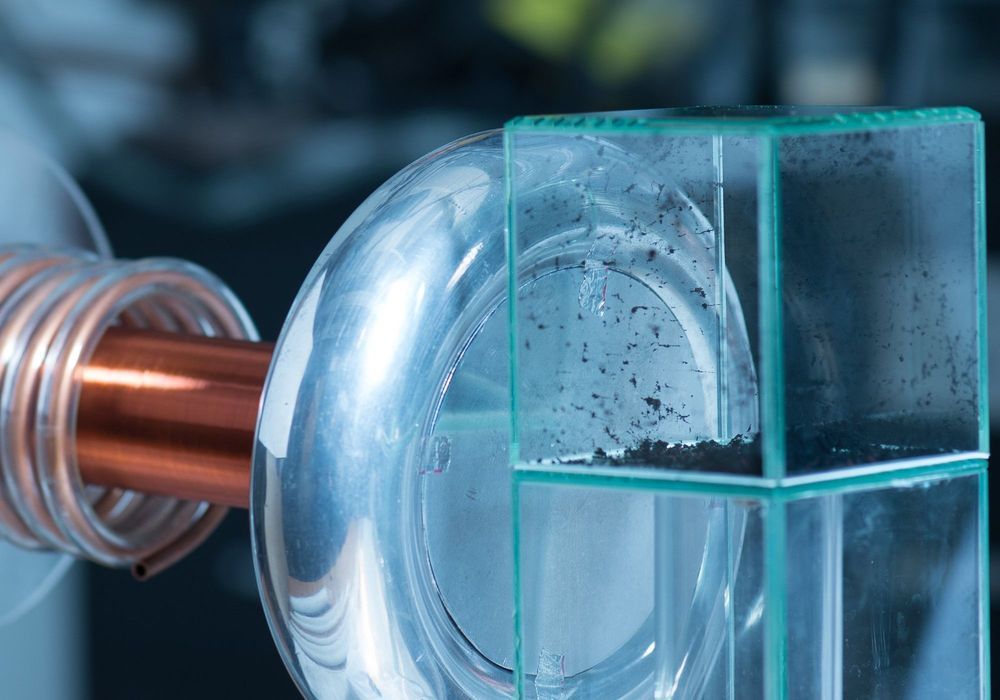
Not all important scientific research is cool looking, or has a cool name. But now and then you get something with both. These self-assembling carbon nanotubes are created with a process called Teslaphoresis. If you’ve read a more impressive-sounding sentence today, I’d like to hear it.
Even the lab of Rice University chemist Paul Cherukuri looks like a proper mad scientist’s lair. But don’t let the flashy trappings fool you: this is a very significant development.
Nanotubes are one of these carbon supermaterials that, like graphene, are full of interesting properties and theoretical applications but — again like graphene — are difficult to manufacture cheaply and reliably. This new method could be a breakthrough in the creation of the ultra-thin, ultra-strong, and ultra-conductive carbon nanowires.

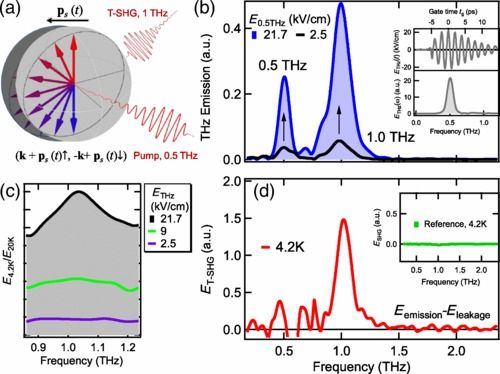
We report terahertz (THz) light-induced second harmonic generation, in superconductors with inversion symmetry that forbid even-order nonlinearities. The THz second harmonic emission vanishes above the superconductor critical temperature and arises from precession of twisted Anderson pseudospins at a multicycle, THz driving frequency that is not allowed by equilibrium symmetry. We explain the microscopic physics by a dynamical symmetry breaking principle at sub-THz-cycle by using quantum kinetic modeling of the interplay between strong THz-lightwave nonlinearity and pulse propagation. The resulting nonzero integrated pulse area inside the superconductor leads to light-induced nonlinear supercurrents due to subcycle Cooper pair acceleration, in contrast to dc-biased superconductors, which can be controlled by the band structure and THz driving field below the superconducting gap.
So everybody likes to ride the roads, but no one likes to endure the roadwork. Sound familiar? We have all found ourselves shaking a fist or two at some construction workers, maybe even pointing our favorite finger at them to drive home the point of our frustration. If only there were a way to lay pavement in a quick, efficient manner? You know, something that had the style and panache of R2D2 that operated with the work ethic of your grandfather.
Well, check out this little wonder. Known as the Fastlane Paver, it is produced by Volvo and works quite well. Most paving machines will lay asphalt or concrete, then get smoothed out by a Caterpillar Steam roller or tamping machine to make the surface smooth and drivable. Not the case with the Fastlane though. It is an all in one paver. Capable of laying aggregate and pervious concrete, this machine can lay down a three meter wide strip at a distance of 18 lineal meters without stopping. Yep, you read that right. It does all of this in one pass, with no break.
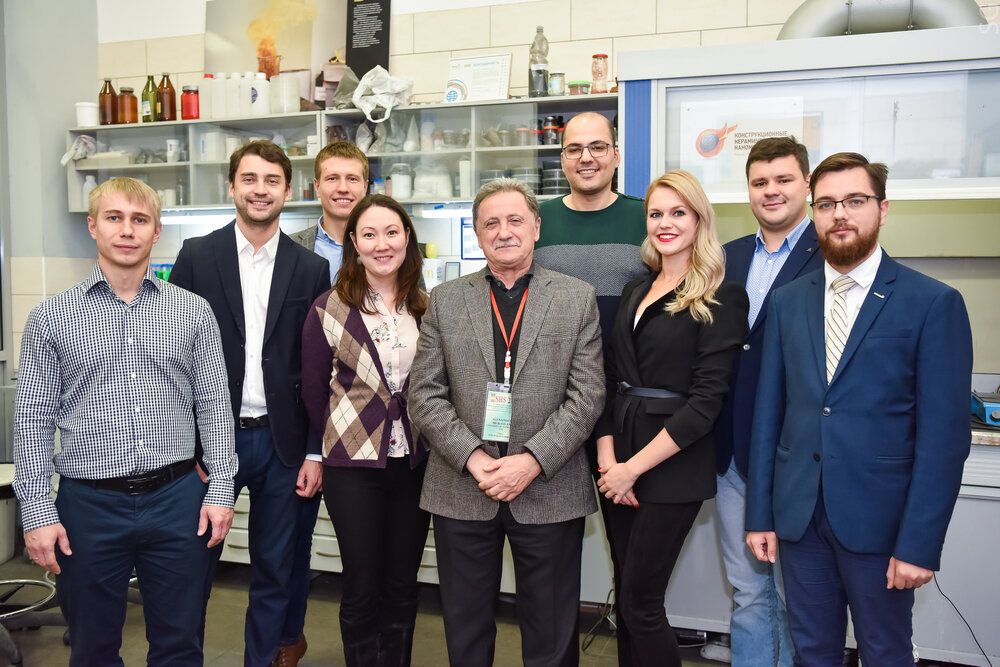
A group of scientists from NUST MISIS developed a ceramic material with the highest melting point among currently known compounds. Due to the unique combination of physical, mechanical and thermal properties, the material is promising for use in the most heat-loaded components of aircraft, such as nose fairings, jet engines and sharp front edges of wings operating at temperatures above 2000 degrees C. The results are published in Ceramics International.
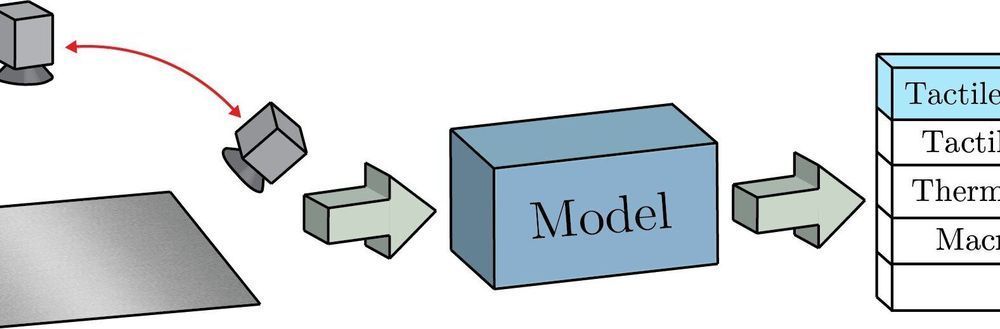
The ability to estimate the physical properties of objects is of key importance for robots, as it allows them to interact more effectively with their surrounding environment. In recent years, many robotics researchers have been specifically trying to develop techniques that allow robots to estimate tactile properties of objects or surfaces, which could ultimately provide them with skills that resemble the human sense of touch.
Building on previous research, Matthew Purri, a Ph.D. student specializing in Computer Vision and AI at Rutgers University, recently developed a convolutional neural network (CNN)-based model that can estimate tactile properties of surfaces by analyzing images of them. Purri’s new paper, pre-published on arXiv, was supervised by Kristin Dana, a professor of Electrical Engineering at Rutgers.
“My previous research dealt with fine-grain material segmentation from satellite images,” Purri told TechXplore. “Satellite image sequences provide a wealth of material information about a scene in the form of varied viewing and illumination angles and multispectral information. We learned how valuable multi-view information is for identifying material from our previous work and believed that this information could act as a cue for the problem of physical surface property estimation.”