Toggle light / dark theme

The Universe Tried to Hide the Gravity Particle. Physicists Found a Loophole

Head to https://brilliant.org/Spacetime/ to start learning for free for 30 days. Plus, our viewers get 20% off an annual Premium subscription for unlimited daily access to everything Brilliant has to offer.

Physicists have long believed that detecting the particle of gravity—the graviton—was fundamentally impossible, with the universe itself seeming to block every direct attempt. This episode explores a new generation of clever experiments that may finally let us detect gravity’s particle, and why even succeeding wouldn’t quite mean what we think it does.

Sign Up on Patreon to get access to the Space Time Discord!
/ pbsspacetime.

Check out the Space Time Merch Store.
https://www.pbsspacetime.com/shop.

Sign up for the mailing list to get episode notifications and hear special announcements!
https://mailchi.mp/1a6eb8f2717d/space… the Entire Space Time Library Here: https://search.pbsspacetime.com/ Hosted by Matt O’Dowd Written by Richard Dyer & Matt O’Dowd Post Production by Leonardo Scholzer Directed by Andrew Kornhaber Associate Producer: Bahar Gholipour Executive Producer: Andrew Kornhaber Executive in Charge for PBS: Maribel Lopez Director of Programming for PBS: Gabrielle Ewing Assistant Director of Programming for PBS: Mike Martin Spacetime is a production of Kornhaber Brown for PBS Digital Studios. This program is produced by Kornhaber Brown, which is solely responsible for its content. © 2026 PBS. All rights reserved. End Credits Music by J.R.S. Schattenberg: / multidroideka Space Time Was Made Possible In Part By: Big Bang Alexander Tamas David Paryente Juan Benet Mark Rosenthal Morgan Hough Peter Barrett Santiago Tj Steyn Vinnie Falco Supernova Ethan Cohen Glenn Sugden Grace Biaelcki Mark Heising Stephen Wilcox Tristan Lucian Claudius Aurelius Tyacke Hypernova Alex Kern Ben Delo Cal Stephens chuck zegar David Giltinan Dean Galvin Donal Botkin Gregory Forfa Jesse Cid Dyer John R. Slavik Justin Lloyd Kenneth See Massimiliano Pala Michael Tidwell Mike Purvis Paul Stehr-Green Scott Gorlick Scott Gray Spencer Jones Stephen Saslow Thomas Mouton Zachary Haberman Антон Кочков Daniel Muzquiz Gamma Ray Burst Aaron Pinto Adrien Molyneux Almog Cohen Anthony Leon Arko Provo Mukherjee Ayden Miller Ben McIntosh Bradley Jenkins Bradley Ulis Brandon Lattin Brian Cook Bryan White Chris Liao Christopher Wade Chuck Lukaszewski Collin Dutrow Craig Falls Craig Stonaha Dan Warren Daniel Donahue Daniel Jennings Daron Woods Darrell Stewart David Johnston Doyle Vann Eric Kiebler Eric Raschke Eric Schrenker Faraz Khan Frederic Simon Harsh Khandhadia Ian Williams Isaac Suttell James Trimmier Jeb Campbell Jeremy Soller Jerry Thomas jim bartosh John Anderson John De Witt John Funai John H. Austin, Jr. John591 Joseph Salomone Junaid Ali Kacper Cieśla Kane Holbrook Keith Pasko Kent Durham Koen Wilde Kyle Atkinson Marcelo Garcia Marion Lang Mark Daniel Cohen Mark Delagasse Matt Kaprocki Matthew Johnson Michael Barton Michael Clark Michael Lev Michael Purcell Nathaniel Bennett Nick Hoffenstoffer III Nicolas Katsantonis Paul Wood Rad Antonov Reuben Brewer Richard Steenbergen Robert DeChellis Ross Story Russell Moore SamSword Sandhya Devi Satwik Pani Sean Owen Shane Calimlim SilentGnome Sound Reason Steffen Bendel Steven Giallourakis Terje Vold Thomas Dougherty Tomaz Lovsin Tybie Fitzhugh Vlad Shipulin William Flinn WILLIAM HAY III Zac Sweers.

Search the Entire Space Time Library Here: https://search.pbsspacetime.com/

Mars Base

To become an Interplanetary Species we need to colonize another planet, and Mars will be our first target. To establish a base there, and a future settlement, we need to get their first, so we will also examine the Aldrin Cycler, a type of spacecraft that may make traveling to other worlds far easier.

Visit our sponsor, Brilliant: https://brilliant.org/IsaacArthur/

National Space Society Roadmap:
https://space.nss.org/nss-roadmap-to–… this channel to get access to perks: / @isaacarthursfia Visit our Website: http://www.isaacarthur.net Join Nebula: https://go.nebula.tv/isaacarthur Support us on Patreon: / isaacarthur Support us on Subscribestar: https://www.subscribestar.com/isaac-a… Facebook Group: / 1,583,992,725,237,264 Reddit: / isaacarthur Twitter: / isaac_a_arthur on Twitter and RT our future content. SFIA Discord Server: / discord version: / mars-base-narration-only Credits: Becoming an Interplanetary Species: Mars Base Science & Futurism with Isaac Arthur Episode 261; October 22, 2020 Written, Produced & Narrated by Isaac Arthur Written by: Isaac Arthur Editors: Jerry Guern Keith Blockus Matthew Acker Cover Art: Jakub Grygier https://www.artstation.com/jakub_grygier Graphics: Jeremy Jozwik https://www.artstation.com/zeuxis_of_… Sam McNamara Sergio Botero https://www.artstation.com/sboterod?f… Tristan 3D Music Sergey Cheremisninov, “Sirius” https://www.s-cheremisinov.com Reign Pagaran, “Distant Voyager” Aerium, “Fifth Star of Aldebaran” / @officialaerium Denny Schneidemesser, “Across the Universe” & “Luminous Rays” / denny-schneidemesser.
Join this channel to get access to perks:
/ @isaacarthursfia.
Visit our Website: http://www.isaacarthur.net.
Join Nebula: https://go.nebula.tv/isaacarthur.
Support us on Patreon: / isaacarthur.
Support us on Subscribestar: https://www.subscribestar.com/isaac-a
Facebook Group: / 1583992725237264
Reddit: / isaacarthur.
Twitter: / isaac_a_arthur on Twitter and RT our future content.
SFIA Discord Server: / discord version: / mars-base-narration-only.

Credits:
Becoming an Interplanetary Species: Mars Base.
Science & Futurism with Isaac Arthur.
Episode 261; October 22, 2020
Written, Produced & Narrated by Isaac Arthur.

Written by:
Isaac Arthur.

Editors:

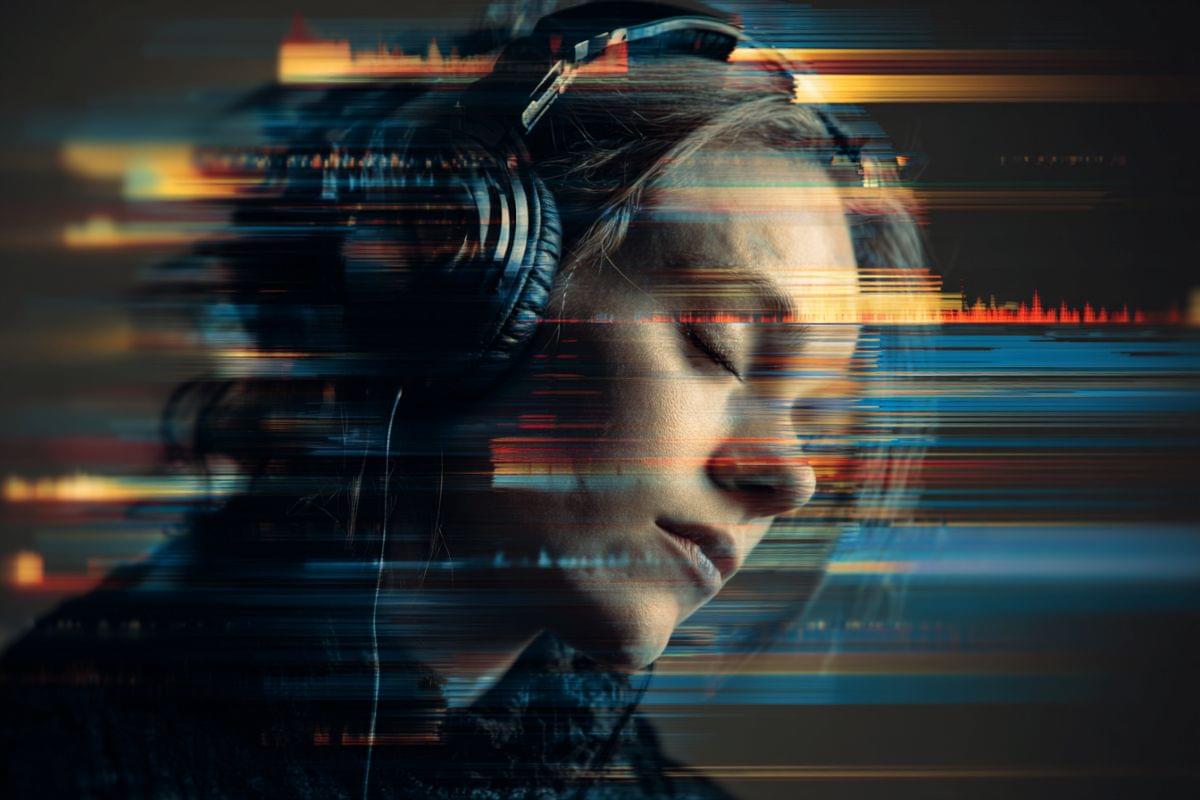
Chill brain-music interface: Using brain signals to enhance the emotional power of music

Musical chills are pleasurable shivers or goosebump sensations that people feel when they resonate with the music they’re listening to. They reduce stress and have beneficial side effects, but they are difficult to induce reliably. Now, researchers from Japan have developed a practical system that uses in-ear electroencephalography sensors to measure the brain’s response to music in real time and provide music suggestions that enhance chills.

Most people are familiar with “musical chills”—a sudden, involuntary shiver or goosebump sensation that occurs when a song resonates perfectly with one’s emotions. These chills are not just a surface-level feeling, but a profound neurological event. When we experience intense musical pleasure, parts of the brain’s reward system activate in a manner similar to how they would respond to life-affirming stimuli, such as beloved foods or positive social connections.

However, despite the universal nature of the experience, musical chills are difficult to trigger reliably. This limits our ability to harness their psychological and physiological benefits, even with today’s on-demand access to vast libraries of music.

The Most Terrifying Alien Civilization Scenarios That Might Actually Be Real

This video explores alien societies capable of expanding across star systems, reshaping reality for efficiency, harvesting cosmic resources at unimaginable scales, or operating with forms of intelligence so detached from human values that our survival would barely register as a variable.

Suscribe ‪@thegreatabyss1

Researched, written, edited, and produced by the @thegreatabyss1 team.

Music produced by @IronCthulhuApocalypse (License Control).

We are truly grateful to have you here with us. Your support means a lot to us and helps us continue creating valuable content. If you enjoy our videos, we would greatly appreciate it if you activate the notification bell, subscribe, like, and share the content. Thank you very much 🙏

Timestamps:

Smart Golden Cities of the Future: 1 Hour Exploring Nature & Sci-Fi Innovation in 2050

Step into the future with “Smart Golden Cities of the Future”, a 1-hour journey exploring how technology and nature will merge to create sustainable, intelligent cities by 2050. In this immersive video, we’ll dive deep into a world where urban spaces are powered by Sci-Fi innovation, green infrastructure, and advanced technologies. From eco-friendly architecture to autonomous transportation systems, discover how the cities of tomorrow will function in harmony with the environment. Imagine a future with clean energy, smart public services, and a thriving connection to nature—where sustainability and futuristic technology drive every aspect of life. Join us for an hour-long exploration of the Smart Cities of 2050, as we uncover the incredible possibilities and challenges of creating urban spaces that work for both people and the planet. ✨ This video was created with passion and love for sharing creative production using AI tools such as: • 🧠 Research: ChatGPT • 🖼️ Image Creation: Leonardo, Midjourney, ImageFX • 🎬 Video Production: Veo 3.1, Runway ML • 🎵 Music Generation: Suno AI • ✂️ Video Editing: CapCut Pro 💡 Note: All of the above AI tools are subscription-based. This project combines imagination and creativity from my perspective as a mechanical engineer who loves exploring the future. 🙏🏻 Please Support: • ✅ Subscribe • 👍 Like • 💬 Comment Thank you so much for watching!I hope you enjoy this journey and gain inspiration from this creative experience ❤️ #SmartCities #Sustainability #FutureOfLiving #SciFiInnovation #EcoFriendlyCities #midjourney #veo3 #sunoai

The Singularity Countdown: AGI by 2029, Humans Merge with AI, Intelligence 1000x | Ray Kurzweil

Ray Kurzweil predicts humans will merge with artificial intelligence (AI) by 2045, resulting in a 1000x increase in intelligence and marking the beginning of a new era of unprecedented innovation, potentially transforming human life and society ## ## Questions to inspire discussion.

Preparing for AI Timeline.

🤖 Q: When should I expect human-level AI and what defines it? A: Human-level AI arrives by 2029, defined not by passing the Turing test (which only matches an ordinary person), but as AGI requiring expertise in thousands of fields and the ability to combine insights across disciplines.

🧠 Q: When will the singularity occur and what intelligence gain can I expect? A: The singularity happens by 2045 when humanity merges with AI to become 1000x more intelligent, creating a seamless merger where biological and computational thought processes become indistinguishable.

⚡ Q: How much change should I prepare for in the next decade? A: Expect as much change in the next 10 years as occurred in the last 100 years (1925−2025), with AGI and supercomputers by 2035 enabling merging with AI for 1000x intelligence increase.

Career and Economic Adaptation.

/* */