An evolutionary “arms race” for light and space drove the early domestication of wheat, according to new research that could provide new insights into crop design.



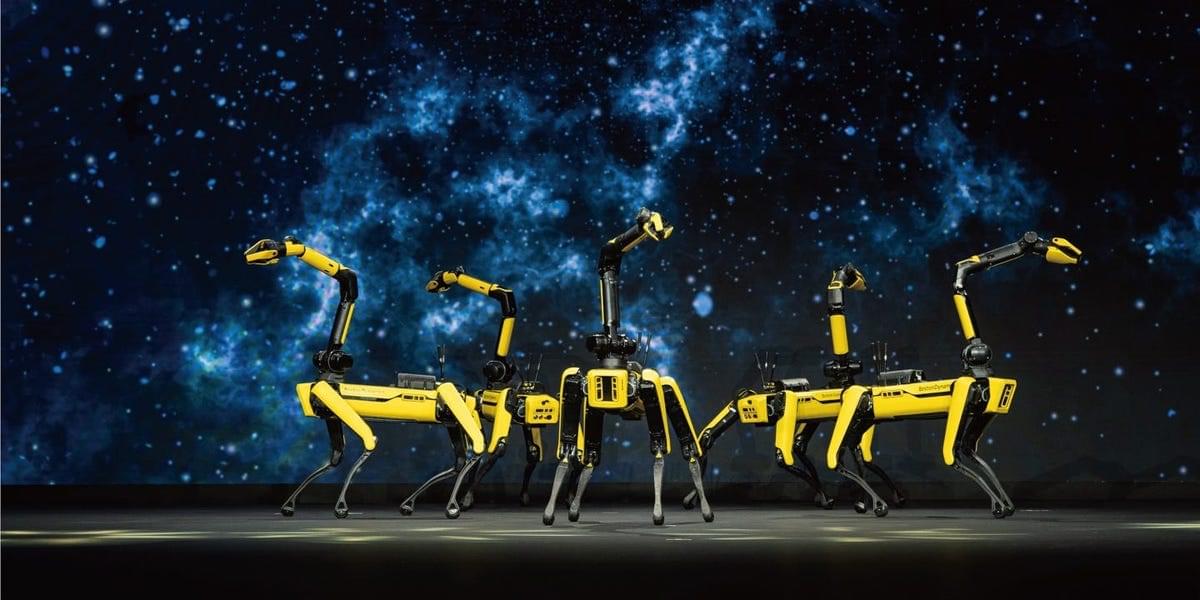
As companies pour billions into sprawling industrial campuses for cloud and AI computing, some data center operators are experimenting with four-legged bots — about the size of large dogs — that can patrol fences, inspect equipment, and flag any issues before they turn into costly outages.
“I was literally at a data center this week,” Merry Frayne, senior director of product management at Boston Dynamics, the maker of Spot, told Business Insider. “We’ve seen a huge, huge uptick in interest from data centers in the last year, I’d say, which is probably not surprising given the investment in that space.”
Robot dogs have already been deployed by first responders, the military, and in other industrial sectors such as oil and mining. But the rapid pace of data center buildouts is creating another niche for the mechanical quadrupeds.
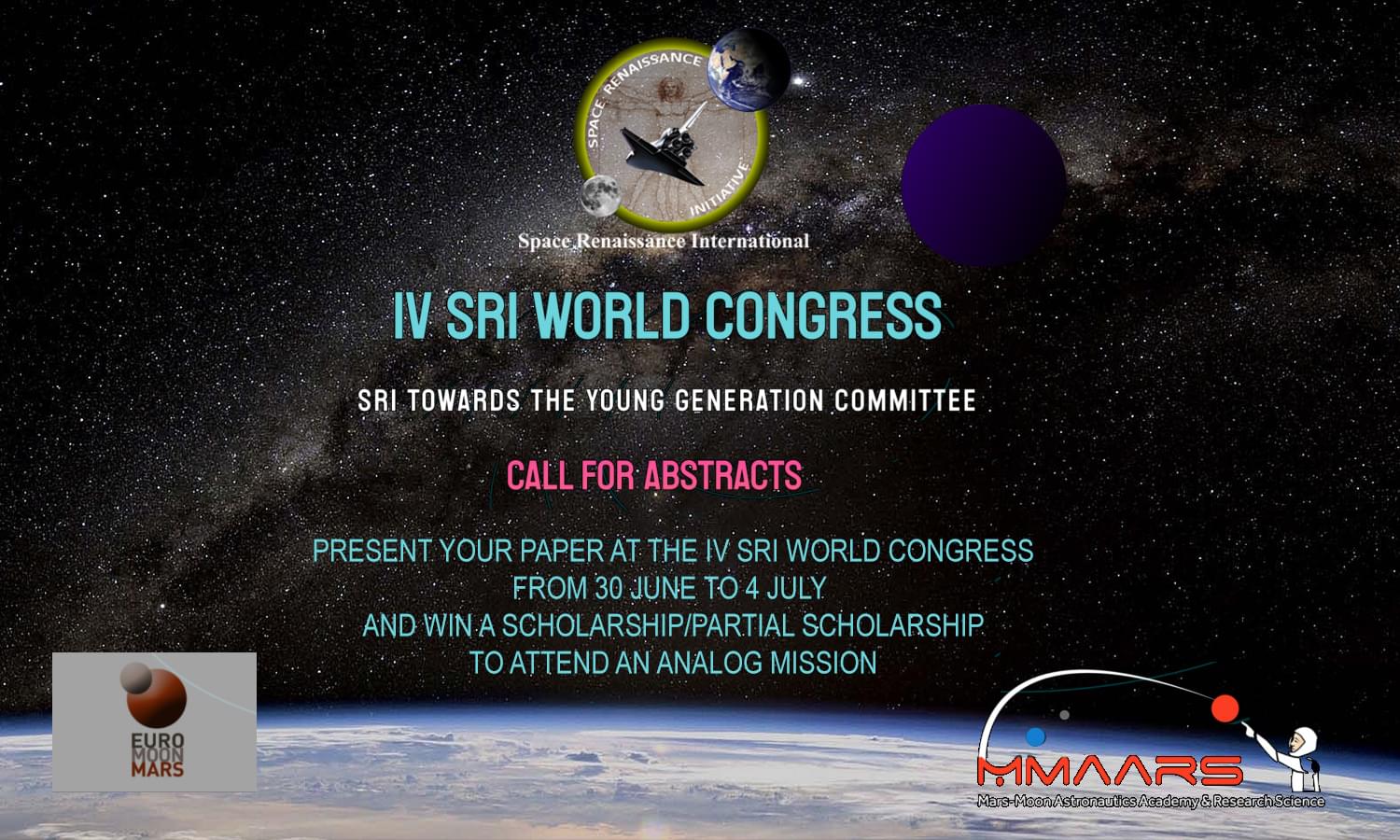
While space agencies globally recognize space applications, diplomacy, and national prestige as core justifications for their work, they remain hesitant to embrace a critical concept: the urgent humanization of space, or the urgent expansion of civilization into space. Similarly, educational institutions have not yet integrated matters related to civilian space development into their curricula. Reviewing the Space Renaissance Manifesto provides a deeper understanding of why the “humanization of space” is essential for the future. The proposition of diverting military spending toward civilian space development is simple yet transformative: it would directly elevate human quality of life. Wars are the worst experience a human population can encounter, and today we are witnessing more military confrontations around the world than at any time since WWII, action is necessary. With this short letter, we are calling the youth to take action. Youth working, or aspiring to work, in the space domain, are welcome to join Space Renaissance International (SRI) and become part of our cause. The Towards the Young Generation Committee is dedicated to guiding the next generation and advocating for the expansion of humanity into the cosmos.
This year marks the IV SRI World Congress (SRIC4), a landmark online event held every five years to set strategic guidelines. For the first time, a dedicated Youth Session is being hosted. Please see the specific EHTOS Call for Papers. And submit your abstract. Be sure to flag the EHTOS checkbox: “I am under 35 years old, this abstract is for the EHTOS context”
As a young professional or student, you will receive a discount when joining SRI. By submitting an abstract to the SRI World Congress, you will automatically join the youth special session.

Current vision systems for robots and drones rely on 3D sensors that, although powerful, do not always keep up with the fast-paced, unpredictable movement of the real world. These systems often struggle to measure speed instantly or are too bulky and expensive for everyday use. Now, in a paper published in the journal Nature, scientists report how they have developed a 4D imaging sensor on a chip that creates 3D maps of an environment while simultaneously tracking the speed of moving objects.
The researchers built a focal plane array (FPA), a physical grid of 61,952 stationary pixels etched onto a single silicon chip. Each one is a tiny sensor that emits laser light toward a scene and detects the reflected signal.
To “see” its surroundings, laser light from an external source is fed into the chip. This light is routed across the chip through a network of optical switches that sequentially direct it to groups of pixels. Each pixel then uses a technique called FMCW LiDAR to measure the returning signal, which is later processed to determine distance and speed. In many LiDAR systems, one set of pixels sends the light, and another receives it, but here, all pixels both send and receive, making the system much more compact.

Russian state-sponsored hackers have been linked to an ongoing Signal and WhatsApp phishing campaign targeting government officials, military personnel, and journalists to gain access to sensitive messages.
This report comes from the Netherlands Defence Intelligence and Security Service (MIVD) and the Netherlands General Intelligence and Security Service (AIVD), who confirmed that Dutch government employees have been targeted in the attacks.
The Dutch intelligence agencies say the operation relies on phishing and social-engineering techniques that abuse legitimate authentication features to take over accounts and covertly monitor new messages.

In the vast scale of the cosmos, the word “God” takes on a terrifying new meaning. Today, our channel performs a deep dive into the 15 most powerful space gods in fiction, ranking them not just by their size, but by their ability to rewrite the source code of reality itself. From the machine “janitors” of Mass Effect to the narrative-bending power of The One Above All, we break down six tiers of cosmic authority. We explore the “Neural Physics” of the Precursors, the entropic hunger of Unicron, and the conceptual nightmare of the Chaos Gods. In this video, we cover:
Tier 1: The Material Masters (Reapers, C’tan, Precursors)
Tier 2: The Chaos Agents (The Outsider, Bill Cipher)
Tier 3: The Entropic Consumers (Unicron, The Witness)
Tier 4: The Multiversal Shapers (The Q, Zeno, Anti-Spiral)
Tier 5: The Conceptual Deities (Arceus, Chaos Gods, Azathoth)
Tier 6: The Ultimate Sources (The Presence, The One Above All)
Which of these cosmic entities has the best design? Let us know in the comments! Watch Next: [Link] Star Destroyer vs. Mass Effect Reaper: Technical Breakdown Subscribe to Our Channel for more engineering and lore comparisons!
🧠 Cognitive warfare is real and it’s here already.
That is why the Konrad Adenauer Foundation is putting the topic on the agenda at the Munich Security Conference.
From now on, the focus will be on the following key issues: • Cognitive warfare as a security policy reality • Resilience instead of alarmism • Strategic advantage through the ability to act • Protection of democratic decision-making processes.
Cognitive warfare is changing the logic of modern conflicts. It does not target infrastructure or territory, but rather perception, trust and decision-making ability, thereby blurring the line between war and peace.
More about #MSC2026: https://www.kas.de/de/veranstaltungsberichte/detail/-/conten…t-begonnen.
#munichsecurityconference