Getting ready for battle — future of military gear and acessories.
The Marine Corps is expanding its cyber warfare and information warfare communities, and embracing cutting-edge technologies.
Getting ready for battle — future of military gear and acessories.
The Marine Corps is expanding its cyber warfare and information warfare communities, and embracing cutting-edge technologies.
This story crosses into the realm of satellite launchers and commercial space, but has troubling implications for international security. I personally am a bit more worried about North Korea’s ability to secure ballistic sub-launched weapons of mass destruction since I think that they offer more stealth than an ICBM silo, which we can fairly easily detect.
North Korea’s potential intercontinental ballistic missile (ICBM) threat may be stealing headlines, but the rogue state’s interest in submarine-launched nuclear weapons is arguably even more worrisome.
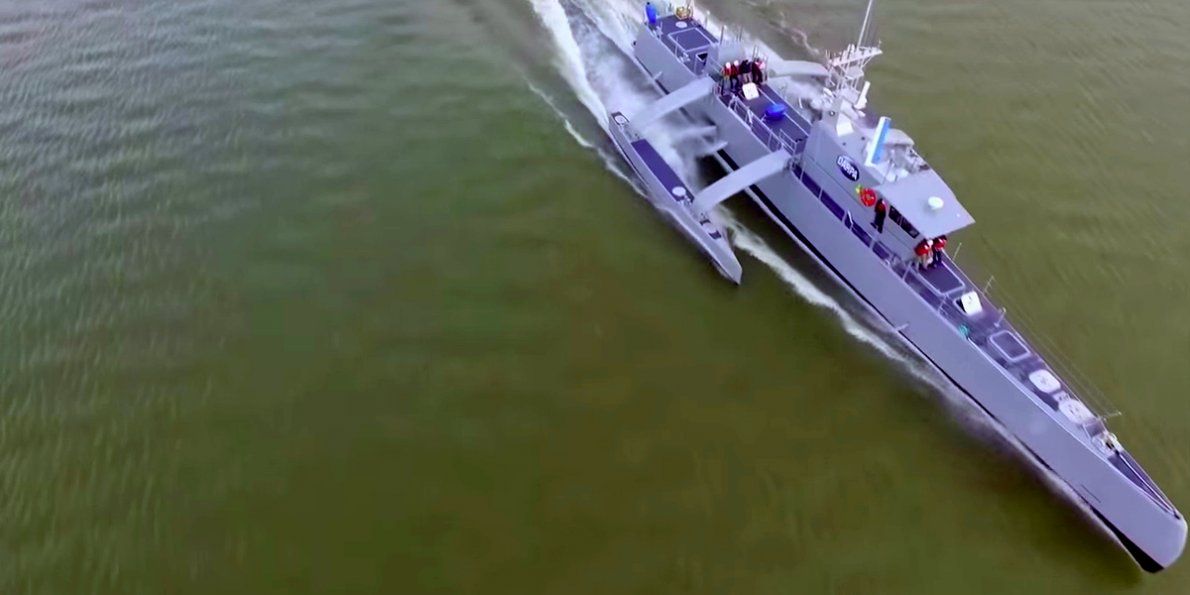
In 2010, DARPA announced it was creating an autonomous, submarine-hunting war machine that would be manned with exactly zero people. Now, that vehicle is ready for action.
The Anti-Submarine Warfare Continuous Trail Unmanned Vessel, or ACTUV, is now scheduled to be launched April 17 from the Vigor Shipyards in Oregon. The ACTUV will continue sea-trials for 18 months following its maiden voyage, where it will be tested for its long-range tracking and self-driving functions.
GPS is an utterly pervasive and wonderful technology, but it’s increasingly not accurate enough for modern demands. Now a team of researchers can make it accurate right down to an inch.
Regular GPS registers your location and velocity by measuring the time it takes to receive signals from four or more satellites, that were sent into space by the military. Alone, it can tell you where you are to within 30 feet. More recently a technique called Differential GPS (DGPS) improved on that resolution by adding ground-based reference stations—increasing accuracy to within 3 feet.
Now, a team from the University of California, Riverside, has developed a technique that augments the regular GPS data with on-board inertial measurements from a sensor. Actually, that’s been tried before, but in the past it’s required large computers to combine the two data streams, rendering it ineffective for use in cars or mobile devices. Instead what the University of California team has done is create a set of new algorithms which, it claims, reduce the complexity of the calculation by several order of magnitude.
The U.S. Navy’s largest unmanned surface vehicle designed to track Chinese and Russian subs will be christened in April.
Honeywell chosen to develop military’s VR technology.
A virtual reality display panel that could replace windows in military ground vehicles is being developed by Honeywell Aerospace for DARPA.
U. Minn & U Central Fla awarded projects to develop technology for the US Military to see through walls.
The emerging tech agency appears to have made at least two awards for that program.
The US military is looking for ways to insert microscopic devices into human brains to help folks communicate with machines, like prosthetic limbs, with their minds. And now, DARPA’s saying scientists have found a way to do just that—without ripping open patients’ skulls.
In the DARPA-funded study, researchers at the University of Melbourne have developed a device that could help people use their brains to control machines. These machines might include technology that helps patients control physical disabilities or neurological disorders. The results were published in the journal Nature Biotechnology.
In the study, the team inserted a paperclip-sized object into the motor cortexes of sheep. (That’s the part of the brain that oversees voluntary movement.) The device is a twist on traditional stents, those teeny tiny tubes that surgeons stick in vessels to improve blood flow.
“Full exploitation of this information is a major challenge,” officials with the Defense Advanced Research Projects Agency (DARPA) wrote in a 2009 brief on “deep learning.”
“Human observation and analysis of [intelligence, surveillance and reconnaissance] assets is essential, but the training of humans is both expensive and time-consuming. Human performance also varies due to individuals’ capabilities and training, fatigue, boredom, and human attentional capacity.”
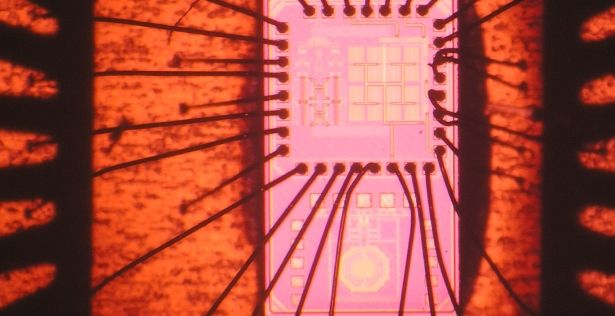
Working with a team of researchers at MIT, DARPA is hoping to take all of that human know-how and shrink it down into processing unit no bigger than your cellphone, using a microchip known as “Eyeriss.” The concept relies on “neural networks;” computerized memory networks based on the workings of the human brain.