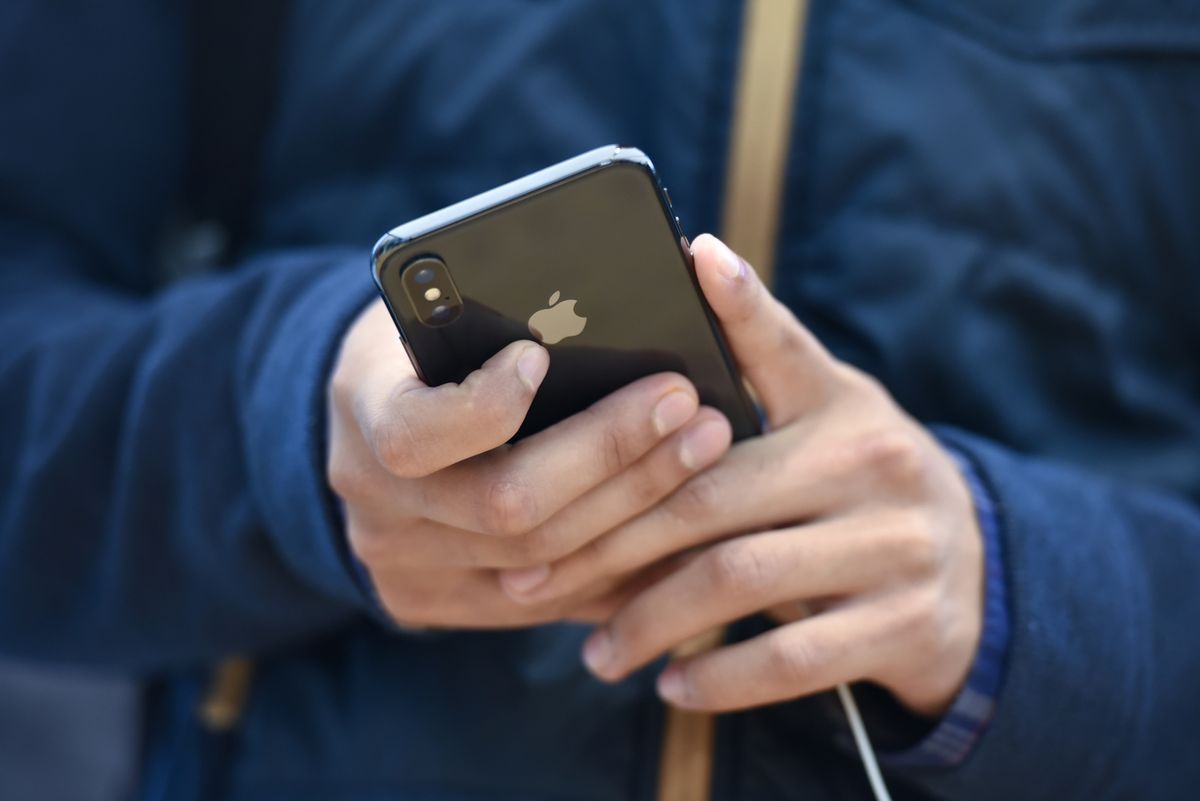
Apple Inc., seeking a breakthrough product to succeed the iPhone, aims to have technology ready for an augmented-reality headset in 2019 and could ship a product as early as 2020.
The big roll out is set for 2021–2022.
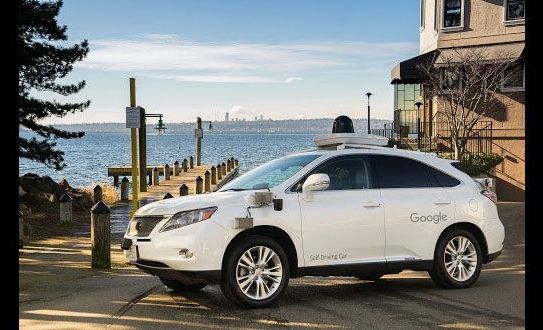
A decade ago, there wasn’t much talk about self-driving cars or autonomous-cars, but Toyota and Lexus were setting the stage with their self-parking cars. They aired television commercials showing how cars magically parallel-parked themselves. That was before any mention of the first iPhone or Android. At the time, it seemed amazing, but that was nothing compared to what’s coming next.
The self-parking revolution that spread throughout the automotive industry over the last decade is now expanding. There is more technology in cars today than ever before: navigation systems, automatic updates wirelessly downloaded to the dashboard, in-cabin WiFi and much more.
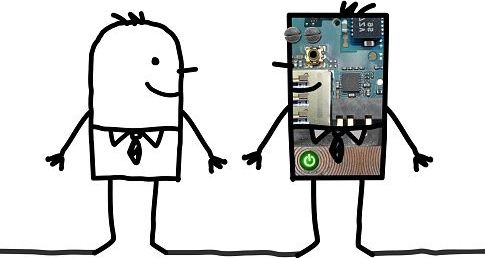
A local ABC story on #transhumanism:
NORFOLK, Va. (WVEC) — From the minute we wake up until we go to sleep, we’re constantly surrounded by technology.
Computers, cell phones, iPads, they’ve become ingrained in our everyday lives.
“There are all sorts of technological advances that conceivable could make the world much better for human beings,” said Mark Waser, an artificial intelligence expert.
He believes with the help of technology, life can be even better for all humans.
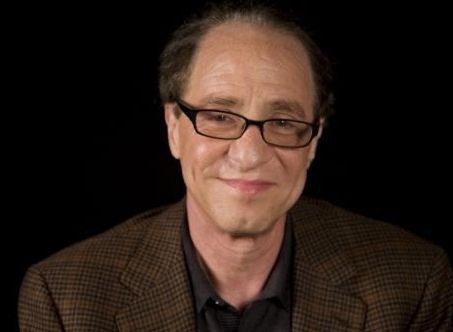
Ray Kurzweil is director of engineering at Google but he is better known for writing best-selling books outlining the future of artificial intelligence.
He has made 147 predictions on the future of technology including the ubiquity of wearable devices and the move from desktops and laptops to smartphones and tablets. In fact, his prediction rate has been rated 86 per cent accurate.
With this in mind, fans were excited to see Kurzweil answer their questions in a live streaming interview session last week where he elaborated on his predictions.
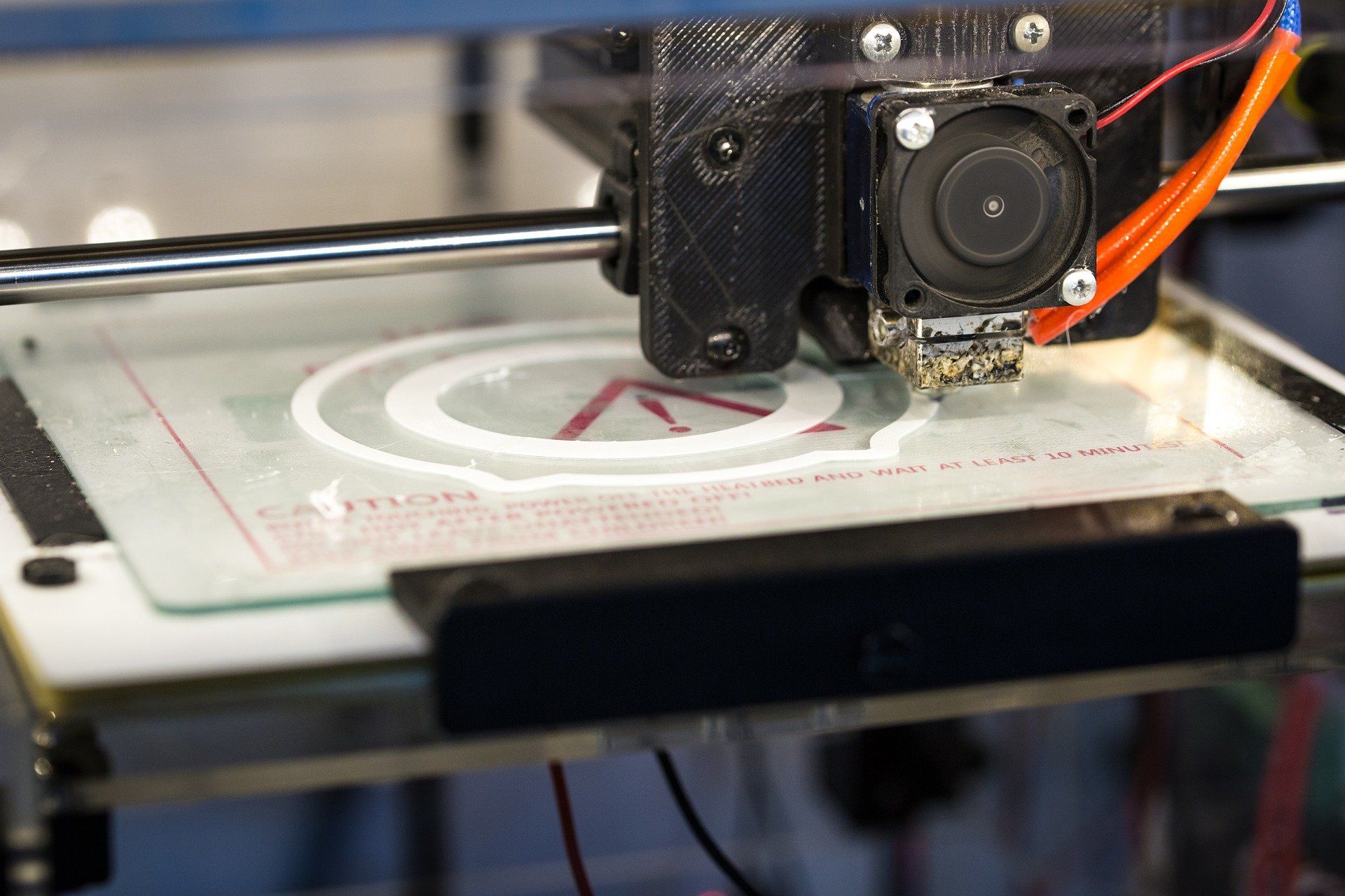
Imagine printing off a wristband that charges your smartphone or electric car with cheap supplies from a local hardware store.
That’s the direction materials research is heading at Brunel University London where scientists have become the first to simply and affordably 3D print a flexible, wearable ‘battery’.
The technique opens the way for novel designs for super-efficient, wearable power for phones, electric cars, medical implants like pacemakers and more.
LONDON: A humanoid robot took the stage at the Future Investment Initiative yesterday and had an amusing exchange with the host to the delight of hundreds of delegates.
Smartphones were held aloft as Sophia, a robot designed by Hong Kong company Hanson Robotics, gave a presentation that demonstrated her capacity for human expression.
Sophia made global headlines when she was granted Saudi citizenship, making the kingdom the first country in the world to offer its citizenship to a robot.
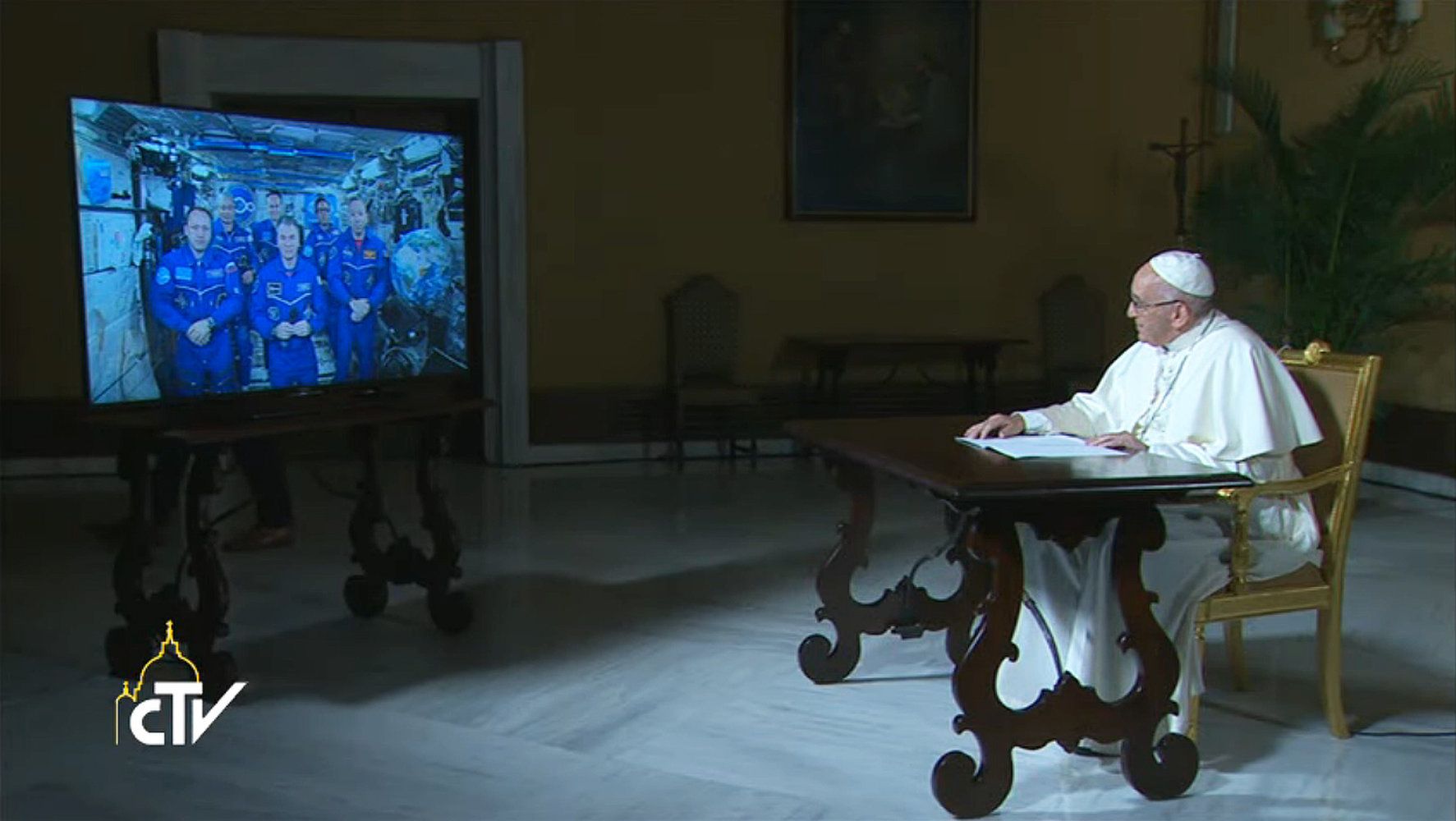
Pope Francis made a phone call to the International Space Station today (Oct. 26) to ask its six occupants deep questions about humanity’s place in the universe.
Calling from the Vatican in Rome, Pope Francis spoke with Italian astronaut Paolo Nespoli of the European Space Agency along with three NASA astronauts and two Russian cosmonauts.
“Your little glass palace in totality is greater than the sum of its parts, and this is the example that you give us,” Pope Francis said through a translator. [Space Station Photos: The Expedition 53 Crew in Orbit].
Neat!
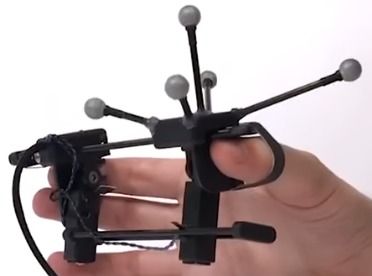
Drawing in air, touchless control of virtual objects, and a modular mobile phone with snap-in sections (for lending to friends, family members, or even strangers) are among the innovative user-interface concepts to be introduced at the 30th ACM User Interface Software and Technology Symposium (UIST 2017) on October 22–25 in Quebec City, Canada.
Here are three concepts to be presented, developed by researchers at Dartmouth College’s human computer interface lab.
Driverless cars need superhuman senses. And for the most part they seem to have them, in the form of lidar, radar, ultrasound, near-infrared, and other sensors. But regular cameras, often forgotten about in favor of more exotic technologies, are incredibly important given they’re used to collect data that’s used to, say, read the messages on road signs. So Sony’s new image sensor is designed to give regular camera vision a boost, too.
The new $90 IMX324 has an effective resolution of only 7.42 megapixels, which sounds small compared to your smartphone camera. But with about three times the vertical resolution of most car camera sensors, it packs a punch. It can see road signs from 160 meters away, has low-light sensitivity that allows it to see pedestrians in dark situations, and offers a trick that captures dark sections at high sensitivity but bright sections at high resolution in order to max out image recognition. The image above shows how much sharper the new tech than its predecessor from the same distance.
Don’t expect a beefed-up camera to eliminate the need for other sensors, though: even with strong low-light performance, cameras don’t work well in the dark, and they can’t offer the precise ranging abilities of other sensors. That means lidar and radar will remain crucial complements to humble optical cameras, however fancy they get.