Toggle light / dark theme

Gold nanoparticles found to reverse brain deficits in multiple sclerosis and Parkinson’s

Results from phase two clinical trials at UT Southwestern Medical Center showed that a suspension of gold nanocrystals taken daily by patients with multiple sclerosis (MS) and Parkinson’s disease (PD) significantly reversed deficits of metabolites linked to energy activity in the brain and resulted in functional improvements.

The findings, published in the Journal of Nanobiotechnology (“Evidence of brain target engagement in Parkinson’s disease and multiple sclerosis by the investigational nanomedicine, CNM-Au8, in the REPAIR phase 2 clinical trials”), could eventually help bring this treatment to patients with these and other neurodegenerative diseases, according to the authors.

Gold nanocrystals suspended in a water buffer represent a novel therapeutic agent developed by Clene Nanomedicine for neurodegenerative conditions. This nanomedicine, called CNM-Au8, is being investigated to treat patients with multiple sclerosis and Parkinson’s disease in clinical trials at UT Southwestern. (Illustration: Random 42/Source: Clene Nanomedicine)
The Next Wave of Nanomaterials: Precision-Engineered Nanoscrolls

Janus nanosheets bring unprecedented control to preparation of nanoscrolls.

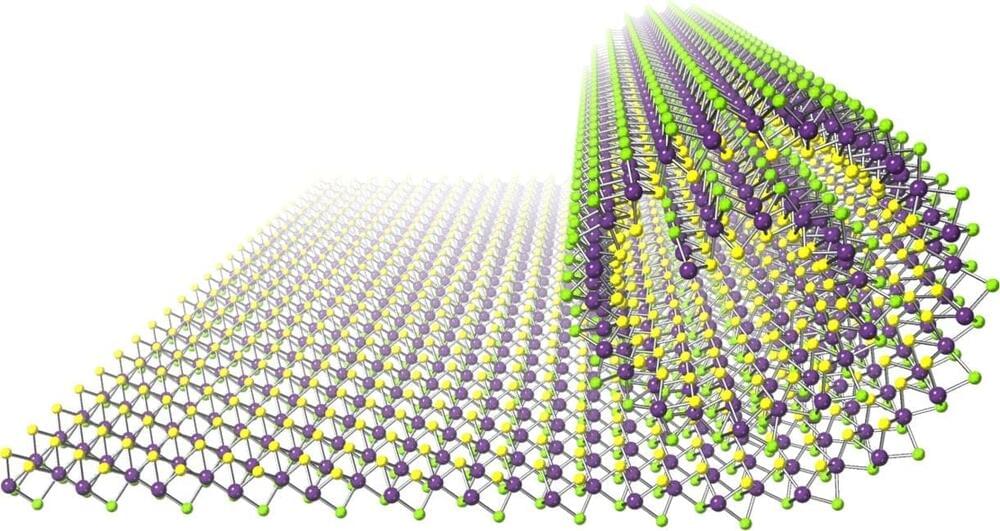
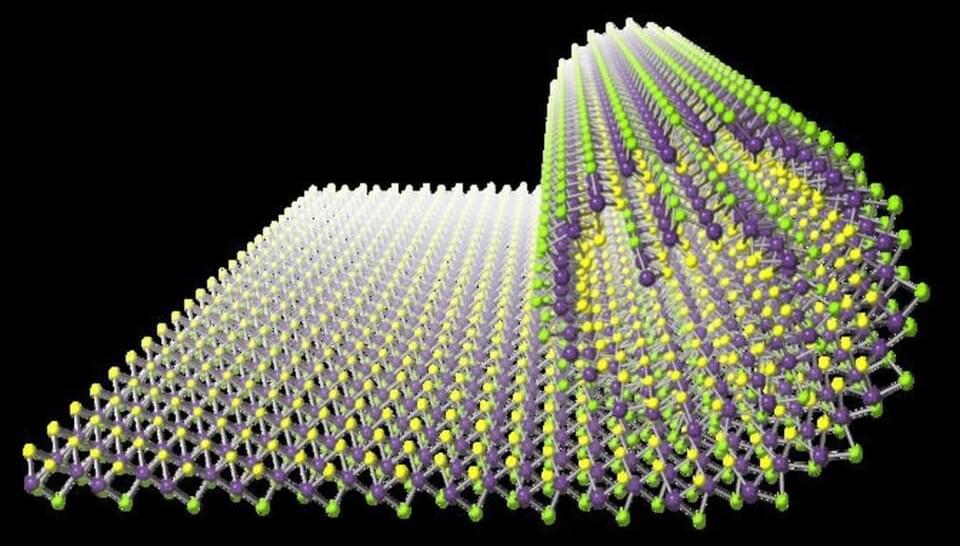
Researchers from Tokyo Metropolitan University have come up with a new way of rolling atomically thin sheets of atoms into “nanoscrolls.” Their unique approach uses transition metal dichalcogenide sheets with a different composition on either side, realizing a tight roll that gives scrolls down to five nanometers in diameter at the center and micrometers in length. Control over the nanostructure in these scrolls promises new developments in catalysis and photovoltaic devices.

Advancements in Nanotechnology.

Beyond cells: Unveiling the potential of genetic circuits on single DNA molecules

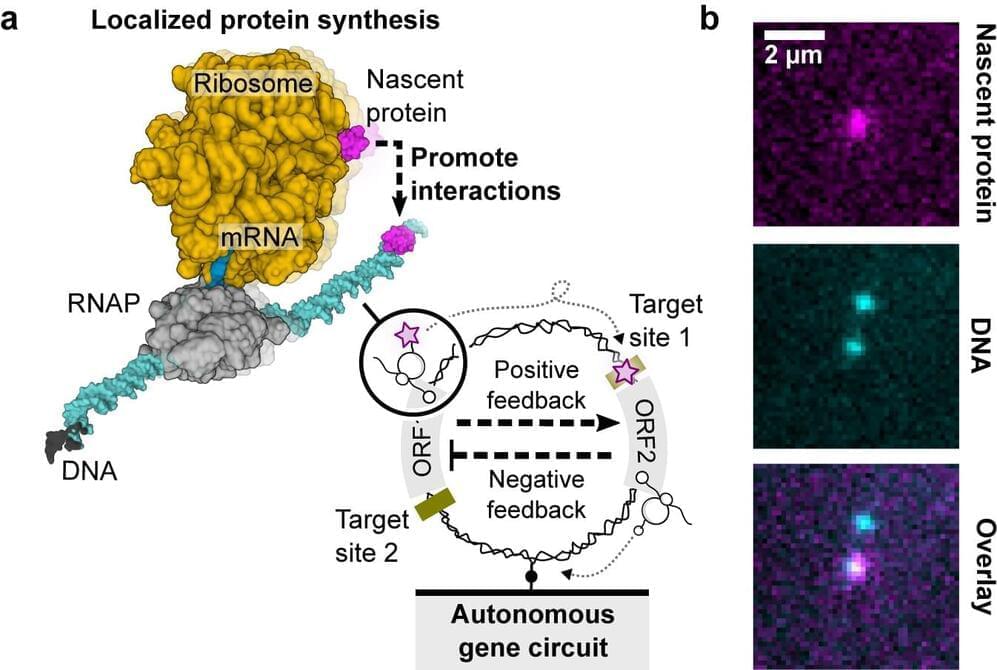
In a new Nature Communications study, researchers have explored the construction of genetic circuits on single DNA molecules, demonstrating localized protein synthesis as a guiding principle for dissipative nanodevices, offering insights into artificial cell design and nanobiotechnology applications.

The term “genetic circuit” is a metaphorical description of the complex network of genetic elements (such as genes, promoters, and ) within a cell that interact to control and cellular functions.

In the realm of artificial cell design, scientists aim to replicate and engineer these genetic circuits to create functional, self-contained units. These circuits act as the molecular machinery responsible for orchestrating cellular processes by precisely regulating the production of proteins and other molecules.

Revolutionizing Industries With Super-Durable Gold Catalysts

A new protective layer developed by researchers improves gold catalysts’ durability, potentially expanding their industrial applications and efficiency. Credit: SciTechDaily.com.

A protective layer applied to gold nanoparticles can boost its resilience.

For the first time, researchers including those at the University of Tokyo discovered a way to improve the durability of gold catalysts by creating a protective layer of metal oxide clusters. The enhanced gold catalysts can withstand a greater range of physical environments compared to unprotected equivalent materials.

Building a DNA nanoparticle to be both carrier and medicine

Scientists have been making nanoparticles out of DNA strands for two decades, manipulating the bonds that maintain DNA’s double-helical shape to sculpt self-assembling structures that could someday have jaw-dropping medical applications.

The study of DNA , however, has focused mostly on their architecture, turning the genetic code of life into components for fabricating minuscule robots. A pair of Iowa State University researchers in the genetics, development, and cell biology department—professor Eric Henderson and recent doctoral graduate Chang-Yong Oh—hope to change that by showing nanoscale materials made of DNA can convey their built-in genetic instructions.

“So far, most people have been exploring DNA nanoparticles from an engineering perspective. Little attention has been paid to the information held in those DNA strands,” Oh said.

Protecting crops through nanotechnology in Southeast Asia

In a recent breakthrough, DNA sequencing technology has uncovered the culprit behind cassava witches’ broom disease: the fungus genus Ceratobasidium. The cutting-edge nanopore technology used for this discovery was first developed to track the COVID-19 virus in Colombia, but is equally suited to identifying and reducing the spread of plant viruses.

The findings, published in Scientific Reports, will help plant pathologists in Laos, Cambodia, Vietnam and Thailand protect farmers’ valued harvest.

“In Southeast Asia, most rely on cassava. Its starch-rich roots form the basis of an industry that supports millions of producers. In the past decade, however, cassava witches’ broom disease has stunted plants, reducing harvests to levels that barely permit affected farmers to make a living,” said Wilmer Cuellar, Senior Scientist at the Alliance of Bioversity and CIAT.

Anisotropic carrier dynamics and laser-fabricated luminescent patterns on oriented single-crystal perovskite wafers

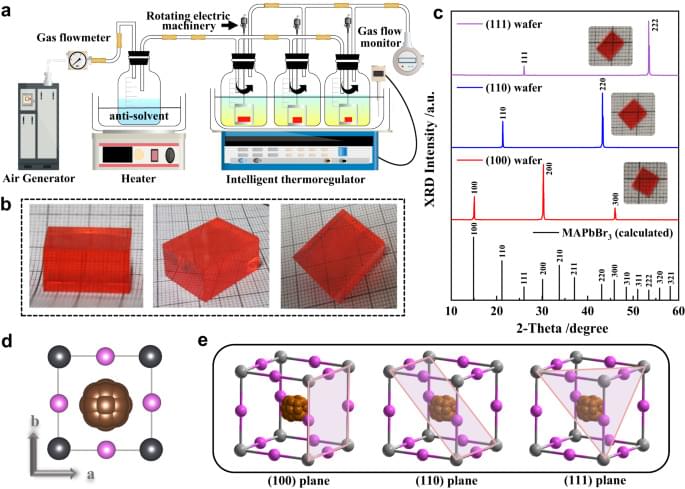
Based on the differently oriented MAPbBr3 single-crystal wafers, this study presents innovative findings primarily in two aspects. First, utilizing polarization-dependent ultrafast time-resolved spectroscopy, the anisotropic dynamics of photoexcited carriers on the picosecond timescale was first revealed. This discovery provides a deeper understanding of the ultrafast carrier relaxation pathways from the perspective of crystal orientation. It holds significant implications for exploring and expanding the potential of perovskite single crystals in polarization-sensitive and ultrafast optoelectronics applications, such as optical modulators, high-speed light polarization sensors, and ballistic transistors, which require both polarization sensitivity and high-field running capability simultaneously. However, a comprehensive understanding to correlate the observed polarization-dependent dynamics with the crystallographic structures has not been achieved yet due to limitations in current excited-state experimental techniques. Further progress will rely on employing more advanced ultrafast probing techniques, in combination with theoretical simulations, to comprehensively elucidate the observed carrier dynamics behind the underlying excited structure.

Second, by employing femtosecond laser processing, luminescent patterns with a remarkable three-order-of-magnitude PL enhancement on the bulk single crystals were achieved. The observed enhancement can be ultimately attributed to the synergy of three factors: the limited carrier diffusion length, the increase in shallow trap-assisted recombination centers, and the passivation of deep traps within the femtosecond laser-induced tentacle-like microstructures. In addition to offering a convenient top-down strategy for enhancing the photoluminescence intensity of bulk crystals, this study has also provided an in-depth understanding of the luminescence mechanism from multiple spatial (bulk and micro/nanoscale) and temporal (steady and transient-state) dimensions.

/* */