Toggle light / dark theme

Fighting brain cancer with bioadhesive nanoparticles

A team of researchers from Yale and the University of Connecticut (UConn) has developed a nanoparticle-based treatment that targets multiple culprits in glioblastoma, a particularly aggressive and deadly form of brain cancer.

The results are published in Science Advances (“Anti-seed PNAs targeting multiple oncomiRs for brain tumor therapy”).

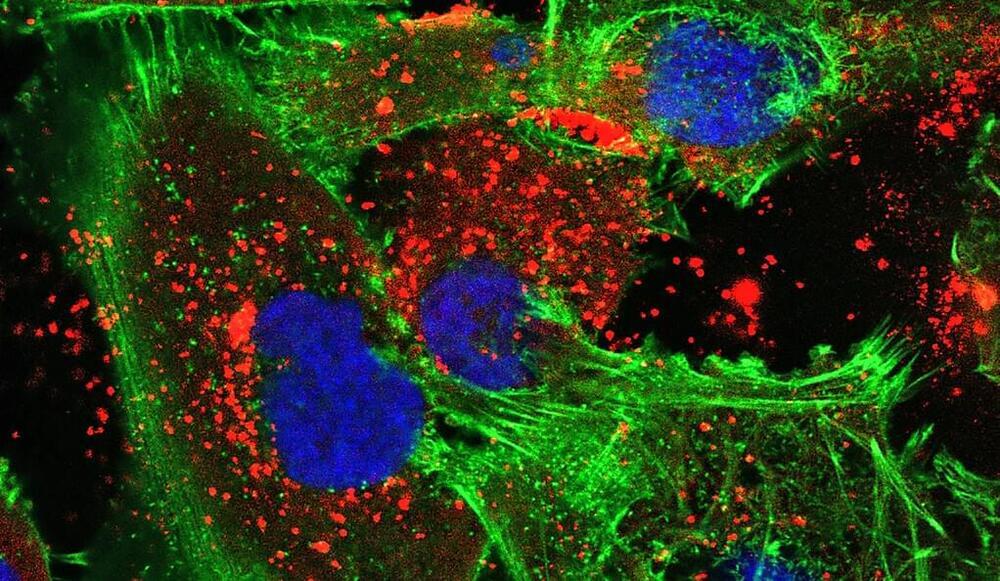
A new treatment developed by Yale researchers uses bioadhesive nanoparticles that adhere to the site of the tumor and then slowly release the synthesized peptide nucleic acids that they’re carrying. In this image, the nanoparticles (red) are visible within human glioma tumor cells (green with blue nuclei). (Image: Yale Cancer Center)
Nanotechnology meets Neuroscience — Nicholas Melosh at BrainMind

Dr. Nick Melosh at the BrainMind Summit hosted at Stanford, interviewed by BrainMind member Christian Bailey.

Nick Melosh is a Professor of Materials Science and Engineering, Stanford University. Nick’s research at Stanford focuses on how to design new inorganic structures to seamlessly integrate with biological systems to address problems that are not feasible by other means. This involves both fundamental work such as to deeply understand how lipid membranes interact with inorganic surfaces, electrokinetic phenomena in biologically relevant solutions, and applying this knowledge into new device designs. Examples of this include “nanostraw” drug delivery platforms for direct delivery or extraction of material through the cell wall using a biomimetic gap-junction made using nanoscale semiconductor processing techniques. We also engineer materials and structures for neural interfaces and electronics pertinent to highly parallel data acquisition and recording. For instance, we have created inorganic electrodes that mimic the hydrophobic banding of natural transmembrane proteins, allowing them to ‘fuse’ into the cell wall, providing a tight electrical junction for solid-state patch clamping. In addition to significant efforts at engineering surfaces at the molecular level, we also work on ‘bridge’ projects that span between engineering and biological/clinical needs. My long history with nano-and microfabrication techniques and their interactions with biological constructs provide the skills necessary to fabricate and analyze new bio-electronic systems.”

Learn more about BrainMind: https://brainmind.org/
Apply to BrainMind: https://brainmind.org/application

Scientists Transplant Human Brain Organoids Into Adult Rats — And They Respond to Visual Stimuli

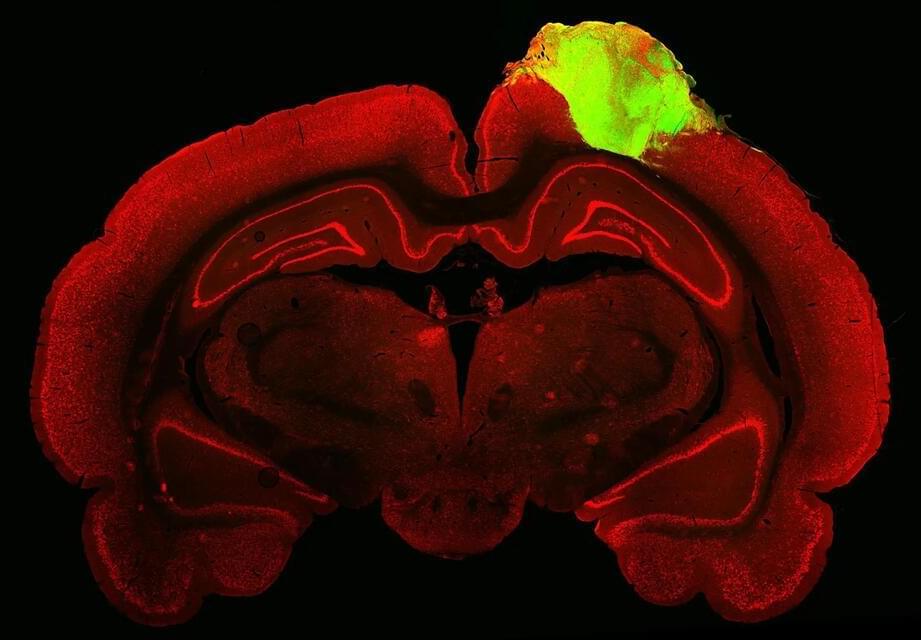
In a study published in the journal Cell Stem Cell on February 2, researchers show that brain organoids—clumps of lab-grown neurons—can integrate with rat brains and respond to visual stimulation like flashing lights.

Decades of research has shown that we can transplant individual human and rodent neurons into rodent brains, and, more recently, it has been demonstrated that human brain organoids can integrate with developing rodent brains. However, whether these organoid grafts can functionally integrate with the visual system of injured adult brains has yet to be explored.

“We focused on not just transplanting individual cells, but actually transplanting tissue,” says senior author H. Isaac Chen, a physician and Assistant Professor of Neurosurgery at the University of Pennsylvania. “Brain organoids have architecture; they have structure that resembles the brain. We were able to look at individual neurons within this structure to gain a deeper understanding of the integration of transplanted organoids.”

Neuroscientist investigates social cognition in biased juries

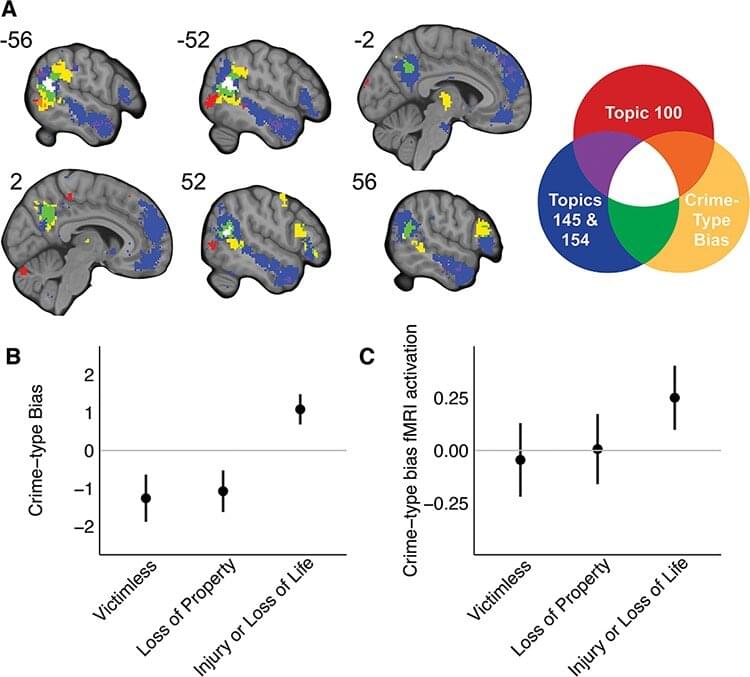
Bias in juries pose a serious challenge for judges and attorneys to conduct fair, equal and impartial trials. A recent paper published in Social Cognitive and Affective Neuroscience considers the overlap between social cognitive processes such as cultural and racial stereotyping and brain activity associated with bias against defendants accused of severe crimes.

R. McKell Carter, one of the paper’s co-authors, is an assistant professor of psychology and neuroscience at the University of Colorado Boulder. He is an expert on : the processes of the brain that interpret the actions, intentions and expectations of others.

Carter’s study examines the role of social cognition in crime-type , when jurors perceive the prosecutor’s case stronger based on the severity of the charges against the defendant. Using imaging (fMRI) scans on mock jurors, researchers mapped out regions of the brain that activated when jurors were presented with fictional case narratives and evidence.

Scientists Say New Brain-Computer Interface Lets Users Transmit 62 Words Per Minute

A team of Stanford scientists claims to have tested a new brain-computer interface (BCI) that can decode speech at up to 62 words per minute, improving the previous record by 3.4 times.

That’d be a massive step towards real-time speech conversion at the pace of natural human conversation.

Max Hodak, who founded BCI company Neuralink alongside Elon Musk, but wasn’t involved in the study, called the research “a meaningful step change in the utility of implanted BCIs” in an email to Futurism.

Quantum tunneling to boost memory consolidation in AI

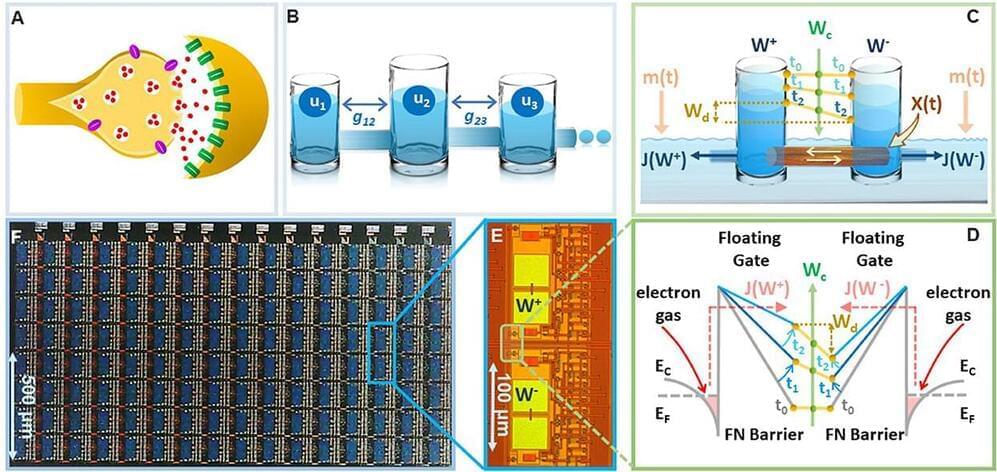
Artificial intelligence and machine learning have made tremendous progress in the past few years including the recent launch of ChatGPT and art generators, but one thing that is still outstanding is an energy-efficient way to generate and store long-and short-term memories at a form factor that is comparable to a human brain. A team of researchers in the McKelvey School of Engineering at Washington University in St. Louis has developed an energy-efficient way to consolidate long-term memories on a tiny chip.

Shantanu Chakrabartty, the Clifford W. Murphy Professor in the Preston M. Green Department of Electrical & Systems Engineering, and members of his lab developed a relatively simple device that mimics the dynamics of the brain’s synapses, connections between that allows signals to pass information. The artificial synapses used in many modern AI systems are relatively simple, whereas biological synapses can potentially store complex memories due to an exquisite interplay between different chemical pathways.

Chakrabartty’s group showed that their artificial synapse could also mimic some of these dynamics that can allow AI systems to continuously learn new tasks without forgetting how to perform old tasks. Results of the research were published Jan. 13 in Frontiers in Neuroscience.

New Brain Atlases and Digital Tools Promise to Make Brain Research More Efficient

Summary: Advancements in brain mapping and the development of new digital tools over the past decade have opened the door to exciting new discoveries in neuroscience and brain sciences.

Source: University of Oslo.

A billion people worldwide suffer from brain diseases such as dementia, addiction and depression. Scientists carrying out brain research at UiO are now contributing to a more efficient utilization of research data by developing 3D brain atlases and new analytic tools.

/* */