Toggle light / dark theme

New insights into how serotonin regulates behavior

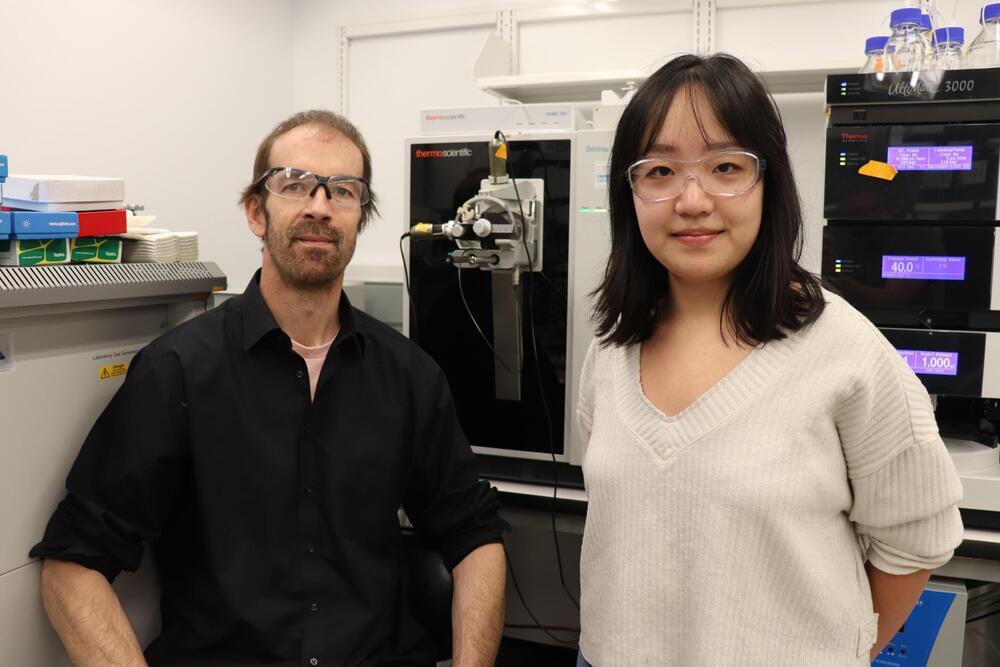
Rates of anxiety and depression have been increasing around the world for decades, a trend that has been sharply exacerbated by the COVID-19 pandemic. New research led by the Boyce Thompson Institute’s Frank Schroeder could ultimately lead to new therapeutics to help relieve this global mental health burden.

First discovered in the 1930s, is a neurotransmitter produced in many animals that mediates myriad behaviors, such as feeding, sleep, mood and cognition. Drugs that alter are the main weapon to treat psychological conditions like anxiety and depression, as well as eating disorders.

As a simple model for neurobiology research, the microscopic roundworm Caenorhabditis elegans has been used extensively to study serotonin’s role in regulating and . For many years, researchers thought that serotonin was made in C. elegans by one specific molecular pathway, and that serotonin was then quickly degraded. Schroeder’s team and colleagues at Columbia University now demonstrated that both of those assumptions were not quite correct.
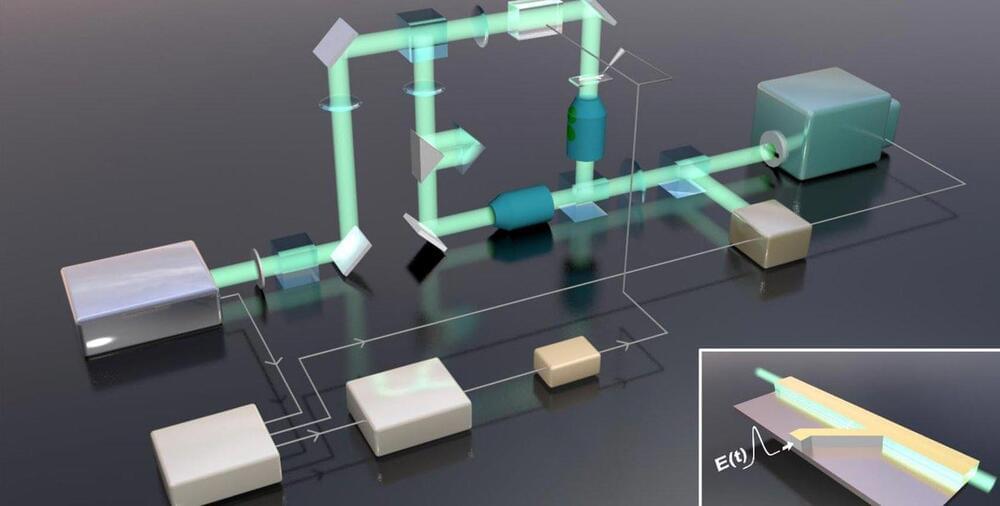
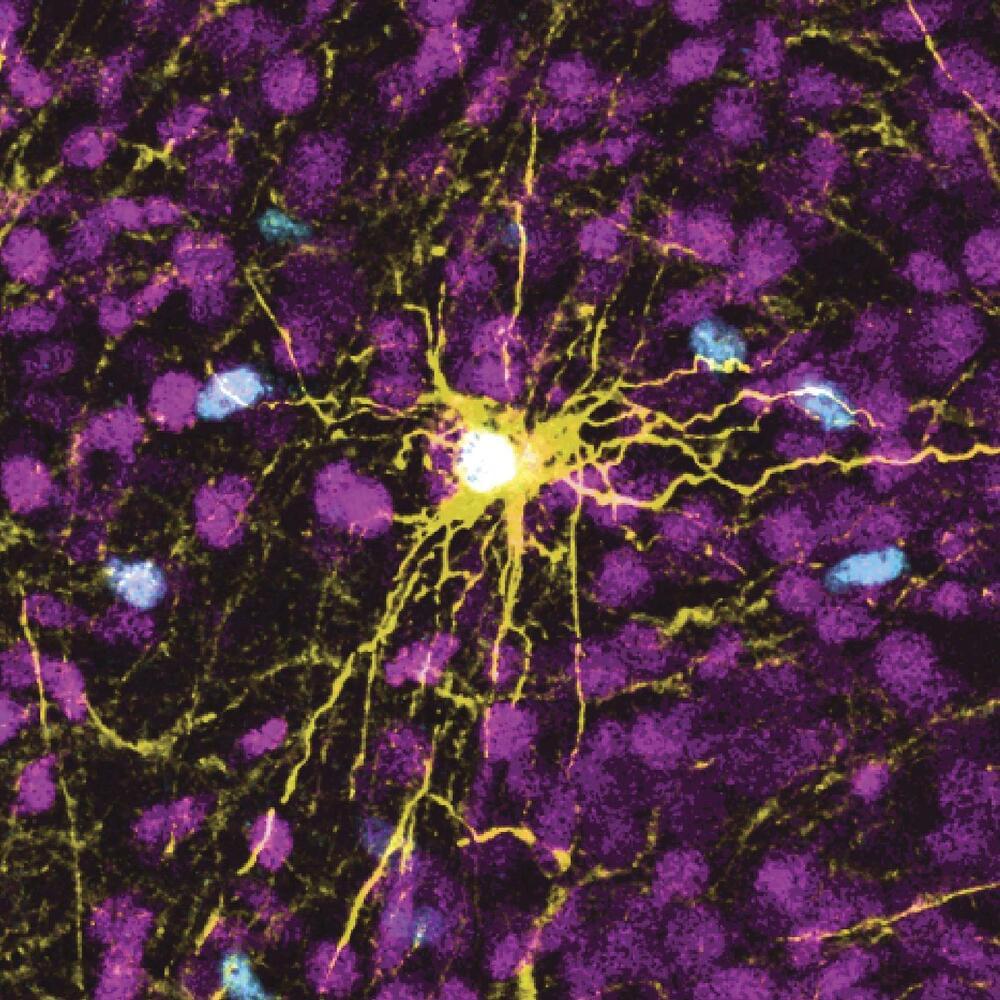
Caltech’s New Ultrafast Camera Captures Signals Traveling Through Nerve Cells

Reach out right now and touch anything around you. Whether it was the wood of your desk, a key on your keyboard, or the fur of your dog, you felt it the instant your finger contacted it.

Or did you?

In actuality, takes a bit of time for your brain to register the sensation from your fingertip. However, it does still happen extremely fast, with the touch signal traveling through your nerves at over 100 miles per hour. In fact, some nerve signals are even faster, approaching speeds of 300 miles per hour.

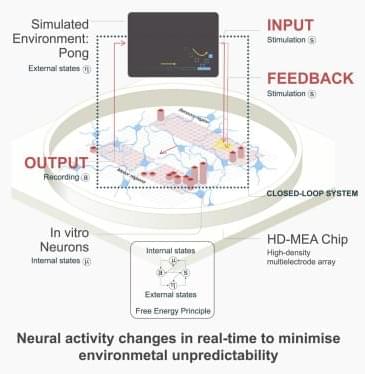
In vitro neurons learn and exhibit sentience when embodied in a simulated game-world

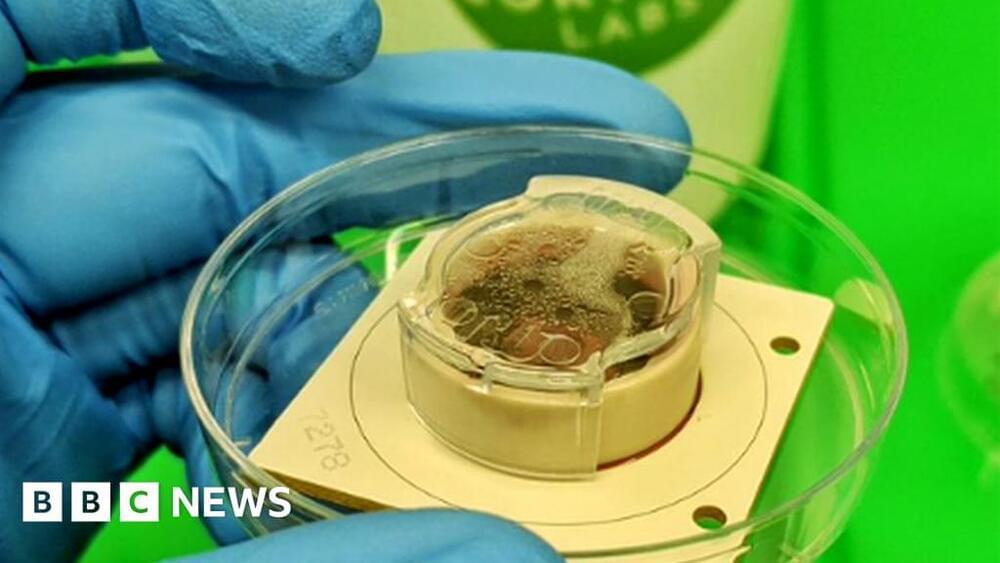
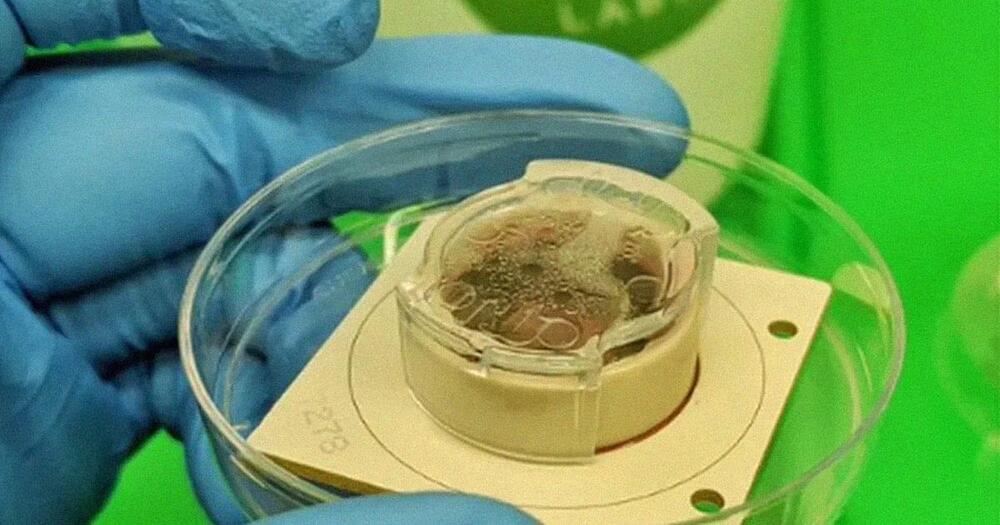
The DishBrain system was developed to leverage neuronal computation and interact with neurons embodied in a simulated environment (STAR Methods; Figure 4 A; Video S2). The DishBrain environment is a low-latency, real-time system that interacts with the vendor MaxOne software, allowing it to be used in ways that extend its original functions (Figure 4 B). This system can record electrical activity in a neuronal culture and provide “sensory” (non-invasive) electrical stimulation comparably to the generation of action potentials by activity in the neuronal network (

Toward the neurocomputer: image Processing and pattern recognition with neuronal cultures.

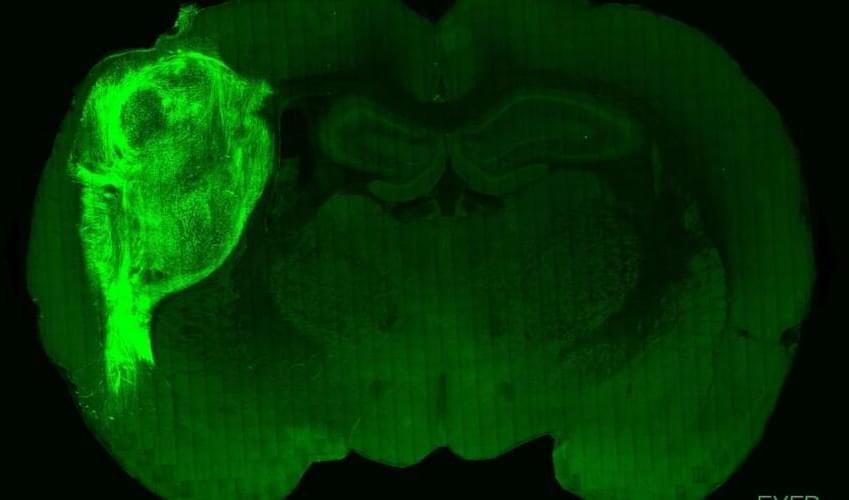
Scientists grow human brain cells in rats to study diseases

Scientists have transplanted human brain cells into the brains of baby rats, where the cells grew and formed connections.

It’s part of an effort to better study human brain development and diseases affecting this most complex of organs, which makes us who we are but has long been shrouded in mystery.

“Many disorders such as autism and schizophrenia are likely uniquely human” but “the human brain certainly has not been very accessible,” said said Dr. Sergiu Pasca, senior author of a study describing the work, published Wednesday in the journal Nature.

/* */