The pursuit of a cure for Alzheimer’s disease is becoming an increasingly competitive and contentious quest with recent years witnessing several important controversies.
One year earlier, in June 2021, the US Food and Drug Administration had approved aducanumab, an antibody-targeting beta-amyloid, as a treatment for Alzheimer’s, even though the data supporting its use were incomplete and contradictory.
A new study recently published in Neurology, the medical journal of the American Academy of Neurology, suggests that physical and mental activities, such as doing chores around the home, exercising, and visiting family and friends, may help reduce the risk of dementia. The research examined how these activities, together with mental activities and the use of electronic devices, affected individuals with and without increased hereditary risk for dementia.
“Many studies have identified potential risk factors for dementia, but we wanted to know more about a wide variety of lifestyle habits and their potential role in the prevention of dementia,” said study author Huan Song, MD, Ph.D., of Sichuan University in Chengdu, China. “Our study found that exercise, household chores, and social visits were linked to a reduced risk of various types of dementia.”
The study involved 501,376 people from a UK database without dementia. The participants had an average age of 36.
The brain is an extremely complex organ whose exact functioning remains difficult to understand. On average, the human brain contains 100 billion neurons that fire upon receiving input signals from multiple sensory organs. But, what is truly remarkable about our brain is the synchronization of this neural firing when triggered by a common input. Put simply, common inputs can generate a collective response in neurons that are not only spatially separated but also have different firing characteristics.
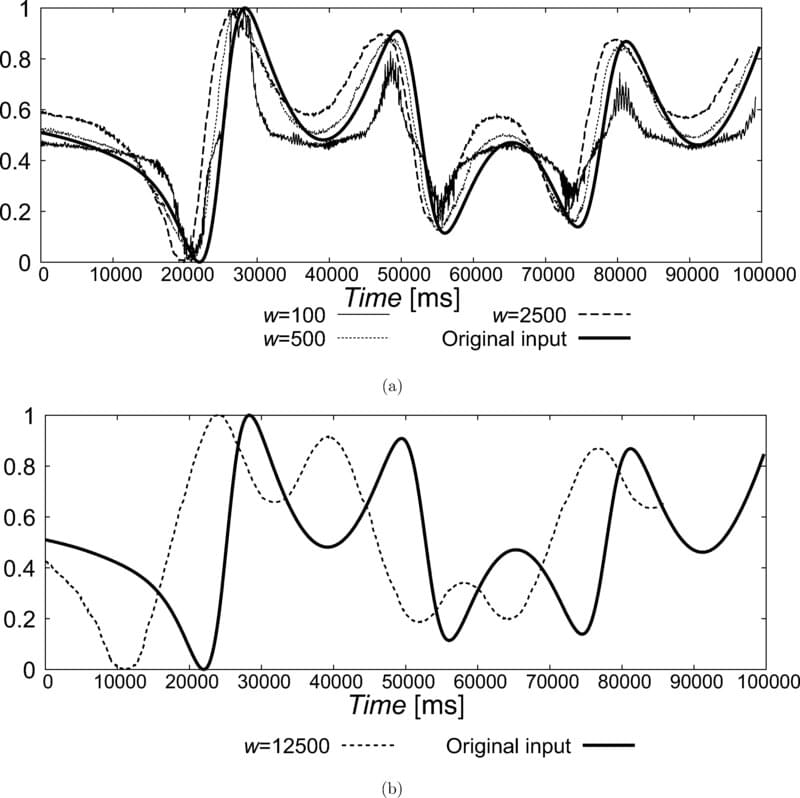
The neural synchronization has been observed before in experiments, and is commonly demonstrated during rest and activities involving tasks. However, the common inputs which produce this are typically unknown in real-world situations. This raises an interesting question: is it possible to reconstruct this input by looking at the output of the neurons?
In a new study published in Physical Review E on September 12, 2022, a team of researchers from Japan, led by Professor Tohru Ikeguchi from Tokyo University of Science (TUS), set out to answer this question. The team, including Associate Professor Ryota Nomura of Waseda University (formerly TUS), and Associate Professor Kantaro Fujiwara of The University of Tokyo, looked at the firing rates of neurons and managed to reconstruct the input signal using a method called “superposed recurrence plot” (SRP).
Bluebird Bio Inc.’s gene therapy for a brain-wasting disease received accelerated approval from U.S. regulators, making it the first treatment of its kind for children living with cerebral adrenoleukodystrophy.
Although we think we are fully aware and in control of our everyday decisions, we actually often follow a series of cognitive scripts. These cognitive scripts often develop in childhood and are personal to you. However, as they are commonly based on a sequence of events that we expect to occur in given situations, many scripts will follow a common theme.
For example, when meeting someone new, we know we are expected to give our name, ask the individual about themselves, partake in some small talk, and then move onto deeper topics. Although cognitive scripts can save time and reduce the mental effort of deciding how to behave, they can also negatively affect our decision-making and productivity.
Summary: Study reveals how reward enhances connectivity between the ventral striatum and the default mode network, impacting behavior.
Source: Kessler Foundation.
Researchers have reported findings that add to our knowledge of how human behavior may be shaped by the default mode network, a specific network of brain regions with both resting and task-related states.
The future of mind-controlled machines might not be as far away as we think.
As director of DARPA’s Biological Technologies Office, Dr Justin Sanchez is part of a team that is looking at how to decode brain signals and use them to control robotic prosthetics.
His research includes the visualisation and decoding of brain activity, the development of devices that could help patients with memory deficits, and advanced prosthetic arm systems that could restore feeling and movement after an injury.
The former associate professor of Biomedical Engineering and Neuroscience at the University of Miami has also looked at the potential of neurotechnology for treating paralysis, Tourette’s Syndrome and Obsessive Compulsive Disorder.
In this talk Dr Justin Sanchez takes us through various real world applications of direct neural interfaces.
Optimizing Human-System Performance — Dr. Greg Lieberman, Ph.D., Neuroscientist / Lead, U.S. Army Combat Capabilities Development Command Army Research Laboratory, U.S. Army Futures Command
Dr. Greg Lieberman, Ph.D. (https://www.arl.army.mil/arl25/meet-arl.php?gregory_lieberman) is a Neuroscientist, and Lead, Optimizing Human-System Performance, at the U.S. Army Combat Capabilities Development Command, Army Research Laboratory (DEVCOM ARL).
DEVCOM ARL, as an integral part of the Army Futures Command, is the Army’s foundational research laboratory focused on operationalizing science to ensure overmatch in any future conflict. DEVCOM ARL shapes future concepts with scientific research and knowledge and delivers technology for modernization solutions to win in the future operating environment.
With a Ph.D. from the University of Vermont in Neuroscience, a Postdoctoral Fellowship in Cognitive Neuroscience from University of New Mexico, and a BA from University of Massachusetts Amherst in Psychology, Dr. Lieberman’s research and research leadership experience ranges from genetics to learning theory, animal behavior to artificial intelligence, and human variability to team dynamics; with additional expertise in S&T strategy and the opportunities afforded by the Future of Work.
Specific areas of Dr. Lieberman’s technical expertise include maximizing human potential, human-autonomy teaming; neuroanatomical organization and connectivity; brain structure-function coupling; learning-driven neuroplasticity; non-invasive neurostimulation and cognitive enhancement; neuroimaging; mind-body medicine and mindfulness meditation; and the mechanisms of neurodegenerative disease, neuropathology, and brain injury.