Toggle light / dark theme

The Stream of Consciousness and Personal Identity

Lastly, there is the concern that this is all whimsically unimportant, or worse, an obtuse disregard for more prosaic societal concerns. Some people may find debates of this sort to be pedantic and even snobbish, given the justified concern that advanced futuristic technologies are likely to benefit wealthy elites long before they trickle down to the masses. Worse, some people may expect that such technologies are likely impossible and that such metaphysical navelgazing is an ivory tower distraction in a world of real problems and challenges. To that reaction I say the importance is not necessarily in determining the prospects of technological and medical marvels that reside far in the future, if ever. The more relevant issue, and the reason I have committed so much of my life to contemplating and writing about these questions, is that we profoundly desire the most accurate model possible of reality and understanding of the human condition. Ultimately, we want to understand ourselves as conscious beings in the universe and to understand the nature of our existence. That is the real issue here, at least for me.

About the author

Keith Wiley is on the board of Carboncopies.org and is a fellow with The Brain Preservation Foundation. He holds a PhD in computer science from the University of New Mexico and works as a data scientist in Seattle, Washington. His book, A Taxonomy and Metaphysics of Mind-Uploading, is available on Amazon (https://www.amazon.com/dp/0692279849?tag=lifeboatfound-20?tag=lifeboatfound-20). His other writings, interviews, and videos about mind uploading are available on his website at http://keithwiley.com and elsewhere on the web.

Repetitive Transcranial Magnetic Stimulation (rTMS)

Repetitive transcranial magnetic stimulation (rTMS) is a noninvasive treatment approved by the U.S. Food and Drug Administration for the treatment of clinical depression. The treatment is also being studied as a potential therapy for Alzheimer’s disease.

How rTMS works

Alzheimer’s disease is the most common cause of dementia, affecting millions of mostly elderly people around the world. In these people, the synaptic activity (connections between nerve cells) collapses and brain networks gradually falter, resulting in a decline in memory and the ability to think and learn.

Long-lasting, dissociable improvements in working memory and long-term memory in older adults with repetitive neuromodulation

This method could be helpful for elderly people.

Our brain has both short-term and long-term memory. While short-term memory helps us with things like remembering the bus number, long-term memory processes information for a long time. However, as we age, our memory does not work as well as it used to.

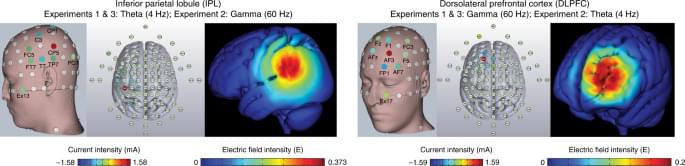
Electrical brain stimulation for 20 minutes on four consecutive days can improve two different types of memory in individuals 65 years and older for at least one month, a study published in the journal Nature Neuroscience reveals.

According to the study, this method could be beneficial for elderly people to maintain their errands very easily.


Reinhart et al. show that repetitive transcranial alternating current stimulation (tACS) of unique combinations of rhythmic frequency and stimulation locations produces selective and long-lasting improvements in verbal working memory and long-term memory in older adults.

Chaos synchronization between linearly coupled chaotic systems

Chaos, as a very interesting nonlinear phenomenon, has been intensively studied in the last three decades [10], [13]. It is found to be useful or has great potential in many disciplines such as in collapse prevention of power systems, biomedical engineering applications to the human brain and heart, thorough liquid mixing with low power consumption, secret communication technology, to name just a few [10], [13], [24].

Over the last decade, many new types of synchronization have appeared: chaotic synchronization [3], [4], lag synchronization [9], adaptive synchronization [2], phase synchronization [6], and generalized synchronization [9], to mention only a few. Since the discovery of chaos synchronization [3], there has been tremendous interest in studying the synchronization of chaotic systems [10]. Recently, synchronization of coupled chaotic systems has received considerable attention [1], [2], [5], [7]. Especially, a typical study of synchronization is the coupled identical chaotic systems [1], [6].

In 1963, Lorenz found the first classical chaotic attractor [12]. In 1999, Chen found another similar but topologically not equivalent chaotic attractor [11], [21], [22], as the dual of the Lorenz system, in a sense defined by Vanĕc̆ek and C̆elikovský [23]: The Lorenz system satisfies the condition a12 a21 0 while Chen system satisfies a12 a21 0. Very recently, Lü et al. produced a new chaotic system [14], [15], which satisfies the condition a12 a21 =0, thereby bridging the gap between the Lorenz and Chen attractors [15], [16], [17].

Using new technique, researchers make surprising discoveries about how flies’ brains respond to tastes

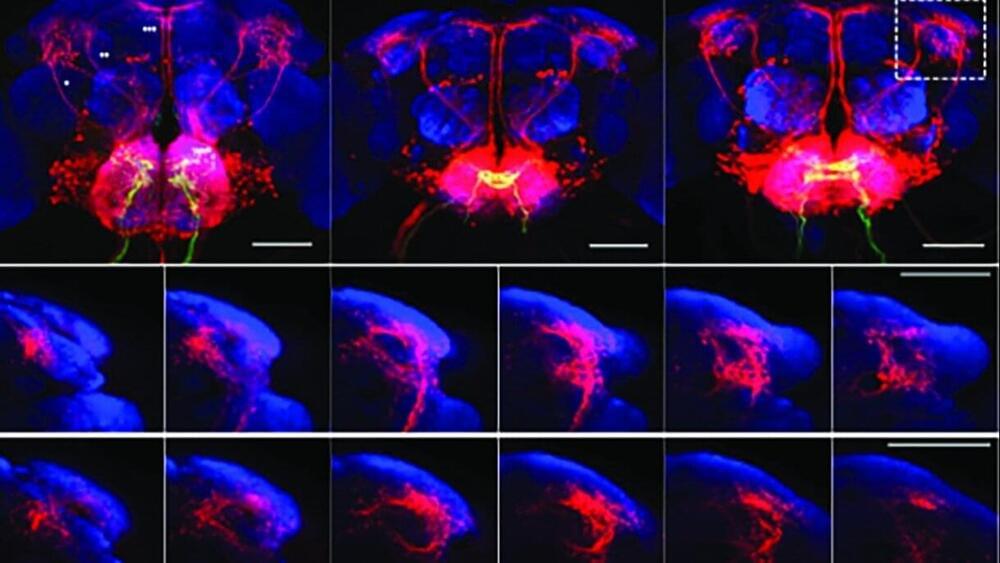
Taste matters to fruit flies, just as it does to humans: like people, the flies tend to seek out and consume sweet-tasting foods and reject foods that taste bitter. However, little is known about how sweet and bitter tastes are represented by the brain circuits that link sensation to behavior.

In a new study published in Current Biology, researchers at Brown University described how they developed a new imaging technique and used it to map the neural activity of fruit flies in response to sweet and bitter tastes.

“These results show that the way fly brains encode the taste of food is more complex than we had anticipated,” said study author Nathaniel Snell, who earned his Ph.D. in neuroscience from Brown in 2021 and conducted the research as part of his thesis.

‘No Other Material Behaves in This Way’: Scientist Identify a Compound With a Memory

It isn’t alive, and has no structures even approaching the complexity of the brain, but a compound called vanadium dioxide is capable of ‘remembering’ previous external stimuli, researchers have found.

This is the first time this ability has been identified in a material; but it may not be the last. The discovery has some pretty intriguing implications for the development of electronic devices, in particular data processing and storage.

“Here we report electronically accessible long-lived structural states in vanadium dioxide that can provide a scheme for data storage and processing,” write a team of researchers led by electrical engineer Mohammad Samizadeh Nikoo of École Polytechnique Fédérale de Lausanne in Switzerland in their paper.

Researchers discover a material that can learn like the brain

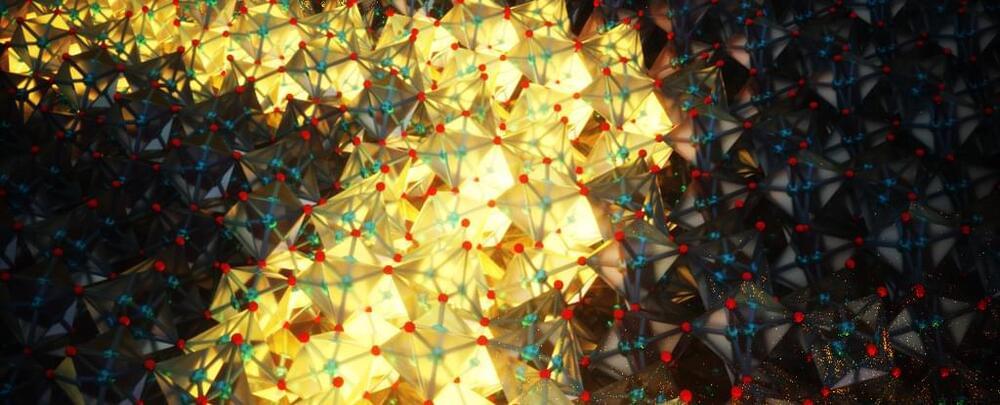
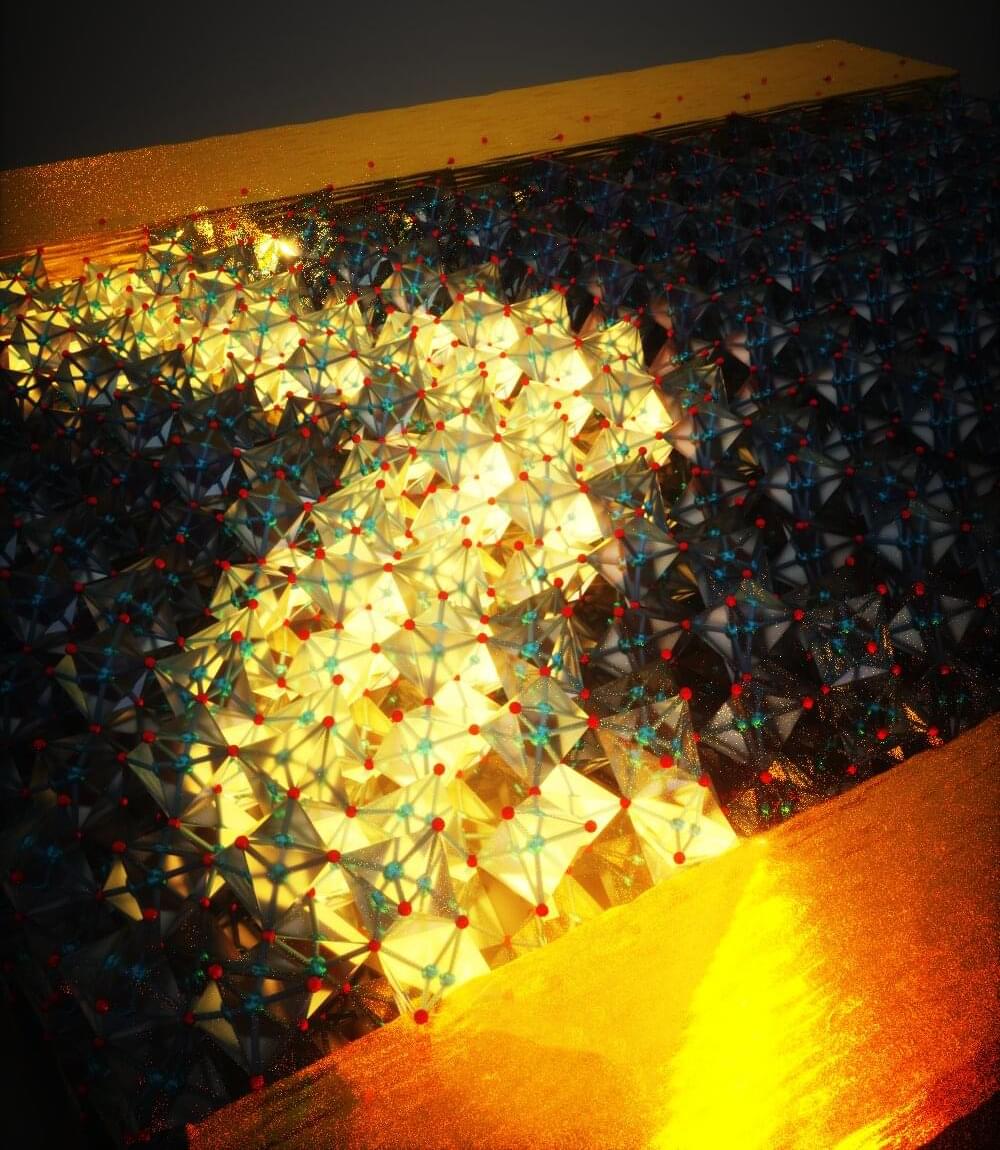
EPFL researchers have discovered that Vanadium Dioxide (VO2), a compound used in electronics, is capable of “remembering” the entire history of previous external stimuli. This is the first material to be identified as possessing this property, although there could be others.

Mohammad Samizadeh Nikoo, a Ph.D. student at EPFL’s Power and Wide-band-gap Electronics Research Laboratory (POWERlab), made a chance discovery during his research on in Vanadium Dioxide (VO2). VO2 has an insulating phase when relaxed at , and undergoes a steep insulator-to-metal transition at 68 °C, where its lattice structure changes. Classically, VO2 exhibits a : “the material reverts back to the insulating state right after removing the excitation” says Samizadeh Nikoo. For his thesis, he set out to discover how long it takes for VO2 to transition from one state to another. But his research led him down a different path: after taking hundreds of measurements, he observed a effect in the material’s structure.

Brains cells born together wire and fire together for life

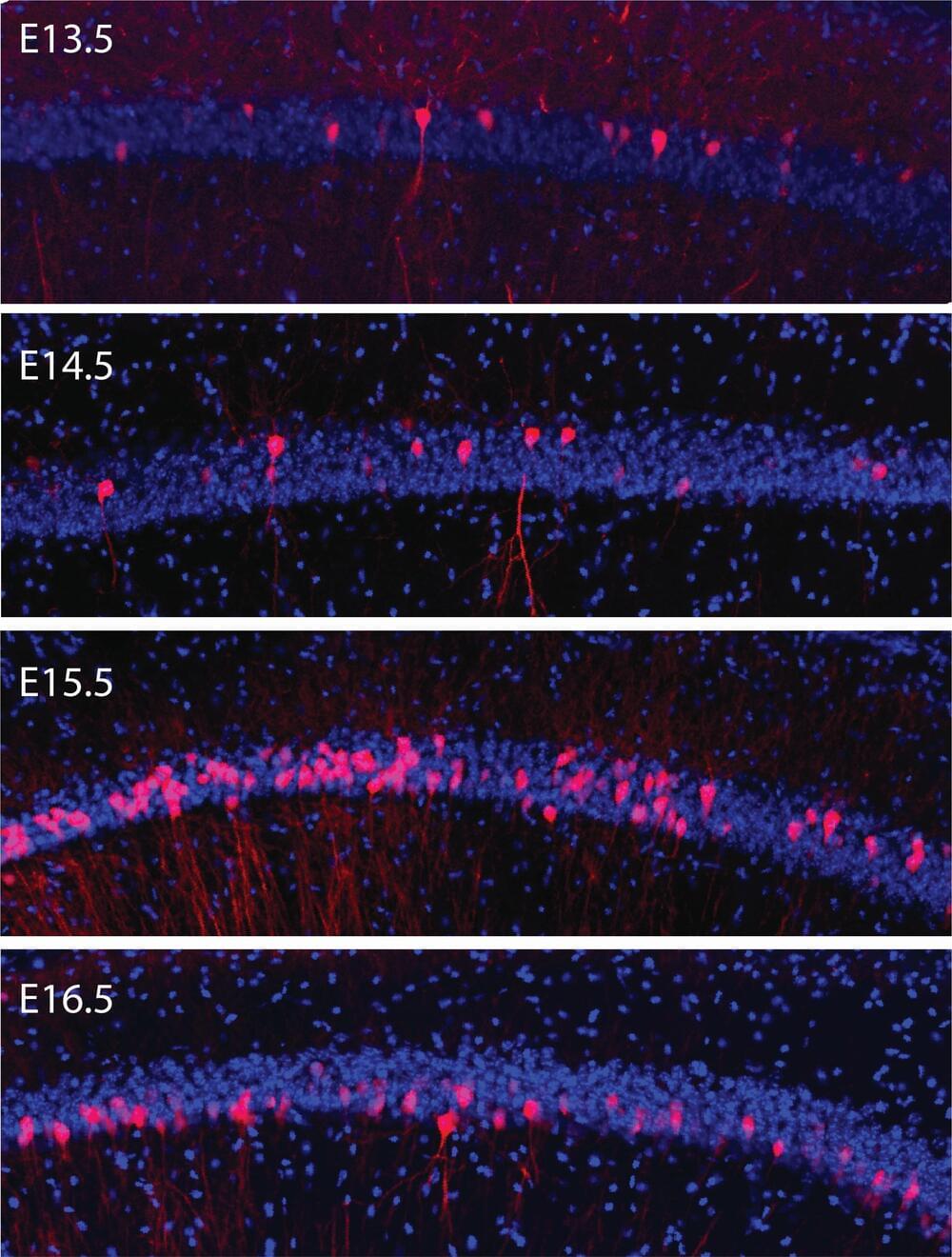
Brain cells with the same “birthdate” are more likely to wire together into cooperative signaling circuits that carry out many functions, including the storage of memories, a new study finds.

Led by researchers from NYU Grossman School of Medicine, the new study on the brains of mice developing in the womb found that () with the same birthdate showed distinct connectivity and activity throughout the animals’ , whether they were asleep or awake.

Published online August 22 in Nature Neuroscience, the findings suggest that evolution took advantage of the orderly birth of neurons—by gestational day—to form localized microcircuits in the hippocampus, the region that forms memories. Rather than attempting to create each new from scratch, the researchers suggest, the brain may exploit the stepwise formation of neuronal layers to establish neural templates, like “Lego pieces,” that match each new experience to an existing template as it is remembered.

Human Skin Cells Reprogrammed Into Aged Neurons To Study Neurodegenerative Disorders

“We took skin biopsies from patients living with Huntington’s disease and reprogrammed the skin biopsies into neurons. We then compared these neurons with reprogrammed neurons from healthy people. The results are very interesting. We have found several defects that explain some of the disease mechanisms in neurons from patients with Huntington’s disease. Among other things, we observed that neurons from patients with Huntington’s disease show problems in breaking down and recycling a particular kind of protein – which can lead to a lack of energy in these cells”, says Johan Jakobsson, professor of neuroscience at Lund University.

The researchers have also measured the biological age of the cells and observed that the reprogrammed neurons retain their biological age, which is significant if they are to be used for research in the new model system.

/* */