Please like, comment, and subscribe!
The Neuro-Network.
Please like, comment, and subscribe!
The Neuro-Network.
27 seconds.
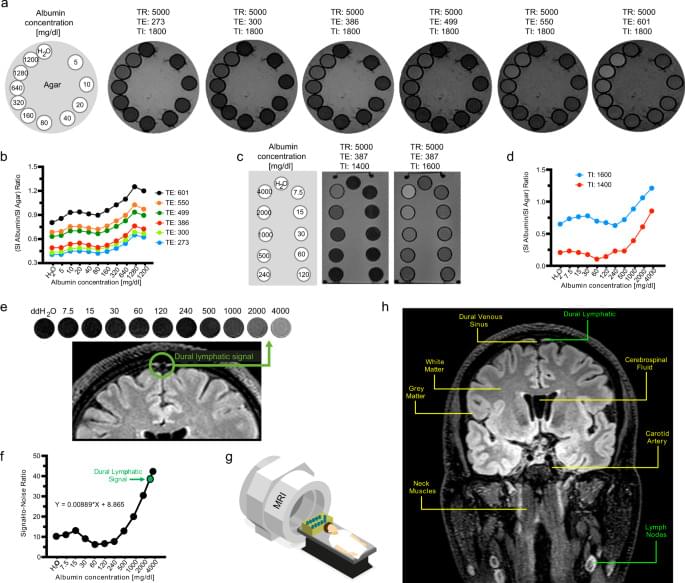
The #medical #university of South Carolina and the University of Florida have shown the first non-invasive visualization of the #brain waste disposal clearance system in real time.
Abstract: #nature Communications: https://www.nature.com/articles/s41467-021-27887-0
McKnight Brain Institute University of Florida: https://mbi.ufl.edu/2022/01/18/mri-study-unveils-key-details…al-system/
Youtube Short: 27 seconds.
The #medical #university of South Carolina and the University of Florida have shown the first non-invasive visualization of the #brain waste disposal clearance system in real time.
Abstract: #nature Communications:
McKnight Brain Institute University of Florida: https://mbi.ufl.edu/2022/01/18/mri-study-unveils-key-details…al-system/
Computers that think more like human brains are inching closer to mainstream adoption. But many unanswered questions remain. Among the most pressing, what types of materials can serve as the best building blocks to unlock the potential of this new style of computing.
For most traditional computing devices, silicon remains the gold standard. However, there is a movement to use more flexible, efficient and environmentally friendly materials for these brain-like devices.
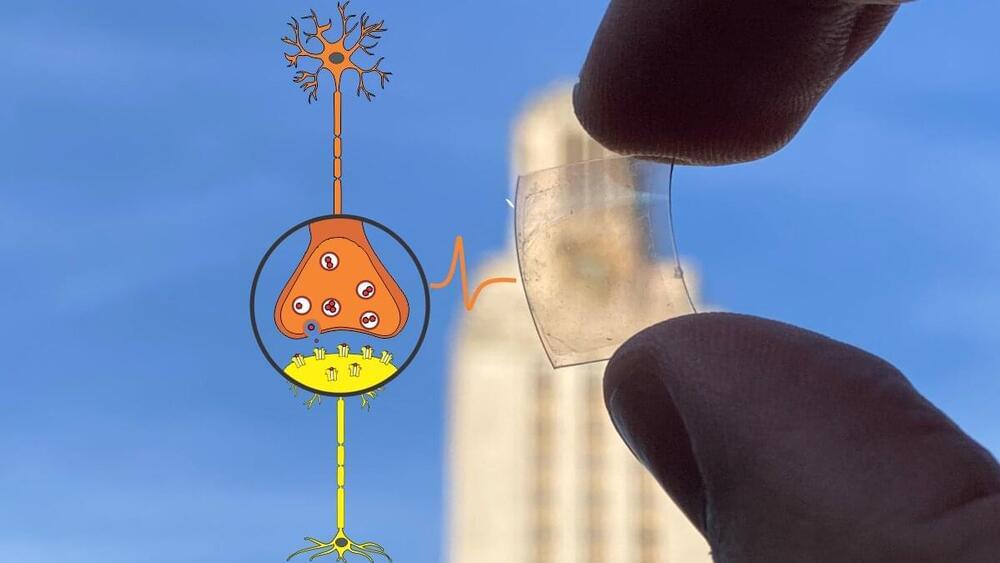
In a new paper, researchers from The University of Texas at Austin developed synaptic transistors for brain-like computers using the thin, flexible material graphene. These transistors are similar to synapses in the brain, that connect neurons to each other.

It’s an everyday scenario: you’re driving down the highway when out of the corner of your eye you spot a car merging into your lane without signaling. How fast can your eyes react to that visual stimulus? Would it make a difference if the offending car were blue instead of green? And if the color green shortened that split-second period between the initial appearance of the stimulus and when the eye began moving towards it (known to scientists as the saccade), could drivers benefit from an augmented reality overlay that made every merging vehicle green?
Qi Sun, a joint professor in Tandon’s Department of Computer Science and Engineering and the Center for Urban Science and Progress (CUSP), is collaborating with neuroscientists to find out.
He and his Ph.D. student Budmonde Duinkharjav—along with colleagues from Princeton, the University of North Carolina, and NVIDIA Research—recently authored the paper “Image Features Influence Reaction Time: A Learned Probabilistic Perceptual Model for Saccade Latency,” presenting a model that can be used to predict temporal gaze behavior, particularly saccadic latency, as a function of the statistics of a displayed image. Inspired by neuroscience, the model could ultimately have great implications for highway safety, telemedicine, e-sports, and in any other arena in which AR and VR are leveraged.
In its heyday, UIUC’s Blue Waters was one of the world’s top supercomputers. Anyone who was curious could drop by its 30,000-square-foot machine room for a tour, and spend half an hour strolling among the 288 huge black cabinets, supported by a 24-megawatt power supply, that housed its hundreds of thousands of computational cores.
Blue Waters is gone, but today UIUC is home to not just one, but tens of thousands of vastly superior computers. Although these wondrous machines put Blue Waters to shame, each one weighs just three pounds, can be fueled by coffee and sandwiches, and is only the size of its owner’s two hands curled together. We all carry them between our ears.
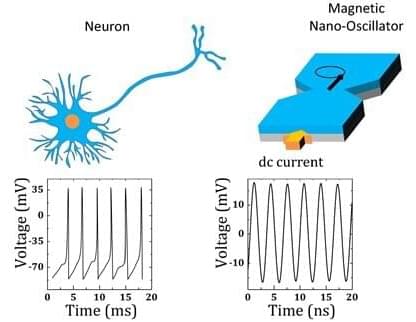
The fact is that humanity is far from having artificial computers that can match the capabilities of the human brain, outside a narrow range of well-defined tasks. Will we ever capture the brain’s magic? To help answer that question, MRL’s Axel Hoffmann recently led the writing of an APL Materials “Perspectives” article that summarizes and reflects on efforts to find so-called “quantum materials” that can mimic brain function.
Scientists Have Created the World’s First Synthetic Embryo with the beginnings of a Brain: 30 Second video.
For the first time ever #scientists have created a #synthetic #embryo using the #stemcell of mice!
Abstract: Journal Cell.
https://www.cell.com/cell/fulltext/S0092-8674(22)00981&#…-149563237
#brain #animals #biology #heart #science #breakthrough #groundbreaking #discovery #israel #research #amazing #doctor #wow #organ #organtransplant