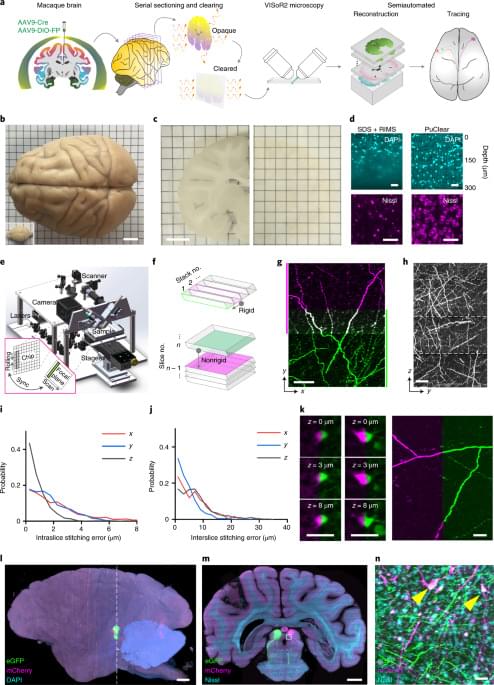
A whole monkey brain is imaged at high resolution in 100 hours.
Patreon support: https://www.patreon.com/braininspired.
Free Video Series: Open Questions in AI and Neuroscience:
Show notes: https://braininspired.co/podcast/103/
Randal, Ken, and I discuss a host of topics around the future goal of uploading our minds into non-brain systems, to continue our mental lives and expand our range of experiences. The basic requirement for such a subtrate-independent mind is to implement whole brain emulation. We discuss two basic approaches to whole brain emulation. The “scan and copy” approach proposes we somehow scan the entire structure of our brains (at whatever scale is necessary) and store that scan until some future date when we have figured out how to us that information to build a substrate that can house your mind. The “gradual replacement” approach proposes we slowly replace parts of the brain with functioning alternative machines, eventually replacing the entire brain with non-biological material and yet retaining a functioning mind.
Randal and Ken are neuroscientists who understand the magnitude and challenges of a massive project like mind uploading, who also understand what we can do right now, with current technology, to advance toward that lofty goal, and who are thoughtful about what steps we need to take to enable further advancements.
Timestamps.
0:00 — Intro.
6:14 — What Ken wants.
11:22 — What Randal wants.
22:29 — Brain preservation.
27:18 — Aldehyde stabilized cryopreservation.
31:51 — Scan and copy vs. gradual replacement.
38:25 — Building a roadmap.
49:45 — Limits of current experimental paradigms.
53:51 — Our evolved brains.
1:06:58 — Counterarguments.
1:10:31 — Animal models for whole brain emulation.
1:15:01 — Understanding vs. emulating brains.
1:22:37 — Current challenges.

Ground-breaking research at Tel Aviv University successfully eradicated glioblastoma, a deadly form of brain cancer. The researchers achieved the result by developing a strategy based on their finding of two crucial mechanisms in the brain that promote tumor growth and survival: one shields cancer cells from the immune system, while the other provides the energy needed for rapid tumor growth. The research discovered that astrocytes, which are brain cells, regulate both methods, and that when they aren’t there, tumor cells die and are eliminated.
Rita Perelroizen, a Ph.D. student, served as the study’s lead researcher. She collaborated with Professor Eytan Ruppin of the National Institutes of Health (NIH) in the United States and was supervised by Dr. Lior Mayo of the Shmunis School of Biomedicine and Cancer Research and the Sagol School of Neuroscience at Tel Aviv. The study was recently published in the journal Brain and was highlighted with scientific commentary.
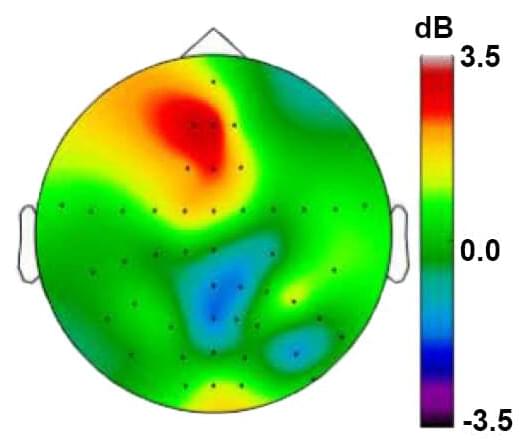
In a new study that could improve the therapeutic efficacy of deep-brain stimulation (DBS) for psychiatric disorders such as depression, a team of scientists shows that, when DBS is applied to a specific brain region, it improves patients’ cognitive control over their behavior by increasing the power of a specific low-frequency brain rhythm in their prefrontal cortex.
The findings, published April 4 in Nature Communications, suggest that the increase in “theta” rhythms, readily detectable in EEG recordings, could provide neurosurgeons and psychiatrists with the reliable, objective and rapid feedback they’ve needed to properly fine-tune the placement and “dosage” of DBS electrical stimulation. In Parkinson’s disease, where DBS has been most successful, that kind of feedback is available through a reduction in a patient’s tremors. But for depression or obsessive-compulsive disorder, symptoms can be more subtle, subjective and slowly emergent.
“This is a major step forward for psychiatric brain stimulation,” said Alik Widge, the lead and corresponding author on the paper. Widge began the work while a clinical fellow at the Picower Institute for Learning and Memory at MIT and a research fellow at Massachusetts General Hospital (MGH). He is now an Assistant Professor of Psychiatry at the University of Minnesota Medical School. “This study shows us a specific mechanism of how DBS improves patients’ brain function, which should let us better identify who can benefit and how to optimize their individual treatment.”
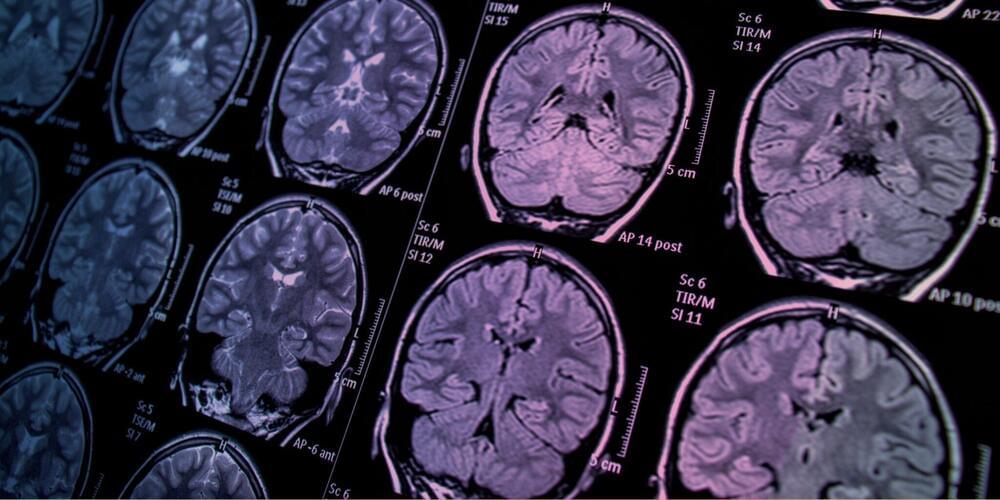
Since the infancy of functional magnetic resonance imaging (fMRI) in 1990, people have been fascinated by the potential for brain scans to unlock the mysteries of the human mind, our behaviors and beliefs. Many breathtaking applications for brain scans have been devised, but hype often exceeds what empirical science can deliver. It’s time to ask: What’s the big picture of neuroscience and what are the limitations of brain scans?
The specific aims of any research endeavor depend on who you ask and what funding agency is involved, says Michael Spezio, associate professor of psychology, data science and neuroscience at Scripps College. Some people believe neuroscience has the potential to explain human cognition and behavior as a fully mechanistic process, ultimately debunking an “illusion of free will.” Not all neuroscientists agree that free will is a myth, but it’s a strong current these days. Neuroscience also has applications in finance, artificial intelligence, weapons research and national security.
For other researchers and funders, the specific aim of neuroscience involves focusing on medical imaging, genetics, the study of proteins (proteomics) and the study of neural connections (connectomics). As caring persons who are biological, neurological, physical, social and spiritual, we can use neuroscience to think carefully and understand our humanity and possible ways to escape some of the traps we’ve built for ourselves, says Spezio. Also, brain scans can enhance research into spirituality, mindfulness and theory of mind – the awareness of emotions, values, empathy, beliefs, intentions and mental states to explain or predict others’ behavior.
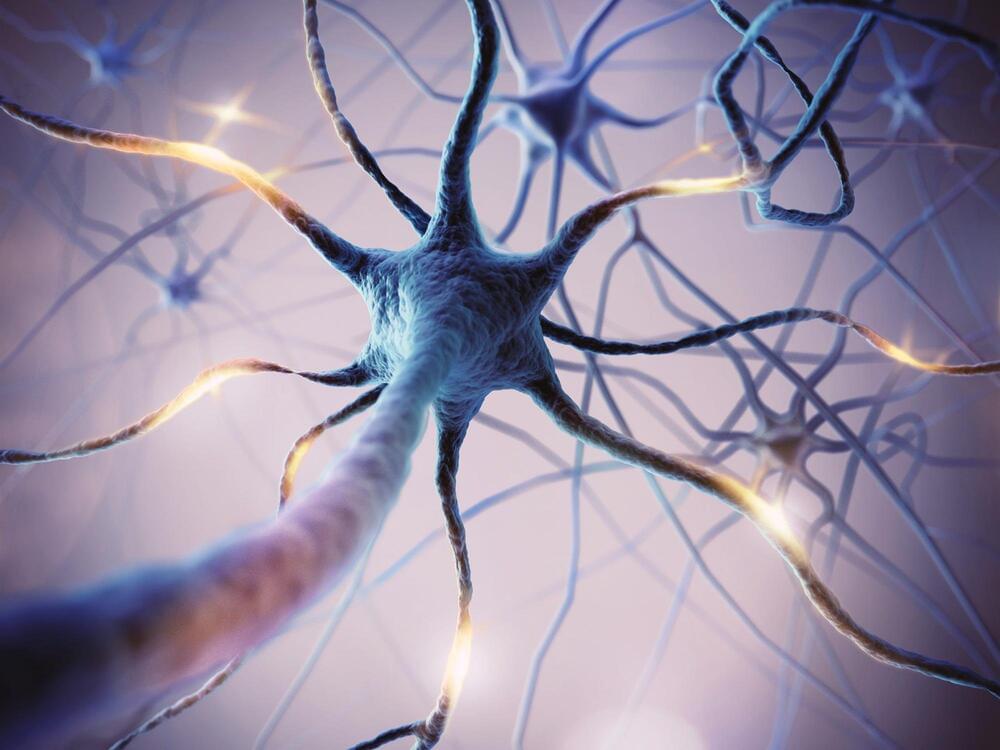
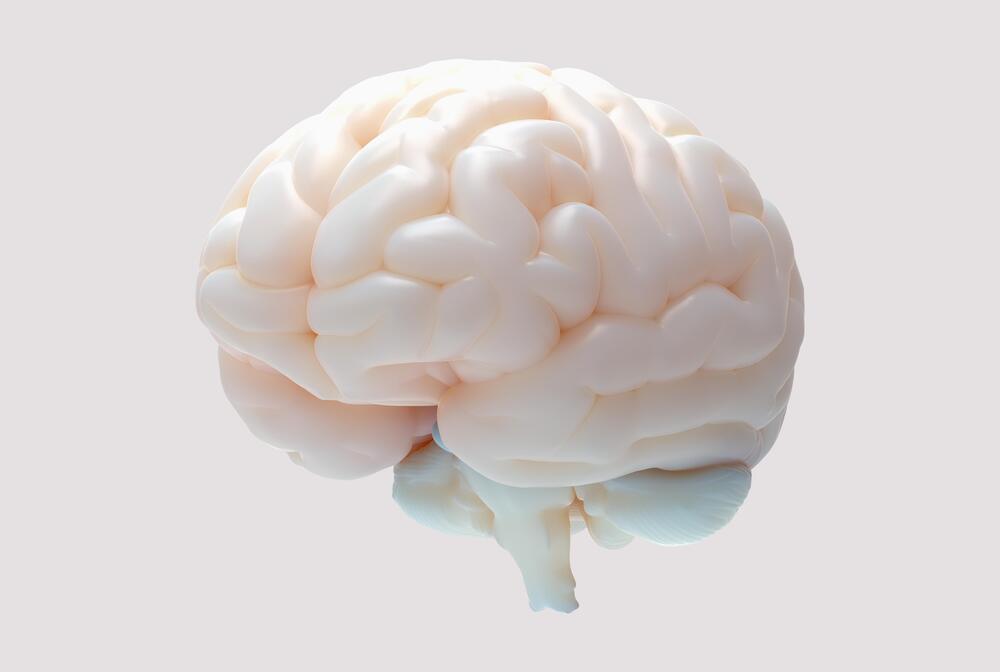
New research from medical scientists at Johns Hopkins University linked abnormally formed proteins in the human brain with the psychiatric illness called schizophrenia, in a significant number of patients. While they’re not yet sure what the connection is, the study said that deformed proteins were found in the brains of many patients who were diagnosed with schizophrenia.
— contents —
~ story ~ infographic: diagram ~ report ~ by definition ~ infographic: chart ~ learning.
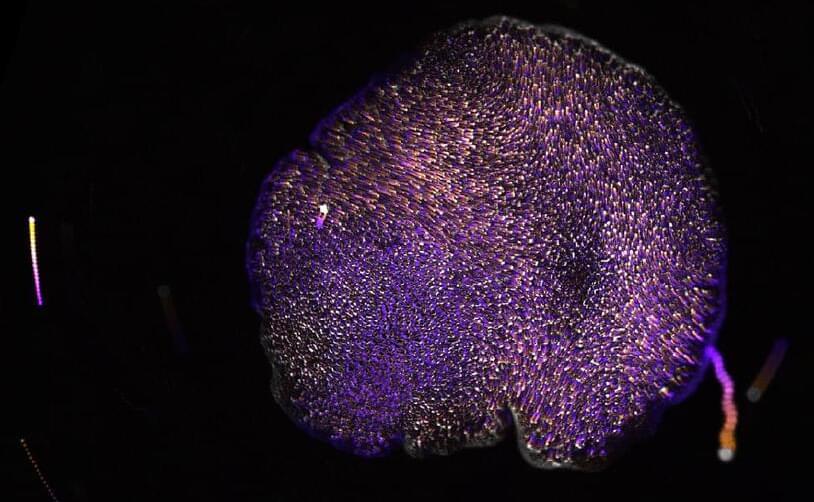

Summary: Neurons in the memory-associated entorhinal cortex of super-agers are significantly larger than their cognitively average peers, those with MCI, and even in people up to 30 years younger. Additionally, these neurons contained no signs of Tau, a hallmark of Alzheimer’s disease.
Source: Northwestern University.
Neurons in an area of the brain responsible for memory (known as the entorhinal cortex) were significantly larger in SuperAgers compared to cognitively average peers, individuals with early-stage Alzheimer’s disease and even individuals 20 to 30 years younger than SuperAgers — who are aged 80 years and older, reports a new Northwestern Medicine study.