In our latest article, our Divisional Chief Nurse, Clare, discusses the social effects of friendships for people with learning disabilities and/or autism and the importance of those friendships. She also discusses how COVID-19 and the different restrictions have affected people with learning disabilities and/or autism and how best to support them.
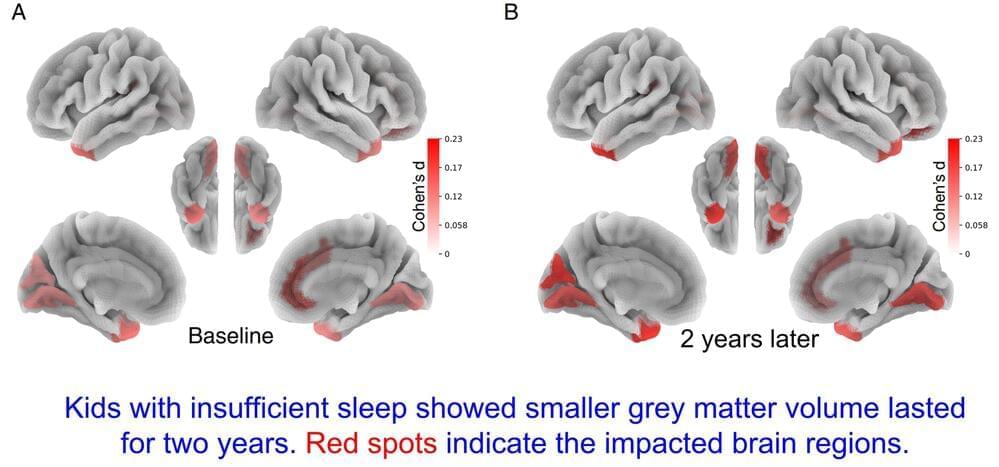
Elementary school-age children who get less than nine hours of sleep per night have significant differences in certain brain regions responsible for memory, intelligence and well-being compared to those who get the recommended nine to 12 hours of sleep per night, according to a new study led by University of Maryland School of Medicine (UMSOM) researchers. Such differences correlated with greater mental health problems, like depression, anxiety, and impulsive behaviors, in those who lacked sleep. Inadequate sleep was also linked to cognitive difficulties with memory, problem solving and decision making. The findings were published today in the journal The Lancet Child & Adolescent Health.
The American Academy of Sleep Medicine recommends that children aged six to 12 years of age sleep 9 to 12 hours per night on a regular basis to promote optimal health. Up until now, no studies have examined the long-lasting impact of insufficient sleep on the neurocognitive development of pre-teens.
To conduct the study, the researchers examined data that were collected from more than 8,300 children aged nine to 10 years who were enrolled in the Adolescent Brain Cognitive Development (ABCD) study. They examined MRI images, medical records, and surveys completed by the participants and their parents at the time of enrollment and at a two-year follow-up visit at 11 to 12 years of age. Funded by the National Institutes of Health (NIH), the ABCD study is the largest long-term study of brain development and child health in the U.S.
Check out the math & physics courses that I mentioned (many of which are free!) and support this channel by going to https://brilliant.org/Sabine/ where you can create your Brilliant account. The first 200 will get 20% off the annual premium subscription.
This is a video I have promised you almost two years ago: How does superdeterminism make sense of quantum mechanics? It’s taken me a long time to finish this because I have tried to understand why people dislike the idea that everything is predetermined so much. I hope that in this video I have addressed the biggest misconceptions. I genuinely think that discarding superdeterminism unthinkingly is the major reason that research in the foundations of physics is stuck.
If you want to know more about superdeterminism, these two papers (and references therein) may give you a good starting point:
A gene that University of Virginia (UVA) Health researchers have discovered is responsible for the deadliest type of brain tumor is also responsible for two forms of childhood cancer, the scientists have found.
The new discovery may open the door to the first targeted treatments for two types of rhabdomyosarcoma, a cancer of the soft tissue that primarily strikes young children.
The gene may also play an important role in other cancers that form in muscle, fat, nerves and other connective tissues in both children and adults, the research suggests.
Humans have an almost unbounded set of skills and knowledge, and quickly learn new information without needing to be re-engineered to do so. It is conceivable that an AGI can be built using an approach that is fundamentally different from human intelligence. However, as three longtime researchers in AI and cognitive science, our approach is to draw inspiration and insights from the structure of the human mind. We are working toward AGI by trying to better understand the human mind, and better understand the human mind by working toward AGI.
From research in neuroscience, cognitive science, and psychology, we know that the human brain is neither a huge homogeneous set of neurons nor a massive set of task-specific programs that each solves a single problem. Instead, it is a set of regions with different properties that support the basic cognitive capabilities that together form the human mind.
Throughout life, cells of the body acquire somatic mutations. In frozen post-mortem human brains, researchers from Yale University have found that somatic, or non-inherited, mutations are considerably more likely to accumulate in roughly 6% of brains, and these “hypermutable” brains are typically 40 years of age or older.
The behavior, comparable to clonal hematopoiesis in the bone marrow that can result in blood cancer in elderly people, is attributed to cell lines with mutations that outcompete other cell lines.
This is the first large-scale study of somatic mutations in human brains. Scientists were not expecting to find this hypermutability in older populations.
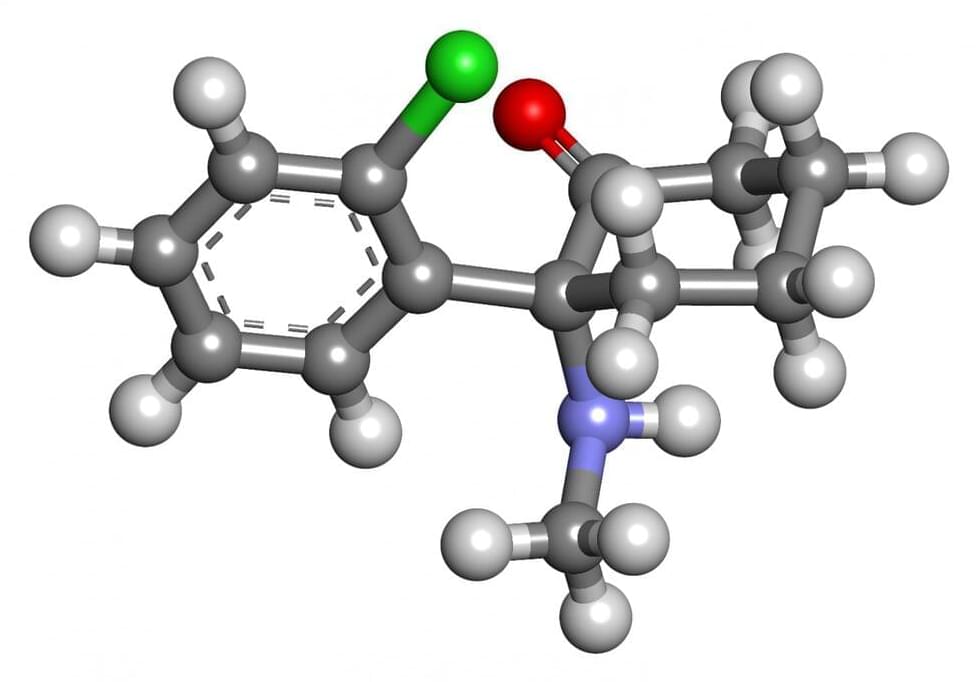
A team of researchers at the University of Geneva has found that ketamine is unlikely to be addictive to people who use it for extended periods of time. In their paper published in the journal Nature, the group describes their study of the impact of the synthetic compound on the brains of mice and what they learned about its impact on different brain regions. Rianne Campbell and Mary Kay Lobo, with the University of Maryland School of Medicine have published a News and Views piece in the same journal issue outlining the work done by the team in Switzerland.
A research team led by Rice University neuroengineers has created wireless technology to remotely activate specific brain circuits in fruit flies in under one second.
The team – an assemblage of experts in genetic engineering, nanotechnology, and electrical engineering – used magnetic signals to activate targeted neurons that controlled the body position of freely moving fruit flies in an enclosure.
The researchers first created genetically modified flies bred to express a special heat-sensitive ion channel in neurons that cause flies to partially spread their wings, a common mating gesture. They then injected magnetic nanoparticles that could be heated with an applied magnetic field.
SYNOPSIS: Will a computer ever be more creative than a human? In this compelling program, artists, musicians, neuroscientists, and computer scientists explore the future of artistry and imagination in the age of artificial intelligence.
PARTICIPANTS: Sougwen Chung, Jesse Engel, Peter Ulric Tse, Lav Varshney. MODERATOR: John Schaefer. Original program date: MAY 31, 2017
FULL DESCRIPTION: Today, there are robots that make art, move like dancers, tell stories, and even help human chefs devise unique recipes. But is there ingenuity in silico? Can computers be creative? A rare treat for the senses, this thought-provoking event brings together artists and computer scientists who are creating original works with the help of artificially intelligent machines. Joined by leading experts in psychology and neuroscience, they’ll explore the roots of creativity in humans and computers, what artificial creativity reveals about human imagination, and the future of hybrid systems that build on the capabilities of both.