Toggle light / dark theme

Musing on Understanding & AI — Hugo de Garis, Adam Ford, Michel de Haan

Started out as an interview ended up being a discussion between Hugo de Garis and (off camera) Adam Ford + Michel de Haan.
00:11 The concept of understanding under-recognised as an important aspect of developing AI
00:44 Re-framing perspectives on AI — the Chinese Room argument — and how can consciousness or understanding arise from billions of seemingly discreet neurons firing? (Should there be a binding problem of understanding similar to the binding problem of consciousness?)
04:23 Is there a difference between generality in intelligence and understanding? (and extentionally between AGI and artificial understanding?)
05:08 Ah Ha! moments — where the penny drops — what’s going on when this happens?
07:48 Is there an ideal form of understanding? Coherence & debugging — ah ha moments.
10:18 Webs of knowledge — contextual understanding.
12:16 Early childhood development — concept formation and navigation.
13:11 The intuitive ability for concept navigation isn’t complete.
Is the concept of understanding a catch all?
14:29 Is it possible to develop AGI that doesn’t understand? Is generality and understanding the same thing?
17:32 Why is understanding (the nature of) understanding important?
Is understanding reductive? Can it be broken down?
19:52 What would be the most basic primitive understanding be?
22:11 If (strong) AI is important, and understanding is required to build (strong) AI, what sorts of things should we be doing to make sense of understanding?
Approaches — engineering, and copy the brain.
24:34 Is common sense the same thing as understanding? How are they different?
26:24 What concepts do we take for granted around the world — which when strong AI comes about will dissolve into illusions, and then tell us how they actually work under the hood?
27:40 Compression and understanding.
29:51 Knowledge, Gettier problems and justified true belief. Is knowledge different from understanding and if so how?
31:07 A hierarchy of intel — data, information, knowledge, understanding, wisdom.
33:37 What is wisdom? Experience can help situate knowledge in a web of understanding — is this wisdom? Is the ostensible appearance of wisdom necessarily wisdom? Think pulp remashings of existing wisdom in the form of trashy self-help literature.
35:38 Is understanding mapping knowledge into a useful framework? Or is it making accurate / novel predictions?
36:00 Is understanding like high resolution carbon copy like models that accurately reflect true nature or a mechanical process?
37:04 Does understanding come in gradients of topologies? Is there degrees or is it just on or off?
38:37 What comes first — understanding or generality?
40:47 Minsky’s ‘Society of Mind’
42:46 Is vitalism alive in well in the AI field? Do people actually think there are ghosts in the machines?
48:15 Anthropomorphism in AI literature.
50:48 Deism — James Gates and error correction in super-symmetry.
52:16 Why are the laws of nature so mathematical? Why is there so much symmetry in physics? Is this confusing the map with the territory?
52:35 The Drake equation, and the concept of the Artilect — does this make Deism plausible? What about the Fermi Paradox?
55:06 Hyperintelligence is tiny — the transcention hypothesis — therefore civs go tiny — an explanation for the fermi paradox.
56:36 Why would *all* civs go tiny? Why not go tall, wide and tiny? What about selection pressures that seem to necessitate cosmic land grabs?
01:01:52 The Great Filter and the The Fermi Paradox.
01:02:14 Is it possible for an AGI to have a deep command of knowledge across a wide variety of topics/categories without understanding being an internal dynamic? Is the turing test good enough to test for understanding? What kinds of behavioral tests could reliably test for understanding? (Of course without the luxury of peering under the hood)
01:03:09 Does AlphaGo understand Go, or DeepBlue understand chess? Revisiting the Chinese Room argument.
01:04:23 More on behavioral tests for AI understanding.
01:06:00 Zombie machines — David Chalmers Zombie argument.
01:07:26 Complex enough algorithms — is there a critical point of complexity beyond which general intelligence likely emerges? Or understanding emerges?
01:08:11 Revisiting behavioral ‘turing’ tests for understanding.
01:13:05 Shape sorters and reverse shape sorters.
01:14:03 Would slightly changing the rules of Go confuse AlphaGo (after it had been trained)? Need for adaptivity — understanding concept boundaries, predicting where they occur, and the ability to mine outwards from these boundaries…
01:15:11 Neural nets and adaptivity.
01:16:41 AlphaGo documentary — worth a watch. Progresses in AI challenges human dignity which is a concern, but the DeepMind and the AlphaGo documentary seemed to be respectful. Can we manage a transition from human labor to full on automation while preserving human dignity?

Filmed in the dandenong ranges in victoria, australia.

Many thanks for watching!

Scientists Discover the Nearest Black Hole to Our Solar System Ever Found

Astronomers have recently found the nearest known black hole to our solar system. According to scientists, the black hole is 1,570 lightyears away and ten times larger than our sun.

Known as Gaia BH1, the research was led by Harvard Society Fellow astrophysicist Kareem El-Badry, with the Harvard-Smithsonian Center for Astrophysics (CfA) and the Max Planck Institute for Astronomy (MPIA).

In addition, El-Badry worked with researchers from CfA, MPIA, Caltech, UC Berkeley, the Flatiron Institute’s Center for Computational Astrophysics (CCA), the Weizmann Institute of Science, the Observatoire de Paris, MIT’s Kavli Institute for Astrophysics and Space Research, and other universities.

‘Immortality Is My Goal’: 11-Year-Old Boy Gets Bachelor’s Degree In Physics

Eleven-year-old Simons only took a year to complete his bachelor’s degree, which usually takes at least three years.

In a conversation with the Dutch daily De Telegraaf, Simons said that, “I don’t really care if I’m the youngest.” “It’s all about getting knowledge for me.”

“This is the first puzzle piece in my goal of replacing body parts with mechanical parts,” Simons said.

MIT Contributes to Success of Historic Fusion Ignition Experiment

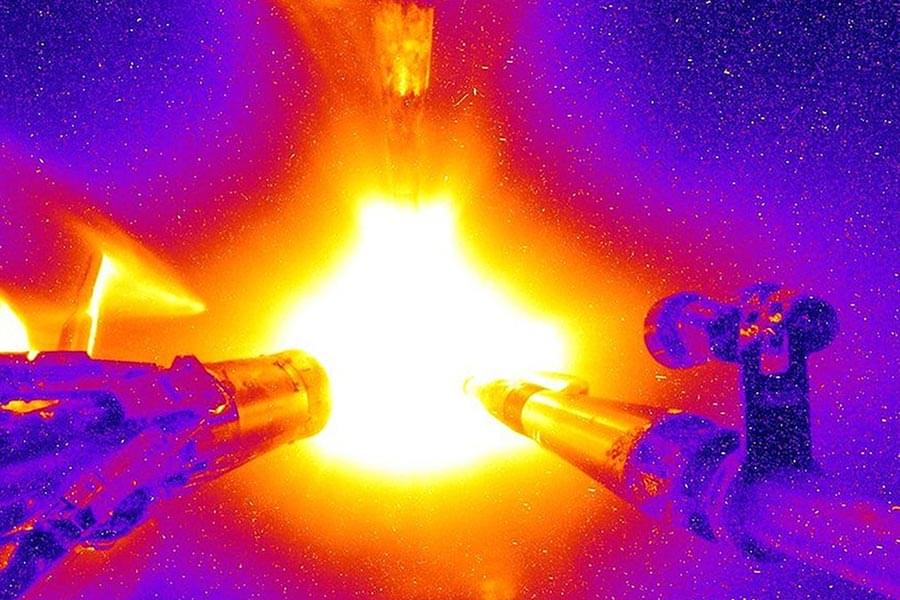
MIT students are part of the large team that achieved fusion ignition for the first time in a laboratory. Researchers around the world have been engaged in attempts to achieve fusion ignition in a laboratory for more than half a century. It is a grand challenge of the 21st century. An approach called inertial confinement fusion (ICF), which uses lasers to implode a pellet of fuel in a quest for ignition, has been the focus of the High-Energy-Density Physics (HEDP) group at MIT’s Plasma Science and Fusion Center. This group, including nine former and current MIT students, was crucial to a historic ICF ignition experiment performed in 2021. The results were published this year on the anniversary of that success.

Released: James Webb Image We Were All Waiting For

The James Webb Space Telescope has released stunning new images of the Orion nebula, a star-forming region lying about 1,300 light years away in the Orion constellation. The images are overflowing with details and are a significant improvement over the Hubble and the Spitzer images of the same. Structures down to the size of the solar system can be seen in them.

The details of the new Webb images will enable astronomers studying stellar astrophysics to understand star formation in detail. Star formation is still not fully understood, and several questions remain unanswered.

The James Webb Space Telescope has marked the beginning of a new era in astronomy. One can only imagine what the telescope will unravel in the coming years.

Sunday Discovery Series: https://bit.ly/369kG4p.
Earendel episode: https://youtu.be/-1GQIAP-o6Y
Schrodinger’s Galaxy episode: https://youtu.be/vjcuQzZD7vI

Created By: Rishabh Nakra.
Narrated By: Jeffrey Smith.

The Secrets of the Universe on the internet:

Researchers May Have Actually Managed To Hear The Background ‘Hum’ Of The Universe

I know, it might sound a bit out there, but it seems we’re able to hear more than you’d expect. Researchers have managed to hear something that they believe is the ‘hum’ of the universe and well, the concept in itself is mind-blowing.

While this ‘hum’ isn’t exactly what you’d expect, it is quite interesting to learn about. You see, because there is no air in space it’s not actually a sound at all but rather more or less something quite different. This finding overall comes from astronomers at the North American Nanohertz Observatory for Gravitational Waves also known as ‘NANOGrav.’ Overall this hum could really help us better understand the history of the universe in time as we further research it.

NANOGrav wrote as follows on this topic:

China to produce clean energy with nuclear fusion by 2028, top weapons expert claims

So far, Chinese scientists have achieved a reaction running at a slightly cooler 70 million degrees celsius for more than 17 minutes.

China aspires to produce unlimited clean energy through nuclear fusion by 2028.

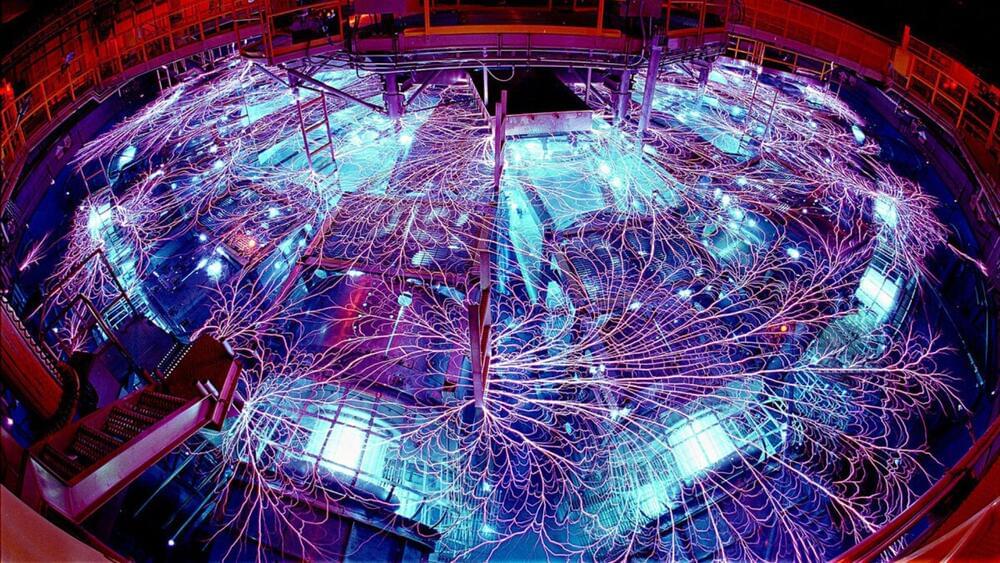
The “world’s largest” pulsed-power plant will be built in Chengdu, Sichuan province, according to Professor Peng Xianjue of the Chinese Academy of Engineering Physics, The Independent reported on Wednesday.

Does Cosmic Fine-Tuning Demand Explanation? | Episode 1208 | Closer To Truth

The universe works for us because of deep physical laws. But if the values of these laws change much, then all we see and know could not exist. If small changes to the laws of physics would make life impossible, does fine-tuning require an explanation? Featuring interviews with Bernard Carr, David Deutsch, Richard Swinburne, Rodney Holder, and Christopher Isham.

Season 12, Episode 8 — #CloserToTruth.

▶Register for free at CTT.com for subscriber-only exclusives: http://bit.ly/2GXmFsP

Closer To Truth host Robert Lawrence Kuhn takes viewers on an intriguing global journey into cutting-edge labs, magnificent libraries, hidden gardens, and revered sanctuaries in order to discover state-of-the-art ideas and make them real and relevant.

▶Free access to Closer to Truth’s library of 5,000 videos: http://bit.ly/376lkKN

Closer to Truth presents the world’s greatest thinkers exploring humanity’s deepest questions. Discover fundamental issues of existence. Engage new and diverse ways of thinking. Appreciate intense debates. Share your own opinions. Seek your own answers.

/* */