A breakthrough in integrated photonics has allowed researchers to harness light manipulation on silicon chips, paving the way for improved quantum computing and secure communications.
They developed compact silicon ring resonators to manage 34 qubit-gates and established a novel five-user quantum network.
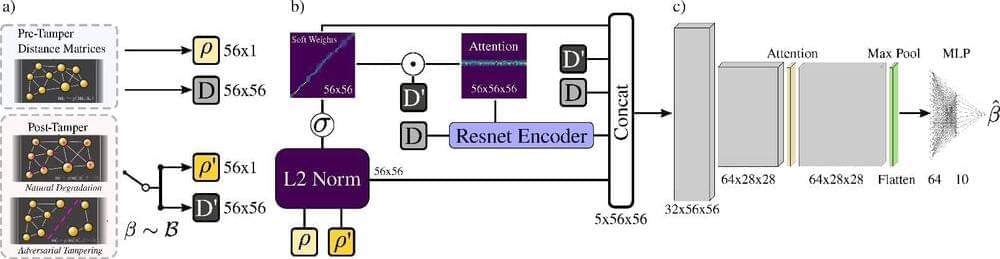
The semiconductor industry has grown into a $500 billion global market over the last 60 years. However, it is grappling with dual challenges: a profound shortage of new chips and a surge of counterfeit chips, introducing substantial risks of malfunction and unwanted surveillance. In particular, the latter inadvertently gives rise to a $75 billion counterfeit chip market that jeopardizes safety and security across multiple sectors dependent on semiconductor technologies, such as aviation, communications, quantum, artificial intelligence, and personal finance.
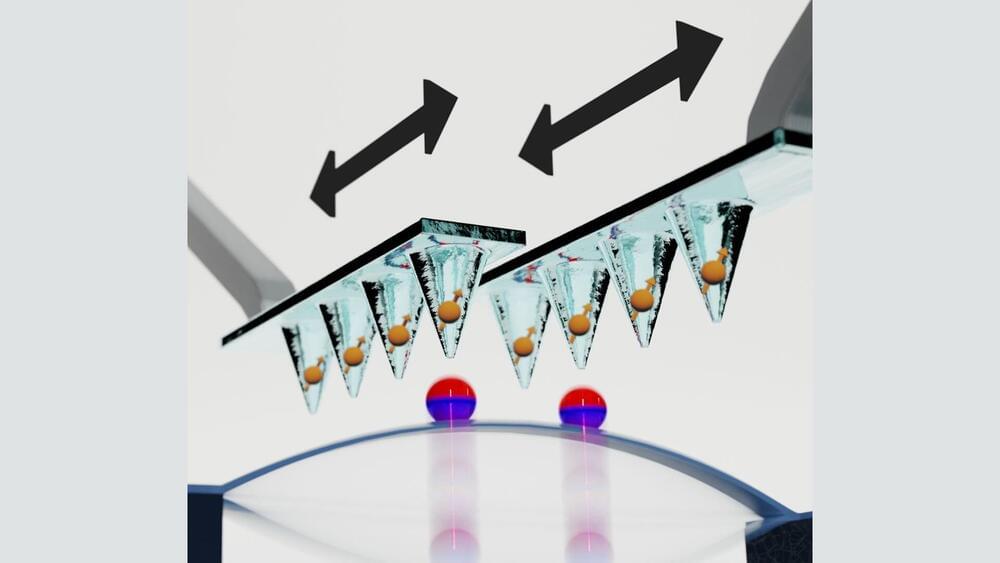
In a new Physical Review Letters study, scientists propose a new method for combining solid-state spin qubits with nanomechanical resonators for scalable and programmable quantum systems.
Conversely, stimulated Raman spectroscopy represents a modern analytical method used to study molecular vibrational properties and interactions, offering valuable insights into molecular fine structure. Its applications span various domains, including chemical analysis, biomedical research, materials science, and environmental monitoring.
By combining these two techniques, an exceptionally powerful analytical tool for studying complex molecular materials emerges.
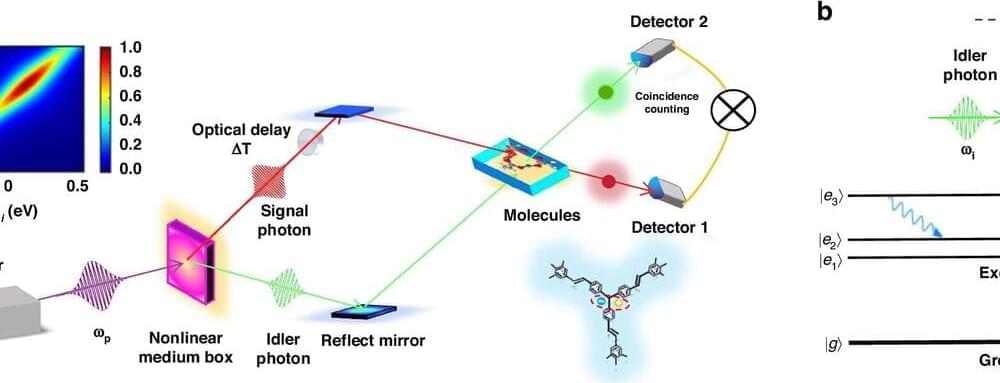
In a new paper published in Light: Science & Applications, a team of scientists, led by Professor Zhedong Zhang and Professor Zhe-Yu Ou from Department of Physics, City University of Hong Kong, Hong Kong, China, developed a microscopic theory for the ultrafast stimulated Raman spectroscopy with quantum-light fields.
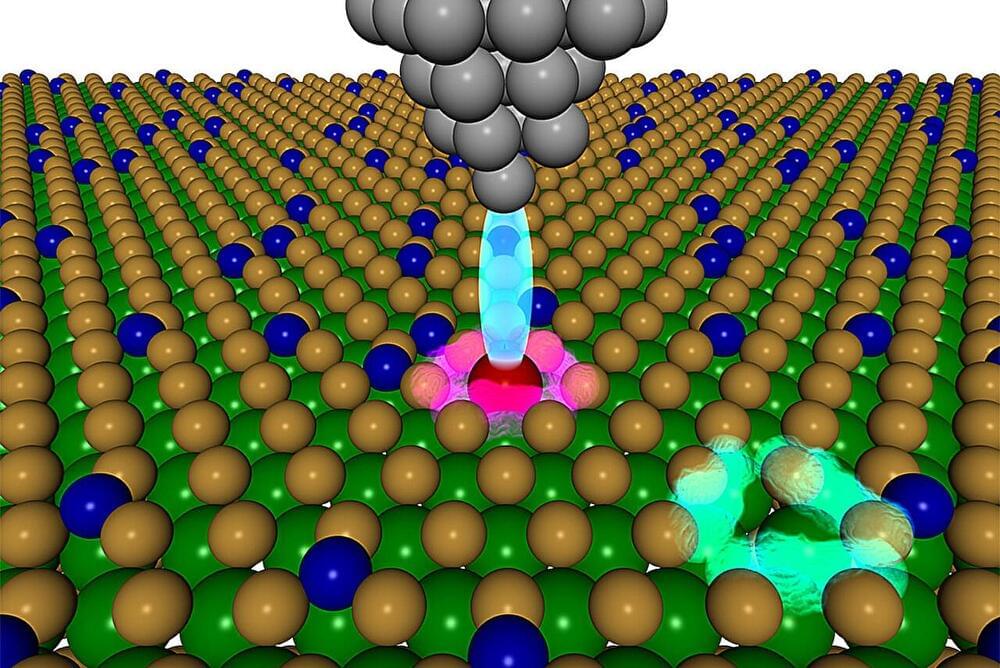
Researchers at the Department of Energy’s Lawrence Berkeley National Laboratory (Berkeley Lab) and several collaborating institutions have successfully demonstrated an innovative approach to find breakthrough materials for quantum applications. The study is published in the journal Nature Communications.
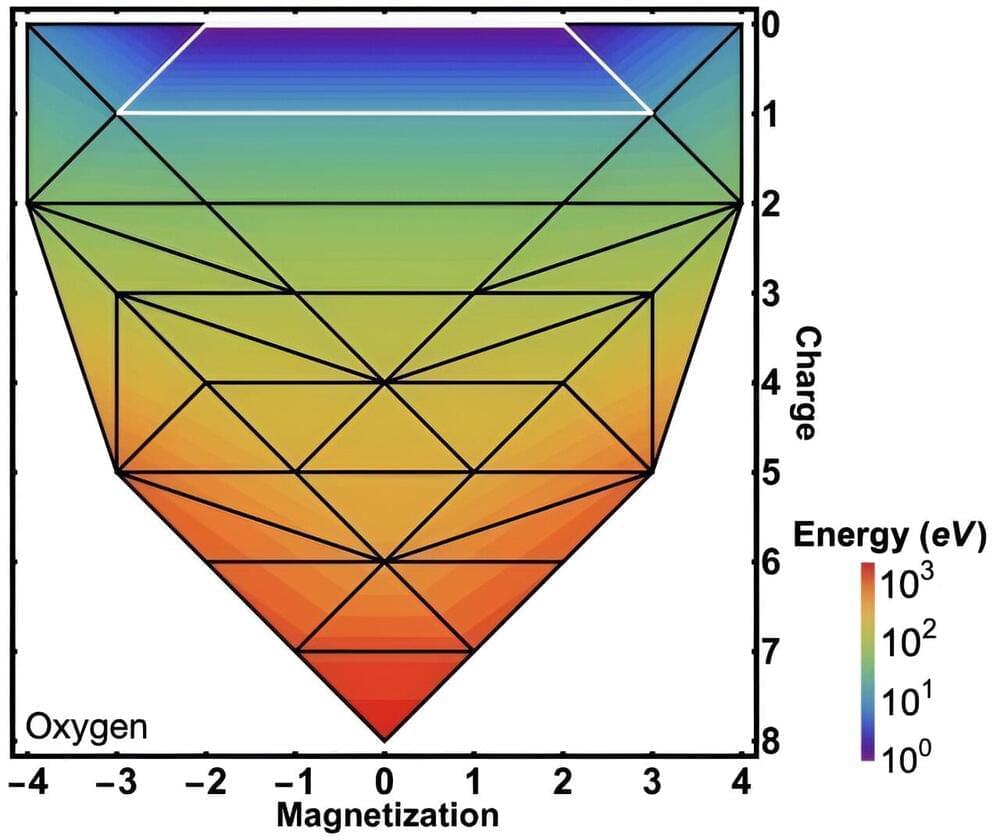
An international team of physicists, centered at Trinity, has proven new theorems in quantum mechanics that describe the “energy landscapes” of collections of quantum particles.
For decades, scientists have been studying a group of unusual materials called multiferroics that could be useful for a range of applications including computer memory, chemical sensors and quantum computers.
Samuele Ferracin1,2, Akel Hashim3,4, Jean-Loup Ville3, Ravi Naik3,4, Arnaud Carignan-Dugas1, Hammam Qassim1, Alexis Morvan3,4, David I. Santiago3,4, Irfan Siddiqi3,4,5, and Joel J. Wallman1,2
1Keysight Technologies Canada, Kanata, ON K2K 2W5, Canada 2 Department of Applied Mathematics, University of Waterloo, Waterloo, Ontario N2L 3G1, Canada 3 Quantum Nanoelectronics Laboratory, Dept. of Physics, University of California at Berkeley, Berkeley, CA 94,720, USA 4 Applied Math and Computational Research Division, Lawrence Berkeley National Lab, Berkeley, CA 94,720, USA 5 Materials Sciences Division, Lawrence Berkeley National Lab, Berkeley, CA 94,720, USA
Researchers at the University of Michigan have found a way to examine tiny structures, such as bacteria and genes, with reduced damage compared to traditional light sources.
The new technique involves spectroscopy, which is the study of how matter absorbs and emits light and other forms of radiation, and it takes advantage of quantum mechanics to study the structure and dynamics of molecules in ways that are not possible using conventional light sources.
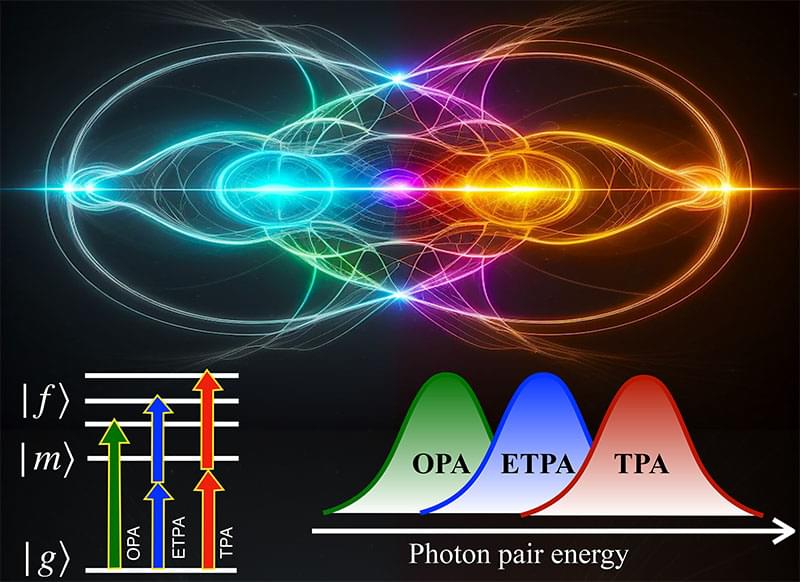
“This research examined a quantum light spectroscopy technique called entangled two-photon absorption (ETPA) that takes advantage of entanglement to reveal the structures of molecules and how ETPA acts at ultrafast speeds to determine properties that cannot be seen with classical spectroscopy,” said study senior author Theodore Goodson, U-M professor of chemistry and of macromolecular science and engineering.