PDF | On Jan 1, 2009, Galen Strawson published Realistic Monism: Why Physicalism Entails Panpsychism | Find, read and cite all the research you need on ResearchGate.
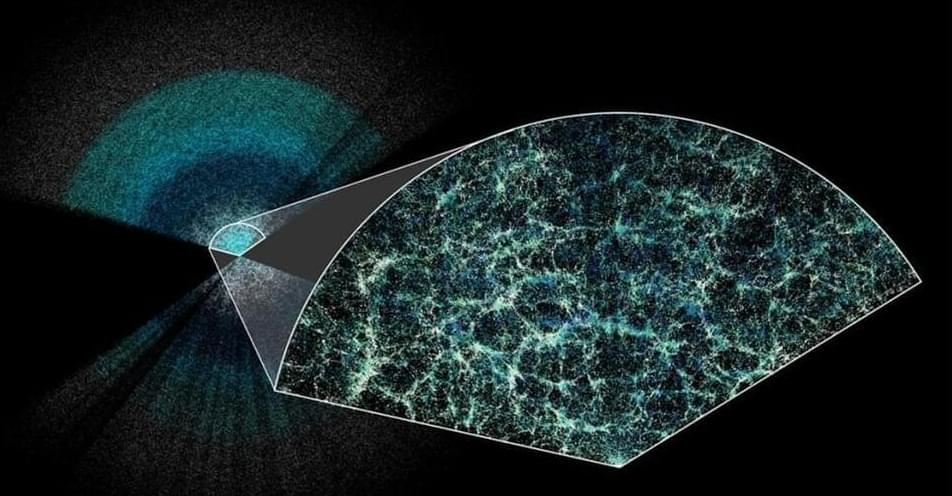
Image: Custom colormap package by cmastro; Claire Lamman / DESI collaboration On April 4, 2024, the Dark Energy Spectroscopic Instrument (DESI), a collaboration of more than 900 researchers from over 70 institutions around the world, announced that they have made the most precise measurement of the expansion of the universe and its acceleration.
Javad Shabani is an Associate Professor of Physics and the Director of the Center of Quantum Information Physics. Shabani seeks to investigate quantum technology, the future of quantum computing, and quantum sensing applications.
Visit the Shabani Lab: http://shabanilab.com/
Meet more of NYU’s Arts \& Science faculty: https://as.nyu.edu/features/meet-facu…
Follow us on Instagram: / nyuartsandscience.
Follow us on LinkedIn: / nyu-arts-science.
More about NYU Arts \& Science: https://as.nyu.edu/
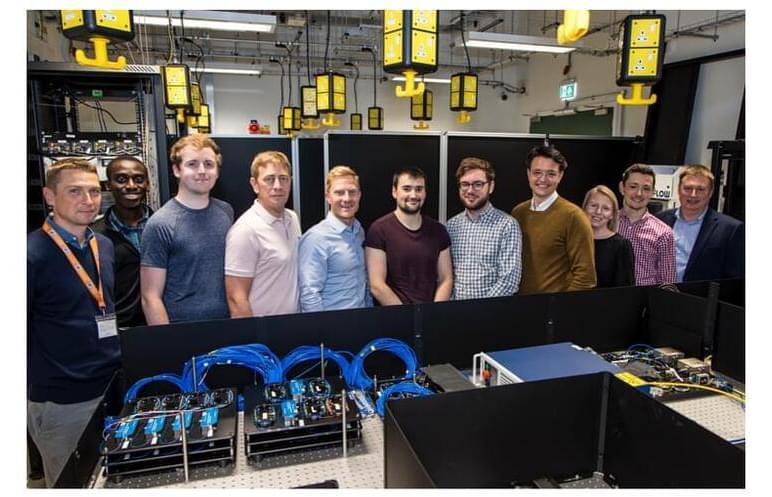
Infleqtion, the world’s leading quantum information company, announced the installation of a cutting-edge neutral atom quantum computer at the National Quantum Computing Centre (NQCC).
PRESS RELEASE — Infleqtion, the world’s leading quantum information company, is proud to announce the installation of a cutting-edge neutral atom quantum computer at the National Quantum Computing Centre (NQCC). This marks a significant milestone as Infleqtion becomes the first company to deploy hardware at the NQCC under their quantum computing testbed programme. The news comes on the heels of Infleqtion’s rapid advancement in quantum gate fidelity.
Tim Ballance, President of Infleqtion UK, said, “Our recent installation is part of Infleqtion’s dedication to leading facility logistics in partnership with our colleagues at the NQCC. Together, we are establishing crucial infrastructure components such as network infrastructure, safety protocols, and security measures. Infleqtion has completed our second milestone, which includes the installation and in-situ characterisation of primary lasers, optical, vacuum, and electronic subsystems necessary for the quantum computer to function. This accomplishment demonstrates our advanced technology and expertise in the field.”
In parallel to the delivery of the quantum computing testbed hardware, Infleqtion’s quantum software team are working closely on near term applications of quantum computing with NQCC researchers and Infleqtion’s partners Oxfordshire County Council, Riverlane, and QinetiQ. This work includes using Infleqtion’s Superstaq software to apply quantum optimisation to tackle challenges such as traffic management in Oxfordshire. A principal goal of these activities is to demonstrate the practical applications of quantum technology on both a regional and national scale, particularly in areas such as national security and defence.

A breakthrough in integrated photonics has allowed researchers to harness light manipulation on silicon chips, paving the way for improved quantum computing and secure communications.
They developed compact silicon ring resonators to manage 34 qubit-gates and established a novel five-user quantum network.
Quantum Leap in Integrated Photonics.
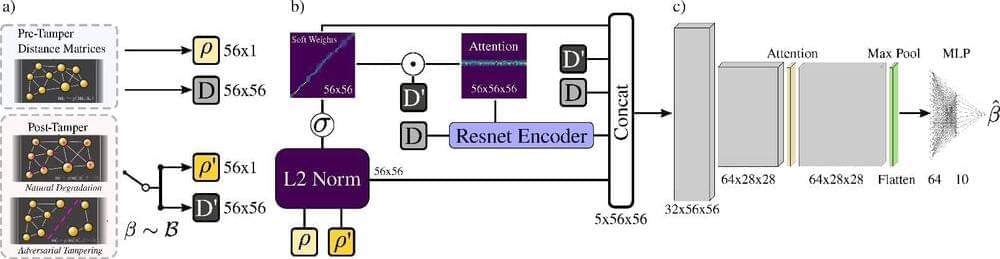
The semiconductor industry has grown into a $500 billion global market over the last 60 years. However, it is grappling with dual challenges: a profound shortage of new chips and a surge of counterfeit chips, introducing substantial risks of malfunction and unwanted surveillance. In particular, the latter inadvertently gives rise to a $75 billion counterfeit chip market that jeopardizes safety and security across multiple sectors dependent on semiconductor technologies, such as aviation, communications, quantum, artificial intelligence, and personal finance.
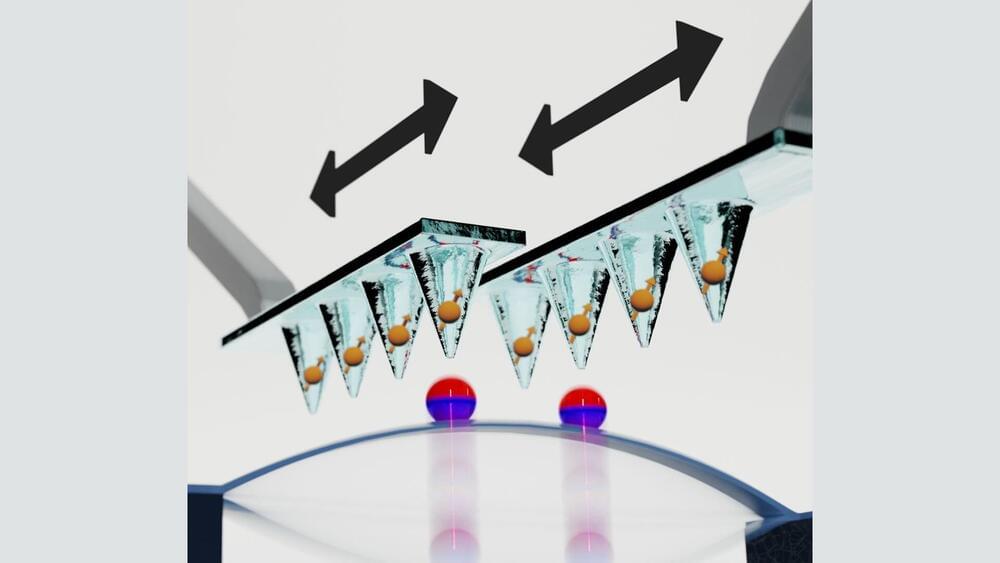
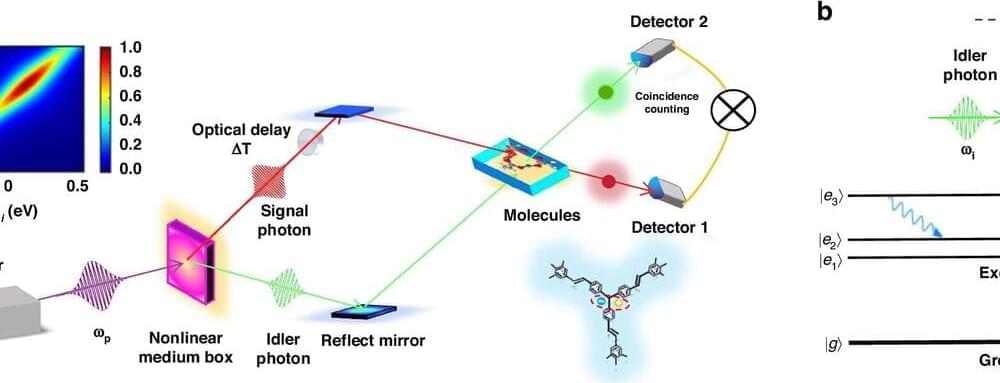
Conversely, stimulated Raman spectroscopy represents a modern analytical method used to study molecular vibrational properties and interactions, offering valuable insights into molecular fine structure. Its applications span various domains, including chemical analysis, biomedical research, materials science, and environmental monitoring.
By combining these two techniques, an exceptionally powerful analytical tool for studying complex molecular materials emerges.
In a new paper published in Light: Science & Applications, a team of scientists, led by Professor Zhedong Zhang and Professor Zhe-Yu Ou from Department of Physics, City University of Hong Kong, Hong Kong, China, developed a microscopic theory for the ultrafast stimulated Raman spectroscopy with quantum-light fields.