Toggle light / dark theme

Third dimension of data storage: Physicists demonstrate first hybrid skyrmion tubes for higher-density quantum computing

Typically, the charge of electrons is used to store and process information in electronics-based devices. In spintronics, the focus is instead on the magnetic moment or on magnetic vortices, so-called skyrmions—the goal is smaller, faster, and more sustainable computers. To further increase storage density, skyrmions will not only be two-dimensional in the future, but will also conquer the third dimension.

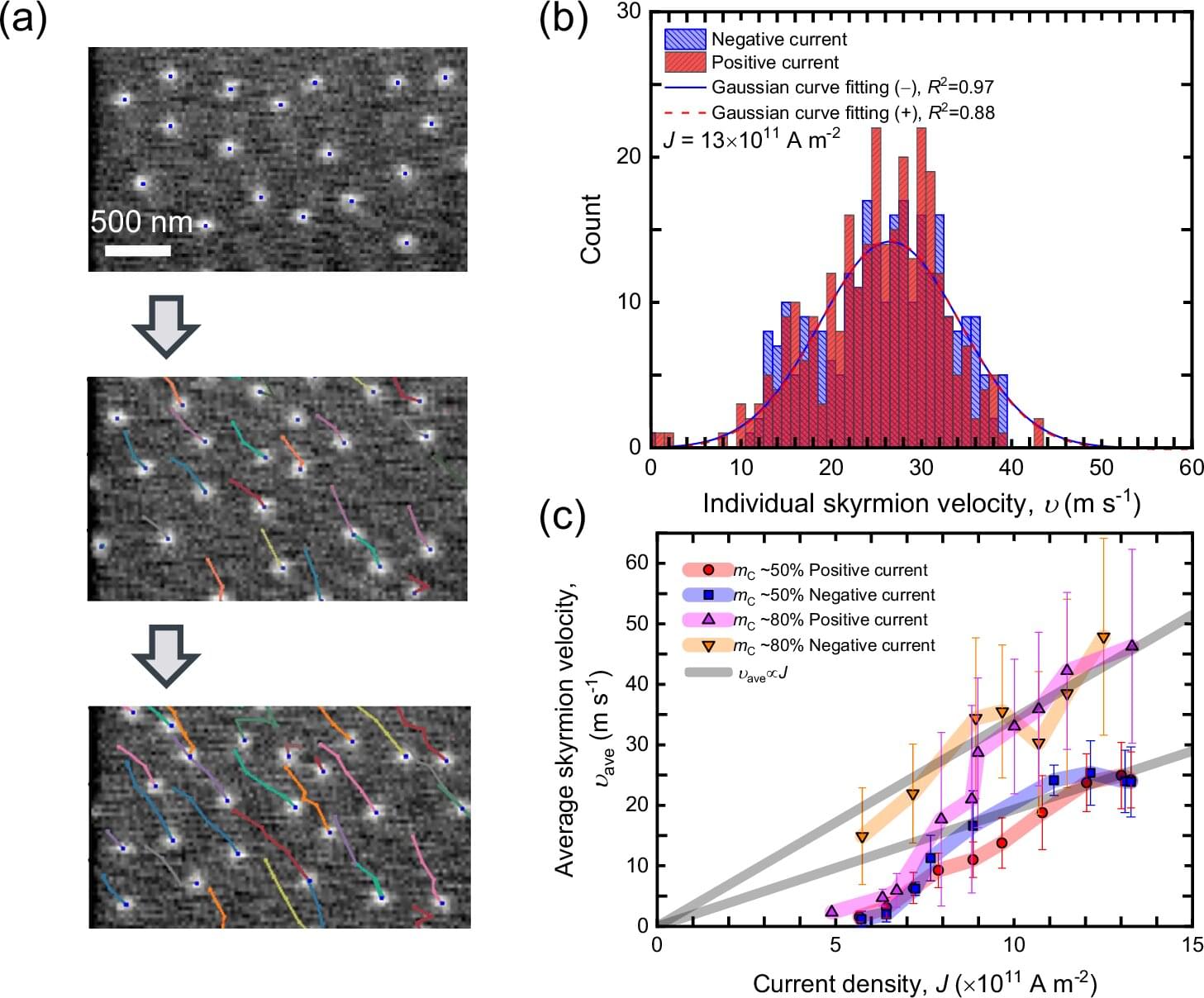
Researchers from the Institute of Physics at Johannes Gutenberg University Mainz (JGU) have now succeeded in creating three-dimensional skyrmions, so-called hybrid skyrmion tubes, in synthetic antiferromagnets and have demonstrated for the first time that these skyrmion tubes move differently than two-dimensional skyrmions.

“Three-dimensional skyrmions are of interest for and brain-inspired computing, among other things—here the higher resulting from the third dimension is essential,” says Mona Bhukta from Professor Mathias Kläui’s research group. The results were published on September 26 in Nature Communications.
Harnessing GeSn semiconductors for tomorrow’s quantum world

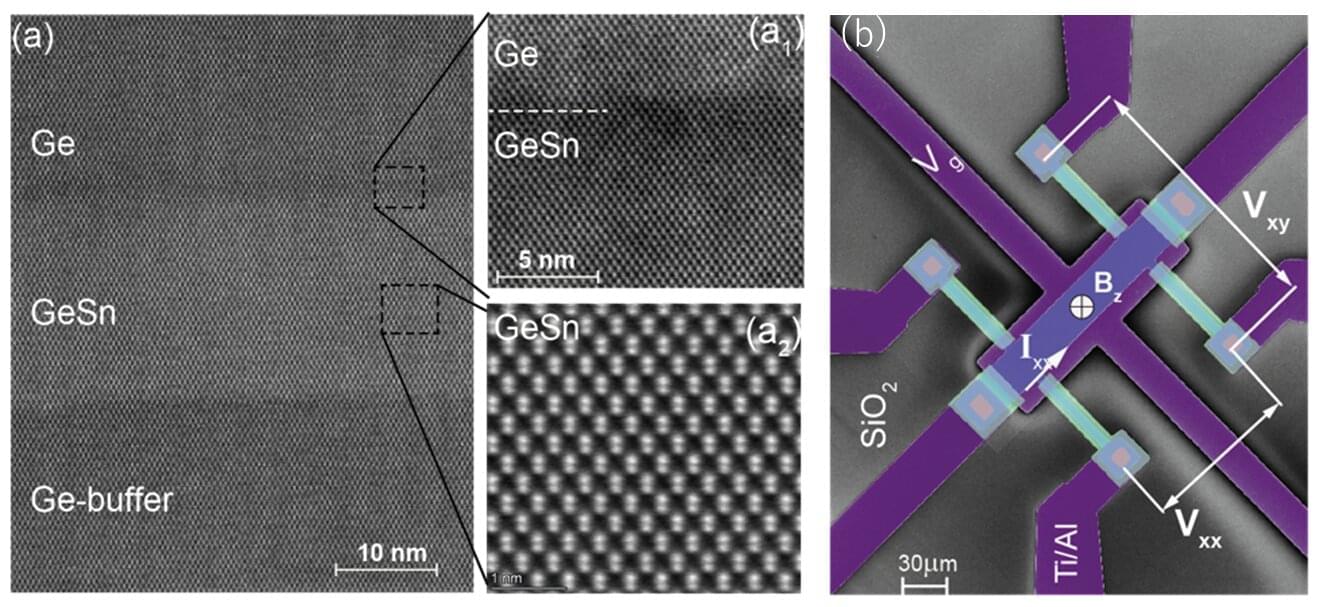
An international team of researchers from Forschungszentrum Jülich (Germany), Tohoku University (Japan), and École Polytechnique de Montréal (Canada) has made a significant discovery in semiconductor science by revealing the remarkable spin-related material properties of Germanium-Tin (GeSn) semiconductors.

Semiconductors control the flow of electricity that power everyday technology all around us (such as cars and computers). However, technology is progressing at such a breakneck speed that it is straining current technologies.

“Semiconductors are approaching their physical and energy-efficiency limits in terms of speed, performance, and ,” says Makoto Kohda from Tohoku University. “This is a huge issue because we need semiconductors that can keep up as we shift to more demanding needs such as 5G/6G networks and the increased use of artificial intelligence.”

Chip-based phonon splitter brings hybrid quantum networks closer to reality

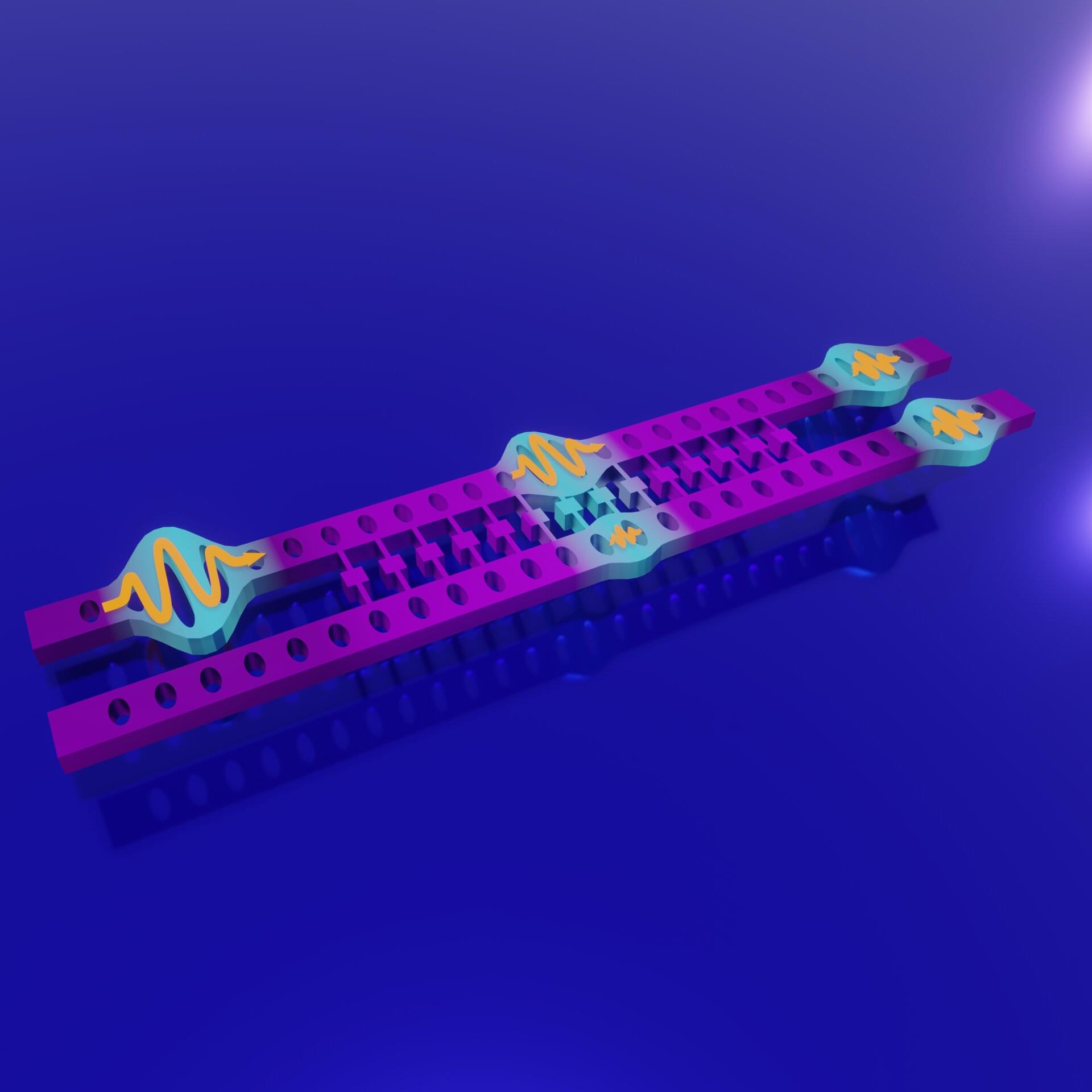
Researchers have created a chip-based device that can split phonons—tiny packets of mechanical vibration that can carry information in quantum systems. By filling a key gap, this device could help connect various quantum devices via phonons, paving the way for advanced computing and secure quantum communication.

“Phonons can serve as on-chip quantum messages that connect very different quantum systems, enabling hybrid networks and new ways to process in a compact, scalable format,” said research team leader Simon Gröblacher from Delft University of Technology in the Netherlands.

“To build practical phononic circuits requires a full set of chip-based components that can generate, guide, split and detect individual quanta of vibrations. While sources and waveguides already exist, a compact splitter was still missing.”

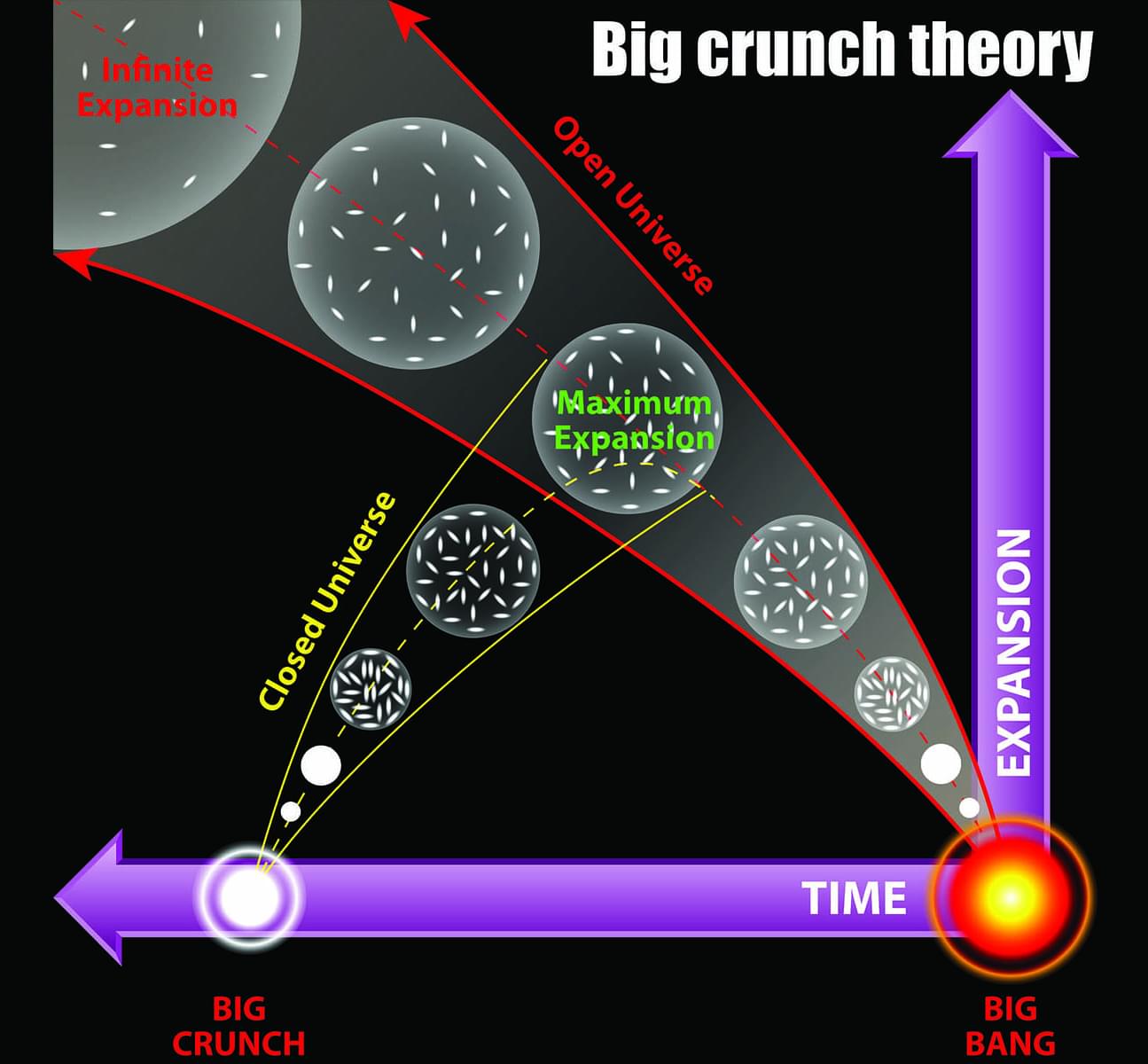
Physicist: After 33 billon years, universe ‘will end in a big crunch’

The universe is approaching the midpoint of its 33-billion-year lifespan, a Cornell physicist calculates with new data from dark-energy observatories. After expanding to its peak size about 11 billion years from now, it will begin to contract – snapping back like a rubber band to a single point at the end.

Henry Tye, the Horace White Professor of Physics Emeritus in the College of Arts and Sciences, reached this conclusion after adding new data to a model involving the “cosmological constant” – a factor introduced more than a century ago by Albert Einstein and used by cosmologists in recent years to predict the future of our universe.

“For the last 20 years, people believed that the cosmological constant is positive, and the universe will expand forever,” Tye said. “The new data seem to indicate that the cosmological constant is negative, and that the universe will end in a big crunch.”

Study says the universe will ‘end in a big crunch’ and scientists predict when it will happen

We’ve grown up with the idea that the universe will expand forever, meaning that something called the “cosmological constant” is positive. Space keeps stretching, galaxies drift farther apart, and that seems final.

A new analysis suggests that story might be wrong. It argues that expansion could slow, stop, and – far in the future – reverse. This idea posits that the cosmological constant is actually negative, not positive, as we have assumed.

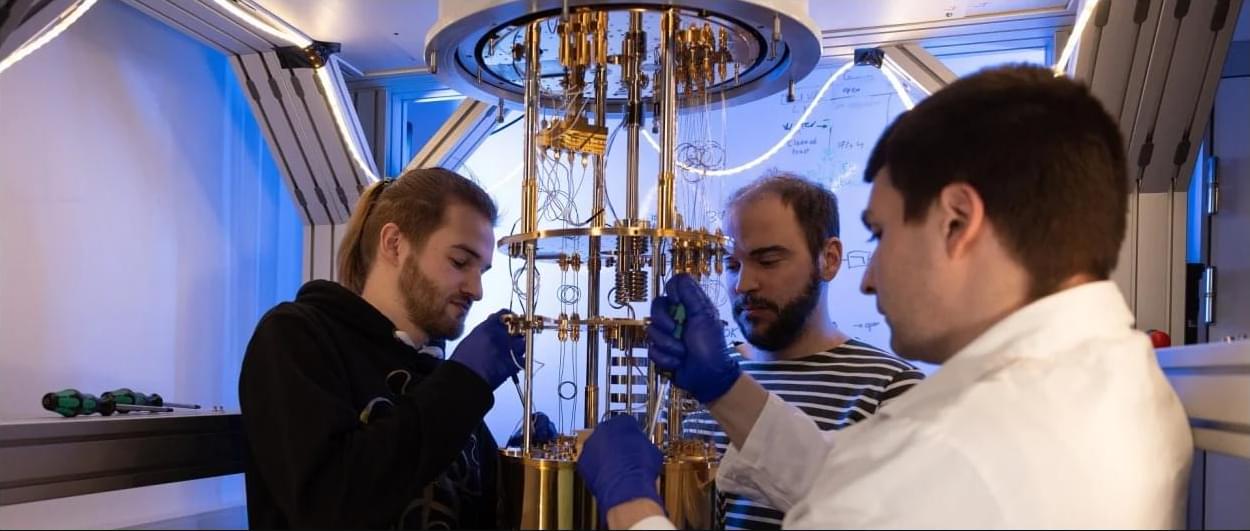
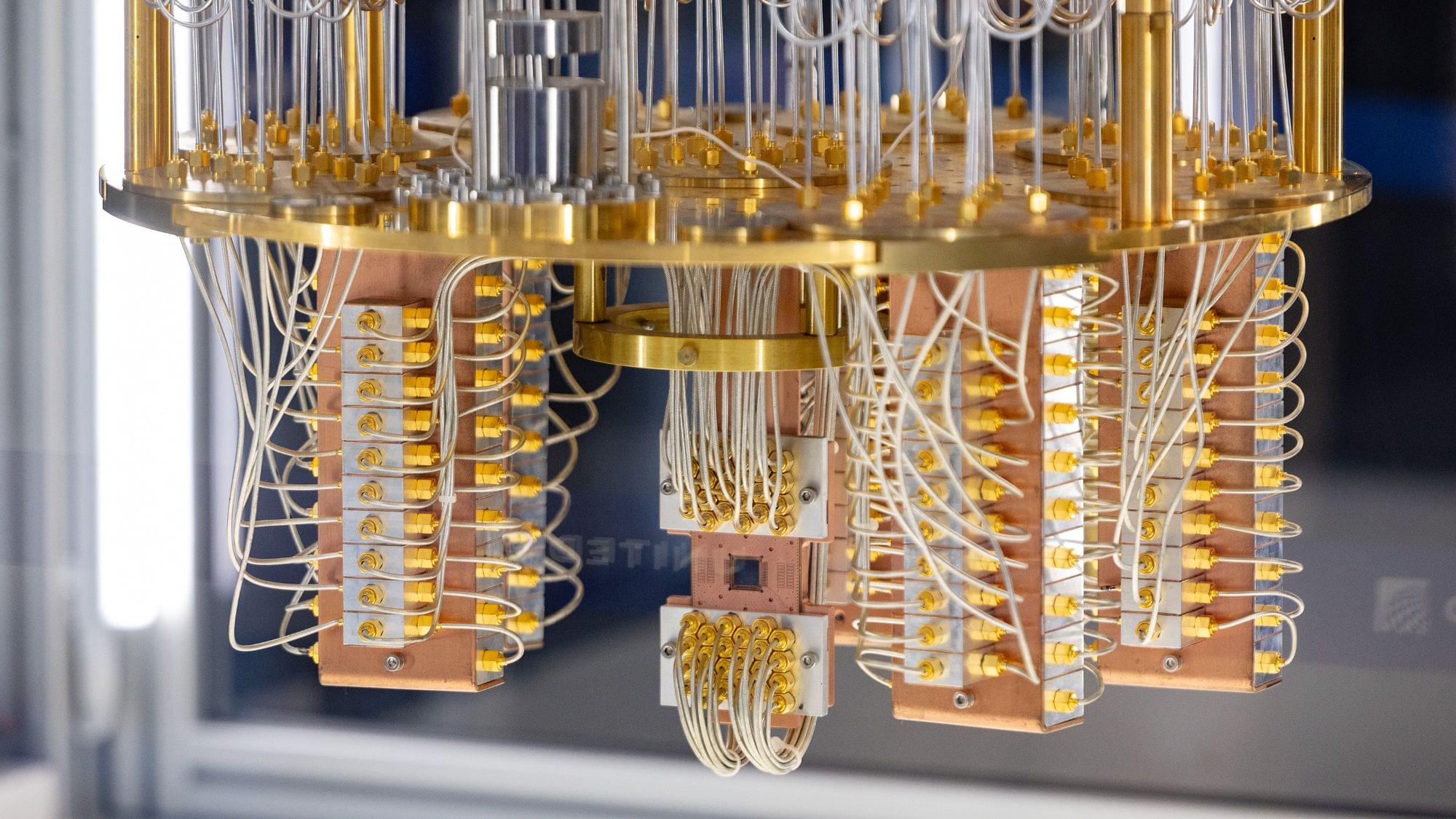
Harvard researchers hail quantum computing breakthrough with machine that can run for two hours — atomic loss quashed by experimental design, systems that can run forever just 3 years away

That’s an over 55,000% increase in operational time.

Molecular coating cleans up noisy quantum light

Quantum technologies demand perfection: one photon at a time, every time, all with the same energy. Even tiny deviations in the number or energy of photons can derail devices, threatening the performance of quantum computers that someday could make up a quantum internet.

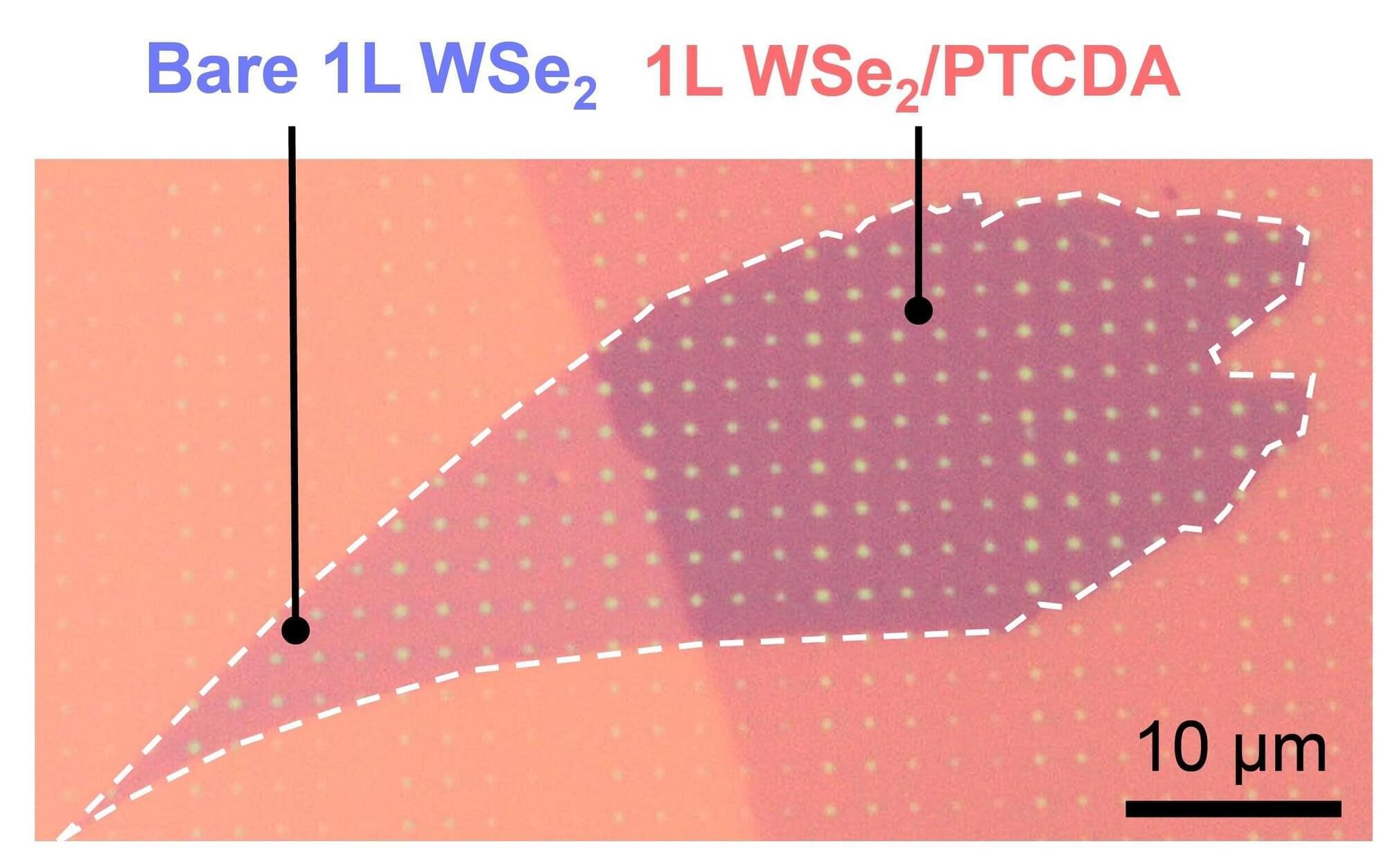
While this level of precision is difficult to achieve, Northwestern University engineers have developed a novel strategy that makes quantum light sources, which dispense single photons, more consistent, precise and reliable.

In a new study, the team coated an atomically thin semiconductor (tungsten diselenide) with a sheetlike organic molecule called PTCDA. The coating transformed the tungsten diselenide’s behavior—turning noisy signals into clean bursts of single photons. Not only did the coating increase the photons’ spectral purity by 87%, but it also shifted the color of photons in a controlled way and lowered the photon activation energy—all without altering the material’s underlying semiconducting properties.

Energy harvesters surpass Carnot efficiency using non-thermal electron states

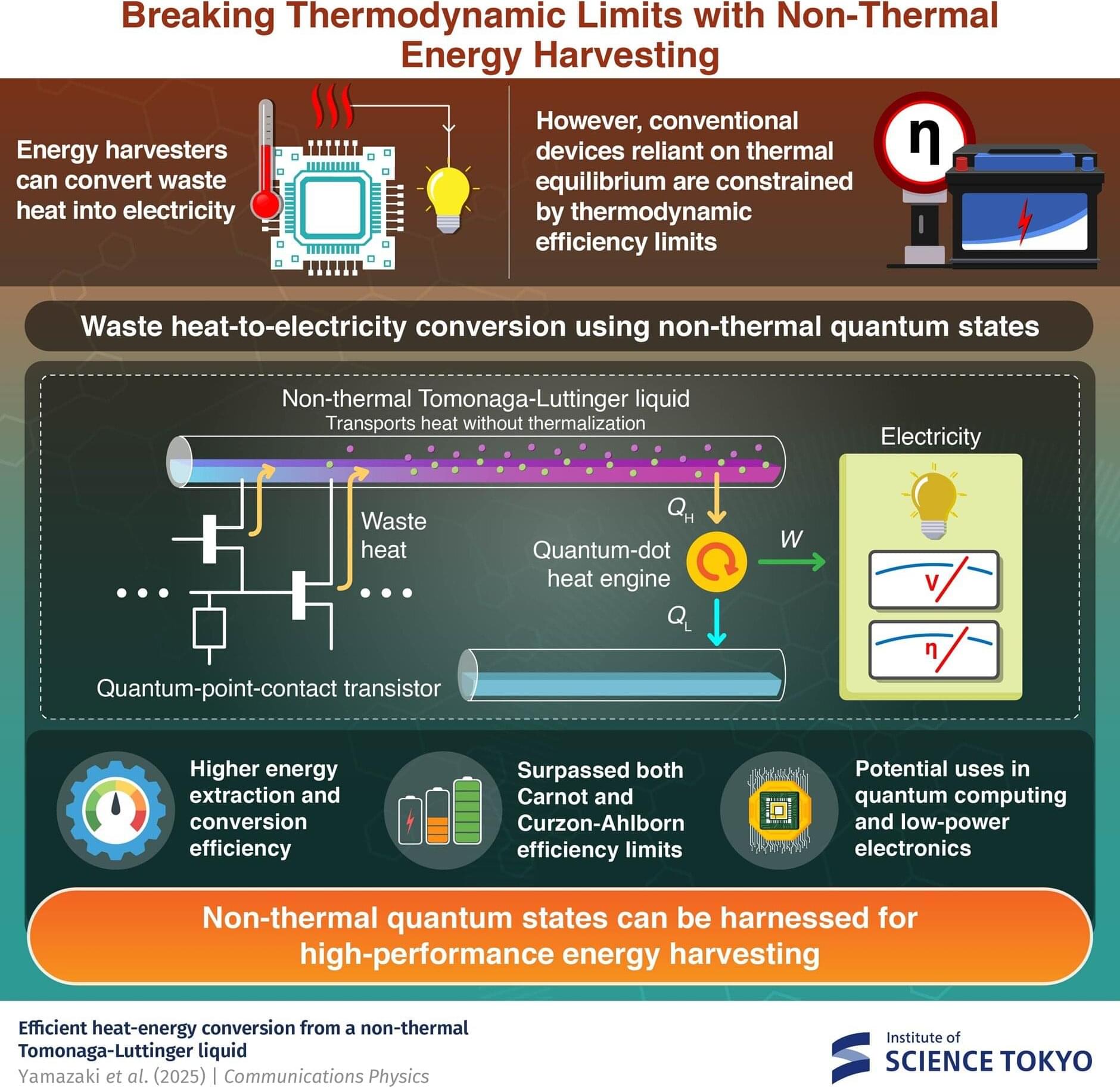
Harnessing quantum states that avoid thermalization enables energy harvesters to surpass traditional thermodynamic limits such as Carnot efficiency, report researchers from Japan. The team developed a new approach using a non-thermal Tomonaga-Luttinger liquid to convert waste heat into electricity with higher efficiency than conventional approaches. These findings pave the way for more sustainable low-power electronics and quantum computing.

Energy harvesters, or devices that capture energy from environmental sources, have the potential to make electronics and industrial processes much more efficient. We are surrounded by waste heat, generated everywhere by computers, smartphones, , and factory equipment. Energy-harvesting technologies offer a way to recycle this lost energy into useful electricity, reducing our reliance on other power sources.

However, conventional energy-harvesting methods are constrained by the laws of thermodynamics. In systems that rely on , these laws impose fundamental caps on heat conversion efficiency, which describes the ratio of the generated electrical power and the extracted heat from the waste heat, for example, is known as the Carnot efficiency. Such thermodynamic limits, like the Curzon-Ahlborn efficiency, which is the heat conversion efficiency under the condition for obtaining the maximum electric power, have restricted the amount of useful power that can be extracted from waste heat.

/* */