Toggle light / dark theme

Quantum device used to slow chemical reaction 100 billion times

A team of researchers has successfully simulated and” observed” a slow-motion chemical reaction at a billion times slower than “normal.”

For the first time ever, scientists have succeeded in slowing down (in simulation) a chemical reaction by around 100 billion times. Using a quantum computer, the researchers simulated and then “observed” the reaction in super slow motion.


Skynesher/iStock.

Super slow motion.

Quantum discovery verifies a decades-old theory on how monopoles decay

The field of quantum physics is rife with paths leading to tantalizing new areas of study, but one rabbit hole offers a unique vantage point into a world where particles behave differently—through the proverbial looking glass.

Dubbed the “Alice ring” after Lewis Carroll’s world-renowned stories on Alice’s Adventures in Wonderland, the appearance of this object verifies a decades-old theory on how monopoles decay. Specifically, that they decay into a ring-like vortex, where any other monopoles passing through the center are flipped into their opposite magnetic charges.

Published in Nature Communications on August 29, these findings mark the latest discovery in a string of work that has spanned the collaborative careers of Aalto University Professor Mikko Möttönen and Amherst College Professor David Hall.

Physicists develop series of quality control tests for quantum computers

Quantum technologies—and quantum computers in particular—have the potential to shape the development of technology in the future. Scientists believe that quantum computers will help them solve problems that even the fastest supercomputers are unable to handle yet. Large international IT companies and countries like the United States and China have been making significant investments in the development of this technology. But because quantum computers are based on different laws of physics than conventional computers, laptops, and smartphones, they are more susceptible to malfunction.

An interdisciplinary research team led by Professor Jens Eisert, a physicist at Freie Universität Berlin, has now found ways of testing the quality of quantum computers. Their study on the subject was recently published in the scientific journal Nature Communications. These scientific quality control tests incorporate methods from physics, computer science, and mathematics.

Quantum physicist at Freie Universität Berlin and author of the study, Professor Jens Eisert, explains the science behind the research. “Quantum computers work on the basis of quantum mechanical laws of physics, in which or ions are used as computational units—or to put it another way—controlled, minuscule physical systems. What is extraordinary about these computers of the future is that at this level, nature functions extremely and radically differently from our everyday experience of the world and how we know and perceive it.”

Quantum computer unveils atomic dynamics of light-sensitive molecules

Researchers at Duke University have implemented a quantum-based method to observe a quantum effect in the way light-absorbing molecules interact with incoming photons. Known as a conical intersection, the effect puts limitations on the paths molecules can take to change between different configurations.

The observation method makes use of a quantum simulator, developed from research in , and addresses a long-standing, fundamental question in chemistry critical to processes such as photosynthesis, vision and photocatalysis. It is also an example of how advances in quantum computing are being used to investigate fundamental science.

The results appear online August 28 in the journal Nature Chemistry.

Researcher finds inspiration from spider webs and beetles to harvest fresh water from thin air

Nature is the ultimate quantum computer.


A team of researchers is designing novel systems to capture water vapor in the air and turn it into liquid.

University of Waterloo professor Michael Tam and his Ph.D. students Yi Wang and Weinan Zhao have developed sponges or membranes with a large surface area that continually capture moisture from their surrounding environment. In the journal Nature Water Tam and his team discuss several promising new water collection and purification technologies.

Traditionally, for consumption is collected from rivers, lakes, groundwater, and oceans (with treatment). The current technologies Dr. Tam is developing are inspired by nature to harvest water from alternative sources as the world is facing a serious challenge with freshwater scarcity.

Scientists use quantum device to slow down simulated chemical reaction 100 billion times

Scientists at the University of Sydney have, for the first time, used a quantum computer to engineer and directly observe a process critical in chemical reactions by slowing it down by a factor of 100 billion times.

Joint lead researcher and Ph.D. student, Vanessa Olaya Agudelo, said, It is by understanding these basic processes inside and between molecules that we can open up a new world of possibilities in , drug design, or harvesting.

It could also help improve other processes that rely on molecules interacting with light, such as how smog is created or how the ozone layer is damaged.

Quantum Entanglement Waves Detected For The First Time

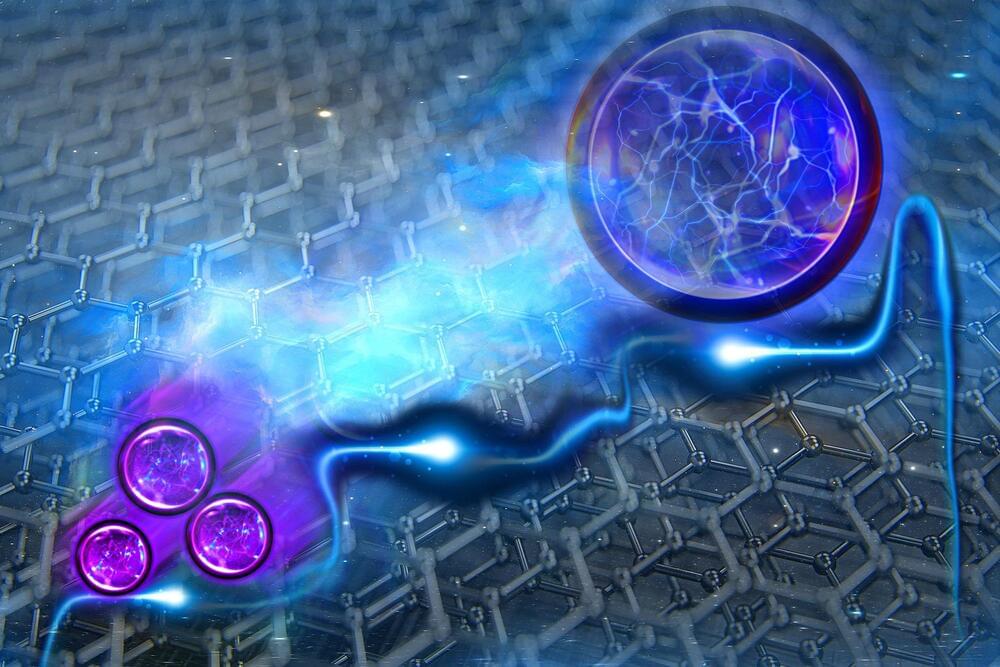
For the first time, researchers have been able to track the behavior of triplons, a quasi-particle created between entangled electrons. They are very tricky to study and they do not form in conventional magnetic material. Now, researchers have been able to detect them for the first time using real-space measurements.

Quasi particles are not real particles. They form in specific interactions, but for as long as that interaction lasts they behave like a particle. The interaction in this case is the entanglement of two electrons. This pair can be entangled in a singlet state or a triplet state, and the triplon comes from the latter interaction.

To get the triplon in the first place, the team used small organic molecules called cobalt-phthalocyanine. What makes the molecule interesting is that it possesses a frontier electron. Now, don’t go picture some gunslinger particle – a frontier electron is simply an electron on the highest-energy occupied orbital.

New technique opens door for encoding data on single photons

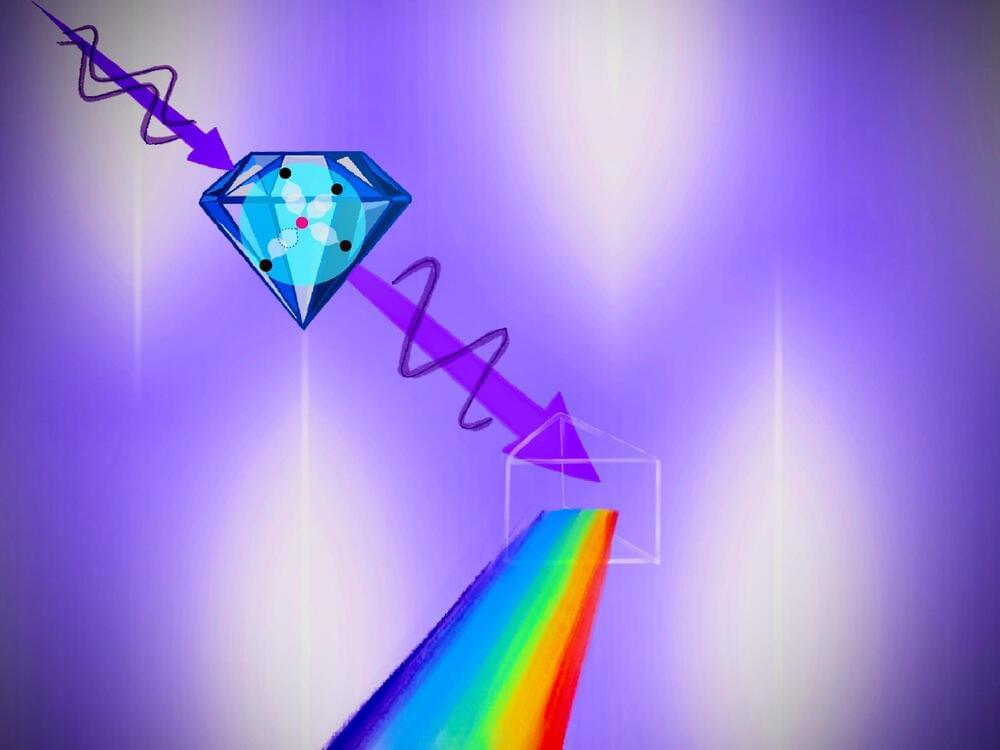
Researchers at Los Alamos National Laboratory have successfully developed a new way to produce a specific type of photon that could prove critical for quantum data exchange, notably encryption. The specific kind of photons, called “circularly polarized light,” have thus far proved challenging to create and control, but this new technique makes the process easier and, importantly, cheaper. This was achieved, the team explains, by stacking two different, atomically thin materials to “twist” (polarize) photons in a predictable fashion.

Encoded, “twisted,” photons

“Our research shows that it is possible for a monolayer semiconductor to emit circularly polarized light without the help of an external magnetic field,” explained Han Htoon, a scientist at Los Alamos National Laboratory. “This effect has only been achieved before with high magnetic fields created by bulky superconducting magnets, by coupling quantum emitters to very complex nanoscale photonics structures, or by injecting spin-polarized carriers into quantum emitters. Our proximity-effect approach has the advantage of low-cost fabrication and reliability,” he added.

/* */