Toggle light / dark theme

Nano-Biological Computing — Quantum Computer Alternative!

Subscribe here: https://goo.gl/9FS8uF
Check out the previous episode: https://www.youtube.com/watch?v=X5lpOskKF9I
Become a Patreon!: https://www.patreon.com/ColdFusion_TV

Here it is, the bio computer. A new type of parallel computing method that could rival the infamous quantum computer at a much lower price while being more practical to boot.

Hi, welcome to ColdFusion (formally known as ColdfusTion).
Experience the cutting edge of the world around us in a fun relaxed atmosphere.

Sources:

http://www.mind.ilstu.edu/curriculum/nature_of_computers/computer_types.php.
http://www.lunduniversity.lu.se/

A new protocol to reliably demonstrate quantum computational advantage

Quantum computers, devices that perform computations by exploiting quantum mechanical phenomena, have the potential to outperform classical computers on some tasks and optimization problems. In recent years, research teams at both academic institutions and IT companies have been trying to realize this predicted better performance for specific problems, which is broadly known as “quantum advantage.”

To reliably demonstrate that a quantum computer performs better than a classical computer, one should, among other things, collect inside the computer and compare them to those collected in . Doing this, however, can sometimes be challenging, due to the distinct nature of these two types of devices.

Researchers at NIST/University of Maryland, UC Berkeley, Caltech and other institutes in the United States recently introduced and tested a new protocol that could help to reliably validate the advantage of quantum computers. This protocol, introduced in Nature Physics, relies on mid-circuit measurements and a cryptographic technique.

Long distance entanglement and high-dimensional quantum teleportation in the Fermi–Hubbard model

Teleportation year 2023 😗😁.


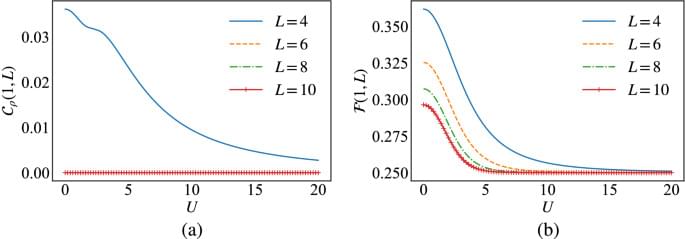
The long distance entanglement in finite size open Fermi–Hubbard chains, together with the end-to-end quantum teleportation are investigated. We show the peculiarity of the ground state of the Fermi–Hubbard model to support maximum long distance entanglement, which allows it to operate as a quantum resource for high fidelity long distance quantum teleportation. We determine the physical properties and conditions for creating scalable long distance entanglement and analyze its stability under the effect of the Coulomb interaction and the hopping amplitude. Furthermore, we show that the choice of the measurement basis in the protocol can drastically affect the fidelity of quantum teleportation and we argue that perfect information transfer can be attained by choosing an adequate basis reflecting the salient properties of the quantum channel, i.e. Hubbard projective measurements.

A particular way of creating quantum entanglement may improve accuracy of advanced quantum sensors

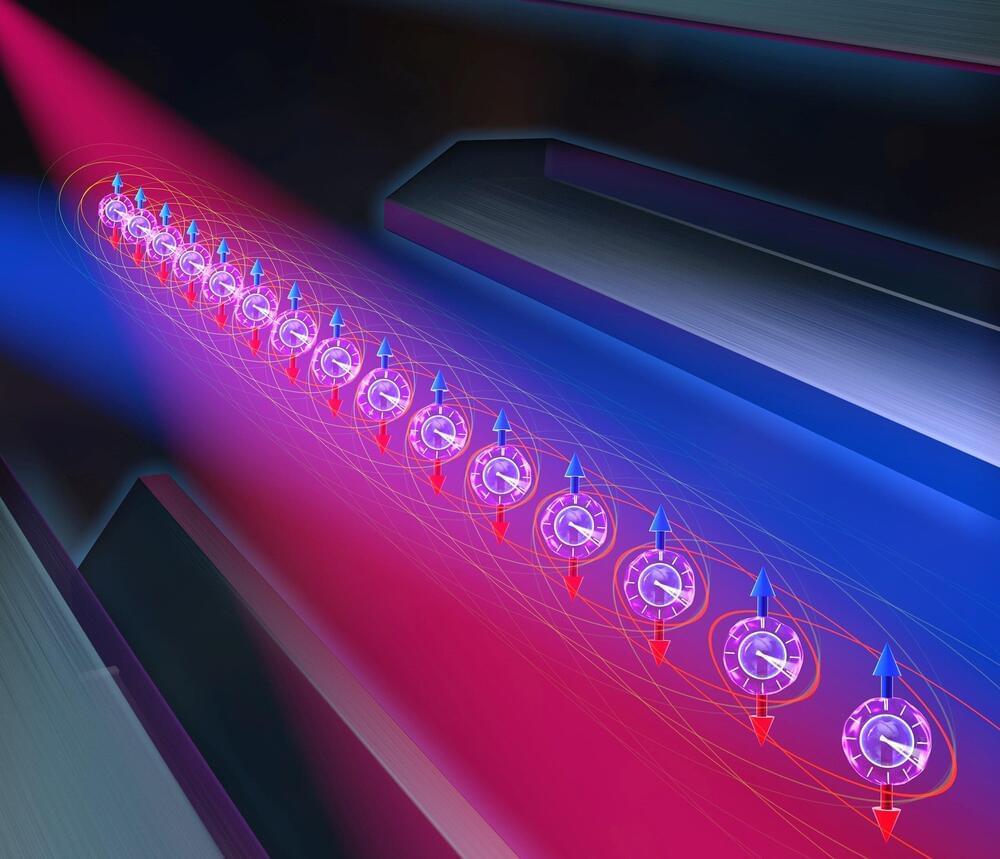
Metrological institutions around the world administer our time using atomic clocks based on the natural oscillations of atoms. These clocks, pivotal for applications like satellite navigation or data transfer, have recently been improved by using ever higher oscillation frequencies in optical atomic clocks.

Now, scientists at the University of Innsbruck and the Institute of Quantum Optics and Quantum Information (IQOQI) of the Austrian Academy of Sciences led by Christian Roos show how a particular way of creating entanglement can be used to further improve the accuracy of measurements integral to an optical atomic clock’s function. Their results have been published in the journal Nature.

Observations of are always subject to a certain statistical uncertainty. “This is due to the nature of the quantum world,” explains Johannes Franke from Christian Roos’ team. “Entanglement can help us reduce these errors.”

Quantum Device Used To Slow Down Chemical Reaction by 100 Billion Times

What happens in femtoseconds in nature can now be observed in milliseconds in the lab.

Scientists at the university of sydney.

The University of Sydney is a public research university located in Sydney, New South Wales, Australia. Founded in 1,850, it is the oldest university in Australia and is consistently ranked among the top universities in the world. The University of Sydney has a strong focus on research and offers a wide range of undergraduate and postgraduate programs across a variety of disciplines, including arts, business, engineering, law, medicine, and science.

Quantum Computing May Help Protect AI From Attack

This post is also available in: he עברית (Hebrew)

At a crucial time when the development and deployment of AI are rapidly evolving, experts are looking at ways we can use quantum computing to protect AI from its vulnerabilities.

Machine learning is a field of artificial intelligence where computer models become experts in various tasks by consuming large amounts of data, instead of a human explicitly programming their level of expertise. These algorithms do not need to be taught but rather learn from seeing examples, similar to how a child learns.

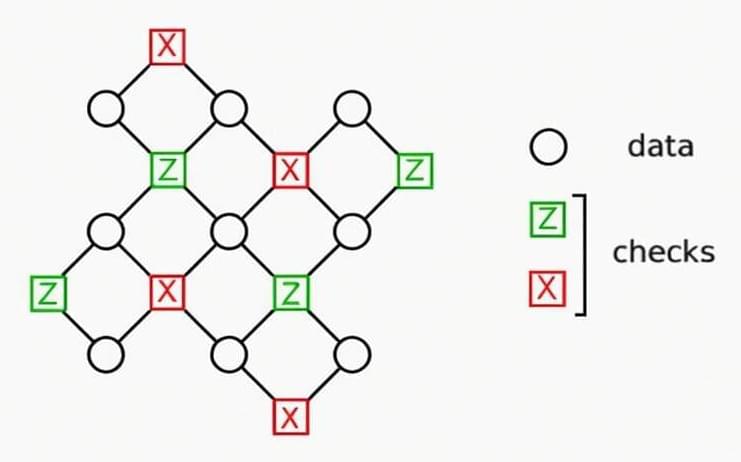
IBM makes major leap in quantum computing error-detection

Quantum computing is on the verge of catapulting the digital revolution to new heights.

Turbocharged processing holds the promise of instantaneously diagnosing health ailments and providing rapid development of new medicines; greatly speeding up response time in AI systems for such time-sensitive operations as autonomous driving and space travel; optimizing traffic control in congested cities; helping aircraft better navigate extreme turbulence; speeding up weather forecasting that better prepares localities facing potential disaster, and optimizing supply chain systems for more efficient delivery times and cost savings.

But we’re not there yet. One of the greatest obstacles facing quantum operations is error-correction.

Quantum simulator helps to unlock a major science mystery

A new study exemplifies how the strides made in quantum computing are now being harnessed to unlock the secrets of fundamental science.

Scientists at Duke University have harnessed the power of quantum-based methods to unravel a puzzling phenomenon related to light-absorbing molecules, according to a new study published in Nature Chemistry.

This advancement sheds light on the enigmatic world of quantum interactions, potentially transforming our understanding of essential chemical processes like photosynthesis, vision, and photocatalysis.

Quantum device used to slow chemical reaction 100 billion times

A team of researchers has successfully simulated and” observed” a slow-motion chemical reaction at a billion times slower than “normal.”

For the first time ever, scientists have succeeded in slowing down (in simulation) a chemical reaction by around 100 billion times. Using a quantum computer, the researchers simulated and then “observed” the reaction in super slow motion.


Skynesher/iStock.

Super slow motion.

Quantum discovery verifies a decades-old theory on how monopoles decay

The field of quantum physics is rife with paths leading to tantalizing new areas of study, but one rabbit hole offers a unique vantage point into a world where particles behave differently—through the proverbial looking glass.

Dubbed the “Alice ring” after Lewis Carroll’s world-renowned stories on Alice’s Adventures in Wonderland, the appearance of this object verifies a decades-old theory on how monopoles decay. Specifically, that they decay into a ring-like vortex, where any other monopoles passing through the center are flipped into their opposite magnetic charges.

Published in Nature Communications on August 29, these findings mark the latest discovery in a string of work that has spanned the collaborative careers of Aalto University Professor Mikko Möttönen and Amherst College Professor David Hall.

/* */