Toggle light / dark theme

New experimental evidence of the restoration of chiral symmetry at high matter density

The QCD vacuum (i.e., the ground state of vacuum in the quantum chromodynamics regime) is theoretically characterized by the presence of non-zero expectation values of condensates, such as gluons and quark–antiquark pairs. Instead of being associated with a lack of particles and interactions in an empty space, physics theory regards this state as filled with the so-called condensates, which have the same quantum numbers as the vacuum and cannot be directly observed.

While many have discussed the properties of the QCD vacuum, experimentally validating these theoretical predictions has so far proved challenging, simply because the condensates in this state are elusive and cannot be directly detected. A hint of experimental “observation” can be found in the theoretical predictions of the properties of the QCD vacuum.

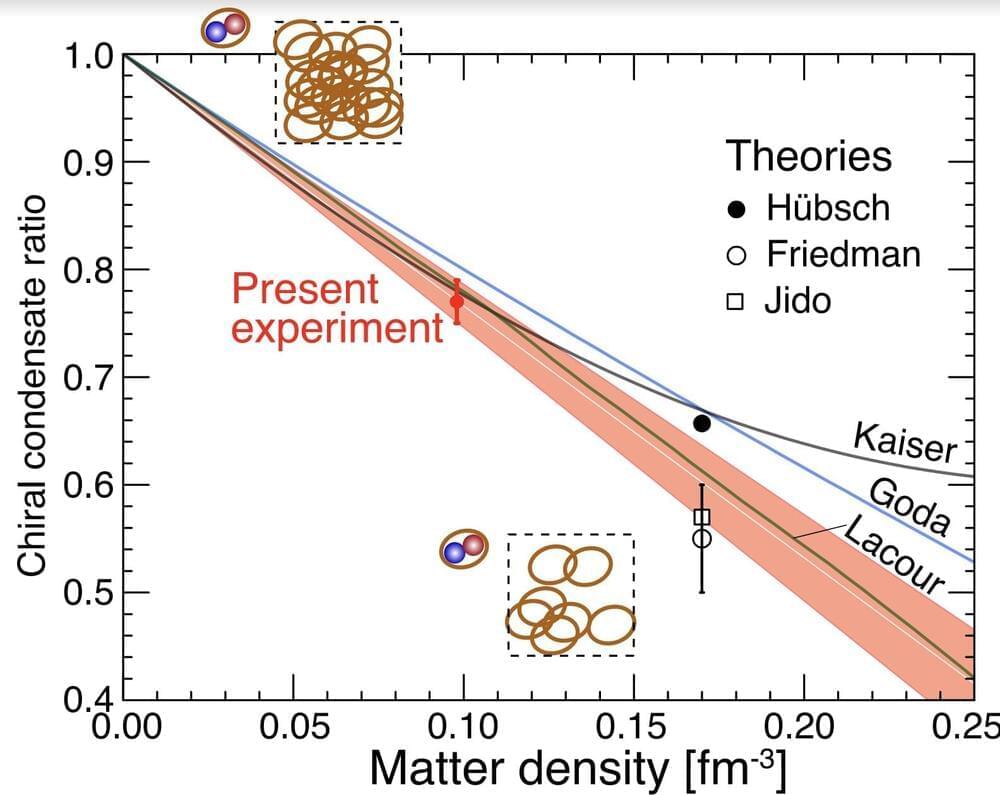
Theories predict that the condensate may decrease in the high temperature and/or at a high matter due to the partial restoration of the so-called chiral symmetry. To prove these theories, some researchers collected measurements during ultra-relativistic, head-on collisions of heavy ions at particularly high temperatures. Other efforts in this area tried to probe properties of the QCD vacuum by measuring so-called “medium effects.” These are essentially effects that alter the QCD vacuum and its structure, prompted by the presence of high matter density such as nuclear matter.
Cortico-Hippocampal Computational Modeling Using Quantum-Inspired Neural Networks

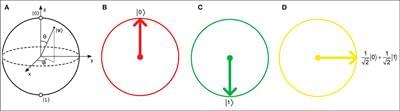
Many current computational models that aim to simulate cortical and hippocampal modules of the brain depend on artificial neural networks. However, such classical or even deep neural networks are very slow, sometimes taking thousands of trials to obtain the final response with a considerable amount of error. The need for a large number of trials at learning and the inaccurate output responses are due to the complexity of the input cue and the biological processes being simulated. This article proposes a computational model for an intact and a lesioned cortico-hippocampal system using quantum-inspired neural networks. This cortico-hippocampal computational quantum-inspired (CHCQI) model simulates cortical and hippocampal modules by using adaptively updated neural networks entangled with quantum circuits. The proposed model is used to simulate various classical conditioning tasks related to biological processes. The output of the simulated tasks yielded the desired responses quickly and efficiently compared with other computational models, including the recently published Green model.

Several researchers have proposed models that combine artificial neural networks (ANNs) or quantum neural networks (QNNs) with various other ingredients. For example, Haykin (1999) and Bishop (1995) developed multilevel activation function QNNs using the quantum linear superposition feature (Bonnell and Papini, 1997).

The prime factorization algorithm of Shor was used to illustrate the basic workings of QNNs (Shor, 1994). Shor’s algorithm uses quantum computations by quantum gates to provide the potential power for quantum computers (Bocharov et al., 2017; Dridi and Alghassi, 2017; Demirci et al., 2018; Jiang et al., 2018). Meanwhile, the work of Kak (1995) focused on the relationship between quantum mechanics principles and ANNs. Kak introduced the first quantum network based on the principles of neural networks, combining quantum computation with convolutional neural networks to produce quantum neural computation (Kak, 1995; Zhou, 2010). Since then, a myriad of QNN models have been proposed, such as those of Zhou (2010) and Schuld et al. (2014).

Will Quantum Computers Make Time Travel Possible? | Unveiled

Is time travel FINALLY possible?? Join us… and find out!

Subscribe: https://wmojo.com/unveiled-subscribe.

In this video, Unveiled takes a closer look at 3 groundbreaking experiments in time travel and quantum computing! On an international scale, science is starting show how moving forward and back in time really COULD be possible… all it will take is a little manipulation at the atomic and subatomic levels!

This is Unveiled, giving you incredible answers to extraordinary questions!

Find more amazing videos for your curiosity here:
6 Scientific Breakthroughs Predicted During Your Lifetime — https://youtu.be/wGKj-3AfxdE
Are We the Creation of a Type V Civilization? — https://youtu.be/T_u4lGDs3dM

0:00 Intro.

QuASeR: Quantum Accelerated de novo DNA sequence reconstruction

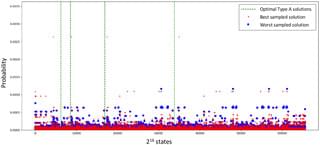
In this, we present QuASeR, a reference-free DNA sequence reconstruction implementation via de novo assembly on both gate-based and quantum annealing platforms. This is the first time this important application in bioinformatics is modeled using quantum computation. Each one of the four steps of the implementation (TSP, QUBO, Hamiltonians and QAOA) is explained with a proof-of-concept example to target both the genomics research community and quantum application developers in a self-contained manner. The implementation and results on executing the algorithm from a set of DNA reads to a reconstructed sequence, on a gate-based quantum simulator, the D-Wave quantum annealing simulator and hardware are detailed. We also highlight the limitations of current classical simulation and available quantum hardware systems. The implementation is open-source and can be found on https://github.com/QE-Lab/QuASeR.

Citation: Sarkar A, Al-Ars Z, Bertels K (2021) QuASeR: Quantum Accelerated de novo DNA sequence reconstruction. PLoS ONE 16: e0249850. https://doi.org/10.1371/journal.pone.

Editor: Archana Kamal, University of Massachusetts Lowell, UNITED STATES.

A new way to share secret information, using quantum mechanics

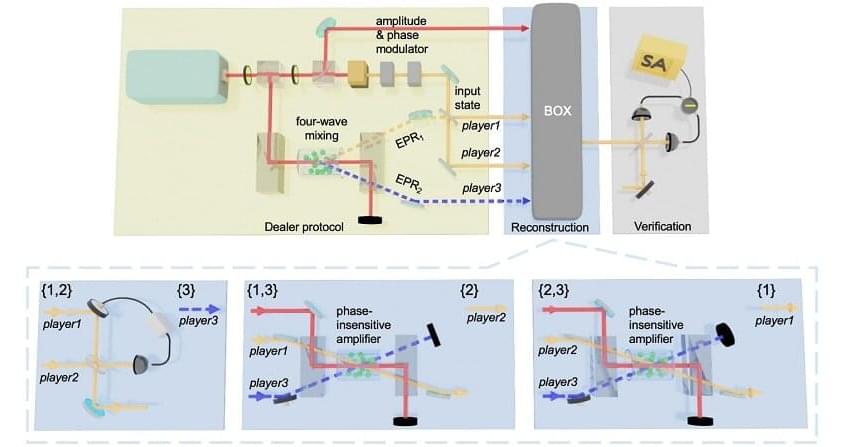
Quantum information is a powerful technology for increasing the amount of information that can be processed and communicated securely. Using quantum entanglement to securely distribute a secret quantum state among multiple parties is known as “quantum state sharing.”

An important in and cryptography, sharing works like this (in simple terms): a secret quantum state is divided into n shares and given to n players. The secret state can only be reconstructed if k (where kn/2) players cooperate, while the remaining n-k players cannot access the information. This protocol can also be used for , allowing the reconstruction of the secret state even if some of the information is lost.

In quantum information, there are two types of systems: discrete variable and continuous variable systems. Discrete variable systems are good because they don’t lose information easily, while continuous variable systems are good because the generation and processing of quantum states are deterministic rather than probabilistic, which enables a high degree of precision.

Superstring Theory and Higher Dimensions: Bridging Einstein’s Relativity and Quantum Mechanics

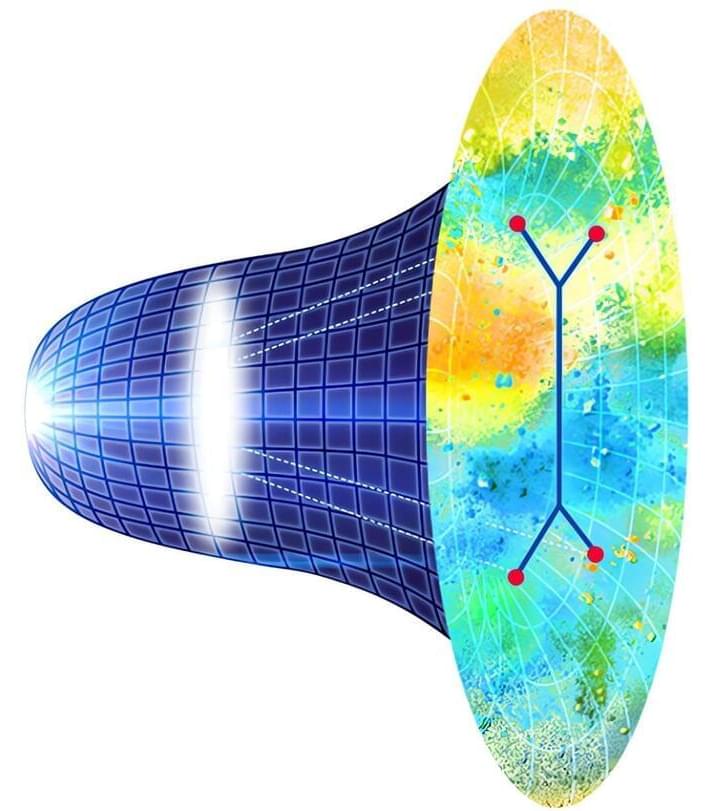
A team of researchers at Kyoto University is exploring the use of higher dimensions in de Sitter space to explain gravity in the early universe. By developing a method to compute correlation functions among fluctuations, they aim to bridge the gap between Einstein’s theory of general relativity and quantum mechanics. This could potentially validate superstring theory and enable practical calculations about the early universe’s subtle changes. Although initially tested in a three-dimensional universe, the analysis may be extended to a four-dimensional universe for real-world applications.

Having more tools helps; having the right tools is better. Utilizing multiple dimensions may simplify difficult problems — not only in science fiction but also in physics — and tie together conflicting theories.

For example, Einstein’s theory of general relativity — which resides in the fabric of space-time warped by planetary or other massive objects — explains how gravity works in most cases. However, the theory breaks down under extreme conditions such as those existing in black holes and cosmic primordial soups.

Quantum Machine Learning over Infinite Dimensions

This could lead to chat gpt infinite ♾️ ✨️


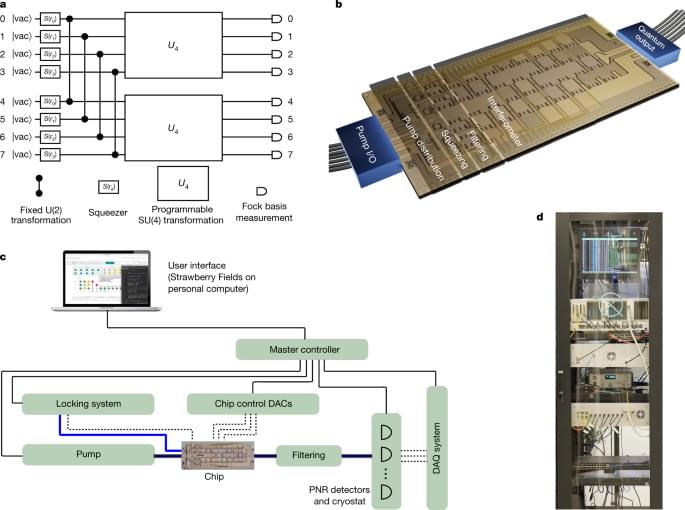
Machine learning is a fascinating and exciting field within computer science. Recently, this excitement has been transferred to the quantum information realm. Currently, all proposals for the quantum version of machine learning utilize the finite-dimensional substrate of discrete variables. Here we generalize quantum machine learning to the more complex, but still remarkably practical, infinite-dimensional systems. We present the critical subroutines of quantum machine learning algorithms for an all-photonic continuous-variable quantum computer that can lead to exponential speedups in situations where classical algorithms scale polynomially. Finally, we also map out an experimental implementation which can be used as a blueprint for future photonic demonstrations.

/* */