Toggle light / dark theme

Relativistic Motion Boosts Engine Efficiency Beyond Limits

The pursuit of more efficient engines continually pushes the boundaries of thermodynamics, and recent work demonstrates that relativistic effects may offer a surprising pathway to surpass conventional limits. Tanmoy Pandit from the Leibniz Institute of Hannover, along with Tanmoy Pandit from TU Berlin and Pritam Chattopadhyay from the Weizmann Institute of Science, and colleagues, investigate a novel thermal machine that harnesses the principles of relativity to achieve efficiencies beyond those dictated by the Carnot cycle. Their research reveals that by incorporating relativistic motion into the system, specifically through the reshaping of energy spectra via the Doppler effect, it becomes possible to extract useful work even without a temperature difference, effectively establishing relativistic motion as a valuable resource for energy conversion. This discovery not only challenges established thermodynamic boundaries, but also opens exciting possibilities for designing future technologies that leverage the fundamental principles of relativity to enhance performance.


The appendices detail the Lindblad superoperator used to describe the system’s dynamics and the transformation to a rotating frame to simplify the analysis. They show how relativistic motion affects the average number of quanta in the reservoir and the superoperators, and present the detailed derivation of the steady-state density matrix elements for the three-level heat engine, providing equations for power output and efficiency. The document describes the Monte Carlo method used to estimate the generalized Carnot-like efficiency bound in relativistic quantum thermal machines, providing pseudocode for implementation and explaining how the efficiency bound is extracted from efficiency and power pairs. Overall, this is an excellent supplementary material document that provides a comprehensive and detailed explanation of the theoretical framework, calculations, and numerical methods used in the research paper. The clear organization, detailed derivations, and well-explained physical concepts make it a valuable resource for anyone interested in relativistic quantum thermal machines.

Relativistic Motion Boosts Heat Engine Efficiency

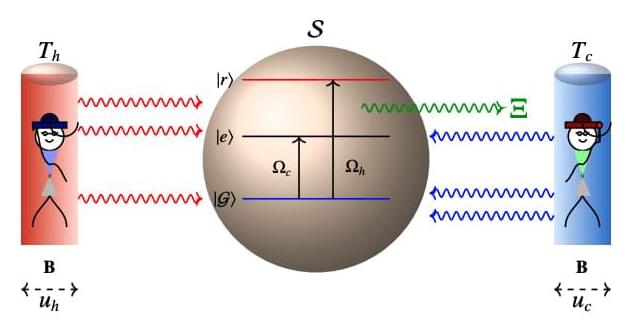
Researchers have demonstrated that relativistic motion can function as a genuine thermodynamic resource, enabling a heat engine to surpass the conventional limits of efficiency. The team investigated a three-level maser, where thermal reservoirs are in constant relativistic motion relative to the working medium, using a model that accurately captures the effects of relativistic motion on energy transfer. The results reveal that the engine’s performance is not solely dictated by temperature differences, but is significantly influenced by the velocity of the thermal reservoirs. Specifically, the engine can operate with greater efficiency than predicted by the Carnot limit, due to the reshaping of the energy spectrum caused by relativistic motion.

Universal logical quantum photonic neural network processor via cavity-assisted interactions

Encoding quantum information within bosonic modes offers a promising direction for hardware-efficient and fault-tolerant quantum information processing. However, achieving high-fidelity universal control over bosonic encodings using native photonic hardware remains a significant challenge. We establish a quantum control framework to prepare and perform universal logical operations on arbitrary multimode multi-photon states using a quantum photonic neural network. Central to our approach is the optical nonlinearity, which is realized through strong light-matter interaction with a three-level Λ atomic system. The dynamics of this passive interaction are asymptotically confined to the single-mode subspace, enabling the construction of deterministic entangling gates and overcoming limitations faced by many nonlinear optical mechanisms. Using this nonlinearity as the element-wise activation function, we show that the proposed architecture is able to deterministically prepare a wide array of multimode multi-photon states, including essential resource states. We demonstrate universal code-agnostic control of bosonic encodings by preparing and performing logical operations on symmetry-protected error-correcting codes. Our architecture is not constrained by symmetries imposed by evolution under a system Hamiltonian such as purely χ and χ processes, and is naturally suited to implement non-transversal gates on photonic logical qubits. Additionally, we propose an error-correction scheme based on non-demolition measurements that is facilitated by the optical nonlinearity as a building block. Our results pave the way for near-term quantum photonic processors that enable error-corrected quantum computation, and can be achieved using present-day integrated photonic hardware.


Basani, J.R., Niu, M.Y. & Waks, E. Universal logical quantum photonic neural network processor via cavity-assisted interactions. npj Quantum Inf 11, 142 (2025). https://doi.org/10.1038/s41534-025-01096-9

Download citation.

Measuring a previously mysterious imaginary component of wave scattering

Inside the system, the light wave’s velocity typically changes; such a system is called a “dispersive medium.” In particular, the scattering matrix for a dispersive medium can provide the of the wave’s transition from incoming to outgoing—how long the wave stays in the system.

The time delay, in turn, provides scientists, engineers and technicians with parameters such as the phase evolution of quantum waves, the delay of a wave group in a fiber optic cable and the group delay in waveguides, among other quantities.

But what to make of the imaginary parts of the scattering matrix? In a 2016 paper in Nature Communications by lead author M. Asano of Japan, a group of scientists from several countries around the world recognized that for that meet certain requirements, the imaginary part of the scattering matrix—more precisely, the real number before “i,” the square root of-1—represented the “frequency shift” of the transitioning wave due to its passage through the scattering system. In particular, it represents the shift of the frequency in the center of the pulse (shaped as a Bell curve, a Gaussian distribution) of the incoming light pulse.

Two quantum computers with 20 qubits manage to simulate information scrambling

Four RIKEN researchers have used two small quantum computers to simulate quantum information scrambling, an important quantum-information process. This achievement illustrates a potential application of future quantum computers. The results are published in Physical Review Research.

Still in their infancy, quantum computers are only just beginning to be used for applications. But they promise to revolutionize computing when they become a mature technology.

One possible application for quantum computers is simulating the scrambling of quantum information—a key phenomenon that involves the spread of information in ranging from strange metals to .

Simulations reveal pion’s interaction with Higgs field with unprecedented precision

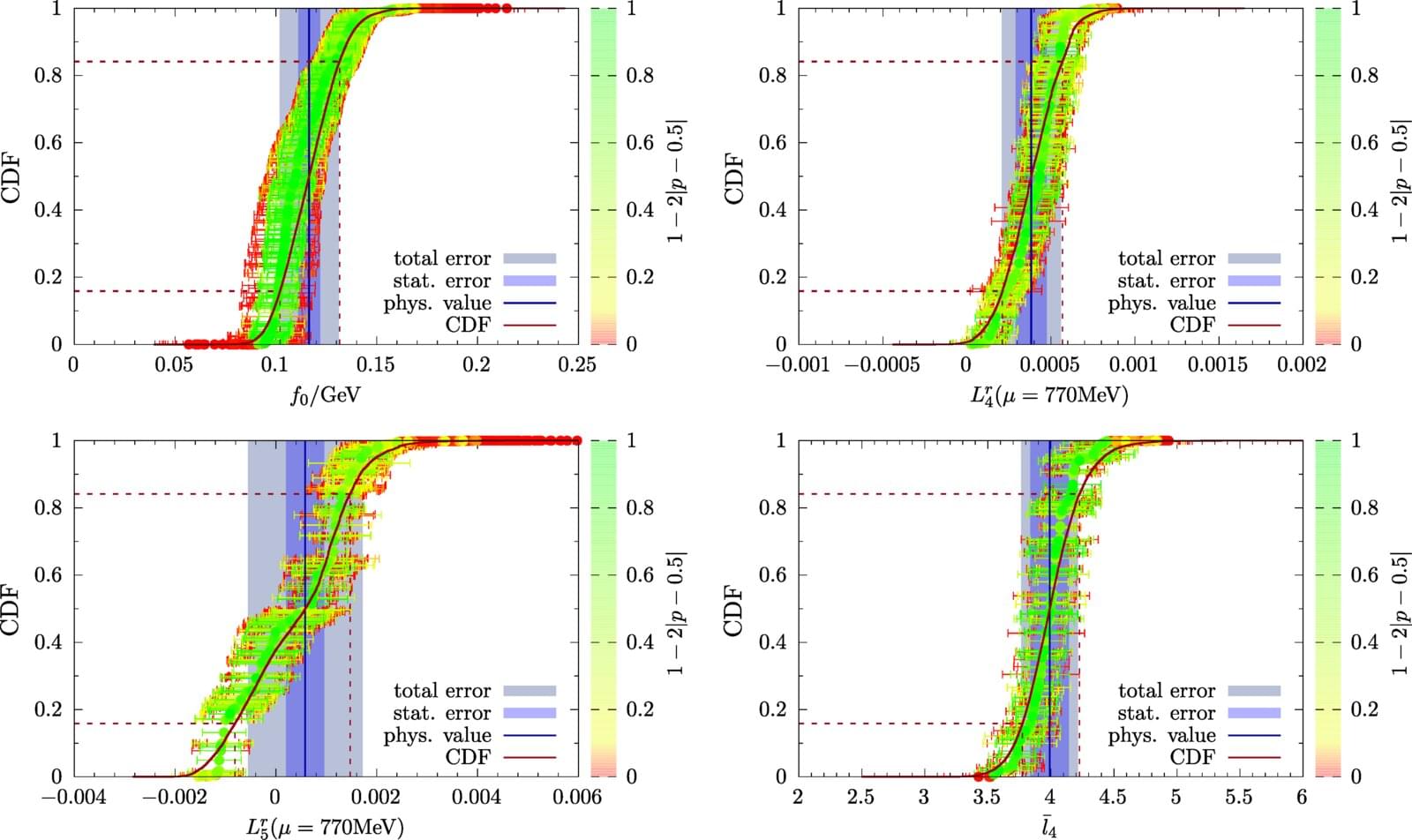
With the help of innovative large-scale simulations on various supercomputers, physicists at Johannes Gutenberg University Mainz (JGU) have succeeded in gaining new insights into previously elusive aspects of the physics of strong interaction.

Associate Professor Dr. Georg von Hippel and Dr. Konstantin Ottnad from the Institute of Nuclear Physics and the PRISMA+ Cluster of Excellence have calculated the interaction of the pion with the Higgs field with unprecedented precision based on . Their findings were recently published in Physical Review Letters.

New measurement station in Brazil: Quantum technology expands global network in search for dark matter

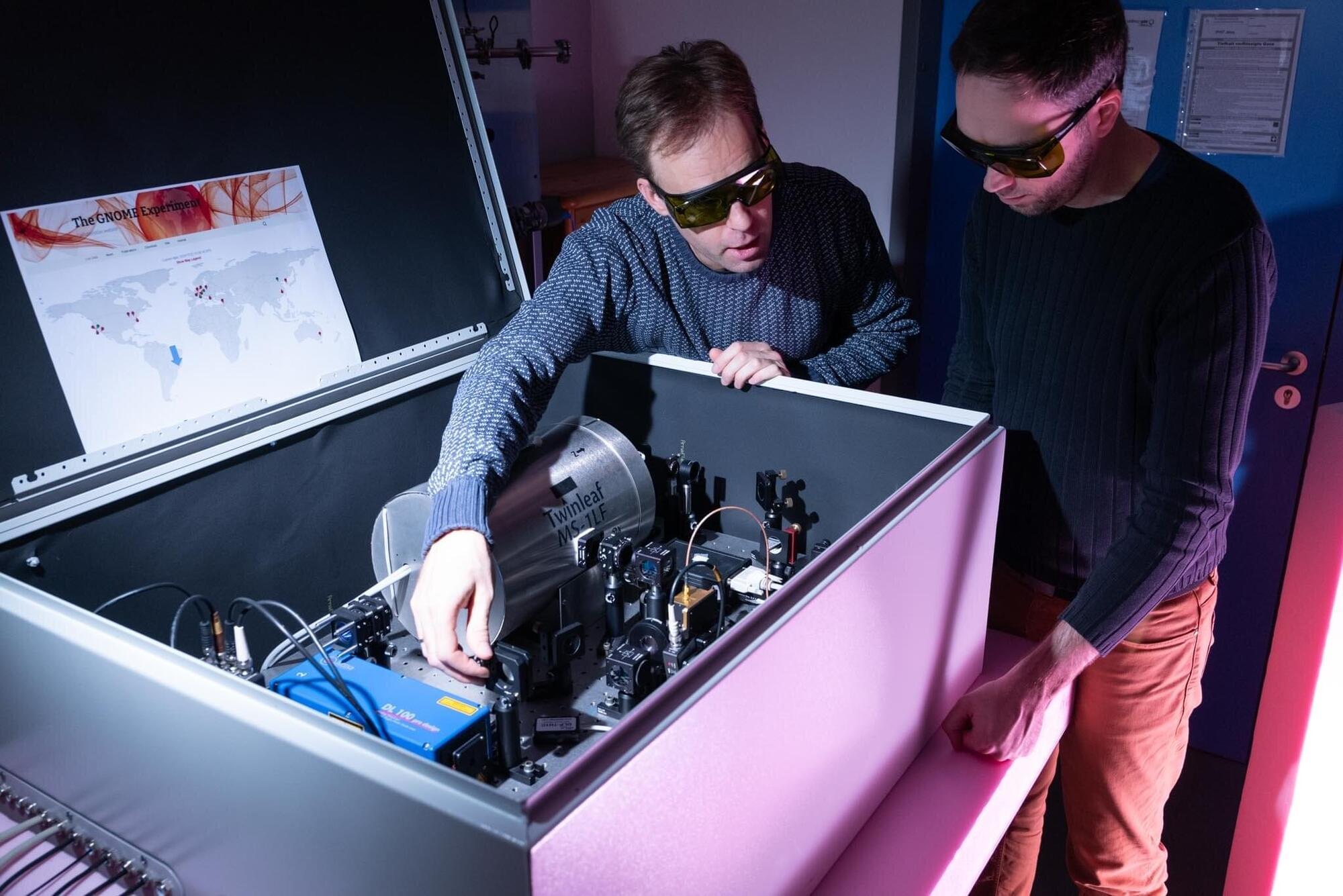
A highly sensitive quantum sensor from Jena has traveled nearly 9,000 kilometers: by truck to Hamburg, by ship across the Atlantic, and finally overland to Vassouras, Brazil.

At the campus of the Observatório Nacional, researchers from the Leibniz Institute of Photonic Technology (Leibniz-IPHT) in Jena, together with Brazilian partners, have installed a new measurement station. It is part of the worldwide GNOME project and is designed to help address one of the great unsolved questions in modern physics: the nature of .

Dark matter cannot be directly detected with conventional measurement methods. However, it demonstrably influences the motion of galaxies and the structure of the cosmos. Understanding its nature remains one of the central open problems in physics.

Trapped calcium ions entangled with photons form scalable nodes for quantum networks

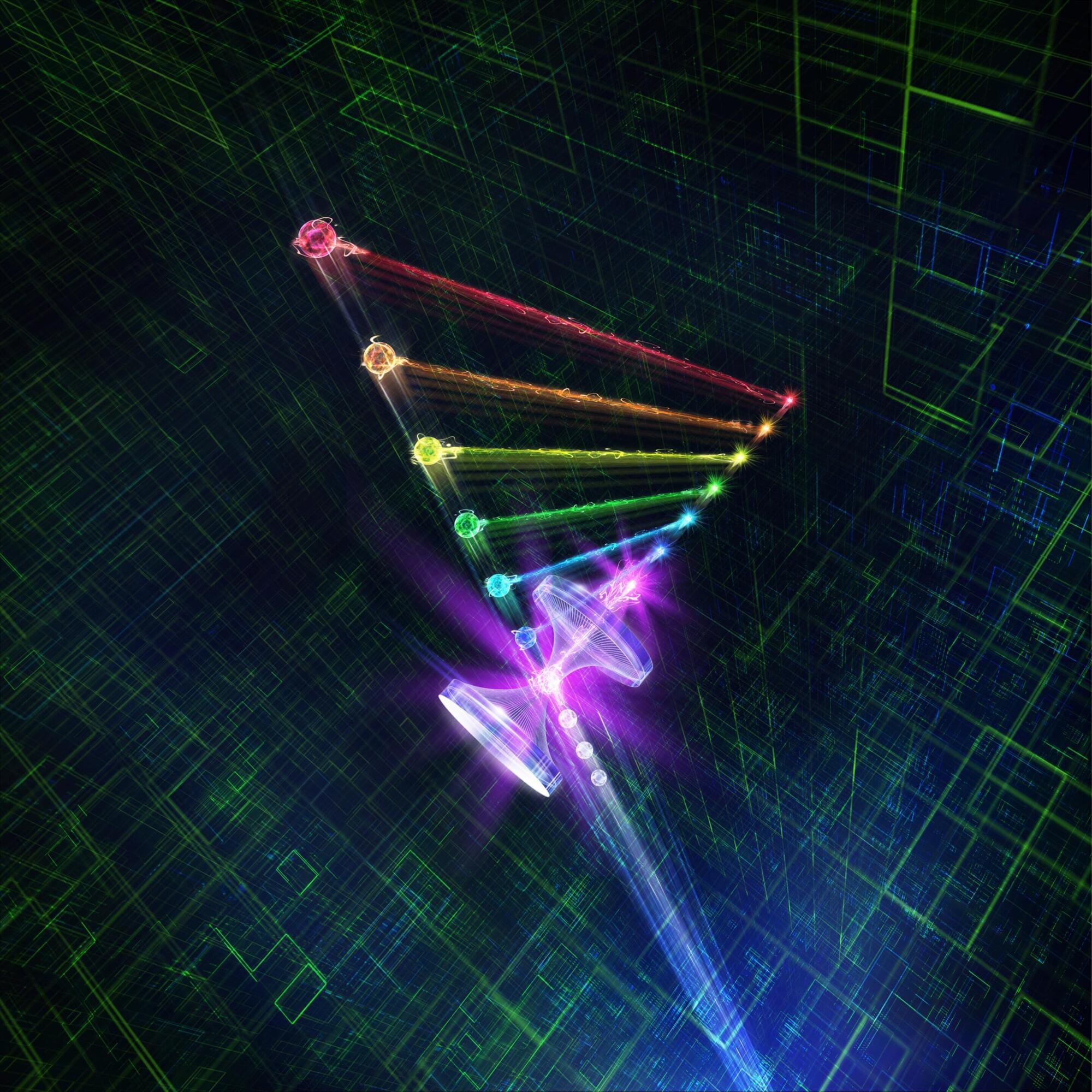
Researchers at the University of Innsbruck have created a system in which individual qubits—stored in trapped calcium ions—are each entangled with separate photons. Demonstrating this method for a register of up to 10 qubits, the team has shown an easily scalable approach that opens new possibilities for linking quantum computers and quantum sensors.

Advanced computer modeling predicts molecular-qubit performance

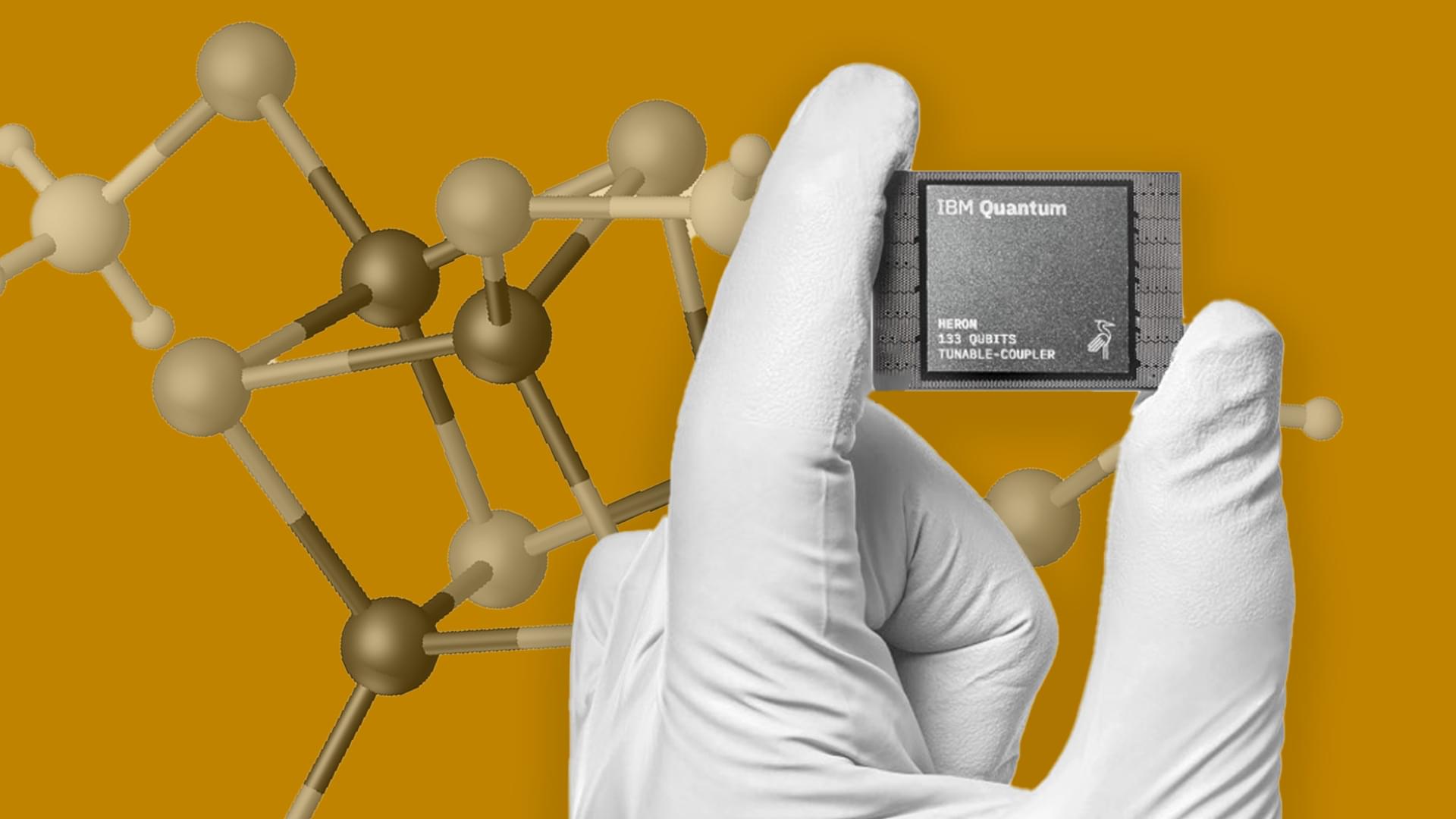
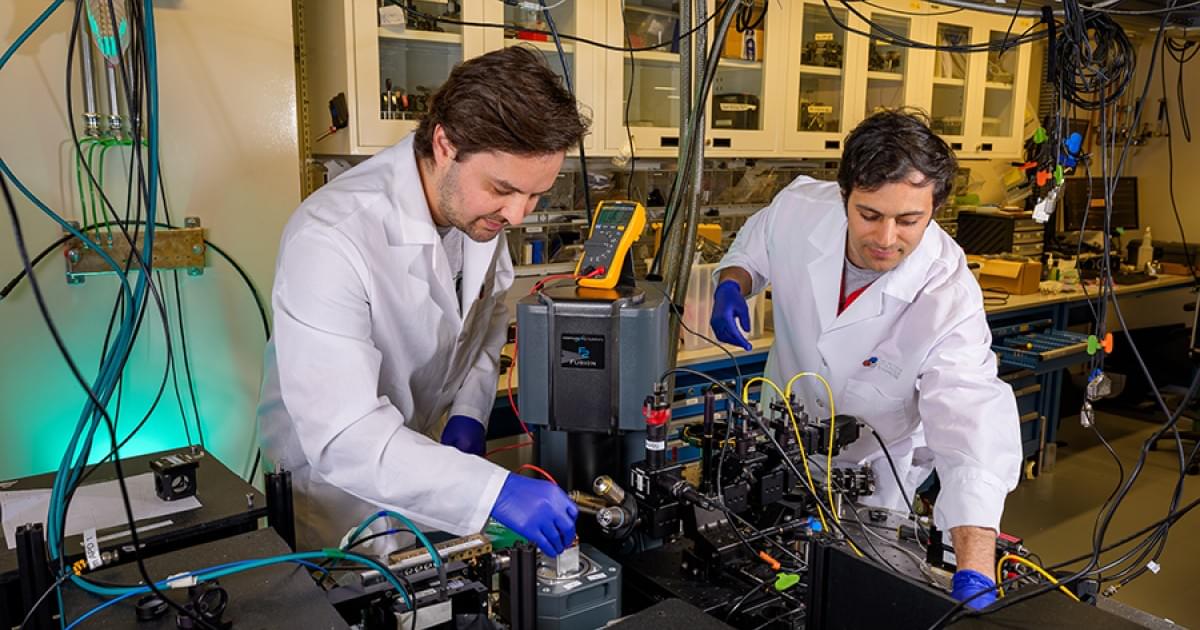
A qubit is the delicate, information-processing heart of a quantum device. In the coming decades, advances in quantum information are expected to give us computers with new, powerful capabilities and detectors that can pick up atomic-scale signals in medicine, navigation and more. The realization of such technologies depends on having reliable, long-lasting qubits.

Now, researchers have taken an important step in understanding the rules necessary for the design of useful, efficient qubits.

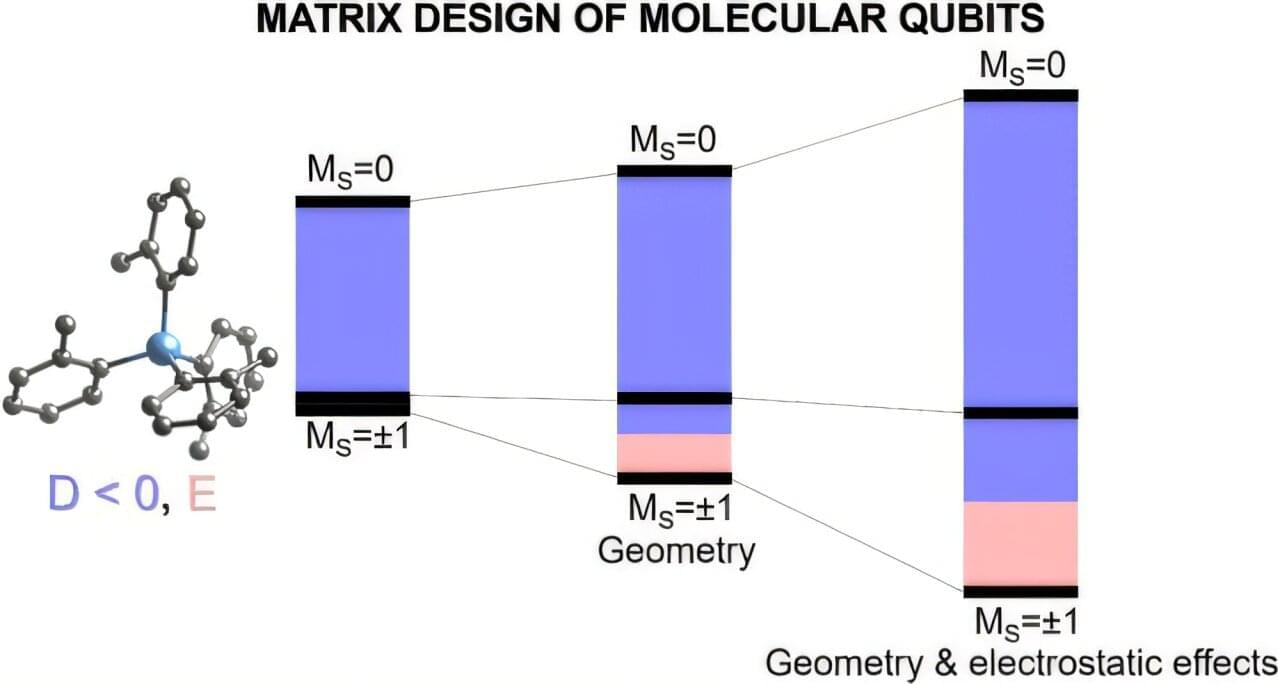
Using advanced computer modeling, the researchers came up with a way to accurately predict and fine-tune key magnetic properties of a type of device called a molecular qubit. They also figured out which factors in the material that the qubit sits in affect this tuning the most and calculated how long the qubits can live.

/* */