In its second antimatter breakthrough this month, CERN announced it successfully created the first-ever antimatter qubit, paving the way to even weirder quantum experiments.

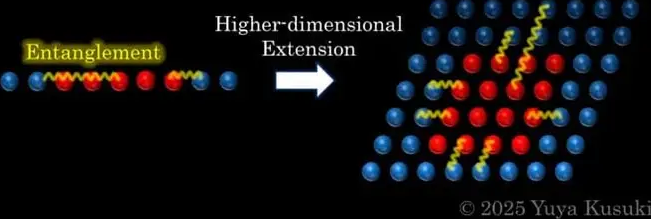


In the past, chemists have used temperature, pressure, light, and other chemical ways to speed up or slow down chemical reactions. Now, researchers at the University of Rochester have developed a theory that explains a different way to control chemical reactions—one that doesn’t rely on heat or light but instead on the quantum environment surrounding the molecules.
In a paper published in the Journal of the American Chemical Society, the researchers—including Frank Huo, the Dean and Laura Marvin Endowed Professor in Physical Chemistry in Rochester’s Department of Chemistry and graduate students Sebastian Montillo and Wenxiang Ying—argue that traditional theories used to predict how fast chemical reactions occur may not fully capture what happens under certain quantum light-matter interaction conditions.
To address this, they developed a new theory showing how quantum effects —specifically, an effect called vibrational strong coupling (VSC)—can influence chemical reactions.
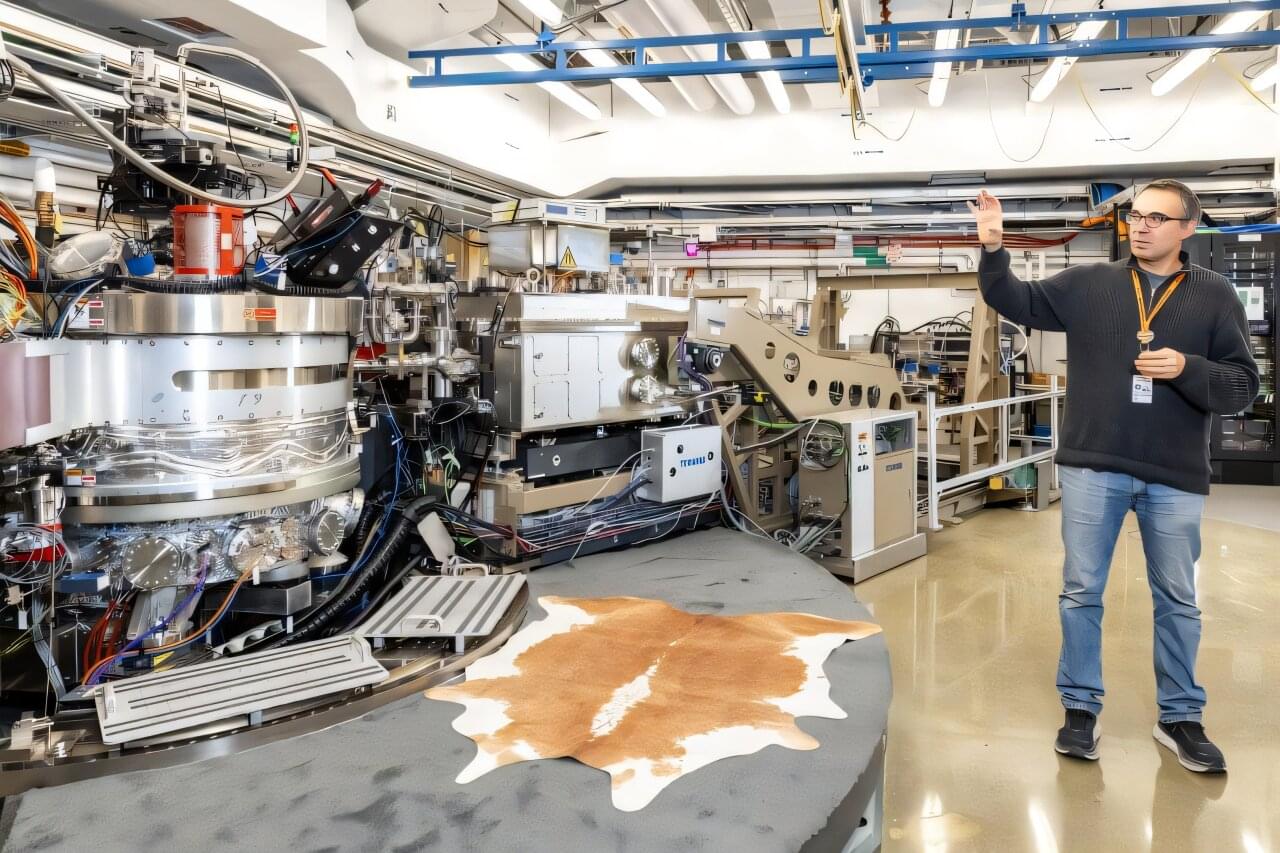
With a suite of reimagined instruments at SLAC’s LCLS facility, researchers see massive improvement in data quality and take up scientific inquiries that were out of reach just one year ago.
Some of science’s biggest mysteries unfold at the smallest scales. Researchers investigating super small phenomena—from the quantum nature of superconductivity to the mechanics that drive photosynthesis—come to the Department of Energy’s SLAC National Accelerator Laboratory to use the Linac Coherent Light Source (LCLS).
Like a giant microscope, LCLS sends pulses of ultrabright X-rays to a suite of specialized scientific instruments. With these tools, scientists take crisp pictures of atomic motions, watch chemical reactions unfold, probe the properties of materials and explore fundamental processes in living things.
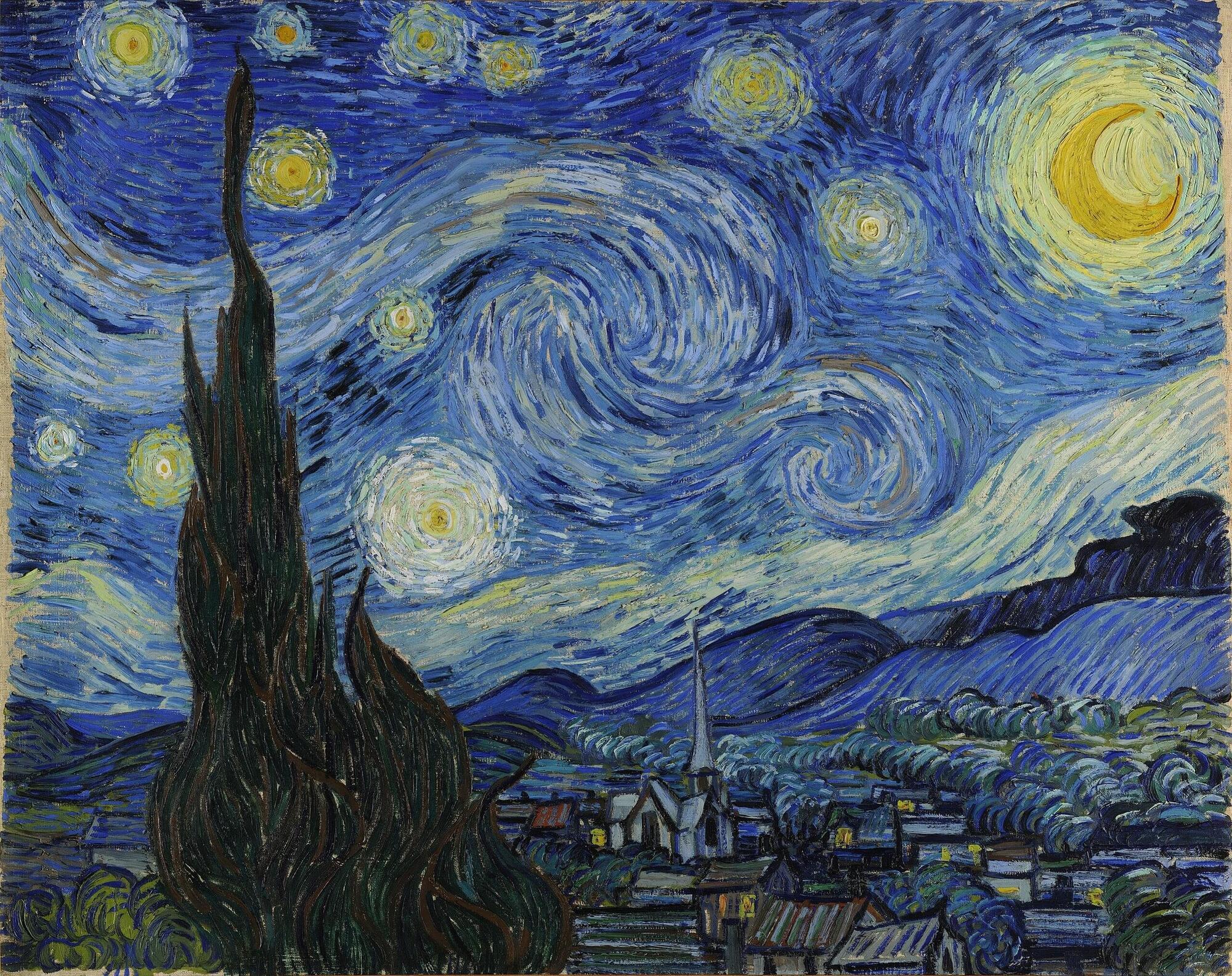
Van Gogh’s “The Starry Night” has stirred the souls of art lovers for over a century. Now, its swirling skies may also speak to physicists, as it echoes the patterns of quantum turbulence.
Physicists at Osaka Metropolitan University and the Korea Advanced Institute of Science and Technology have for the first time successfully observed the quantum Kelvin–Helmholtz instability (KHI)—a phenomenon predicted decades ago but never before seen in quantum fluids. The instability produces exotic vortex patterns known as eccentric fractional skyrmions, whose crescent-shaped structures bear a resemblance to the moon in Van Gogh’s masterpiece.
KHI is a classic phenomenon in fluid dynamics, where waves and vortices form at the boundary between two fluids moving at different speeds—as seen in wind-whipped ocean waves, swirling clouds, or Van Gogh’s skies.

How can quantum technologies be developed responsibly? In the journal Science, researchers from the Technical University of Munich (TUM), the University of Cambridge, Harvard University and Stanford University argue that international standards should be established before laws are enacted.
Prof. Urs Gasser explains why the authors propose a quality management system for quantum technologies, how standards create trust and where even competing countries such as China and the US can cooperate.
Quantum technologies could have an even more disruptive impact than artificial intelligence. This is why there are growing calls to steer technological development in a socially responsible direction at an early stage through legislation, unlike with AI. Why do you see things differently?
Renowned Caltech physicist John Preskill joins Brian Greene for an in-depth discussion of quantum mechanics, focusing on where we are and where we’re headed with quantum computing.
This program is part of the Big Ideas series, supported by the John Templeton Foundation.
Participant: John Preskill.
Moderator: Brian Greene.
0:00:00 — Introduction.
0:01:33 — Are There Still Quantum Mysteries?
0:03:32 — Three Pillars of Quantum Mechanics.
0:05:25 — Einstein and Quantum Entanglement.
0:14:51 — Quantum Weirdness and Relativity.
0:17:46 — The Measurement Problem.
0:28:29 — Intro to Quantum Computing.
0:40:28 — Why Preskill Switched Fields.
1:00:51 — What is Quantum Error Correction?
1:15:30 — Quantum Supremacy.
1:23:07 — Can Quantum Systems Impact Society?
1:27:19 — The Black Hole Diary Thought Experiment.
1:31:14 — The Black Hole Bet with Stephen Hawking.
1:38:44 — What We Still Don’t Understand About Black Holes.
1:41:03 — From Baseball Cards to Quantum Physics.
1:45:12 — Credits.
VISIT our Website: http://www.worldsciencefestival.com.
FOLLOW us on Social Media:
Facebook: / worldsciencefestival.
Twitter: / worldscifest.
Instagram: / worldscifest.
TikTok: / worldscifest.
LinkedIn: / world-science-festival.
#worldsciencefestival #briangreene #cosmology #astrophysics

In a striking demonstration of how chemical bonding can engineer exotic physics, researchers at Columbia University have discovered that quantum frustration —a key ingredient for superconductivity and other correlated quantum phases—can be induced not just by geometry, but directly through chemistry. The new material, Pd5AlI2, showcases this unusual electron behavior in a two-dimensional crystal structure with orbital configurations that mimic flat-band lattice geometries.