The famed futurist remains inhumanly optimistic about the world and his own fate—and thinks the singularity is minutes away.
This video explores the 10 hypothetical stages of AI and their impact on humanity. Watch this next video about 20 emerging technologies of the future: • 20 Emerging Technologies That Will Ch…
🎁 5 Free ChatGPT Prompts To Become a Superhuman: https://bit.ly/3Oka9FM
✨ Join This Channel: / @futurebusinesstech.
SOURCES:
• / whats-next-ai-10-stages-igor-van-gemert.
• The Singularity Is Near: When Humans Transcend Biology (Ray Kurzweil): https://amzn.to/3ftOhXI
💡 Future Business Tech explores AI, emerging technologies, and future technologies.
SUBSCRIBE: https://bit.ly/3geLDGO
Disclaimer:
Ray Kurzweil tightened his timeline for reaching “the singularity,” reflecting technological advances that are bringing us much closer to AGI.
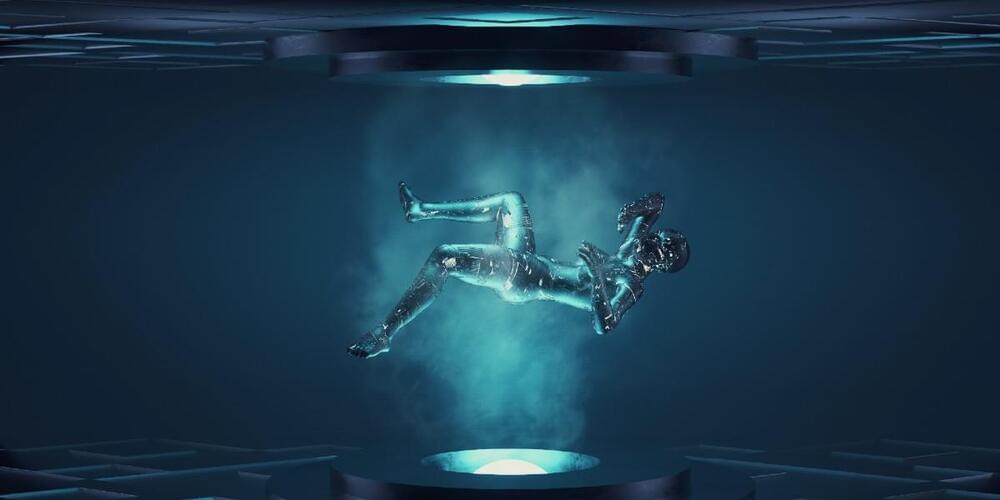
How will AI improve our lives in the years to come? From its inception six decades ago to its recent exponential growth, futurist Ray Kurzweil highlights AI’s transformative impact on various fields and explains his prediction for the singularity: the point at which human intelligence merges with machine intelligence.
If you love watching TED Talks like this one, become a TED Member to support our mission of spreading ideas: https://ted.com/membership.
Follow TED!
X: / tedtalks.
Instagram: / ted.
Facebook: / ted.
LinkedIn: / ted-conferences.
TikTok: / tedtoks.
The TED Talks channel features talks, performances and original series from the world’s leading thinkers and doers. Subscribe to our channel for videos on Technology, Entertainment and Design — plus science, business, global issues, the arts and more. Visit https://TED.com to get our entire library of TED Talks, transcripts, translations, personalized talk recommendations and more.
Watch more: https://go.ted.com/raykurzweil.
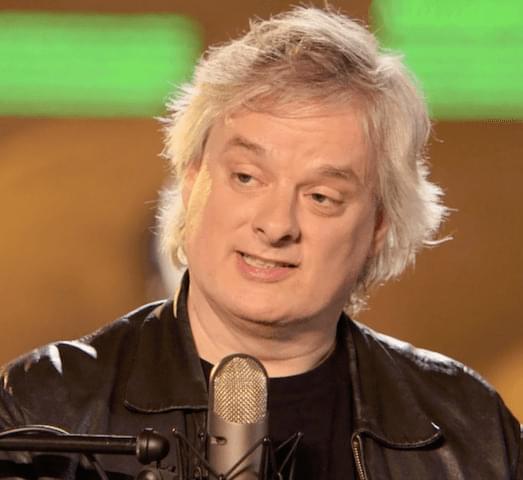
David is one of the world’s best-known philosophers of mind and thought leaders on consciousness. I was a freshman at the University of Toronto when I first read some of his work. Since then, Chalmers has been one of the few philosophers (together with Nick Bostrom) who has written and spoken publicly about the Matrix simulation argument and the technological singularity. (See, for example, David’s presentation at the 2009 Singularity Summit or read his The Singularity: A Philosophical Analysis)
During our conversation with David, we discuss topics such as: how and why Chalmers got interested in philosophy; and his search to answer what he considers to be some of the biggest questions – issues such as the nature of reality, consciousness, and artificial intelligence; the fact that academia in general and philosophy, in particular, doesn’t seem to engage technology; our chances of surviving the technological singularity; the importance of Watson, the Turing Test and other benchmarks on the way to the singularity; consciousness, recursive self-improvement, and artificial intelligence; the ever-shrinking of the domain of solely human expertise; mind uploading and what he calls the hard problem of consciousness; the usefulness of philosophy and ethics; religion, immortality, and life-extension; reverse engineering long-dead people such as Ray Kurzweil’s father.
As always you can listen to or download the audio file above or scroll down and watch the video interview in full. To show your support you can write a review on iTunes, make a direct donation, or become a patron on Patreon.
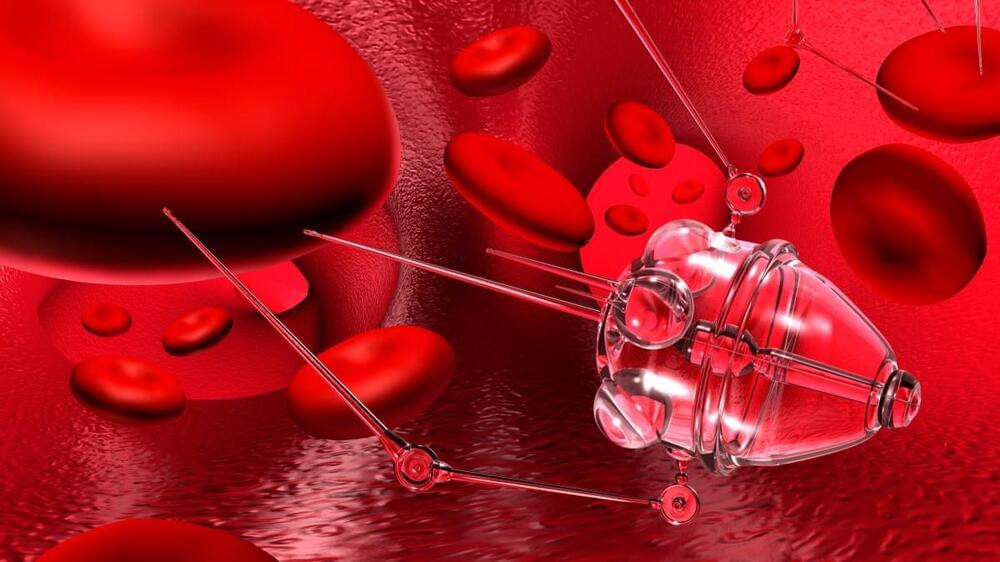
Most of our progress in disease treatment and prevention to date has been the product of the linear process of hit-or-miss efforts to find useful interventions. Because we have lacked tools for systematically exploring all possible treatments, discoveries under this paradigm have owed a lot to chance. Likely the most notable chance breakthrough in medicine was the accidental discovery of penicillin — which opened up the antibiotic revolution and has since saved perhaps as many as 200 million lives. But even when discoveries aren’t literally accidental, it still takes good fortune for researchers to achieve breakthroughs with traditional methods. Without the ability to exhaustively simulate possible drug molecules, researchers have to rely on high-throughput screening and other painstaking laboratory methods, which are much slower and more inefficient.
To be fair, this approach has brought great benefits. A thousand years ago, European life expectancy at birth was just in the twenties, since so many people died in infancy or youth from diseases like cholera and dysentery, which are now easily preventable. By the middle of the nineteenth century, life expectancy in the United Kingdom and the United States had increased to the forties. As of 2023, it has risen to over eighty in much of the developed world. So, we have nearly tripled life expectancy in the past thousand years and doubled it in the past two centuries. This was largely achieved by developing ways to avoid or kill external pathogens — bacteria and viruses that bring disease from outside our bodies.
Today, though, most of this low-hanging fruit has been picked. The remaining sources of disease and disability spring mostly from deep within our own bodies. As cells malfunction and tissues break down, we get conditions like cancer, atherosclerosis, diabetes, and Alzheimer’s. To an extent we can reduce these risks through lifestyle, diet, and supplementation — what I call the first bridge to radical life extension. But those can only delay the inevitable. This is why life expectancy gains in developed countries have slowed since roughly the middle of the twentieth century. For example, from 1,880 to 1900, life expectancy at birth in the United States increased from about thirty-nine to forty-nine, but from 1980 to 2000 — after the focus of medicine had shifted from infectious disease to chronic and degenerative disease — it only increased from seventy-four to seventy-six.
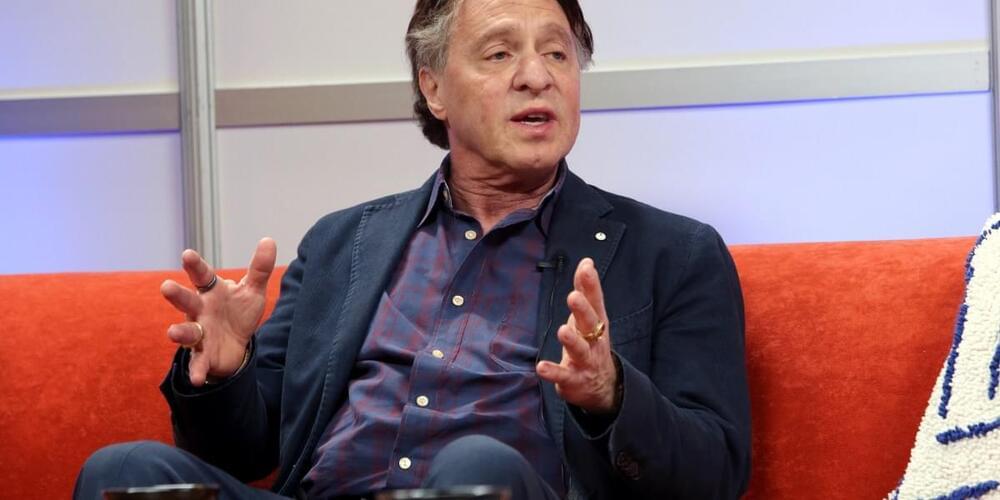

The American computer scientist and techno-optimist Ray Kurzweil is a long-serving authority on artificial intelligence (AI). His bestselling 2005 book, The Singularity Is Near, sparked imaginations with sci-fi like predictions that computers would reach human-level intelligence by 2029 and that we would merge with computers and become superhuman around 2045, which he called “the Singularity”. Now, nearly 20 years on, Kurzweil, 76, has a sequel, The Singularity Is Nearer – and some of his predictions no longer seem so wacky. Kurzweil’s day job is principal researcher and AI visionary at Google. He spoke to the Observer in his personal capacity as an author, inventor and futurist.
Why write this book? The Singularity Is Near talked about the future, but 20 years ago, when people didn’t know what AI was. It was clear to me what would happen, but it wasn’t clear to everybody. Now AI is dominating the conversation. It is time to take a look again both at the progress we’ve made – large language models (LLMs) are quite delightful to use – and the coming breakthroughs.