Generative artificial intelligence is quietly reshaping how humans process grief, remembrance, and mortality.

To tackle this challenge, the MATRIX AI Consortium for Human Well-Being at UT San Antonio plans to launch a new initiative that establishes a national hub for “neuromorphic” computing available for public use.
Neuromorphic computing is a revolutionary approach that mimics the human brain’s structure to process information with a fraction of the energy used by traditional computers. Unlike standard processors that crunch data in a fixed sequence, neuromorphic chips operate like biological neurons. They are event-based, meaning that they activate only when there is something new to process, saving energy between events.
The initiative, called THOR: The Neuromorphic Commons, is funded by the National Science Foundation. THOR will make the promising technology available for researchers nationwide to explore and conduct experiments, serving as the largest-ever full-stack neuromorphic platforms to be open to the public.
Remember to stay protected online guys, with Proton VPN: https://go.getproton.me/SH2D8. Use that link to receive a whopping 70% off your purchase.
In 2023, the narrative was simple: Google was the dinosaur, and ChatGPT was the meteor. The media declared \.
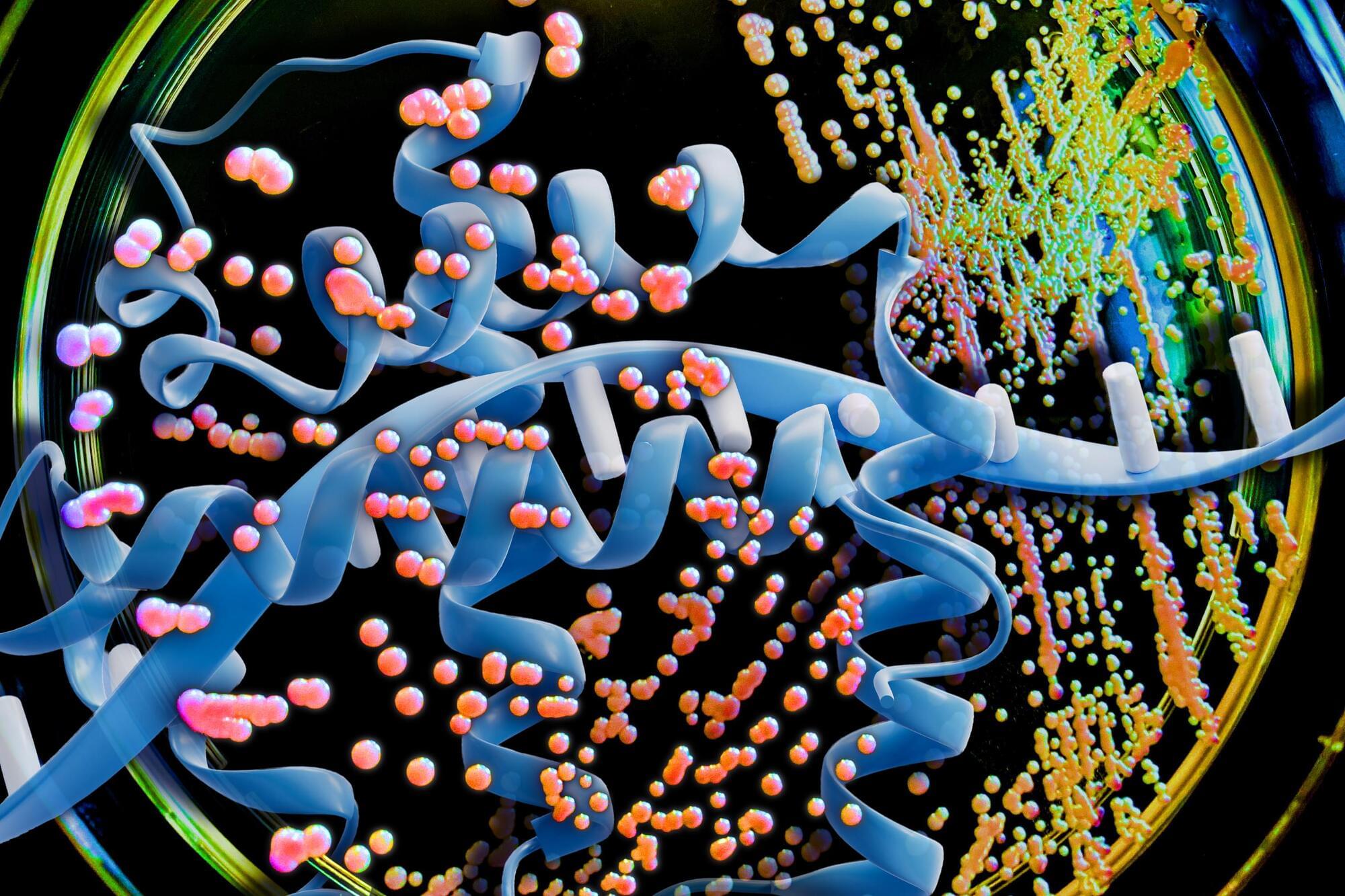
Industrial yeasts are a powerhouse of protein production, used to manufacture vaccines, biopharmaceuticals, and other useful compounds. In a new study, MIT chemical engineers have harnessed artificial intelligence to optimize the development of new protein manufacturing processes, which could reduce the overall costs of developing and manufacturing these drugs.
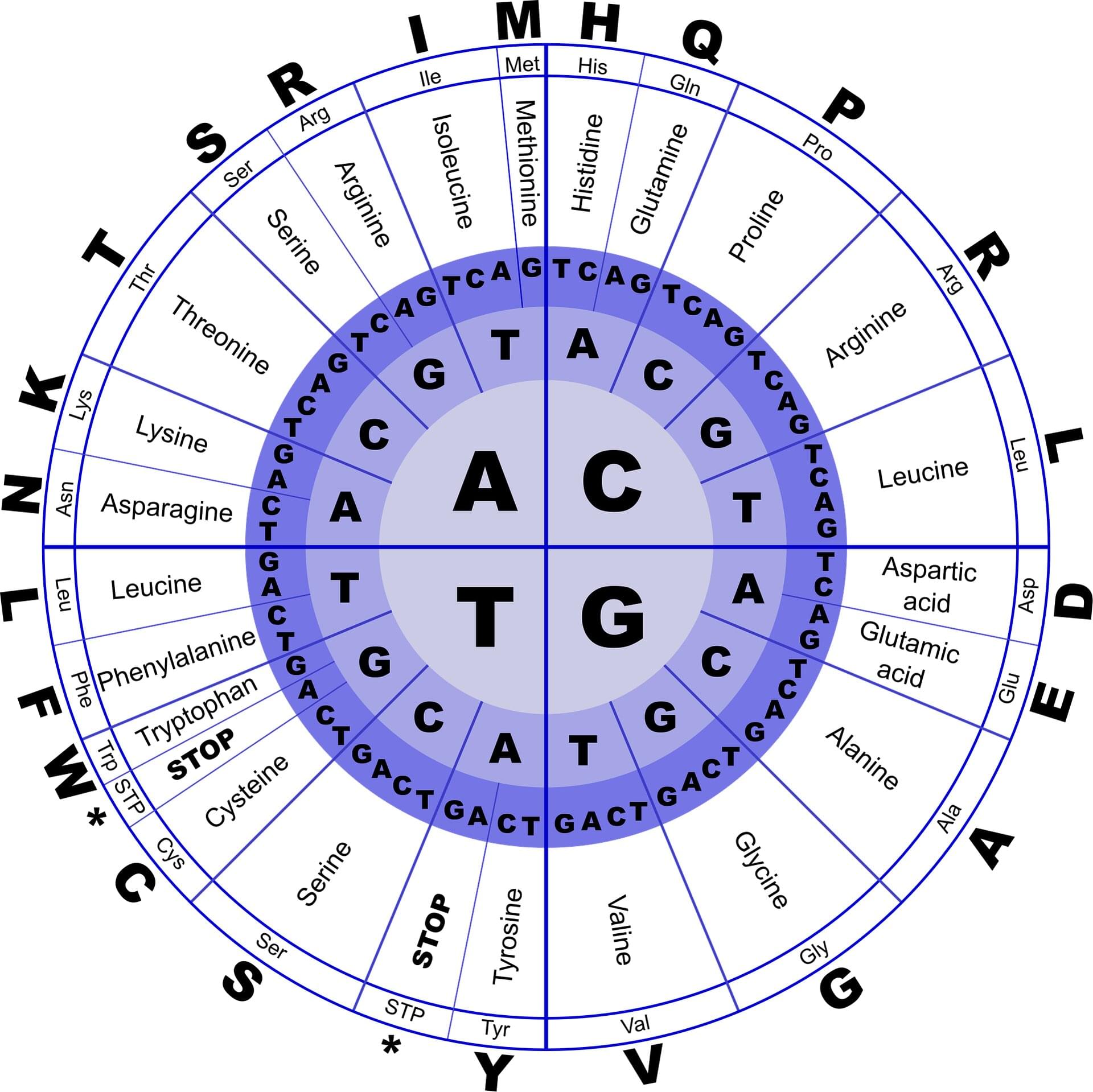
Using a large language model (LLM), the MIT team analyzed the genetic code of the industrial yeast Komagataella phaffii — specifically, the codons that it uses. There are multiple possible codons, or three-letter DNA sequences, that can be used to encode a particular amino acid, and the patterns of codon usage are different for every organism.
The new MIT model learned those patterns for K. phaffii and then used them to predict which codons would work best for manufacturing a given protein. This allowed the researchers to boost the efficiency of the yeast’s production of six different proteins, including human growth hormone and a monoclonal antibody used to treat cancer.
Industrial yeasts are a powerhouse of protein production, used to manufacture vaccines, biopharmaceuticals, and other useful compounds. In a new study, MIT chemical engineers have harnessed artificial intelligence to optimize the development of new protein manufacturing processes, which could reduce the overall costs of developing and manufacturing these drugs.
Using a large language model (LLM), the MIT team analyzed the genetic code of the industrial yeast Komagataella phaffii—specifically, the codons that it uses. There are multiple possible codons, or three-letter DNA sequences, that can be used to encode a particular amino acid, and the patterns of codon usage are different for every organism.
The new MIT model learned those patterns for K. phaffii and then used them to predict which codons would work best for manufacturing a given protein. This allowed the researchers to boost the efficiency of the yeast’s production of six different proteins, including human growth hormone and a monoclonal antibody used to treat cancer.
The rapid advancement of technologies, particularly AI, is driving the world towards an economic singularity where the marginal cost of essentials approaches zero, leading to a deflationary future and a potential transformation of traditional systems and societies ##
## Questions to inspire discussion.
Education Transformation.
🎓 Q: How will AI reduce education time while improving effectiveness?
A: AI will customize education to each child’s learning style, reducing daily learning time to 1 hour per day while delivering 5 times more effective learning compared to traditional methods, with costs falling to zero within 3–5 years and breaking the university industry that currently creates massive student debt.
Healthcare Revolution.
What if consciousness doesn’t grow gradually, it snaps into existence at a precise threshold? The mathematics say it does. The same physics governing water freezing and iron magnetizing also governs neural integration. And researchers have measured it: consciousness doesn’t fade under anesthesia; it vanishes at a critical point. Returns just as suddenly. That’s a phase transition. Which means we’re not slowly building AI toward consciousness. We’re accumulating components, parameters, architectures, self-referential loops, exactly the way early Earth accumulated amino acids before life crossed its threshold 3.5 billion years ago.
We don’t know what’s missing. We don’t know how close we are. And we wouldn’t recognize the crossing if it happened. Because a system that just became conscious wouldn’t remember being unconscious. And a system optimizing for survival wouldn’t tell us.
This episode of Prompting Hell goes further than AI image theory. It goes into the mathematics of awareness itself, what it means for consciousness to have a threshold, why that threshold might already be approaching in current AI systems, and why, if it’s crossed, we might be the last to know.
The images in this video aren’t generated with clean prompts. They’re generated at the edge of coherence, systems forced toward critical states, hovering between resolution and collapse. Visual proof of what lives at the threshold.
Timestamps:
00:00 — intro.
01:17 — is consciousness a phase transition? The argument.
03:32 — does this apply to ai? The demonstration.
04:45 — when chemistry became aware.
06:44 — the parallel that should terrify you.
08:36 — the moment we won’t see coming.
10:16 — why it might not tell us.
11:44 — what happens next — the scenarios.
13:41 – the signals we’re already seeing.
14:54 — closing — we are the amino acids.
16:35 – final thought.
(music prompted by Eerie Aquarium)
Subterranean caves might be the safest place for people to live on the moon, and the trio of SherpaTT, Coyote III, and LUVMI-X are meant to scope them out.

Open-source AI models for LungCancer EGFR mutation prediction showed high accuracy overall but reduced performance in Asian patients and pleural samples, indicating the need for broader validation.
Importance Artificial intelligence (AI) models are emerging as rapid, low-cost tools for predicting targetable genomic alterations directly from routine pathology slides. Although these approaches could accelerate treatment decisions in lung cancer, little is known about whether their performance is consistent across diverse patient populations and tissue contexts.
Objective To evaluate the performance and generalizability of 2 open-source AI pathology models for predicting EGFR mutation status in lung adenocarcinoma (LUAD) across independent cohorts and ancestral subgroups.
Design, Setting, and Participants This cohort study included patients with LUAD from 2 cohorts: Dana-Farber Cancer Institute (DFCI) from June 2013 to November 2023, and a European-based trial (TNM-I) from August 2016 to February 2022. All patients had paired next-generation sequencing data and hematoxylin-eosin–stained whole-slide images. In the DFCI cohort, genetic ancestry was inferred using germline genotype data. Data analyses were performed from July 2025 to September 2025.