Toggle light / dark theme

Microsoft Announces New AI-Powered Tools For Its Office Apps

Built on OpenAI’s generative AI technology and one of the largest datasets comprising trillions of data points, Copilot can write emails, business proposals and meeting minutes.

On Thursday, Microsoft announced a natural language-based AI tool called Copilot that will be embedded across its Office suite of applications such as Word, Teams, Excel, Outlook and PowerPoint. The tool is currently being tested and has been rolled out to 20 select enterprise users, the company said.

Copilot combines large language models with Microsoft Graph, a dataset of human workplace activity that includes trillions of data points collected from the suite of Microsoft applications.
‘BritGPT’: UK plans ChatGPT-like superpower to counter China’s AI influence

The new AI strategy, which includes the construction of a supercomputer, will cost the UK £900 million ($1.2 billion).

The United Kingdom (U.K.) has announced plans to develop its own ChatGPT version, “BritGPT” as part of a new artificial intelligence (AI) strategy.

“These investments will provide scientists with access to cutting-edge computing power and bring a significant uplift in computing capacity to the AI community,” reads the Spring Budget 2023 plan.


Devrimb/iStock.

A new AI research organization will be established, along with constructing an exascale computer, costing £900 million ($1.2 billion), according to the U.K. Treasury’s plan, revealed on Wednesday.

Ex-Uber employee designs new approach to evaluating AI capabilities

The Turing Test, developed in 1950 has become quite obsolete.

Chris Saad, the former head of product development at Uber, has designed a new framework to benchmark the intelligence of artificial intelligence (AI), which is currently undergoing a sea change. The framework, based on a theory that intelligence is not a monolithic construction, was recently shared on Tech Crunch.

AI has been the trending topic for the past few months after OpenAI made public their conversational chatbot, ChatGPT. Users have tested the chatbot in many different areas varying from writing poetry to code and even sales pitches, and the bot hasn’t disappointed.

Chat GPT is NOT generative AI: Intel scientist

Is generative AI the beginning of the end for humans… or the end of the beginning?

And, did you know generative AI has been around since 1972?

In this TechFirst we chat with Ilke Demir, a research scientist at Intel who is working on ethical generative AI applications, like a speech synthesis project that aims to enable people who have lost their voice to talk again, an open urban driving simulator developed to support development, training, and validation of autonomous driving systems.

And a privacy-focused face generator that allows researchers to mix and match facial regions (nose of person A, mouth of person B, eyes of person C, etc.) to create an entirely new face that does not already exist in a dataset, so that people can request anonymization in public photos.

We also — of course — talk about OpenAI and Chat GPT, and how Ilke feels that it is not actually generative AI.

The Model That Changes Everything: Alpaca Breakthrough (ft. Apple’s LLM, BritGPT, Ernie and AlexaTM)

8 years of cost reduction in 5 weeks: how Stanford’s Alpaca model changes everything, including the economics of OpenAI and GPT 4. The breakthrough, using self-instruct, has big implications for Apple’s secret large language model, Baidu’s ErnieBot, Amazon’s attempts and even governmental efforts, like the newly announced BritGPT.

I will go through how Stanford put the model together, why it costs so little, and demonstrate in action versus Chatgpt and GPT 4. And what are the implications of short-circuiting human annotation like this? With analysis of a tweet by Eliezer Yudkowsky, I delve into the workings of the model and the questions it rises.

Web Demo: https://alpaca-ai0.ngrok.io/

Alpaca: https://crfm.stanford.edu/2023/03/13/alpaca.html.
Ark Forecast: https://research.ark-invest.com/hubfs/1_Download_Files_ARK-I…_Final.pdf.
Eliezer Tweet: https://twitter.com/ESYudkowsky/status/1635577836525469697

Self-Instruct: https://arxiv.org/pdf/2212.10560.pdf.
InstructGPT: https://openai.com/research/instruction-following.
OpenAI Terms: https://openai.com/policies/terms-of-use.
MMLU Test: https://arxiv.org/pdf/2009.03300.pdf.
Apple LLM: https://www.nytimes.com/2023/03/15/technology/siri-alexa-goo…gence.html.
GPT 4 API: https://openai.com/pricing.
Llama Models: https://arxiv.org/pdf/2302.13971.pdf.
BritGPT: https://www.theguardian.com/technology/2023/mar/15/uk-to-inv…wn-britgpt.
Amazon: https://www.businessinsider.com/amazons-ceo-andy-jassy-on-ch…?r=US&IR=T
AlexaTM: https://arxiv.org/pdf/2208.01448.pdf.
Baidu Ernie: https://www.nytimes.com/2023/03/16/world/asia/china-baidu-chatgpt-ernie.html.
PaLM API: https://developers.googleblog.com/2023/03/announcing-palm-ap…suite.html.

Patreon.com/AIExplained

A soft polymer-based tactile sensor for robotics applications

To effectively tackle everyday tasks, robots should be able to detect the properties and characteristics of objects in their surroundings, so that they can grasp and manipulate them accordingly. Humans naturally achieve this using their sense of touch and roboticists have thus been trying to provide robots with similar tactile sensing capabilities.

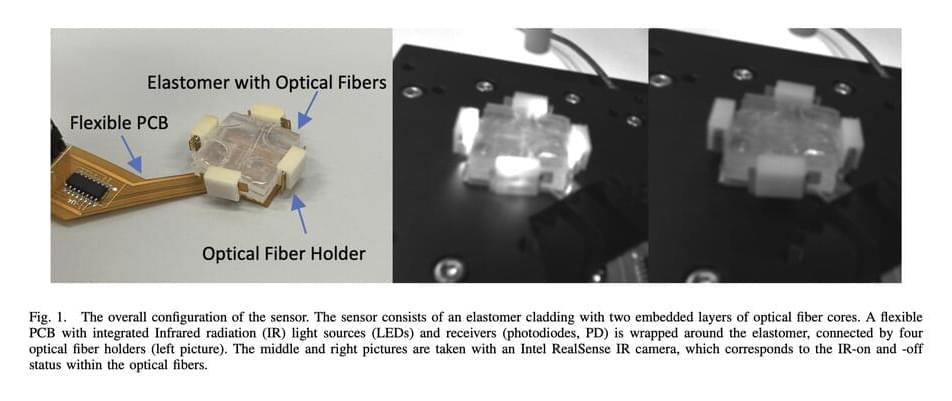
A team of researchers at the University of Hong Kong recently developed a new soft tactile sensor that could allow robots to detect different properties of objects that they are grasping. This sensor, presented in a paper pre-published on arXiv, is made up of two layers of weaved optical fibers and a self-calibration algorithm.

“Although there exist many soft and conformable tactile sensors on robotic applications able to decouple the normal force and , the impact of the size of object in contact on the force calibration model has been commonly ignored,” Wentao Chen, Youcan Yan, and their colleagues wrote in their paper.

New research suggests AI image generation using DALL-E 2 has promising future in radiology

A new paper published in the Journal of Medical Internet Research describes how generative models such as DALL-E 2, a novel deep learning model for text-to-image generation, could represent a promising future tool for image generation, augmentation, and manipulation in health care. Do generative models have sufficient medical domain knowledge to provide accurate and useful results? Dr. Lisa C Adams and colleagues explore this topic in their latest viewpoint titled “What Does DALL-E 2 Know About Radiology?”

First introduced by OpenAI in April 2022, DALL-E 2 is an artificial intelligence (AI) tool that has gained popularity for generating novel photorealistic images or artwork based on textual input. DALL-E 2’s generative capabilities are powerful, as it has been trained on billions of existing text-image pairs off the internet.

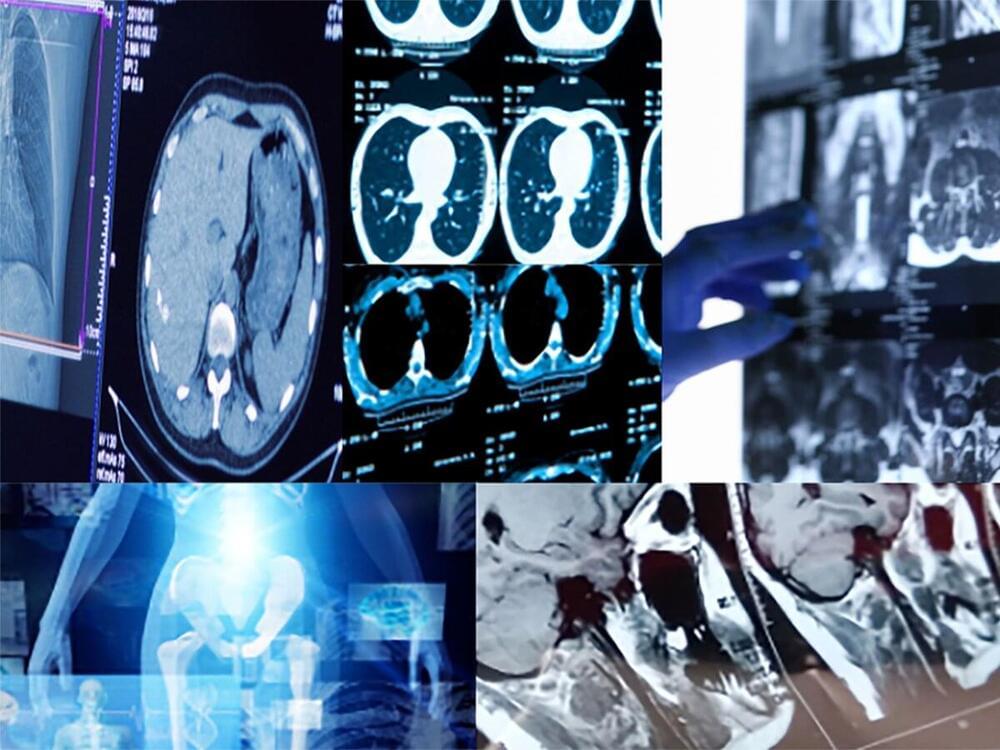
To understand whether these capabilities can be transferred to the medical domain to create or augment data, researchers from Germany and the United States examined DALL-E 2’s radiological knowledge in creating and manipulating X-ray, computed tomography (CT), magnetic resonance imaging (MRI), and ultrasound images.

Fairmatic raises $46M to bring AI to commercial auto insurance

With inflation sparking an increase in the cost of repairs, labor and claims, fees for insurance are similarly spiking across the board. Car insurance premiums rose 13.7% nationally over the past year, according to a study from Bankrate.com. Home insurance, meanwhile, climbed 12.1% year-on-year, Policygenius found.

But Jonathan Matus argues that it doesn’t have to be that way. He’s the founder of Fairmatic, a company that’s applying AI to — at least according to him — reduce risk in the car insurance industry.

Matus previously founded Zendrive, a platform that provides insights to enterprises for car insurance underwriting and claims as well as roadside assistance. While Zendrive is focused on insurance for individuals and families, Fairmatic has a more commercial bent — a customer base made up primarily of businesses.

/* */