Toggle light / dark theme

ChatGPT Won’t Fix Healthcare, But It Might Save Doctors Some Time

In a healthcare industry still burdened with 1960s technology, generative AI may offer a little relief — but companies are still working to overhaul a broken system that’s keeping doctors and nurses more focused on paperwork than patients.

Every week, Eli Gelfand, chief of general cardiology at Beth Israel Deaconess Medical Center in Boston, wastes a lot of time on letters he doesn’t want to write — all of them to insurers disputing his recommendations. A new drug for a heart failure patient. A CAT scan for a patient with chest pain. A new drug for a patient with stiff heart syndrome.

People can learn to detect AI writing

Another week, another AI chatbot.

This week Snapchat launched My AI, a customised version of OpenAI’s ChatGPT and Elon Musk signalled his intentions to build one.

Artificial intelligence (AI) writing technology underpinned by large language models are certainly impressive. And they are creating a great deal of anxiety among writers, academics and people concerned about intellectual property rights.

Will AI take your job? ‘No one is safe from this’ — Alan Thompson

Alan Thompson, AI Consultant and Former Chairman of Mensa International, examines the latest trends in artificial intelligence, as well as its applications to finance, professional services, and military. He discusses the possibility that AI could become sentient and even dangerous with David Lin, Anchor and Producer at Kitco News.

Alan Thompson’s website: https://lifearchitect.ai/about-alan/

Follow David Lin on Twitter: @davidlin_TV (https://twitter.com/davidlin_TV)
Follow Kitco News on Twitter: @KitcoNewsNOW (https://twitter.com/KitcoNewsNOW)

0:00 — Intro.
1:57 — Overview of AI
8:07 — Chat GPT
11:51 — Human similarities.
15:53 — Microsoft and Google.
19:55 — AI replacing workers.
21:54 — Applications of AI
24:26 — Technological singularity.
26:05 — Dangers of AI
28:52 — Transhumanism.

#technology #ai #chatgpt.

Kitco NEWS is a global news network based in Montreal, with bureaus in New York, Hong Kong, New Mexico, London and Vancouver. Since 2009, our journalists have helped investors make informed decisions through in-depth reporting, daily market updates, and interviews with key industry figures. We aim to accurately and impartially cover the economy, stock markets, commodities, cryptocurrencies, mining and metals.

LEAKED: Elon’s Secret AI Lab, Tesla Mexico, Toyota Doomed

Join Patreon: https://www.patreon.com/solvingthemoneyproblem.
➡ FREE One Year Supply of Vitamin D + 5 AG1 Travel Packs https://athleticgreens.com/SMR
UNLOCK 300+ Exclusive Videos: https://www.patreon.com/solvingthemoneyproblem.
➡ Oura Ring https://ouraring.com/smr (Track your sleep, readiness & activity)
My Tesla Stock Price Targets: https://www.patreon.com/posts/tesla-stock-bull-57460691/
Merch: https://solving-the-money-problem.creator-spring.com/
Twitter https://twitter.com/stevenmarkryan.

AFFILIATE DISCLOSURE: I earn a commission on every purchase made through my links.

🚀 SUPPORT THE CHANNEL ON PATREON
◆ Patreon https://www.patreon.com/solvingthemoneyproblem.

BECOME A MEMBER OF THE CHANNEL
◆ Join https://www.youtube.com/channel/UCagiBBx1prefrlsDzDxuA9A/join.

CHANNEL MERCH
◆ Merch store https://solving-the-money-problem.creator-spring.com/

MERCH LINKS

Will AI Make First Contact with Extra-Terrestrial Intelligence?

Will a machine learning AI be the way we find out we are not alone in the Universe?


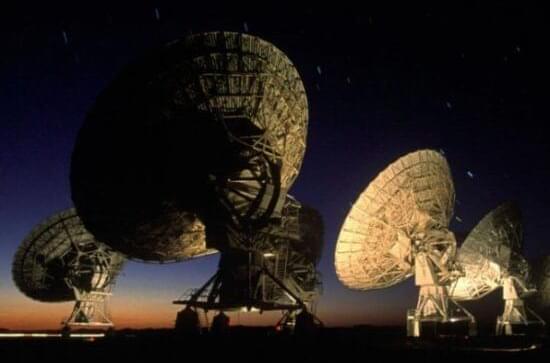
In a January 2023 published paper in Nature Astronomy, a collaboration by authors from universities in Toronto, Canada, Berkeley in California, Manchester in the United Kingdom, Malta, Queensland and Western Australia, and the SETI Institute, created a machine learning algorithm variational autoencoder, a type of neural network that learns through the unsupervised study of unlabelled data. They used it to try and find technosignatures contained within 150 Terabytes of radio traffic from 820 nearby stars. The data source came from the Green Bank Telescope in West Virginia, the world’s largest steerable radio telescope. This data had previously been searched in 2017 using traditional techniques.

Radio signals are abundant throughout the Universe and they represent the most effective way for us to find out if we are a solo act or one of many technical civilizations. Our contribution to radio traffic has been going on for more than a century which means an alien civilization within a hundred light-years from us with technology similar to ours can now detect us.

SETI (Search for Extraterrestrial Intelligence) has been using radio telescopes and receiving antennae since 1960 in a search to detect signals coming from space in patterns similar to what we produce. So far, however, it has proven to be harder than finding the proverbial needle in a haystack. That’s why the application of AI to the vast amounts of radio traffic coming from space is seen as a step up in our efforts to detect alien intelligence. It seems ironic that an AI may be the way we first discover alien intelligence originating from distant solar systems. And it may be that those alien species are using their own AIs to be doing the same.


“Sorry in advance!” Snapchat warns of hallucinations with new AI conversation bot

On Monday, Snapchat announced an experimental AI-powered conversational chatbot called “My AI,” powered by ChatGPT-style technology from OpenAI. My AI will be available for $3.99 a month for Snapchat+ subscribers and is rolling out “this week,” according to a news post from Snap, Inc.

But like its GPT-powered cousins, ChatGPT and Bing Chat, Snap says that My AI is prone to “hallucinations,” which are unexpected falsehoods generated by an AI model. On this point, Snap includes a rather lengthy disclaimer in its My AI announcement post:

/* */