Toggle light / dark theme

AI tool can predict which trauma patients need blood transfusions before they reach the hospital

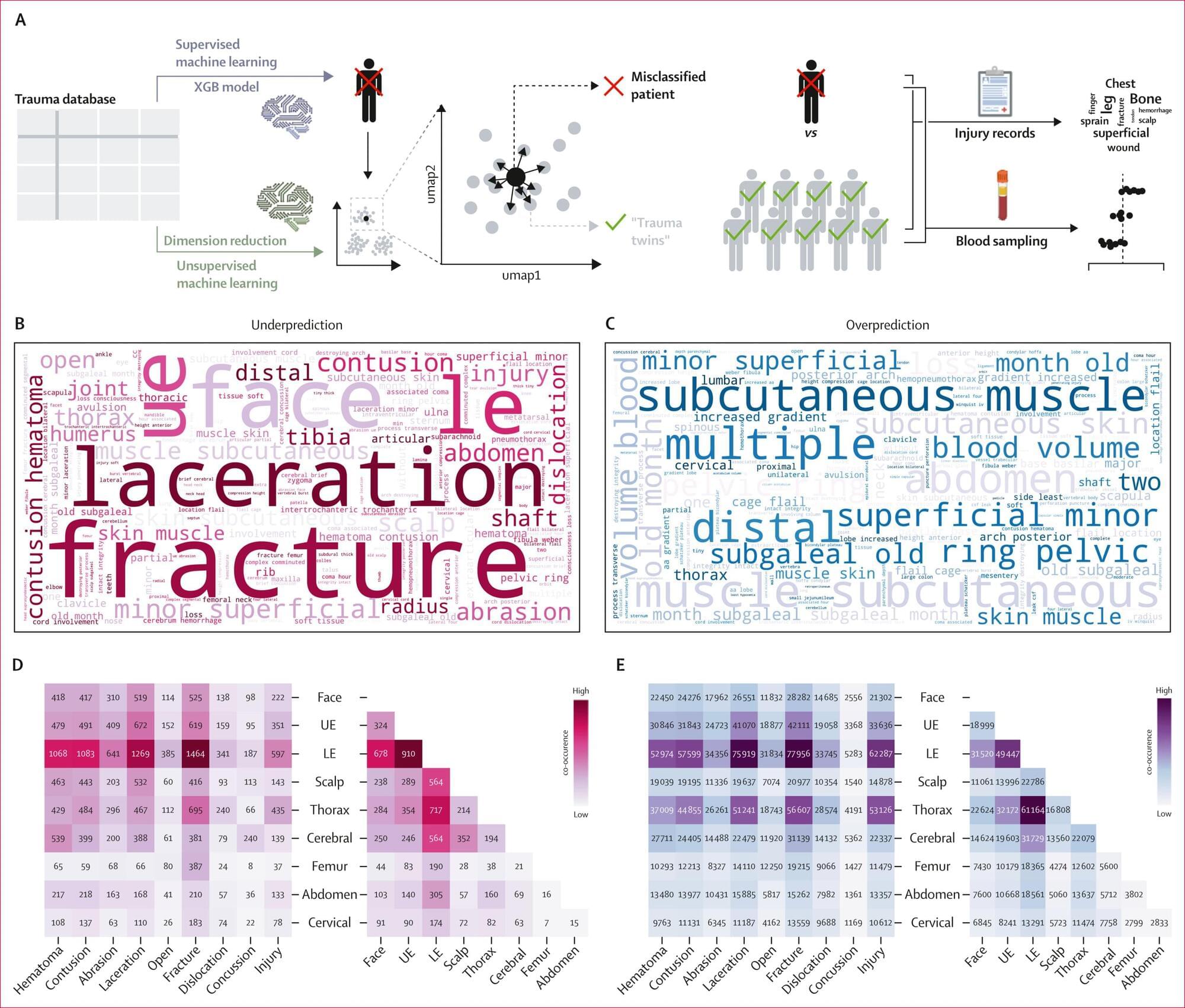
Severe bleeding is one of the most common and preventable causes of death after traumatic injury, yet currently available tools have poor ability to determine which patients urgently need blood transfusions. A new multinational study, just published in Lancet Digital Health, suggests artificial intelligence (AI) may help close that gap.

Researchers have developed and validated machine-learning models that can accurately predict whether trauma patients will require blood transfusions, using only information available before they reach the hospital such as vital signs, injury patterns, and medication history.

Co-author Prof Patricia Maguire from University College Dublin (UCD), Director of UCD AI Healthcare Hub and UCD Institute for Discovery, said, “These findings show that AI-driven decision support could enable earlier and more precise identification of patients at highest risk of hemorrhagic shock, using data already available to emergency services. This has clear potential to support more timely transfusion decisions, although prospective evaluation will be needed before clinical implementation.”
Decoding the shadows: Vehicle recognition software uncovers unusual traffic behavior

Researchers at the Department of Energy’s Oak Ridge National Laboratory have developed a deep learning algorithm that analyzes drone, camera, and sensor data to reveal unusual vehicle patterns that may indicate illicit activity, including the movement of nuclear materials. The work is published in the journal Future Transportation.

The software monitors routine traffic over time to establish a baseline for “patterns of life,” enabling detection of deviations that could signal something out of place. For example, a surge in overnight truck traffic at a facility which is normally only visited during the day could reveal illegal shipments.

The research builds on a previous ORNL-developed technology for recognizing specific vehicles from side views. Researchers improved the structure of this software’s deep learning network to provide much broader capabilities than any existing recognition systems, said ORNL’s Sally Ghanem, lead researcher.

AI-powered compressed imaging system developed for high-speed scenes

A research team from the Xi’an Institute of Optics and Precision Mechanics (XIOPM) of the Chinese Academy of Sciences, along with collaborators from the Institute National de la Recherche Scientifique, Canada, and Northwest University, has developed a single-shot compressed upconversion photoluminescence lifetime imaging (sCUPLI) system for high-speed imaging.

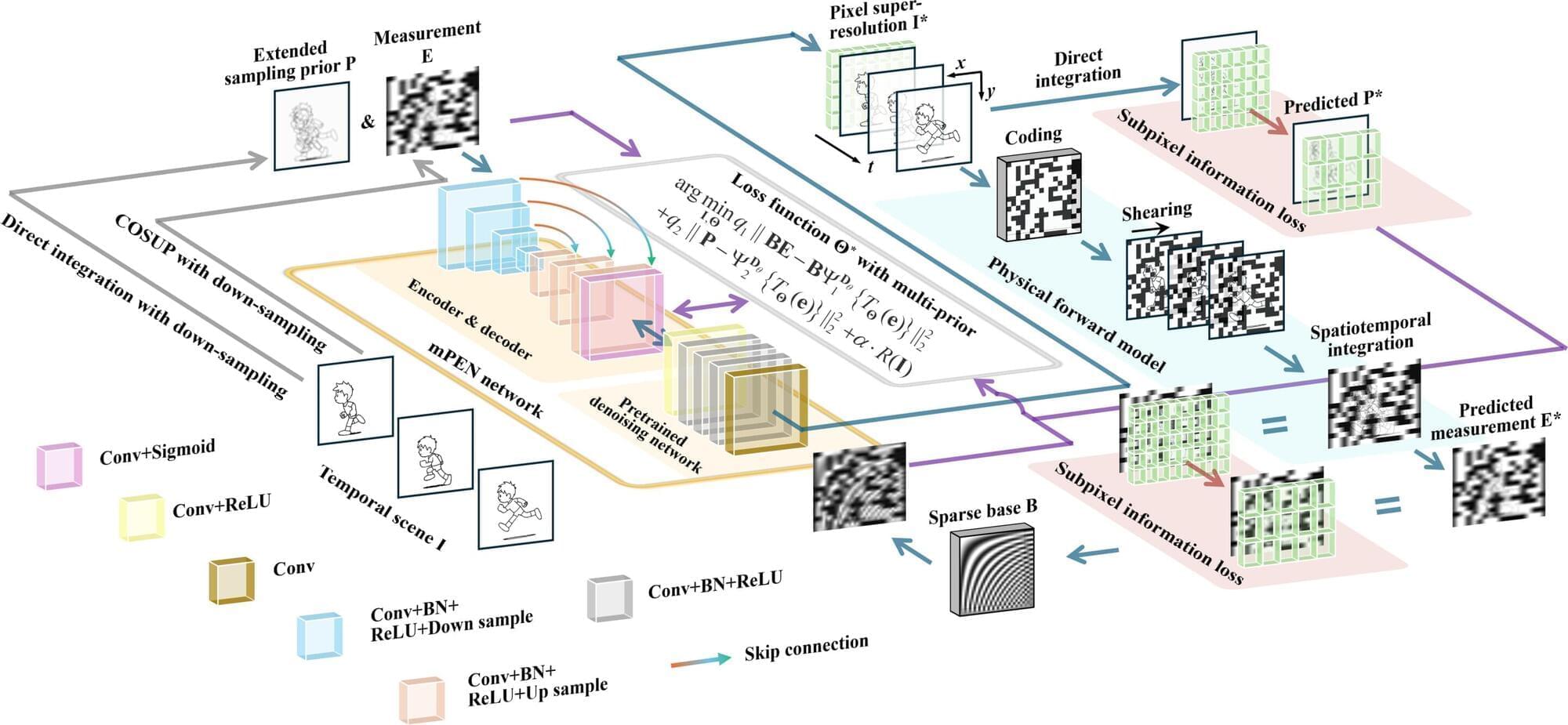
High-fidelity recovery from complex inverse problems remains a key challenge in compressed high-speed imaging. Deep learning has revolutionized the reconstruction, but pure end-to-end “black-box” networks often suffer from structural artifacts and high costs. To address these issues, the team from XIOPM propose a multi-prior physics-enhanced neural network (mPEN) in an article published in Ultrafast Science.

By integrating mPEN with compressed optical streak ultra-high-speed photography (COSUP), the researchers developed the sCUPLI system. This system utilized an encoding path for temporal shearing and a prior path to record unencoded integral images. It effectively suppressed artifacts and corrected spatial distortion by synergistically correcting multiple complementary priors including physical models, sparsity constraints, and deep image priors.

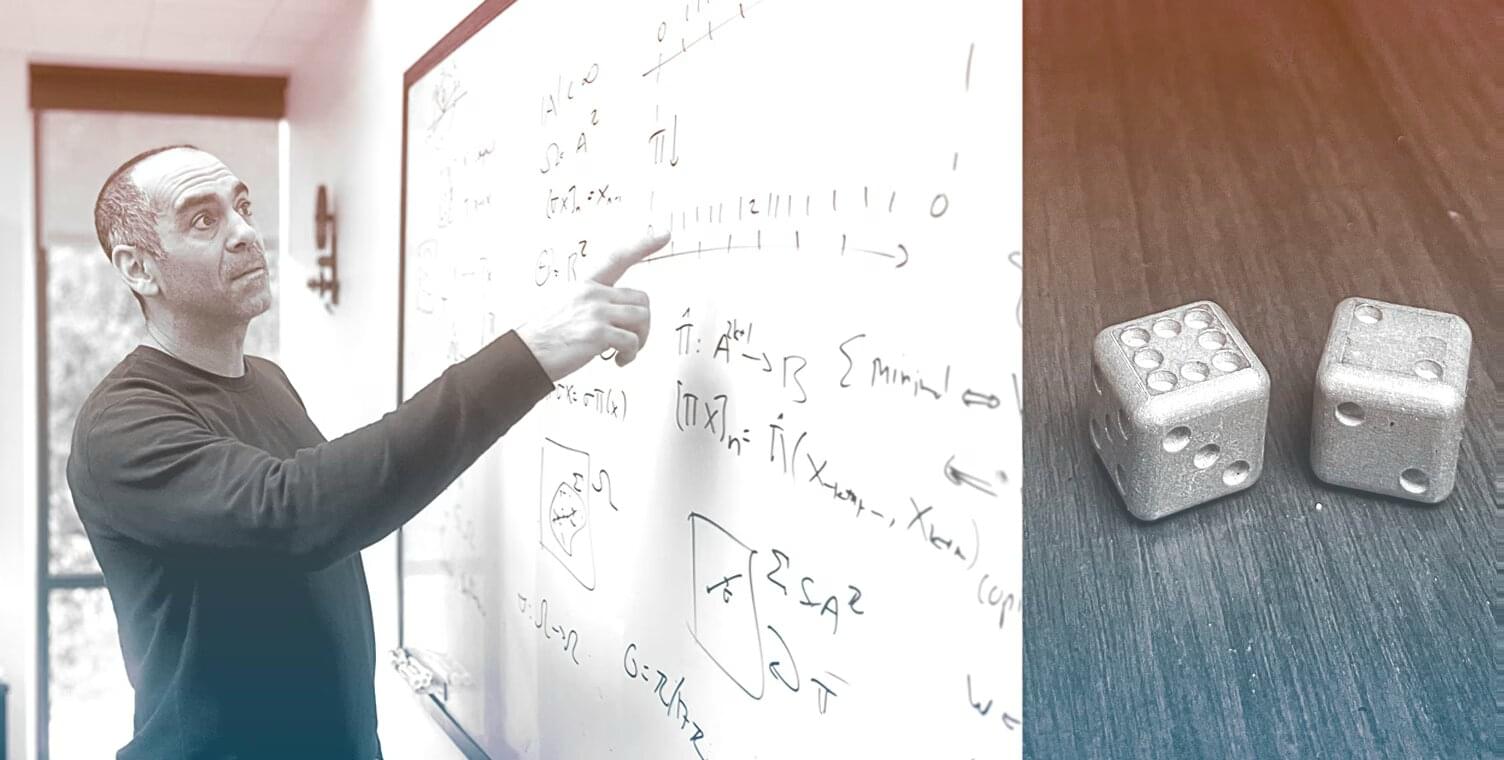
A ‘crazy’ dice proof leads to a new understanding of a fundamental law of physics

Right now, molecules in the air are moving around you in chaotic and unpredictable ways. To make sense of such systems, physicists use a law known as the Boltzmann distribution, which, rather than describe exactly where each particle is, describes the chance of finding the system in any of its possible states. This allows them to make predictions about the whole system even though the individual particle motions are random. It’s like rolling a single die: Any one roll is unpredictable, but if you keep rolling it again and again, a pattern of probabilities will emerge.

Developed in the latter half of the 19th century by Ludwig Boltzmann, an Austrian physicist and mathematician, this Boltzmann distribution is used widely today to model systems in many fields, ranging from AI to economics, where it is called “multinomial logit.”

Now, economists have taken a deeper look at this universal law and come up with a surprising result: The Boltzmann distribution, their mathematical proof shows, is the only law that accurately describes unrelated, or uncoupled, systems.

Elon Musk — “In 36 months, the cheapest place to put AI will be space”

How Elon plans to launch a terawatt of GPUs into space.

## Elon Musk plans to launch a massive computing power of 1 terawatt of GPUs into space to advance AI, robotics, and make humanity multi-planetary, while ensuring responsible use and production. ## ## Questions to inspire discussion.

Space-Based AI Infrastructure.

Q: When will space-based data centers become economically superior to Earth-based ones? A: Space data centers will be the most economically compelling option in 30–36 months due to 5x more effective solar power (no batteries needed) and regulatory advantages in scaling compared to Earth.

☀️ Q: How much cheaper is space solar compared to ground solar? A: Space solar is 10x cheaper than ground solar because it requires no batteries and is 5x more effective, while Earth scaling faces tariffs and land/permit issues.

Q: What solar production capacity are SpaceX and Tesla planning? A: SpaceX and Tesla plan to produce 100 GW/year of solar cells for space, manufacturing from raw materials to finished cells in-house.

Tech Companies Showing Signs of Distress as They Run Out of Money for AI Infrastructure

AI companies are looking to spend trillions of dollars on data centers to power their increasingly resource-intensive AI models — an astronomical amount of money that could threaten the entire economy if the bet doesn’t pay off.

As the race to spend as much money as possible on AI infrastructure rages on, companies have become increasingly desperate to keep the cash flowing. Firms like OpenAI, Anthropic, and Oracle are exhausting existing debt markets — including junk debt, private credit, and asset-backed loans — in increasingly desperate moves, as Bloomberg reports, that are raising concerns among investors.

“The numbers are like nothing any of us who have been in this business for 25 years have seen,” Bank of America managing head of global credit Matt McQueen told Bloomberg. “You have to turn over all avenues to make this work.”

Neuroscience Beyond Neurons? The Diverse Intelligence Era | Michael Levin & Robert Chis-Ciure

What if neurons aren’t the foundation of mind?

In this Mind-Body Solution Colloquia, Michael Levin and Robert Chis-Ciure challenge one of neuroscience’s deepest assumptions: that cognition and intelligence are exclusive to brains and neurons.

Drawing on cutting-edge work in bioelectricity, developmental biology, and philosophy of mind, this conversation explores how cells, tissues, and living systems exhibit goal-directed behavior, memory, and problem-solving — long before neurons ever appear.

We explore:
• Cognition without neurons.
• Bioelectric networks as control systems.
• Memory and learning beyond synapses.
• Morphogenesis as collective intelligence.
• Implications for AI, consciousness, and ethics.

This episode pushes neuroscience beyond the neuron, toward a deeper understanding of mind, life, and intelligence as continuous across scales.

TIMESTAMPS:

/* */