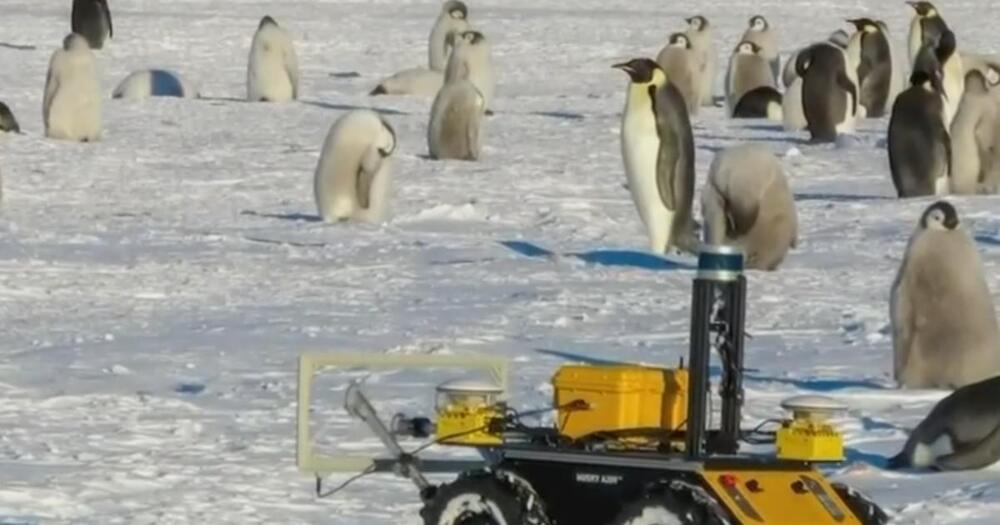
ECHO, the robot, belongs to the Woods Hole Oceanographic Institution and rolls around the tundra collecting data used to study marine ecosystems.
The small robot takes readings and collects data like a normal researcher, but his existence allows researchers to collect real-time information year round and minimize the impact their presence could have on the animals’ lives.
Researchers say the penguins seem to be getting along swimmingly with the robot.
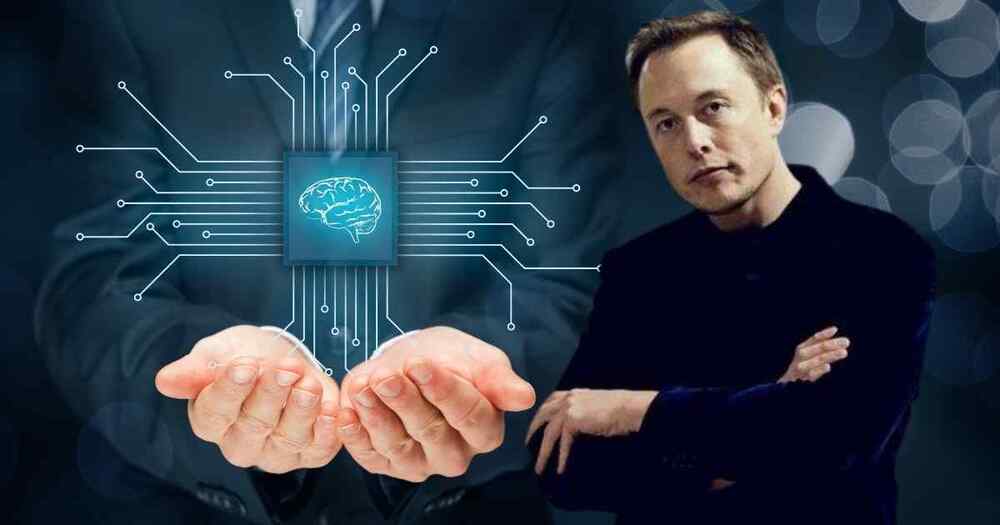
Elon talks about x-risks and making us a multi-planetary species, amongst other things.
What’s on Elon Musk’s mind? In this exclusive conversation with head of TED Chris Anderson, Musk details how the radical new innovations he’s working on — Tesla’s intelligent humanoid robot Optimus, SpaceX’s otherworldly Starship and Neuralink’s brain-machine interfaces, among others — could help maximize the lifespan of humanity and create a world where goods and services are abundant and accessible for all. It’s a compelling vision of a future worth getting excited about. (Recorded at the Tesla Texas Gigafactory on April 6, 2022)
Just over a week after this interview was filmed, Elon Musk joined TED2022 for another (live) conversation, where he discussed his bid to purchase Twitter, the biggest regret of his career, how his brain works and more. Watch that conversation here: https://youtu.be/cdZZpaB2kDM
0:14 A future that’s worth getting excited about. 2:44 The sustainable energy economy, batteries and 300 terawatt hours of installed capacity. 7:06 “Humanity will solve sustainable energy.“ 8:47 Artificial intelligence and Tesla’s progress on full self-driving cars. 19:46 Tesla’s Optimus humanoid robot. 21:46 “People have no idea, this is going to be bigger than the car.“ 23:14 Avoiding an AI dystopia. 26:39 The age of abundance. 28:20 Neuralink and brain-machine interfaces. 36:55 SpaceX’s Starship and the mission to build a city on Mars. 46:54 “It’s the people of Mars’ city.“ 50:14 What else can Starship do and help explore? 53:18 Possible synergies between Tesla, SpaceX, The Boring Company and Neuralink. 54:44 Intercontinental travel via Starship. 58:41 Being a billionaire. 1:02:31 Philanthropy as love of humanity. 1:03:39 Population collapse and birth rates as a threat to future of human civilization. 1:04:13 Elon’s drive. 1:06:06 “I think if you want the future to be good, you must make it so.”
If you love watching TED Talks like this one, become a TED Member to support our mission of spreading ideas: http://ted.com/membership.
One key aspect of intelligence is the ability to quickly learn how to perform a new task when given a brief instruction. For instance, a child may recognise real animals at the zoo after seeing a few pictures of the animals in a book, despite any differences between the two. But for a typical visual model to learn a new task, it must be trained on tens of thousands of examples specifically labelled for that task. If the goal is to count and identify animals in an image, as in “three zebras”, one would have to collect thousands of images and annotate each image with their quantity and species. This process is inefficient, expensive, and resource-intensive, requiring large amounts of annotated data and the need to train a new model each time it’s confronted with a new task. As part of DeepMind’s mission to solve intelligence, we’ve explored whether an alternative model could make this process easier and more efficient, given only limited task-specific information.
Today, in the preprint of our paper, we introduce Flamingo, a single visual language model (VLM) that sets a new state of the art in few-shot learning on a wide range of open-ended multimodal tasks. This means Flamingo can tackle a number of difficult problems with just a handful of task-specific examples (in a “few shots”), without any additional training required. Flamingo’s simple interface makes this possible, taking as input a prompt consisting of interleaved images, videos, and text and then output associated language.
Similar to the behaviour of large language models (LLMs), which can address a language task by processing examples of the task in their text prompt, Flamingo’s visual and text interface can steer the model towards solving a multimodal task. Given a few example pairs of visual inputs and expected text responses composed in Flamingo’s prompt, the model can be asked a question with a new image or video, and then generate an answer.
HPE has launched its Swarm Learning and Machine Learning Development System whilst Salesforce announced further integration with Slack, Tableau, and Mulesoft.
Calculator is also more smart than humans but it made our life easier.
While the win over Google’s AI was impressive, more advanced developments are being made behind the scenes as well. The integration of multiple AIs, called neural networks, has led to computers with unique personalities and quirks that were previously only seen in humans.
AI is already outsmarting humans
When we talk about artificial intelligence (AI), our minds often turn to visions of a robot uprising, sentient computers, and other science-fiction fantasies. As it turns out, though, AI has already started doing some pretty impressive things in real life: Researchers at Google just announced that their AI was able to beat one of mankind’s best players at Go—an ancient Chinese game so complex that a computer had never beaten a human master. The victory was significant for more than one reason: first, it shows that AlphaGo can already outsmart humans; second, it suggests there’s real potential for AI in solving problems we haven’t been able to solve before.
“Pressure and mobility have an inverse relationship,” Diaz Artiles said. “The more pressure you have in the spacesuit, the lower the mobility. The less pressure you have, the easier it is to move around.”
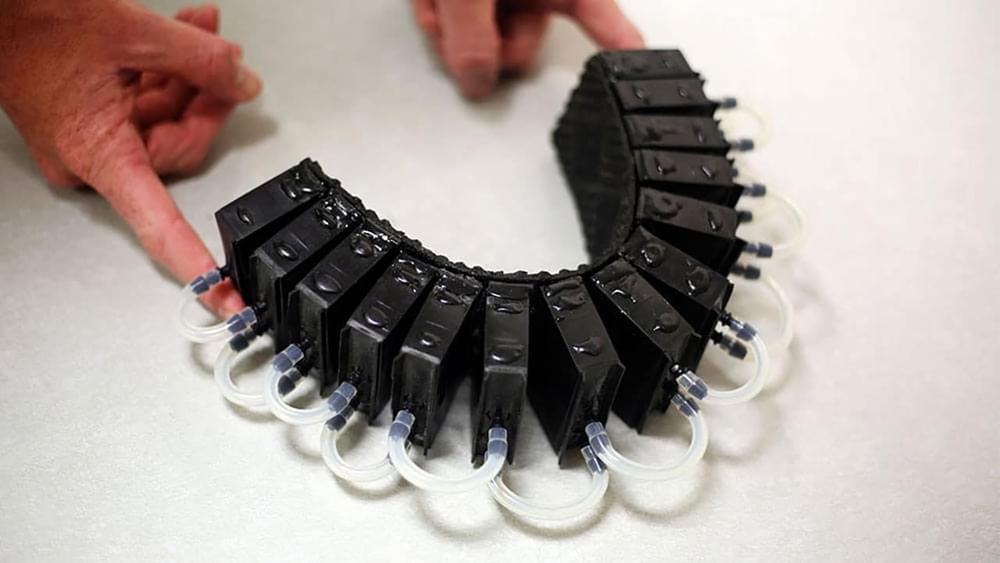
“Imagine wearing really tight Under Armour or really tight leggings. That pressure pushing down on your body would be in replace of or in addition to gas pressure,” Kluis said. “So the idea with the SmartSuit is that it would use both mechanical pressure and gas pressure.”
Diaz Artiles and her team continue to work on the SmartSuit architecture, and the actuator prototypes are a promising development in creating a more accommodating and resourceful spacesuit for future planetary missions. Their end goal would be for it to feel like the wearer is moving without the spacesuit on and without breaking too much of a sweat.
Making the future of medicine possible by rethinking how medicines are made — olivia zetter, head of government affairs & AI strategy, resilience.
Olivia Zetter is Head of Government Affairs and AI Strategy at National Resilience, Inc. (https://resilience.com/) a first-of-its-kind manufacturing and technology company dedicated to broadening access to complex medicines and protecting bio-pharmaceutical supply chains against disruption.
Founded in 2020, National Resilience, Inc. is building a sustainable network of high-tech, end-to-end manufacturing solutions to ensure the medicines of today, and tomorrow, can be made quickly, safely, and at scale.
Olivia brings extensive experience in national security spanning diplomacy, defense, and development, along with emerging technology issues. Olivia has held multiple positions in government, most recently as a Director of Research and Analysis at the National Security Commission on Artificial Intelligence, an independent federal commission established by Congress to examine the impact of artificial intelligence on national security and defense.
Olivia previously served at the Department of State as a Foreign Affairs Officer in the Office of the Coordinator for Cyber Issues, where her work spanned a diverse range of cyber policy areas. She also served as the Special Advisor on Trans-Regional Issues to the Special Presidential Envoy for the Global Coalition to Counter ISIS, where she coordinated efforts to counter the terrorist organization’s financing, foreign terrorist fighter flows, and external operations.
Researchers at the Max Planck Institute for Intelligent Systems (MPI-IS), Cornell University and Shanghai Jiao Tong University have developed collectives of microrobots which can move in any desired formation. The miniature particles are capable of reconfiguring their swarm behavior quickly and robustly. Floating on the surface of water, the versatile microrobotic disks can go round in circles, dance the boogie, bunch up into a clump, spread out like gas or form a straight line like beads on a string.
Each robot is slightly bigger than a hair’s width. They are 3D printed using a polymer and then coated with a thin top layer of cobalt. Thanks to the metal the microrobots become miniature magnets. Meanwhile, wire coils which create a magnetic field when electricity flows through them surround the setup. The magnetic field allows the particles to be precisely steered around a one-centimeter-wide pool of water. When they form a line, for instance, the researchers can move the robots in such a way that they “write” letters in the water. The research project of Gaurav Gardi and Prof. Metin Sitti from MPI-IS, Steven Ceron and Prof. Kirstin Petersen from Cornell University and Prof. Wendong Wang from Shanghai Jiao Tong University titled “Microrobot Collectives with Reconfigurable Morphologies, Behaviors, and Functions” was published in Nature Communications on April 26, 2022.