Toggle light / dark theme

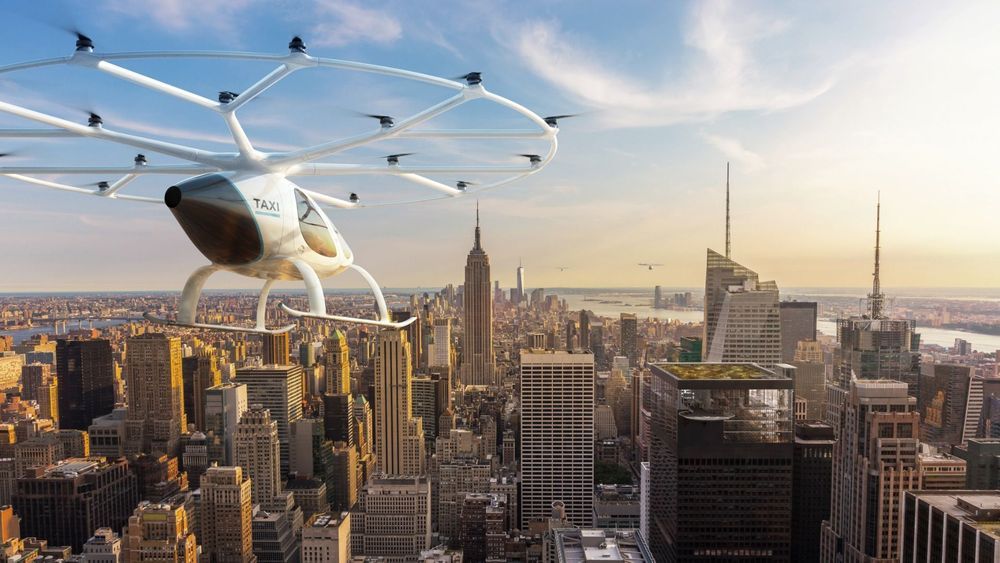
Caterpillar’s autonomous vehicles may be used by NASA to mine the moon and build a lunar base

Caterpillar has been synonymous with big, heavy equipment — for farming, construction and mining — since Holt Manufacturing and C. L. Best Tractor merged in 1925 to form the Peoria, Illinois-based company. Over the years, tons of innovation have been built into the iconic yellow products, too, from the Model 20 Track-Type Tractor introduced in 1927 to the ginormous engines that helped power the Apollo 11 mission to the moon 50 years ago.

Coincidentally, one of Cat’s latest breakthroughs is self-driving, or autonomous, and remote-controlled mining equipment, which could very well find itself on the moon when NASA is scheduled to return to the lunar surface in 2024, with plans to build a permanent base near the orb’s south pole, part of the Artemis program.

Just as on terrestrial sites, Caterpillar fully or semi-autonomous bulldozers, graders, loaders and dump trucks could be utilized to build roads, housing and other infrastructure. Operator-less drilling and digging machines might mine water, oxygen-rich rocks and moon dust for use in 3D printing of various materials.

Could AI’s next chapter bring design of feeling machines?

Could robots with feelings be the next step in AI? A research paper discusses an interesting approach to robot design. It is titled “Homeostasis and soft robotics in the design of feeling machines” in Nature Machine Intelligence.

No need to see the robot as an enemy just because it takes on a robotic version of human ; the train of thought that the authors take is a distance away from fear and trembling by some futurists who ponder robots turning against their masters in an upside-down switch of master-servant roles.

Rather, Kingson Man and Antonio Damasio, the authors, choose to focus on machines acquiring homeostasis. Man and Damasio are with the Brain and Creativity Institute, University of Southern California, Los Angeles.

Elon Musk says Neuralink could bring A.I. ‘superintelligence’ to the brain

Beyond cortical and limbic systems, the company Neuralink could add a third layer of digital superintelligence to humans and avoid artificial intelligence enslavement, its founder Elon Musk claimed Tuesday. The brain-computer linkup firm is working to treat medical conditions using its implanted chip as early as next year, but during a podcast appearance, Musk reiterated his belief that the technology could avoid some of the worst consequences of advanced machines.

“It’s important that Neuralink solves this problem sooner rather than later, because the point at which we have digital superintelligence, that’s when we pass the singularity and things become just very uncertain,” Musk said during an interview with MIT professor Lex Fridman.

Musk was keen to note that the singularity, a hypothesized point where machines grow so advanced that humanity slips into an irreversible change, may not necessarily be good or bad. He did state, however, that “things become extremely unstable” after that point, which means Neuralink would need to achieve its human-brain linkup either before or not long after “to minimize the existential risk for humanity and consciousness as we know it.”

The High-Tech Vertical Farmer

In the kale-filled facility at vertical farm startup Bowery Farming, it’s a piece of proprietary software that makes most of the critical decisions — like when to harvest and how much to water each plant. But it still takes humans to carry out many tasks around the farm. Katie Morich, 25, loves the work. But as roboticists make gains, will her employer need her forever? This is the fourth episode of Next Jobs, a series about careers of the future hosted by Bloomberg Technology’s Aki Ito.

Host, Producer: Aki Ito
Camera: Alan Jeffries, Brian Schildhorn
Co-Producer: David Nicholson
Editor: Victoria Daniell
Writers: Aki Ito and Victoria Daniell.

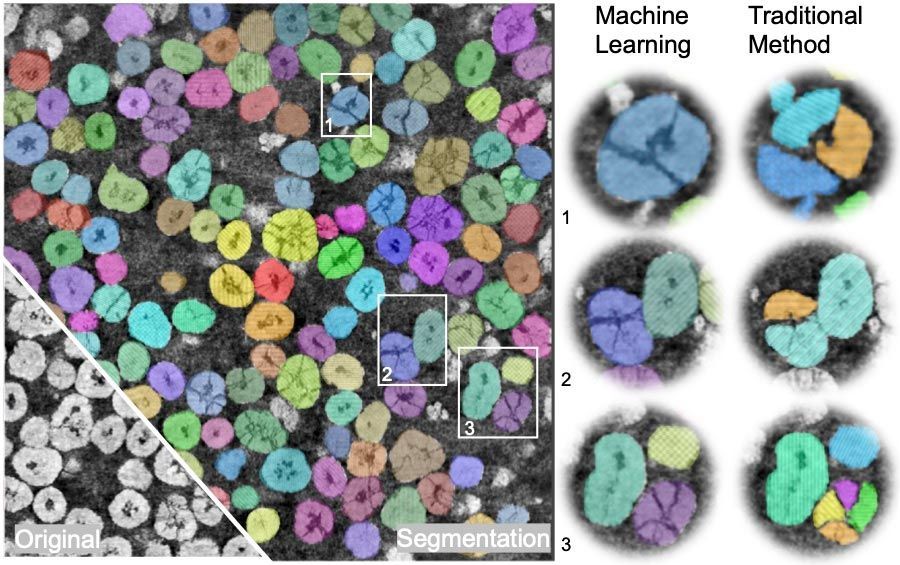
AI Can Tell If You’re Going to Die Soon. We Just Don’t Know How It Knows

Albert Einstein’s famous expression “spooky action at a distance” refers to quantum entanglement, a phenomenon seen on the most micro of scales. But machine learning seems to grow more mysterious and powerful every day, and scientists don’t always understand how it works. The spookiest action yet is a new study of heart patients where a machine-learning algorithm decided who was most likely to die within a year based on echocardiogram (ECG) results, reported by New Scientist. The algorithm performed better than the traditional measures used by cardiologists. The study was done by researchers in Pennsylvania’s Geisinger regional healthcare group, a low-cost and not-for-profit provider.

/* */