Toggle light / dark theme

Experimental brain-controlled hearing aid decodes, identifies who you want to hear

Our brains have a remarkable knack for picking out individual voices in a noisy environment, like a crowded coffee shop or a busy city street. This is something that even the most advanced hearing aids struggle to do. But now Columbia engineers are announcing an experimental technology that mimics the brain’s natural aptitude for detecting and amplifying any one voice from many. Powered by artificial intelligence, this brain-controlled hearing aid acts as an automatic filter, monitoring wearers’ brain waves and boosting the voice they want to focus on.

Though still in early stages of development, the technology is a significant step toward better hearing aids that would enable wearers to converse with the people around them seamlessly and efficiently. This achievement is described today in Science Advances.

“The area that processes sound is extraordinarily sensitive and powerful; it can amplify one voice over others, seemingly effortlessly, while today’s hearings aids still pale in comparison,” said Nima Mesgarani, Ph.D., a principal investigator at Columbia’s Mortimer B. Zuckerman Mind Brain Behavior Institute and the paper’s senior author. “By creating a device that harnesses the power of the brain itself, we hope our work will lead to technological improvements that enable the hundreds of millions of hearing-impaired people worldwide to communicate just as easily as their friends and family do.”

Read more

NASA, Northrop Grumman finish testing cislunar habitat mockup

As Northrop Grumman’s NG-11 Cygnus spacecraft flew high above in low Earth orbit, NASA astronauts at the Johnson Space Center recently completed testing and evaluation of the company’s Earth-based full-scale cislunar habitat mockup.

Designed to test the ergonomics, feature layout and functional compatibility with basic “day-in-the-life” astronaut tasks for potential long-term use as a part of the future Lunar Gateway in cislunar space, the habitat mockup necessarily incorporated all core elements that would eventually be needed by a four-person Orion crew: sleep stations, a galley, crew exercise equipment and of course accommodations for science, a robotics workstations and life support systems.

Read more

Europe abandons plans for ‘flagship’ billion-euro research projects

The consortium, called LifeTime, aims to use three emerging technologies—machine learning, the study of single cells, and lab-grown organlike tissues called organoids—to map how human cells change over time and develop diseases. It is one of six candidates in the latest round of ambitious proposals for European flagships, billion-euro research projects intended to run for 10 years. There is just one snag: The European Commission has decided that it won’t launch any of them.


Six candidate research proposals lost in limbo.

Read more

New Age of Autonomous Jet Fighters on Horizon

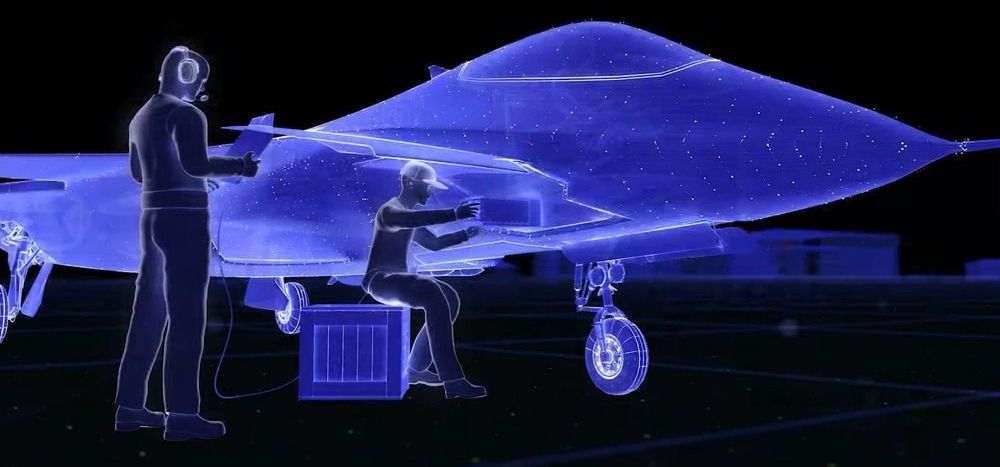
The scenario military thinkers propose would double the number of jet fighters in a typical battle formation from four to eight. But instead of the additional aircraft being identical to an F-35 joint strike fighter, or F-15E Strike Eagle, they are low-cost, unmanned jets.

One might carry extra air-to-air missiles. Another may only have a sensor suite to boost situational awareness for the pilots in the traditional aircraft.

Whatever their payload, the enemy has to contend with double the number of targets on their radars. They have multiple “dilemmas” in front of them, giving U.S. forces an asymmetric advantage.

Read more

Blazing Supersonic Plane Could Zoom From NY to Paris in 90 Min

Planes, Drones, and AI Machines

But going from Mach 2 to Mach 5 is not an easy undertaking. Hermeus is hoping to pull from existing technologies to make its insanely fast passenger plane a reality, including titanium materials and cutting edge rocketry.

It’s impossible to tell what the future of air travel will look like. If supersonic airplanes aren’t it, SpaceX founder Elon Musk has pushed for the idea that we’ll go between Earthly destinations in rockets that can technically take us to Mars.

Read more

Atlas is rockstar cross-stepper over tricky terrain

Robot enthusiasts were sending up cheers this month to the team advancing Atlas into an even more human-like walker through obstacles including a bunch of cinder blocks and a balance beam. They have turned Atlas into the very credible hulk, who wins the spotlight with its display of walking, which was recorded May 1.

The video is “IHMC Atlas Autonomous Path Planning Across Narrow Terrain.” Don’t miss the key word “narrow.” This is why the walk is being eyed as a big deal.

Narrow terrain is difficult due to the need to do tricky cross-over steps, tricky, in that there is limited range of motion in the hip joint, said the video notes. There was “a small polygon of support when one foot is directly in front of the other.”

Read more

Scientists Trained AI To Write Poetry, It’s Ready To Replace Shakespeare

Computer scientists the University of Melbourne in Australia and the University of Toronto in Canada have developed an algorithm that is capable of writing poetry following the rules of rhyme and metre.

With the use of poetries rules and taking the metre into account, this AI algorithm creates weaves of words and grouped them together to produce meaningful sentences.

This AI is trained extensively on the rules it needed to follow to craft an acceptable poem and the dataset researcher used to train the AI has over 2,600 real sonnets.

Read more

/* */