Toggle light / dark theme

Google DeepMind’s JEST AI Learns 13x Faster & SenseTime’s New AI Beats GPT-4o

Google’s DeepMind has unveiled a groundbreaking AI training method called JEST, which significantly reduces energy consumption and training time. Meanwhile, Chinese tech giants like SenseTime and Alibaba are showcasing their own powerful AI models, claiming to outperform even OpenAI’s GPT-4 in certain areas. The race for AI dominance is heating up, with advancements in efficient training and multimodal learning taking center stage.

#google #ai

Meet the AI-powered robots that Big Tech thinks can solve a global labor shortage

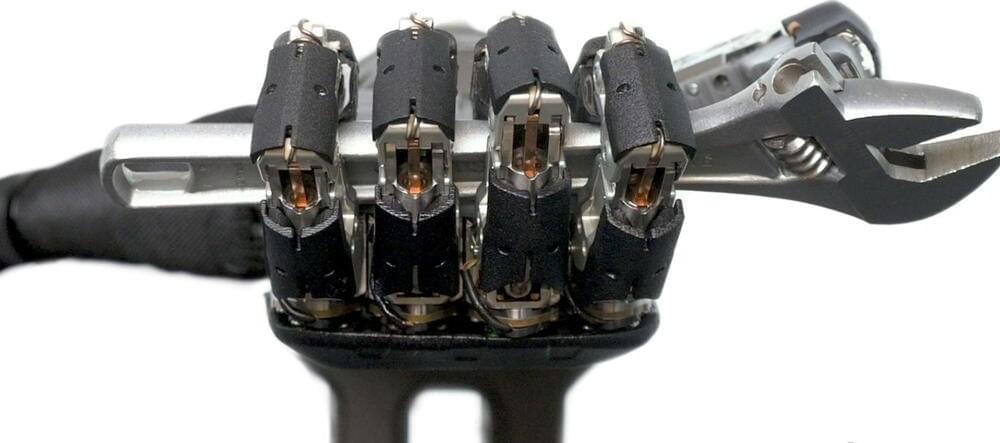
AI-powered robots are popping up across Silicon Valley. If some industry experts are right, they could help solve a global labor shortage.

Companies like Tesla, Amazon, Microsoft and Nvidia have plowed billions of dollars into what are known as “humanoid” robots. These machines typically stand on two legs, and are designed to perform tasks meant for people.

Machine-Learning Assisted Directed Evolution — Viviana Gradinaru — 10/25/2019

“Machine-Learning Assisted Directed Evolution of Viral Vectors and Microbial Opsins for Minimally Invasive Neuroscience.” AI-4-Science Workshop, October 25, 2019 at Bechtel Residence Dining Hall, Caltech. Learn more about: — AI-4-science: https://www.ist.caltech.edu/ai4science/ — Events: https://www.ist.caltech.edu/events/ Produced in association with Caltech Academic Media Technologies. ©2019 California Institute of Technology.

Better understanding of wave propagation processes could boost 5G and 6G networks

Researchers from the Smart and Wireless Applications and Technologies Group (SWAT-UGR) have conducted two scientific studies aimed at answering a common question: understanding how electromagnetic waves propagate in the medium.

The increase in network speed opens the door to new possibilities, such as robotic surgery or virtual reality services.

A team of UGR researchers has examined the propagation of electromagnetic waves with the goal of enhancing the deployment of 5G and 6G networks. Additionally, the study results contribute to the development of Industry 4.0, which seeks to automate processes in factories using wireless technologies.

Novel ‘kill-switch’ nanorobot selectively kills cancer cells

Researchers have developed a pH-responsive nanorobot system that changes confirmation in the tumor microenvironment to selectively kill cancer cells in mice.

Researchers at the Karolinska Institutet (Stockholm, Sweden) have recently developed a nanorobot system capable of killing cancer cells in mice. This system works by activating at lower pH, such as within the tumor microenvironment. It is hoped that this could serve as a proof-of-concept for similar stimulus-responsive nanorobotic approaches and introduce a new range of effective cancer therapeutics.

Certain membrane proteins capable of inducing apoptosis, a type of cell death, appear on the surface of both healthy and cancer cells. These proteins, often called death receptors, join and activate when in close proximity to each other. This closeness is induced by external factors binding to the cell surface.

Breakthrough in Next-Generation Memory Technology!

A research team led by Professor Jang-Sik Lee from the Department of Materials Science and Engineering and the Department of Semiconductor Engineering at Pohang University of Science and Technology (POSTECH) has significantly enhanced the data storage capacity of ferroelectric memory devices. By utilizing hafnia-based ferroelectric materials and an innovative device structure, their findings, published on June 7 in the international journal Science Advances, mark a substantial advancement in memory technology.

With the exponential growth in data production and processing due to advancements in electronics and artificial intelligence (AI), the importance of data storage technologies has surged. NAND flash memory, one of the most prevalent technologies for mass data storage, can store more data in the same area by stacking cells in a three-dimensional structure rather than a planar one. However, this approach relies on charge traps to store data, which results in higher operating voltages and slower speeds.

Recently, hafnia-based ferroelectric memory has emerged as a promising next-generation memory technology. Hafnia (Hafnium oxide) enables ferroelectric memories to operate at low voltages and high speeds. However, a significant challenge has been the limited memory window for multilevel data storage.

/* */