While Elon Musk says Tesla is trying to build an AI supercomputer, his companies are spending billions of dollars on Nvidia hardware.
Category: robotics/AI – Page 798
Sam Altman Shuts Down Q* Questions

OpenAI CEO Sam Altman is remaining tight-lipped about the company’s secretive Q* project — even after admitting that his company is something of a leaky ship.
Even among those who followed along with OpenAI’s November massacre that saw Altman temporarily ousted, it’s easy to overlook the Q* (pronounced “queue-star”) of it all, particularly because nobody outside the company really knows what the heck it is.
The speculation-laden project was linked to the chaos at the firm in the aftermath of that failed coup, and at the end of 2023, OpenAI refused to answer any questions about it — a posture Altman continued in a new interview with tech podcaster Lex Fridman.


Video: Unitree H1 is first humanoid to nail a backflip without hydraulics
After setting a new world speed record for humanoid robots earlier this month, China’s Unitree is now claiming another. Its latest H1 bipedal takes the title for first to perform a standing backflip without the use of hydraulics.
Yes, humanoids like Boston Dynamics’ Atlas have been nailing backflips for a few years now but they make use of heavy, potentially leaky hydraulics to launch into the air, somersault backwards and then land on both feet.
Impressively, Unitree’s H1 relies on in-house M107 electric joint motors only, each of which boasts 360 Nm (265.5 lb.ft) of peak torque and can also be found on the company’s B2 quadruped. Each leg has three degrees of freedom at the hip plus one at the knee and another at the ankle, and all cabling is routed internally for snag-free clean lines.



Privacy in the AI era: How do we protect our personal information?
The AI boom, including the advent of large language models (LLMs) and their associated chatbots, poses new challenges for privacy. Is our personal information part of a model’s training data? Are our prompts being shared with law enforcement? Will chatbots connect diverse threads from our online lives and output them to anyone?
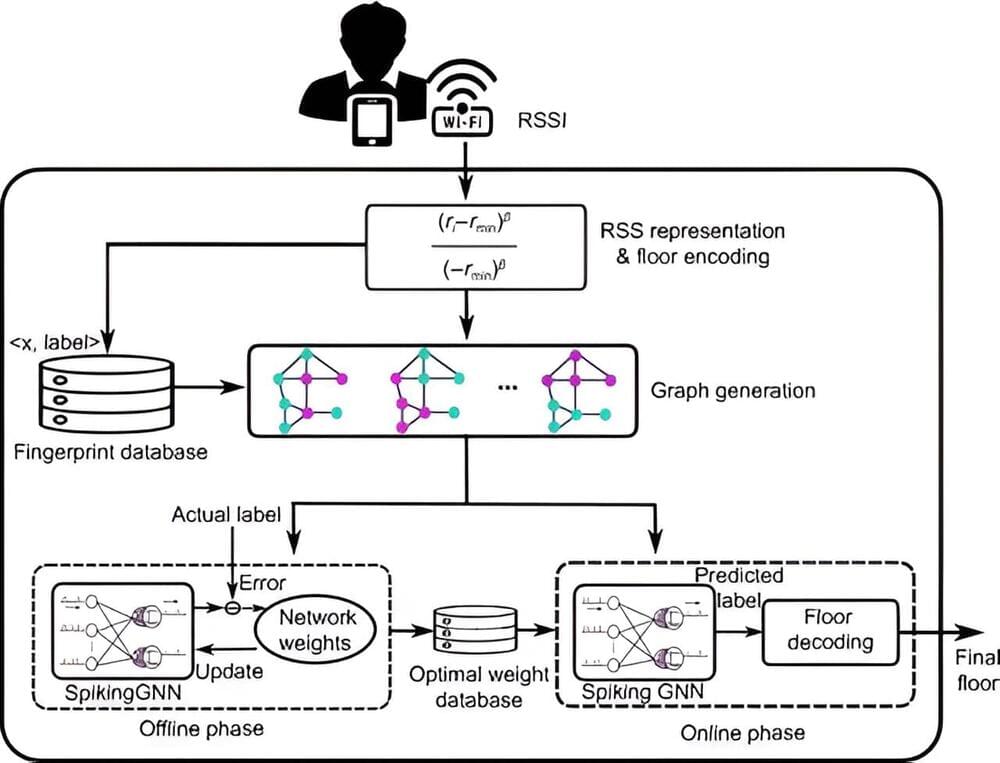
Introducing Floorlocator, a system that enhances indoor navigation
Indoor positioning is transforming with applications demanding precise location tracking. Traditional methods, including fingerprinting and sensor-based techniques, though widely used, face significant drawbacks, such as the need for extensive training data, poor scalability, and reliance on additional sensor information. Recent advancements have sought to leverage deep learning, yet issues such as low scalability and high computational costs remain unaddressed.
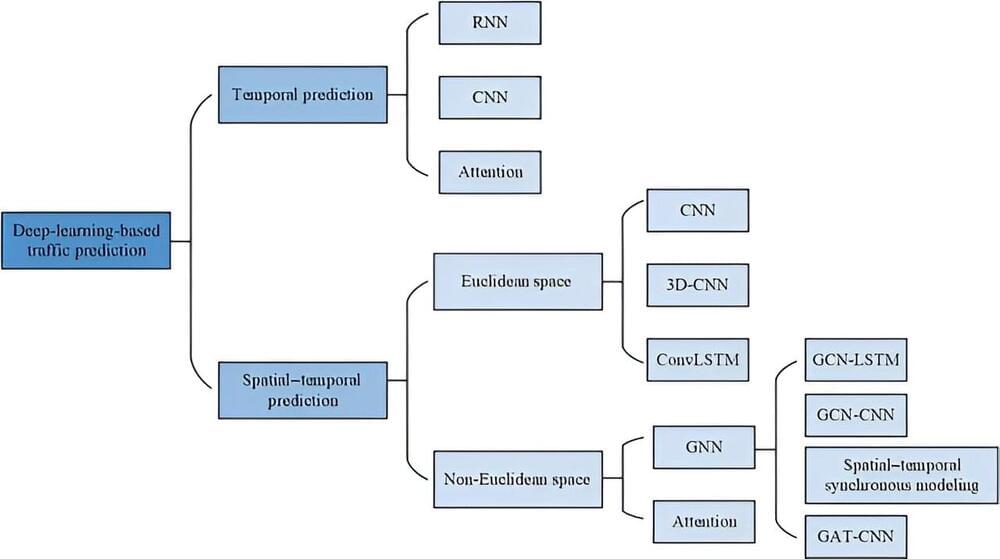
New survey on deep learning solutions for cellular traffic prediction
The bustling streets of a modern city are filled with countless individuals using their smartphones for streaming videos, sending messages and browsing the web. In the era of rapidly expanding 5G networks and the omnipresence of mobile devices, the management of cellular traffic has become increasingly complex.