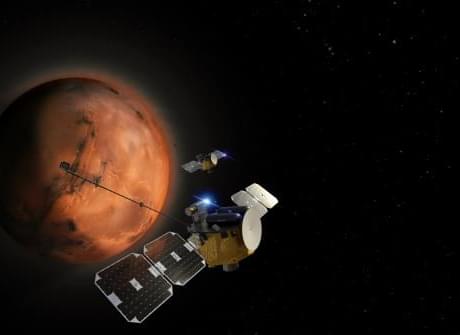
Rocket Lab is one step closer to going to Mars with NASA’s approval of the company’s Photon spacecraft for an upcoming science mission. If all continues according to plan the two craft will launch in2024and arrive on the red planet 11 months later to study its magnetosphere.
These satellites have to be less than 180 kilograms (about 400 pounds) and must perform standalone science missions, part of a new program aiming at more lightweight, shorter lead missions that can be performed with strong commercial industry collaboration. A few concepts have been baking since the original announcement of the program, and ESCAPADE just passed Key Decision Point C, meaning it’s ready to go from concept to reality.
In 2,024 NASA is scheduled to return humans to the surface of the Moon with the Artemis III mission. One year before that, Artemis II should circle the satellite without touching down. Both missions are to be crewed by experienced astronauts. But not the dearMoon mission, which will carry civilians to the Moon and back on SpaceX hardware.
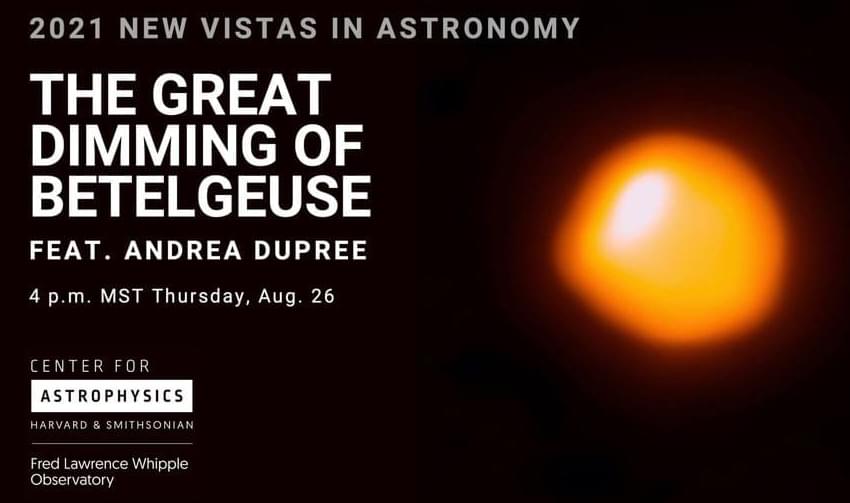
Harvard & Smithsonian, where she directs the Solar, Stellar and Planetary Sciences Division. She is a past President of the American Astronomical Society and holds degrees from Wellesley College and Harvard University. Her interest in the star Betelgeuse began in the mid-80’s with measurements from satellites that documented the 420-day pulsation period of Betelgeuse. She also led the extraordinary team that captured the first image of a star other than the Sun – an image of Betelgeuse taken with the Hubble Space Telescope in ultraviolet light – revealing its brightly varying surface.
SUNDAY 08/22/2021 Welcome to the LabPadre 24/7 Livestream! || Onsite weather provided by INITWeather.com || BOCA CHICA NEWS: NEW Heat tile replacement continues. B3 scrapping on hold. Catch arm fabrication proceeding. New Raptors arrive at shipyard GSE tank lifted into orbital tank farm. || ROAD CLOSURES: Intermittent Aug 23rd 9:30–11:30a CDT (1430−1630 UTC) and Aug 24th 5p-11p CDT (2200−0400 UTC), also Aug 25th, 26th. || LAUNCHES: Starsem, Soyuz 2.1b/Fregat, OneWeb #9 satellite constellation launched and deployed succesfully. Next: Blue Origin/New Shepard-NS 17 Wed Aug 25 2021 at 9:35a EDT, (13:35 UTC) from Launch Site One, West Texas, Texas, USA Thank you for watching LabPadre’s live stream from Boca Chica and South Padre Island in Texas. Subscribe for more SpaceX live coverage. Special thanks to Greg Scott and Gator’s Dockside in Port Canaveral, Florida. https://twitter.com/GregScott_photo. https://www.scottphotomedia.com.
This 24/7 stream is powered by LabPadre, in cooperation with Sapphire Condominiums and Isla Grand Beach Resort.
Video Graphics Overlay By: https://twitter.com/AeroJamesC All copyrights to live images are owned explicitly by LabPadre. Intelligent chat community!
Chat Rules: No self promotion, No Bickering, No Vulgarity, No Politics, No Religion Talk, No Trash Talking, No Flat Earth Talk, NO Anti NASA/SpaceX Talk.
To help improve the LabPadre YouTube Channel you may donate to PayPal Family & Friends: paypal.me/labpadre. Venmo: @LabPadre. CashApp: $LabPadre.
As parts of the U.S. northeast brace for Hurricane Henri to make landfall in New York today (Aug. 22), astronauts and satellites are tracking the historic storm from space.
Henri, which reached category 1 hurricane status on Saturday, is forecast to make landfall on Long Island, New York by midday today, dropping torrents of rain on Connecticut and Rhode Island, according to the National Hurricane Center’s morning update. Astronauts on the International Space Station spotted Henri from orbit on Saturday.
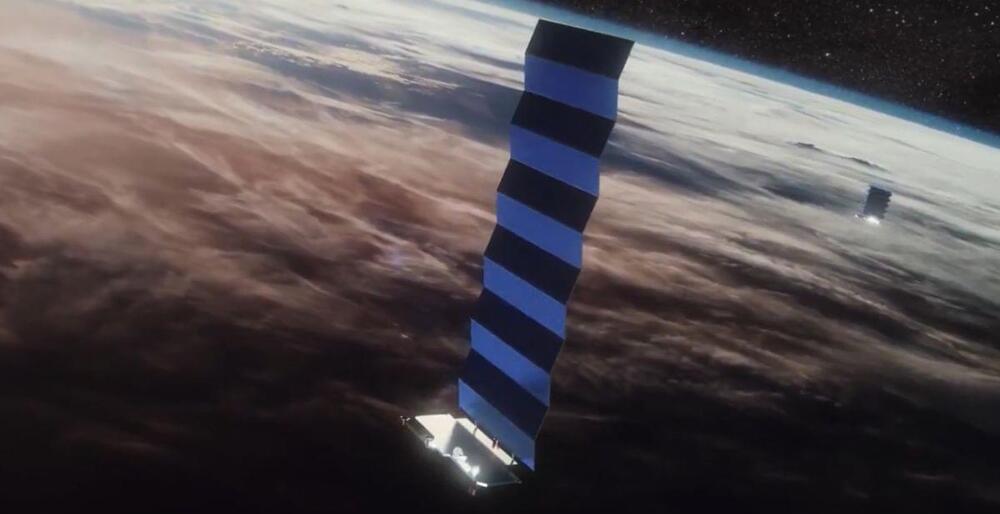
TAMPA, Fla. — SpaceX is proposing to use Starship to rapidly deploy its second-generation Starlink constellation, providing denser rural coverage without needing more than the 30,000 satellites it previously envisioned for the follow-on network.
The proposal is one of two revised configurations that SpaceX filed Aug. 18 with the Federal Communications Commission for Starlink Gen2, updating a plan submitted in 2020.
The other configuration envisages continuing to use Falcon 9 rockets for launching Starlink satellites, and also does not involve a larger constellation or require more spectrum than what SpaceX outlined last year.
An increase in counterspace weapons is challenging the military’s approach of placing all of its billion-dollar eggs (exquisite satellites) in one basket (far-out geosynchronous orbit).
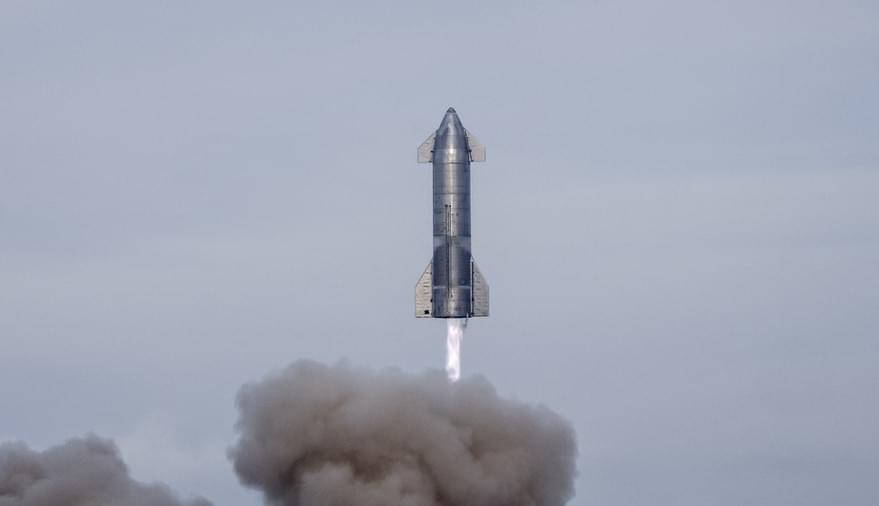
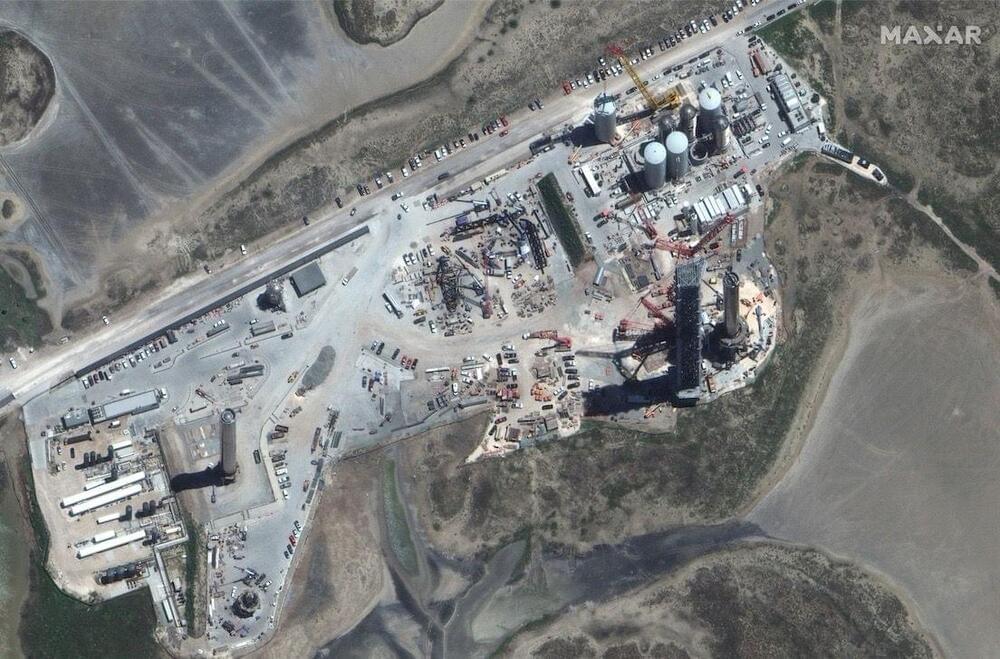
There are actually two Super Heavy boosters in the shot.
SpaceX’s Super Heavy rocket looks big, even from space.
On Aug. 9 Maxar Technologies’ WorldView-3 satellite snapped a great shot of SpaceX’s “Starbase” facility in South Texas, where the company is building and testing its Starship deep-space transportation system.
Do you remember the Zuckerland metaverse? (Yes, I know he borrowed the word, but when you are president of a digital country, does anyone dare challenge Zuck the First, Le Roi Numérique?)
Palantir Technologies (the Seeing Stone outfit with the warm up jacket fashion bug) introduced a tasty bit of jargon-market speak in its Q22021earnings call:
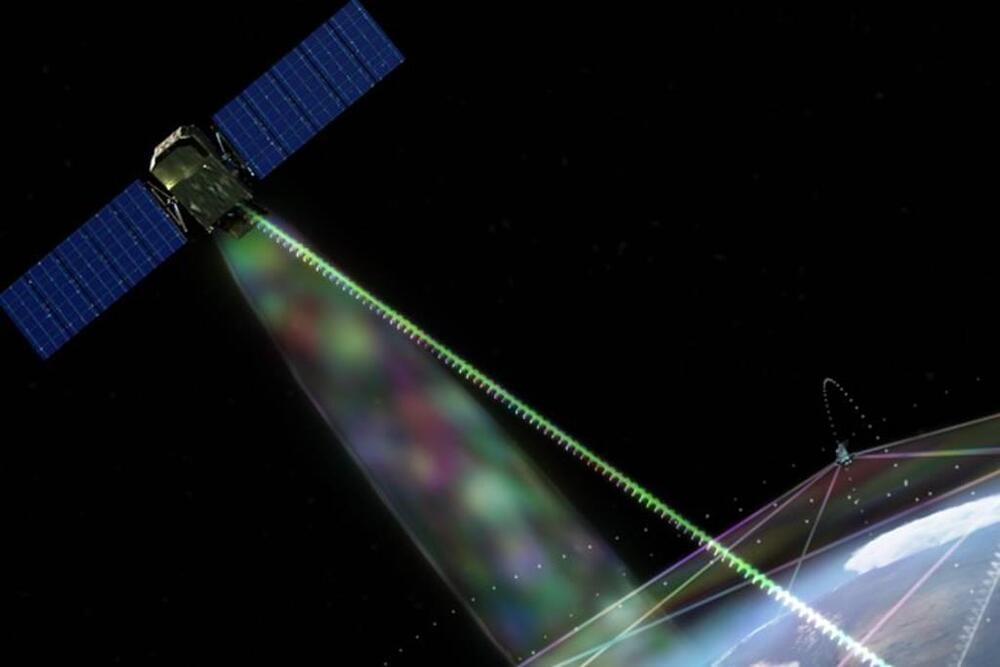
Palantir’s meta-constellation software harnesses the power of growing satellite constellations, deploying AI into space to provide insights to decision-makers here on Earth. Our meta-constellation integrates with existing satellites, optimizing hundreds of orbital sensors and AI models and allowing users to ask time-sensitive questions across the entire planet. Important questions like, where are the indicators of wildfires or how are climate changes affecting crop productivity? And when and where are naval fleets conducting operations? Meta-constellation pushes Palantir’s Edge AI technology to a new frontier.
SpaceX’s Starlink satellites are involved in about 1,600 close encounters between two spacecraft in low Earth orbit every week. That’s about 50% of all such incidents. As the constellation grows, that proportion is expected to rise up to 90%, experts say.