Toggle light / dark theme

The threat of wildfires is rising. So is new artificial intelligence solutions to fight them

Wildfires fueled by climate change have ravaged communities from Maui to the Mediterranean this summer, killing many people, exhausting firefighters and fueling demand for new solutions. Enter artificial intelligence.

Firefighters and startups are using AI-enabled cameras to scan the horizon for signs of smoke. A German company is building a constellation of satellites to detect fires from space. And Microsoft is using AI models to predict where the next blaze could be sparked.

With wildfires becoming larger and more intense as the world warms, firefighters, utilities and governments are scrambling to get ahead of the flames by tapping into the latest AI technology—which has stirred both fear and excitement for its potential to transform life. While increasingly stretched first responders hope AI offers them a leg up, humans are still needed to check that the tech is accurate.

Telesat inks deal with SpaceX for its Lightspeed constellation

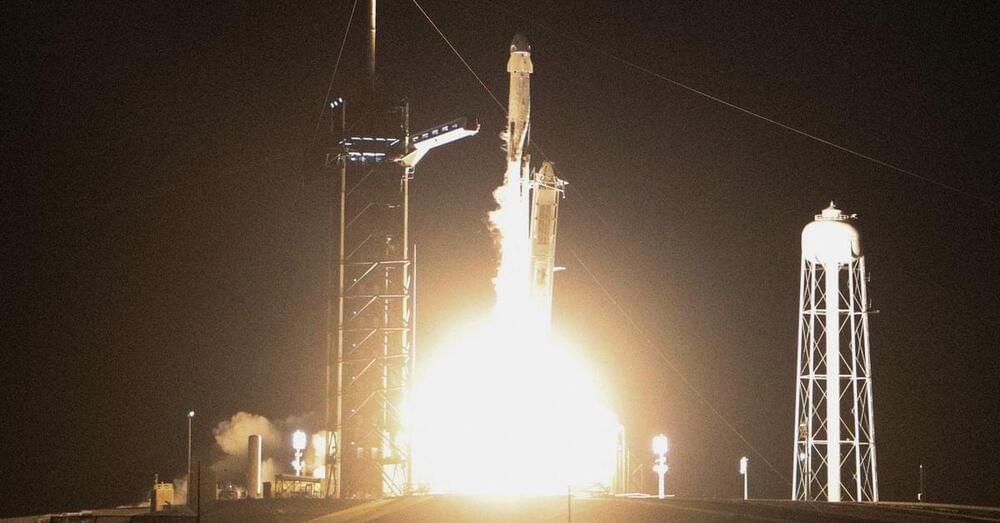
SpaceX’s Falcon 9 rocket will perform 14 launches for Telesat, taking 18 satellites each to the low-earth orbit.

Aerospace seems to be the new buzzword in the technological arena, with multiple new entrants aiming to make a mark in the industry.

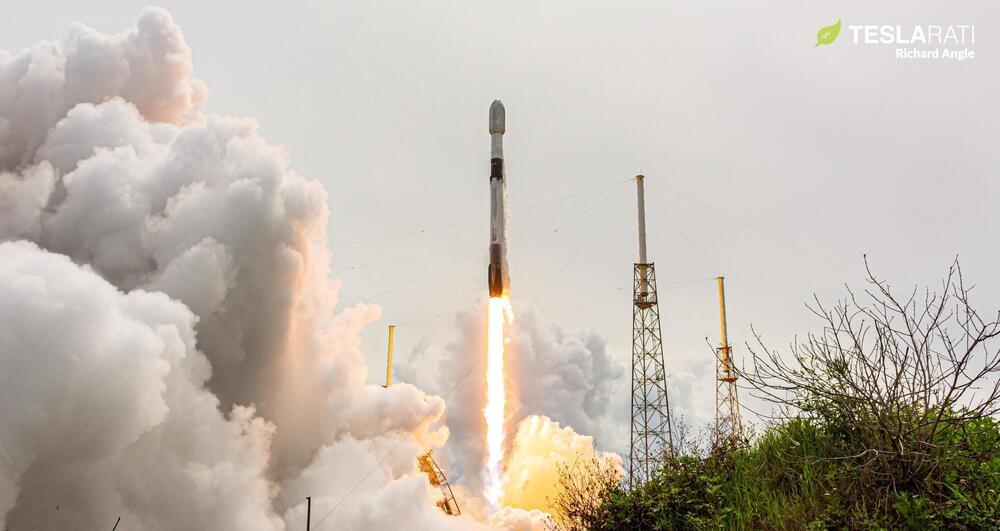
To that extent, Canadian satellite operator Telesat and Elon Musk’s SpaceX, which designs and manufactures rockets and spacecraft, have agreed to deliver the former’s Lightspeed constellation to low-earth orbit.

European space startup partners with India for Moon mission

The Exploration Company chose to fly its upcoming Moon mission aboard an Indian rocket following delays to the debut launch of Ariane 6.

European space startup The Exploration Company has signed an agreement with the Indian Space Research Organisation (ISRO) with a view to reaching the Moon by 2028, a report from The Next Web.

The Bordeaux and Munich-based company will partner with ISRO’s commercial arm, New Space India Limited (NSIL), and will use ISRO’s Polar Satellite Launch Vehicle (PSLV).

Mini space thruster that runs on water

Designed to manoeuvre the smallest classes of satellite, the operation of this Iridium Catalysed Electrolysis CubeSat Thruster (ICE-Cube Thruster) developed with Imperial College in the UK is based on electrolysis.

This tiny fingernail-length space thruster chip runs on the greenest propellant of all: water.

Avoiding any need for bulky gaseous propellant storage, an associated electrolyser runs a 20-watt current through water to produce hydrogen and oxygen to propel the thruster.

Stop crowding earth’s orbital environment: ESA report

The problem of space debris would worsen even if we sent nothing else into orbit.

ESA’s Space Environment report 2023 was published last August and highlighted a key problem: space debris. “Our planet is surrounded by spacecraft carrying out important work to study our changing climate, deliver global communication and navigation services and help us answer important scientific questions,” noted the report.

“But some of their orbits are getting crowded and increasingly churning with deadly, fast-moving pieces of defunct satellites and rockets that threaten our future in space.”


Dottedhippo/iStock.

“Our planet is surrounded by spacecraft carrying out important work to study our changing climate, deliver global communication and navigation services and help us answer important scientific questions,” noted the report.

Firefly launches US Space Force mission in 24-hour timeline

The US Space Force’s ‘Victus Nox’ mission launched aboard a Firefly Alpha rocket that lifted off from Vandenberg Space Force Base, California.

The US Space Force announced in a press statement today, September 15, that Firefly Aerospace successfully launched a Millennium Space satellite yesterday.

That mission launched on an incredibly short 24-hour timeline, showcasing the capability for rapid deployment of national security missions.

Space Force to create “integrated” units responsible for acquisition, maintenance and operations

NATIONAL HARBOR, Md. — U.S. chief space operations Gen. Chance Saltzman on Sept. 12 announced the Space Force will experiment with a new command structure where a unit is responsible for all aspects of a mission area, including training, procurement and operations.

Two integrated units will be established, each run by a Space Force colonel — one for space electronic warfare; and the other for positioning, navigation, and timing (PNT) satellites.

This is a departure from the current structure where responsibilities for procurement, maintenance, sustainment and operations are fragmented under separate chains of command, Saltzman said in a keynote speech at the Air & Space Forces Association’s annual conference.

SpaceX no longer taking losses to produce Starlink satellite antennas, a key step to improving profitability

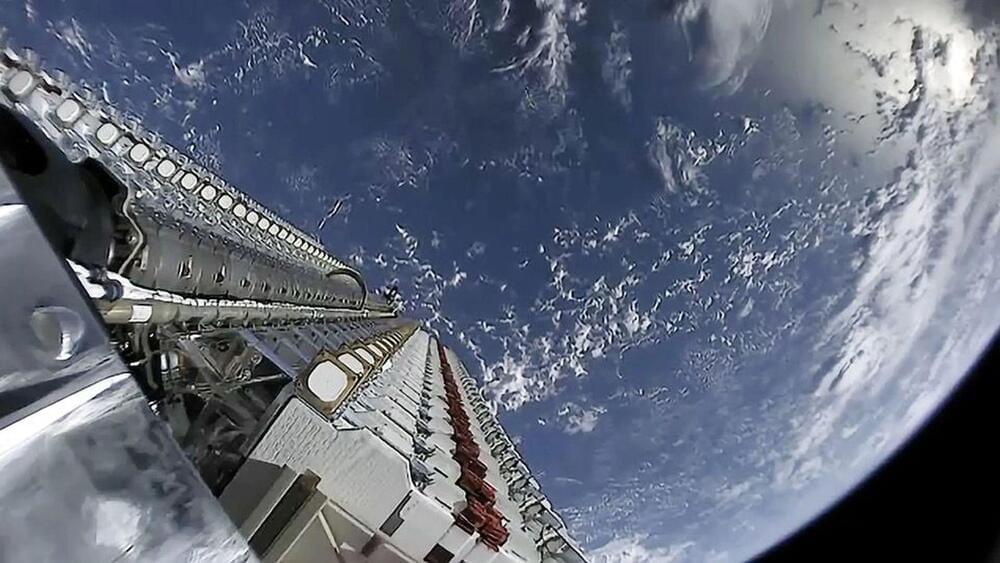
PARIS – Elon Musk’s SpaceX is no longer absorbing the cost of the Starlink antennas that it sells with its satellite internet service, a company executive said on Wednesday, a key step to the company improving its profitability.

“We were subsidizing terminals but we’ve been iterating on our terminal production so much that we’re no longer subsidizing terminals, which is a good place to be,” Jonathan Hofeller, SpaceX vice president of Starlink and commercial sales, said during a panel at the World Satellite Business Week conference.

SpaceX sells consumer Starlink antennas, also known as user terminals, for $599 each. For more demanding Starlink customers – such as mobile, maritime, or aviation users – SpaceX sells antennas with its service in a range from $2,500 to $150,000 each.

Machine learning masters massive data sets

A machine-learning algorithm demonstrated the capability to process data that exceeds a computer’s available memory by identifying a massive data set’s key features and dividing them into manageable batches that don’t choke computer hardware. Developed at Los Alamos National Laboratory, the algorithm set a world record for factorizing huge data sets during a test run on Oak Ridge National Laboratory’s Summit, the world’s fifth-fastest supercomputer.

Equally efficient on laptops and supercomputers, the highly scalable solves hardware bottlenecks that prevent processing information from data-rich applications in , , social media networks, national security science and earthquake research, to name just a few.

“We developed an ‘out-of-memory’ implementation of the non-negative matrix factorization method that allows you to factorize larger than previously possible on a given hardware,” said Ismael Boureima, a computational physicist at Los Alamos National Laboratory. Boureima is first author of the paper in The Journal of Supercomputing on the record-breaking algorithm.

/* */