Innovative silicon solutions provider HPQ Silicon Resources Inc. (“HPQ” or the “Company”), announced that it has received the TREKHY® system, a portable hydrogen-based mini-power generator, jointly developed by the French companies Apollon Solar SAS (“Apollon”) and Pragma Industries SAS (“Pragma”).
While continuing to work with Apollon on the development of new generations of more efficient silicon powders for hydrogen production, HPQ signed a Memorandum of Understanding with Apollon and Pragma to study the commercial potential of the TREKHY® autonomous power generator in Canada.
The TREKHY® provides energy on demand. The system uses a compact fuel cell to provide electrical power. The integrated fuel cell combines hydrogen and oxygen to provide useful electricity + H2O. Hydrogen is produced through a chemical reaction resulting from contact between water and a powder bag. Each bag delivers 30W of power for more than one hour. (Video of the system in operation). In January 2021, a Japanese distributor purchased 300 TREKHY® systems to equip the survival shelters of the Japanese Civil Security.
We’ve all met people so smart and informed that we don’t understand what they’re talking about. The investment advisor discussing derivatives, the physician elaborating about B cells and T cells, the auto mechanic talking about today’s computerized engines—we trust their decisions, even though we do not completely grasp the meaning of their words.
An international team of scientists has developed a system that can generate random numbers over a hundred times faster than current technologies, paving the way towards faster, cheaper, and more secure data encryption in today’s digitally connected world.
The Aidan Meller Galley (www.aidanmeller.com) is Oxford’s longest established specialist gallery dealing in Modern, Contemporary and Old Master works.
Today we are joined by Aidan Meller, the Gallery Director, who with 20 years’ experience in the art business, works closely with private collectors, is often consulted by those who wish to begin, or further develop their collections, and is the creator of the Aidan Meller Art Prize, a valuable resource for the development of the arts.
Aidan regularly has original works in the gallery by the likes of Picasso, Matisse, Chagall, as well as older works such as John Constable, Turner and Millais, was involved in a discovery of a collection of Pre-Raphaelite cartoons for stained glass, is working with other experts in the field of scientific procedures for the authentication of artwork, and has been interviewed on a variety of current affair topics including the exhumation of Salvador Dali.
On today’s show we are going to be focusing on a rather new artist in the Meller portfolio, and that would be Ai-Da (www.ai-darobot.com), the world’s first ultra-realistic, humanoid, artificial intelligence (AI) robot artist, who makes drawings, painting, and sculptures.
Ai-Da is named after the mathematician Ada Lovelace, combines the latest in computing, robotics, and AI innovations, including those developed at Leeds University, and University of Oxford, and represents a fascinating milestone in AI innovation, human collaboration and creativity.
Once, holograms were just a scientific curiosity. But thanks to the rapid development of lasers, they have gradually moved center stage, appearing on the security imagery for credit cards and bank notes, in science fiction movies—most memorably Star Wars—and even “live” on stage when long-dead rapper Tupac reincarnated for fans at the Coachella music festival in 2012.
Check out Expanscape’s Aurora 7 prototype laptop, which features six more displays than your average laptop. It’s made to be a mobile security operations station, but it’s okay to imagine yourself gaming hard on it.
Quantum Encryption, Privacy Preservation, And Blockchains — Dr. Vipul Goyal, NTT Ltd. Cryptography & Information Security Labs
Dr Vipul Goyal is a senior scientist at NTT Research (a division of Nippon Telegraph and Telephone Corporation, a telecommunications company headquartered in Tokyo, Japan.) and an Associate Professor in the Computer Science Department at Carnegie Mellon University (CMU), where he is part of the Crypto group, the theory group, a core faculty at CyLab (CMU security and privacy institute) and the faculty advisor of CMU Blockchain Group.
Previously, Dr. Goyal was a researcher in the Cryptography and Complexity group at Microsoft Research, India.
Dr. Goyal received his PhD from the University of California, Los Angeles.
Dr. Goyal is broadly interested in all areas of cryptography with a particular focus on the foundations of cryptography. Currently his research topics include secure multi-party computation, non-malleable cryptography, and foundations of blockchains.
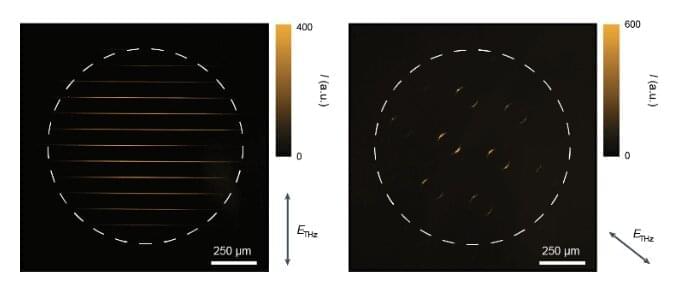
Scientists from MIPT, Moscow Pedagogical State University and the University of Manchester have created a highly sensitive terahertz detector based on the effect of quantum-mechanical tunneling in graphene. The sensitivity of the device is already superior to commercially available analogs based on semiconductors and superconductors, which opens up prospects for applications of the graphene detector in wireless communications, security systems, radio astronomy, and medical diagnostics. The research results are published in Nature Communications.
Fair to say that we all assume that aging is inevitable. In reality however, there is no biological law that says we must age. Over the years we’ve seen a variety of theories proposed to explain why we age including the accumulation of damage to our DNA, the damaging effects of chemicals called “free radicals, changes in the function of our mitochondria, and so many others.
Our guest today, Dr. David Sinclair, believes that aging is related to a breakdown of information. Specifically, he describes how, with time, our epigenome accumulates changes that have powerful downstream effects on the way our DNA functions. Reducing these changes to the epigenome is achievable and in fact, even taking it further, his research now reveals that the epigenome can be reprogrammed back to a youthful state.
David A. Sinclair, PhD, AO is Professor of Genetics at Harvard Medical School, and is the author of Lifespan — Why We Age and Why We Don’t Have To. He is the Founding Director of the Paul F. Glenn Center for the Biological Mechanisms of Aging at Harvard. One of the leading innovators of his generation, he is listed by TIME magazine as one of the “100 most influential people in the world” (2014) and top 50 most important people in healthcare (2018). He is a board member of the American Federation for Aging Research, a Founding Editor of the journal Aging, and has received more than 35 awards for his research on resveratrol, NAD, and reprogramming to reverse aging, which have been widely hailed as major scientific breakthroughs and are topics we discuss in our time together.
In 2018, Dr. Sinclair became an Officer of the Order of Australia, the equivalent of a knighthood, for his work on national security matters and human longevity. Dr. Sinclair and his work have been featured on 60 Minutes, Today, The Wall Street Journal, The New York Times, Fortune, and Newsweek, among others.
In closing, I really need to say that Lifespan (https://amzn.to/3sSoCNS) ranks as one of the most influential books I have ever read. Please enjoy today’s interview.