These glass bricks serve as solar panels AND windows.
Category: solar power – Page 147

The Tantalizing Dream of Blanketing the Sahara in Solar Panels
Just need 400 billion and 1.2% of the land area.
Desertec continues in a smaller form; they’re still building power plants in Morocco to supply the local energy needs of that country. Perhaps a ground-up approach, where MENA countries increase their own solar production in the desert before becoming net exporters, will provide the solution. This project is not the first wildly ambitious scheme to provide for the world’s energy needs that has stalled; historians remember Atlantropa, a scheme to dam the Strait of Gibraltar and use it for hydroelectric power that had some interest in the 1920s.
Yet the prospect remains tantalizing. Surely, when only a tiny fraction of the Earth’s surface need be devoted to energy production to provide us with more power than we could ever dream of consuming, we won’t wreck the planet by getting that energy through dirty and dangerous means. To starry-eyed idealists, it must seem equivalent to being on a raft in a lake full of drinking water—and choosing instead to swig from a bottle of seawater in your backpack. Solar power in the world’s deserts is one of the few feasible, renewable ways of providing energy on the scale we currently demand as humans. Someday, we will make better use of the abundant energy from the sun. We’ll have to.
Image Credit: https://www.shutterstock.com/image-illustration/egypt-surrou...-444689929”">Harvepino / https://www.shutterstock.com/”">Shutterstock.com
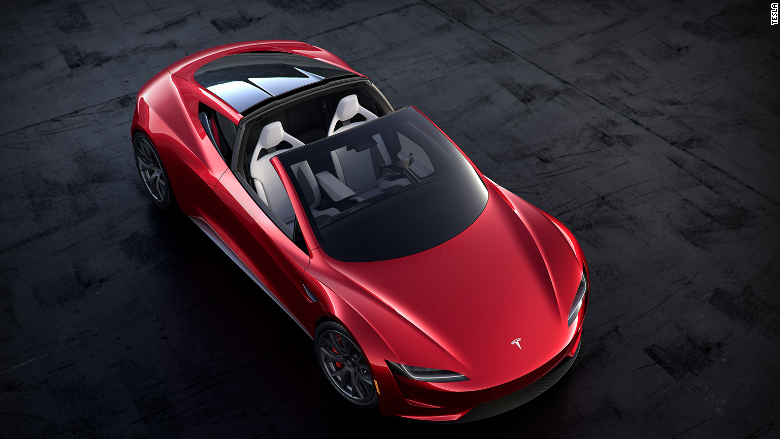
Tesla Roadster might fly — By Peter Valdes-Dapena | CNN Tech
“Musk seems to be talking about something different, a sports car that could “hop” over obstacles. The emphasis would, presumably, still be on performance and practicality with four wheels on the ground.”
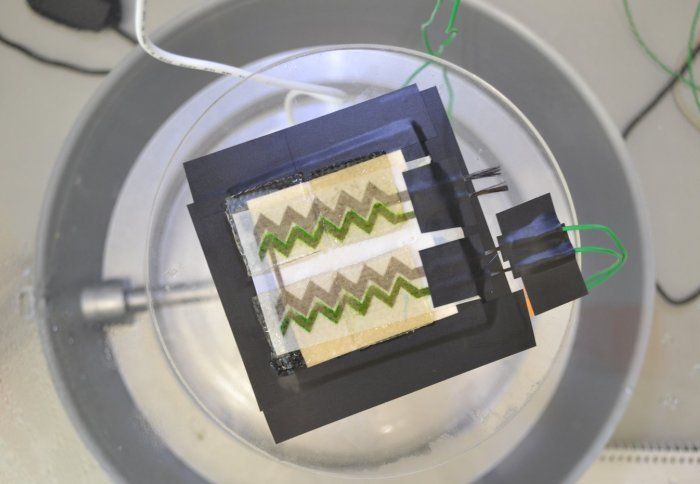
Researchers develop wallpaper bio-solar panel
A two-in-one solar bio-battery and solar panel has been created by researchers who printed living cyanobacteria and circuitry onto paper.
Cyanobacteria are photosynthetic micro-organisms that have been on Earth for billions of years. They are thought to be the primary reason why the Earth’s atmosphere is oxygen rich.
Now, a team has demonstrated that cyanobacteria could be used as an ink and printed from an inkjet printer in precise patterns onto electrically conductive carbon nanotubes, which were also inkjet-printed onto the piece of paper. The team showed that the cyanobacteria survived the printing process and were able to perform photosynthesis so that small amounts of electrical energy could be harvested over a period of 100 hours.

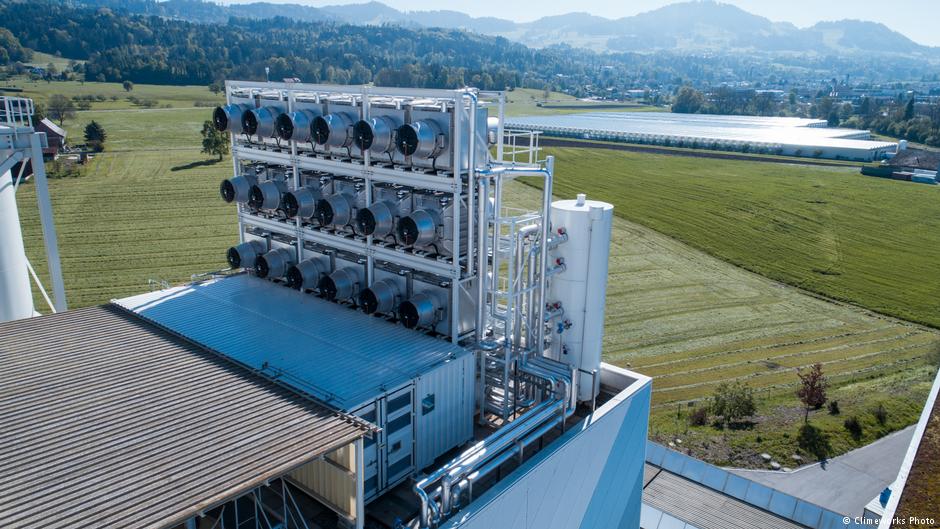
The carbon catchers of Climeworks
I was thinking about this thing, and the one in Iceland. Maybe we could build giant blimps in the atmosphere of Venus, it would carry that machine on its belly, and on the back of the blimp super advanced solar panels. Then inside of the blimp the CO2 could be mixed into liquid crystals or something like that and be dropped like rain down on the surface, to eventually terraform it.
Global Engineering — a phrase that describes steadying the world’s climate with technical solutions. A Swiss company has received EU funding to develop a machine that captures CO2. Can it really make a difference?
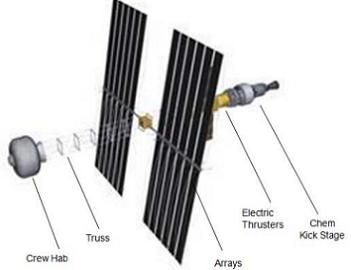
Boeing outlines technology for crewed Mars missions
With a focus on building the archetypal missions for NASA’s new Space Launch System rocket, the U.S.-based Boeing Corporation has outlined their view of what technologies can be used to accomplish humankind’s goal of visiting crews to the Martian system – missions Boeing believes are possible through the combination of the SLS rocket’s lift capability, the bourgeoning Solar Electric Propulsion technology field, and Bigelow’s soon-to-be-tested inflatable habitat modules.
From the Earth-Moon system to Mars:
Continuing from their initial presentation on potential SLS rocket uses beyond the opening two circumlunar missions, the Boeing Corporation has presented their idea of how to execute a phased approach to deep space exploration – with an eye for the eventual goal of landing human beings on the surface of Mars.
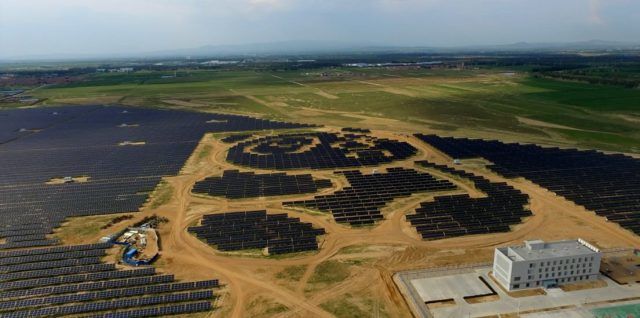
China breaking all solar power records, aiming for 50GW in 2017
China is leading the world in solar power installations by a long run. ASECEA is predicting that 50GW of solar power is well within reach of being installed this year. In June and July of 2017, China installed 25GW of solar power – and they’ll push the globe past 100GW total for the year.
At China’s ‘State of the Union address’ equivalent, just yesterday, president Xi Jinping said, “Any harm we inflict on nature will eventually return to haunt us… this is a reality we have to face.”
“Taking a driving seat in international cooperation to respond to climate change, China has become an important participant, contributor, and torchbearer in the global endeavor for ecological civilization,” said President Xi Jinping, and that China must “develop a new model of modernization with humans developing in harmony with nature.”
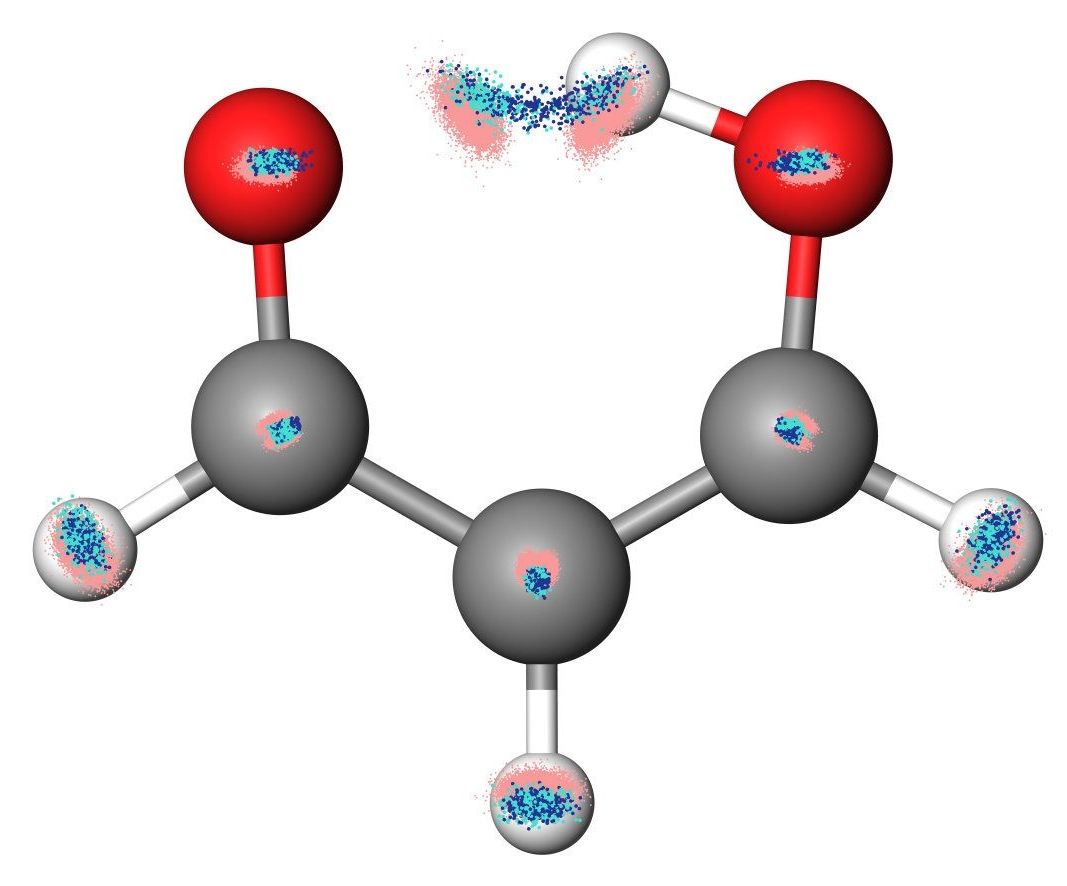
Scientists develop machine-learning method to predict the behavior of molecules
An international, interdisciplinary research team of scientists has come up with a machine-learning method that predicts molecular behavior, a breakthrough that can aid in the development of pharmaceuticals and the design of new molecules that can be used to enhance the performance of emerging battery technologies, solar cells, and digital displays.
The work appears in the journal Nature Communications.
“By identifying patterns in molecular behavior, the learning algorithm or ‘machine’ we created builds a knowledge base about atomic interactions within a molecule and then draws on that information to predict new phenomena,” explains New York University’s Mark Tuckerman, a professor of chemistry and mathematics and one of the paper’s primary authors.